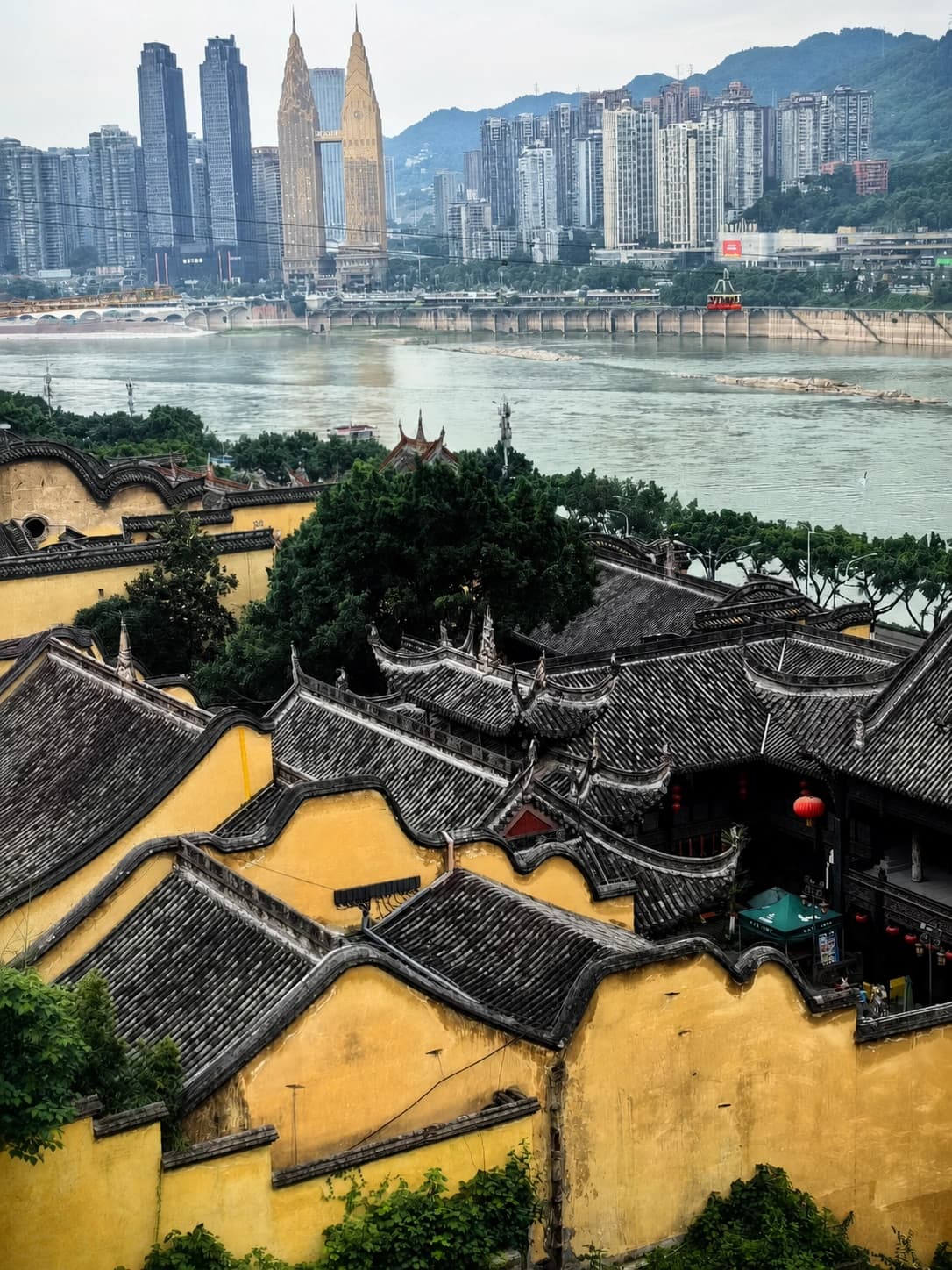
Hong'en Temple Forest Park
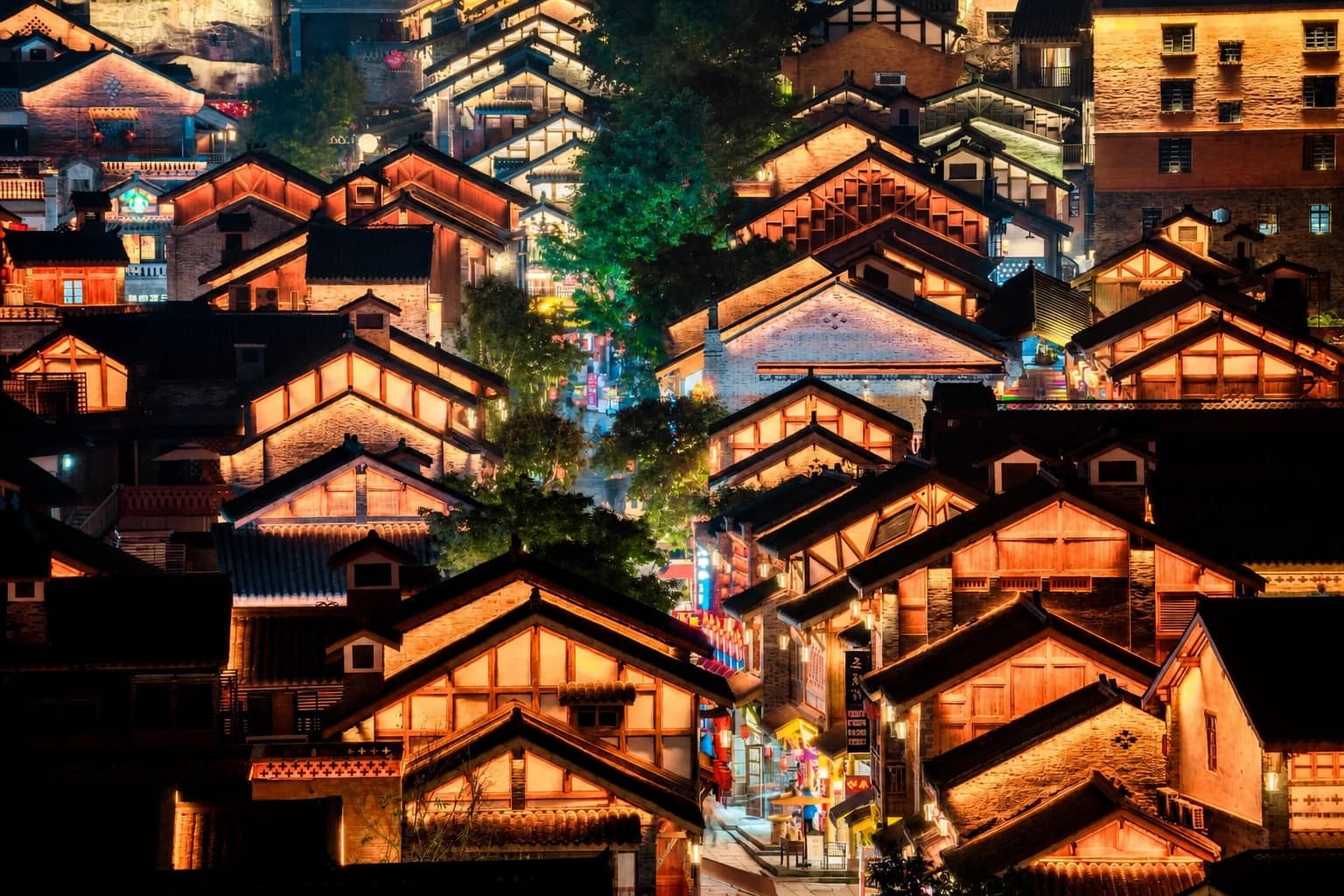
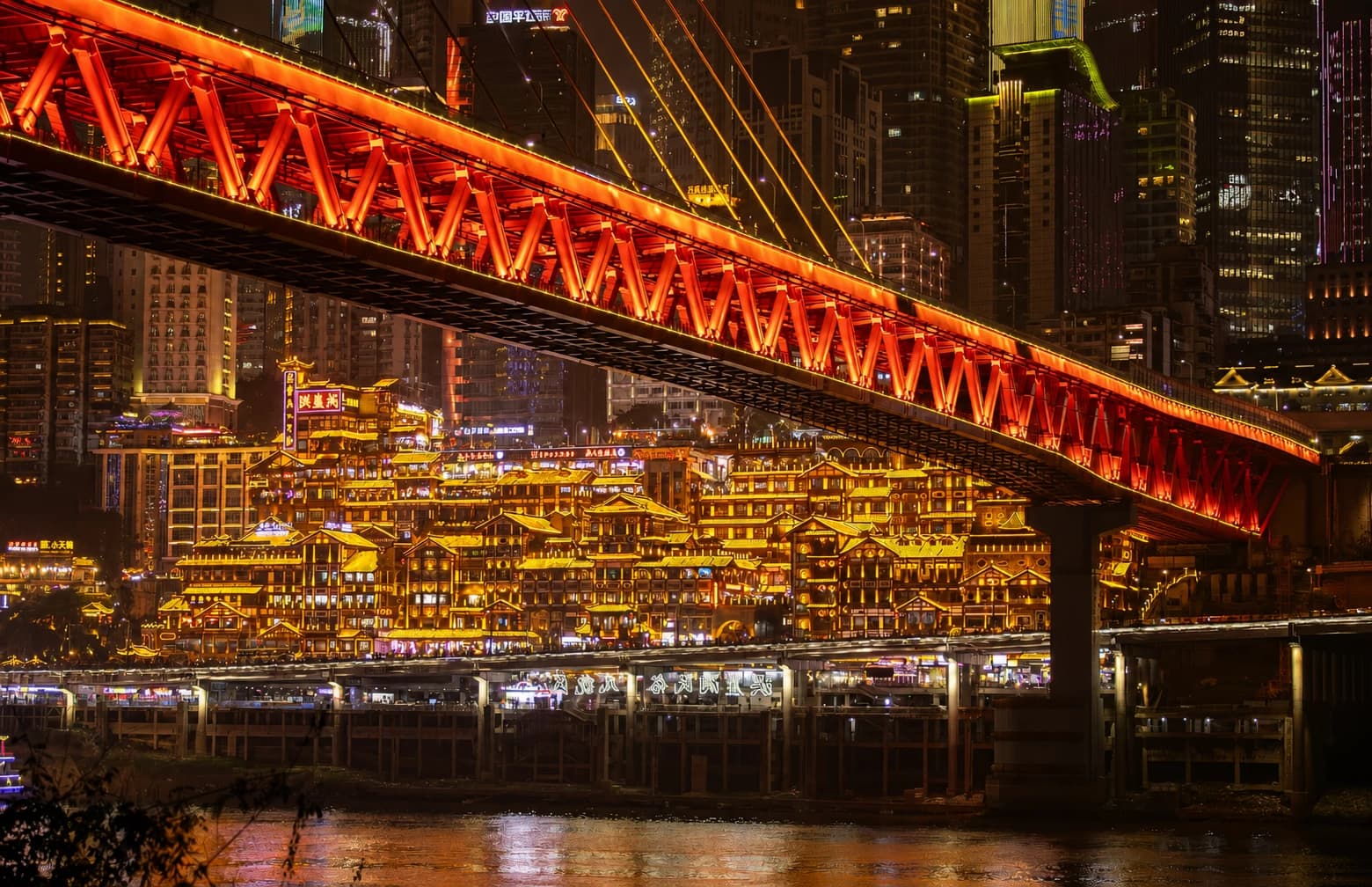
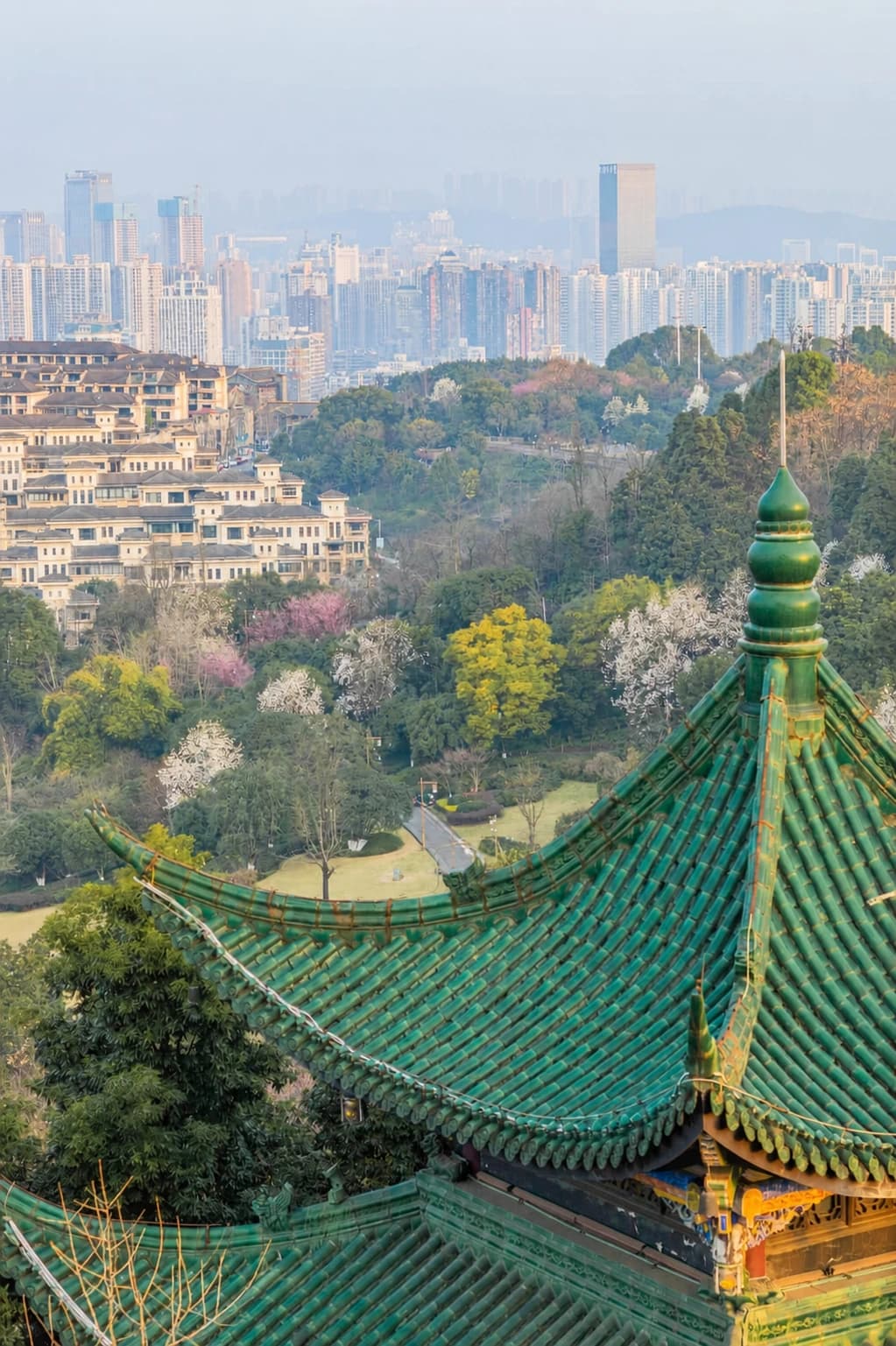
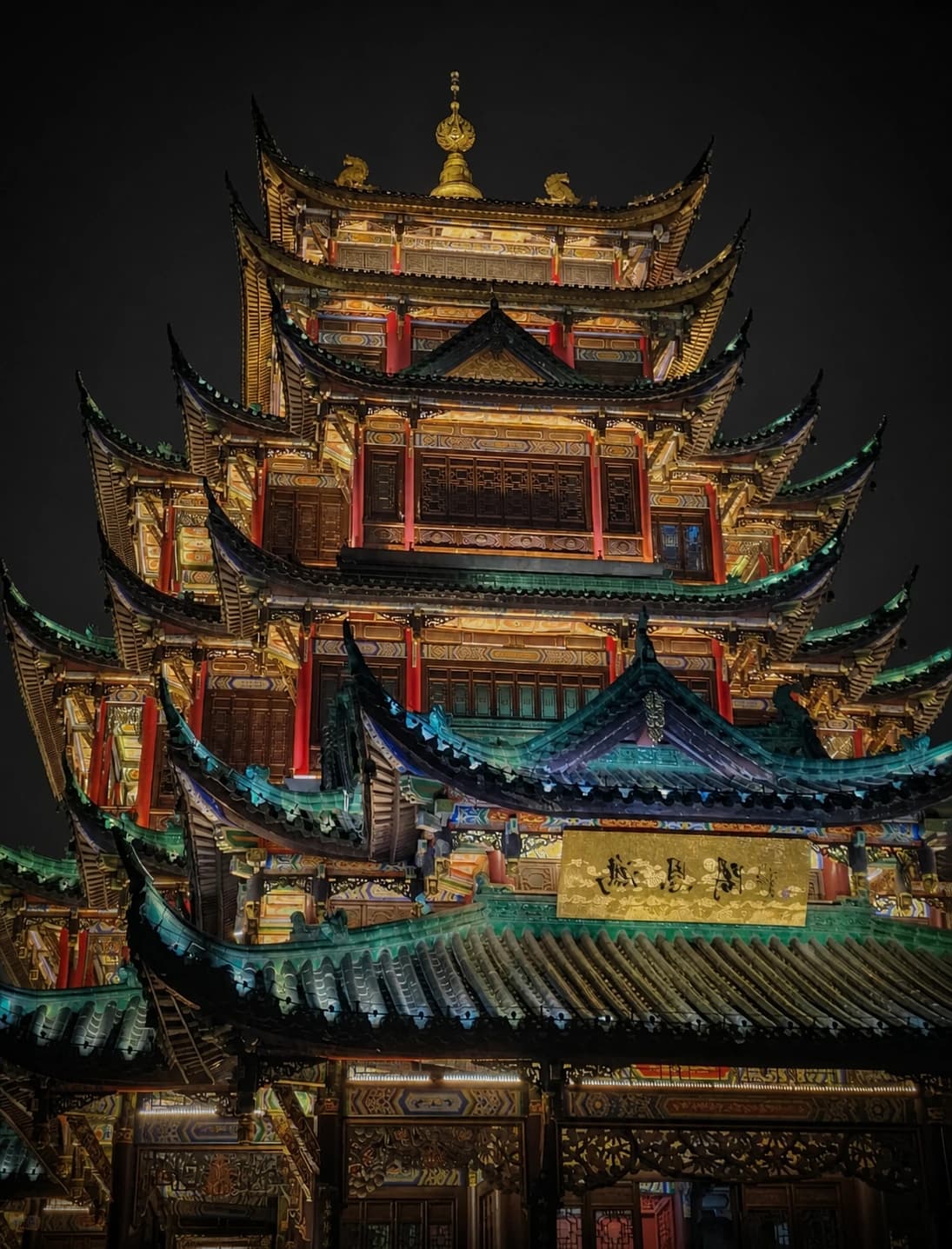
Despite the English name, Hong'en Temple Forest Park (鸿恩寺森林公园) contains no active Hong'en Temple. Its landmark is Hong'en Pavilion (鸿恩阁), a modern traditional-style observation building above a large municipal park. Come for a hilly green walk and central Chongqing views, not for monastery history.
Allow 90 minutes to three hours depending on entrance and climb. The main-road approach suits an ordinary walk; west-side stair routes are a workout. Night views can be attractive, but weak lighting on side paths makes route choice more important than a copied illumination time.
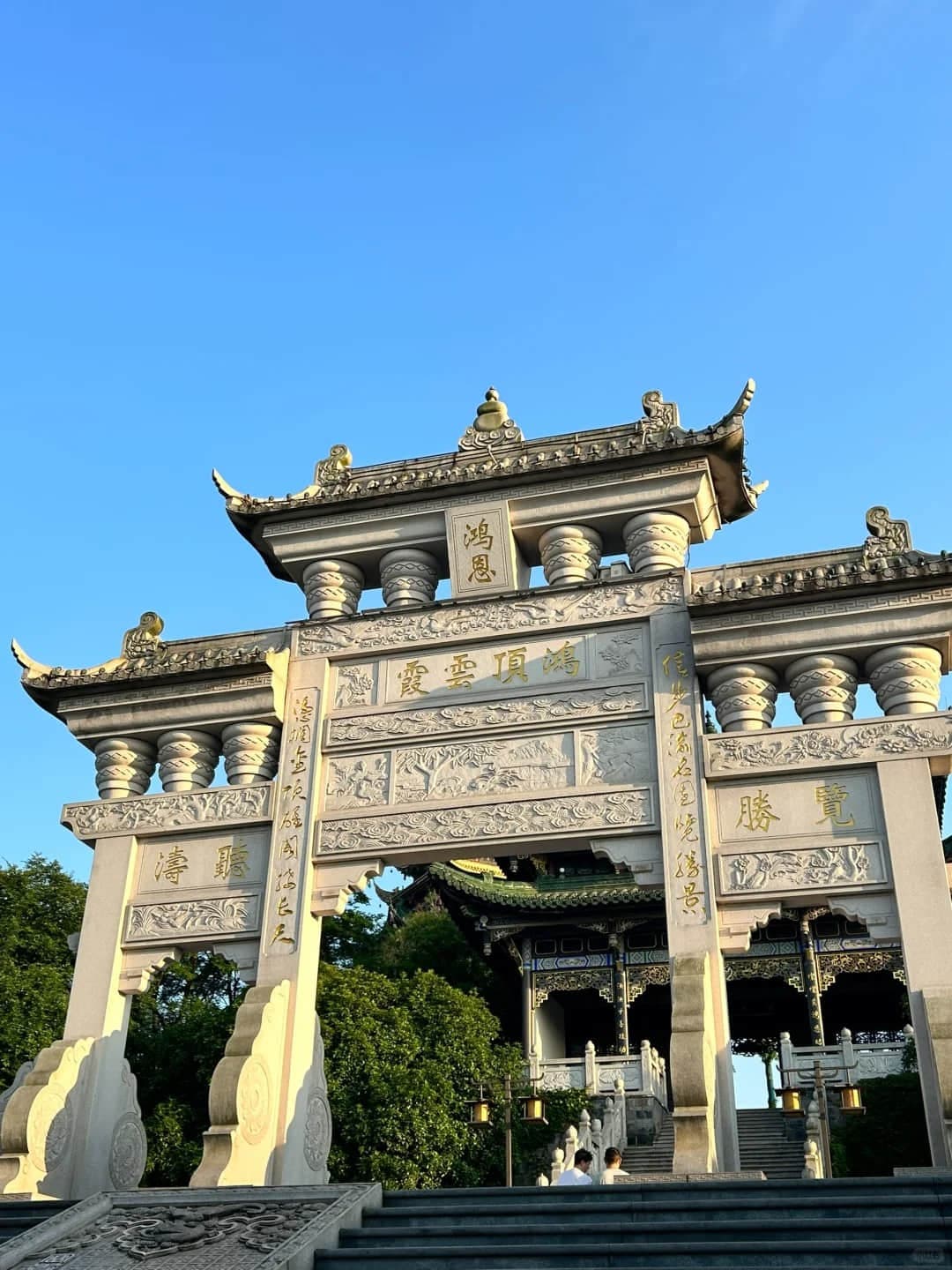
Choose effort before choosing an entrance
For the easier visit, use the signed main approach and Hongding Road, the operator-documented walking spine linking the osmanthus landscape with Hong'en Pavilion. Its surfaced road is more dependable than trying to collect every named garden from an old map. Reach the pavilion, use the authorized viewing level if open, then return by the same lit main route.
For exercise, west-side entrances and the “500 steps” area add concentrated stairs. They are a poor choice for older companions, strollers, limited mobility or a first visit after dark. Recent visitors report steep, narrow and poorly lit side stairs near some east-gate connections as well; never improvise a shortcut based only on a navigation line.
Free access and current operating checks
- Park admission: free.
- Reservation: normally not required for the public park.
- Hong'en Pavilion: interior or upper-level access can have separate hours, identity checks, maintenance or crowd controls.
- Evening lighting: variable with season, events, maintenance and energy policy; do not plan around the old fixed 19:30 claim.
Check the park notice for the exact date. Commercial performances near surrounding developments—including iron-flower shows reported by visitors—are not guaranteed park programming. One visitor waited past the advertised time for a brief event; treat any such show as a separate live product.
Timing, weather and safety
Arriving around 16:30 can combine daylight orientation, sunset and night views, but only when the weather and closing notice leave enough time to descend. Fog often erases the city view. After rain, stone steps and shaded paths become slippery; summer vegetation also means mosquitoes.
Carry water, wear shoes with grip and bring a light layer for the summit. Use a phone light only to return along a known signed path—not as permission to explore an unlit trail. Travel with companions after dark and turn back if gates, lighting or staff directions change.
The district's 2025 profile gives the park high point as 418 meters. That elevation produces views but also sustained slopes; “city park” does not mean level.
Getting there and leaving
Metro Line 5 to Dashiba Station, Exit 3A leaves an approximately 1.1 km walk toward the park. Buses 631 and 847 serve the park side, subject to live route changes. A taxi to the main/easier entrance reduces climbing uncertainty; specify the gate and save the pickup point.
Do not rely on old claims of hundreds of roadside parking spaces. Parking and road access change with weekend demand and events. Public transport or ride-hailing is safer for an evening visit, especially when a mass departure follows lighting shutdown.
Food, accessibility and visitor fit
Food inside the park is limited and variable. Bring a small snack, then eat around Guanyinqiao or a currently operating commercial area after the walk. Old restaurant directories around Hong'en Square should not control the route.
The surfaced main spine is the best accessibility option, but slope and distance remain. Ask staff whether the pavilion lift or step-free entrance is operating. Families should keep children on the inside of paths and avoid dark stair shortcuts.
Verdict
Hong'en is worth visiting for a free green climb and pavilion view when visibility is good. Use Hongding Road for the dependable route, choose stairs only deliberately and descend on a lit path. It is a park with a modern pavilion—not a temple, guaranteed show or effortless night viewpoint.