Chongqing 8D transport: what to ride, what to photograph and how to link it
This route suits travelers who actively want slopes, deep stations, bridges and changing street levels. If that physical rhythm is still a concern, use Chongqing or Chengdu? to compare it with Chengdu's flatter clusters, pandas, teahouses and slower city days.
Chongqing's most memorable transport is not a collection of novelty rides. It is an answer to steep terrain: a monorail enters a building, an escalator replaces a hill climb, a public elevator joins two street levels, a cableway crosses the Yangtze, and ferries connect riverbanks that road traffic reaches less directly. The city becomes easier to understand once you use these systems as transport rather than treating every one as an isolated photo stop.
The essential distinction is ride versus photograph. At Liziba, the famous exterior view and the best Line 2 ride are separate actions. On the Crown Escalator, riding is the experience and photography must wait for the landing. On the cableway, the river crossing is strong, but the exterior cabin photograph comes from the South Bank. A ferry gives a moving skyline, yet its schedule is less dependable than the metro.
This guide links five systems into a realistic day, with one taxi bridge where the map hides an exhausting cross-city walk. It also tells you what to cut when a queue, storm or tired knee changes the plan.
Choose the experience before you build the route
| Experience | Ride value | Photo value | Typical friction | Best decision |
|---|---|---|---|---|
| Line 2 at Liziba (李子坝) | High: elevated curves and layered Jialing River city views | High from the official lower platform | Station level changes and current renovation diversions | Ride one stop from Niujiaotuo, then photograph from below |
| Crown Escalator (皇冠大扶梯) | High: the length and grade are felt only while moving | Medium-high from a stationary landing | Short ride, small fare, unsafe to turn around while moving | Ride one way downhill; make the symmetrical frame before boarding or after exiting |
| Kaixuan Road Elevator (凯旋路电梯) | Medium-high: an ordinary public lift replaces a steep vertical connection | Medium: the useful picture is the change of street level | Compact cabin, local passenger flow, easily overhyped | Ride it as a functional transfer and photograph the public entrance context |
| Yangtze River Cableway (长江索道) | High when the queue is reasonable | High from public South Bank viewpoints | Timed product, physical queue, weather and maintenance pauses | Buy one way, cross once, then continue on the opposite bank |
| Public river ferry (重庆小渡) | High for a slow, low-on-the-water city view | High at blue hour from the open deck | Sparse and changeable timetable; river conditions | Plan around one confirmed departure, not an old screenshot |
If you have only one half-day, do Line 2/Liziba and Crown. If you dislike heights, keep Line 2, Crown and Kaixuan, then use Metro Line 6 instead of the cableway. If your main goal is photography, spend longer at Liziba and Longmenhao and accept that the Kaixuan ride itself may yield only a simple documentary frame.
Save these exact AMap pins
Save the Chinese names as well as the links. English search results can point to a district, a station building or the wrong level.
- Niujiaotuo Station — 牛角沱站
- Liziba Station — 李子坝站
- Liziba Monorail Viewing Platform — 李子坝单轨穿楼观景平台
- Lianglukou Station — 两路口站
- Crown Escalator upper entrance — 两路口皇冠大扶梯
- Crown Escalator lower station — 皇冠大扶梯下站
- Kaixuan Road Elevator — 凯旋路电梯
- Yangtze River Cableway North Station — 重庆长江索道北站
- Yangtze River Cableway South Station — 重庆长江索道南站
- Longmenhao Old Street — 龙门浩老街
- Danzishi Ferry Terminal — 弹子石渡口
- Hongyadong Passenger Terminal — 洪崖洞客运码头, for the A-line ferry when a live departure fits
These are navigation anchors, not promises that every entrance is step-free or open. Chongqing often places one mapped attraction across several vertical levels. Follow live walking navigation and onsite signs for the final approach.
The complete one-day 8D transport route
This schedule completes every core experience without pretending the city is flat. It assumes an ordinary day, a cableway departure that fits the afternoon, and the currently published 18:30 Two Rivers Ferry B loop from Danzishi. Confirm both the cableway and ferry before leaving your hotel. If the ferry time changes, keep the same sequence but move the South Bank rest stop around the live departure.
08:30–10:00: ride Line 2, then photograph Liziba
Start at Niujiaotuo Station, board Line 2 westbound toward Yudong and ride one stop to Liziba. Stand clear of doors and use the carriage window on the river side if space permits. The useful onboard result is not the instant inside the station building; it is the approach through a layered hillside of roads, apartments and rail structure. Reflections are common, so place the phone close to the glass and turn off flash.
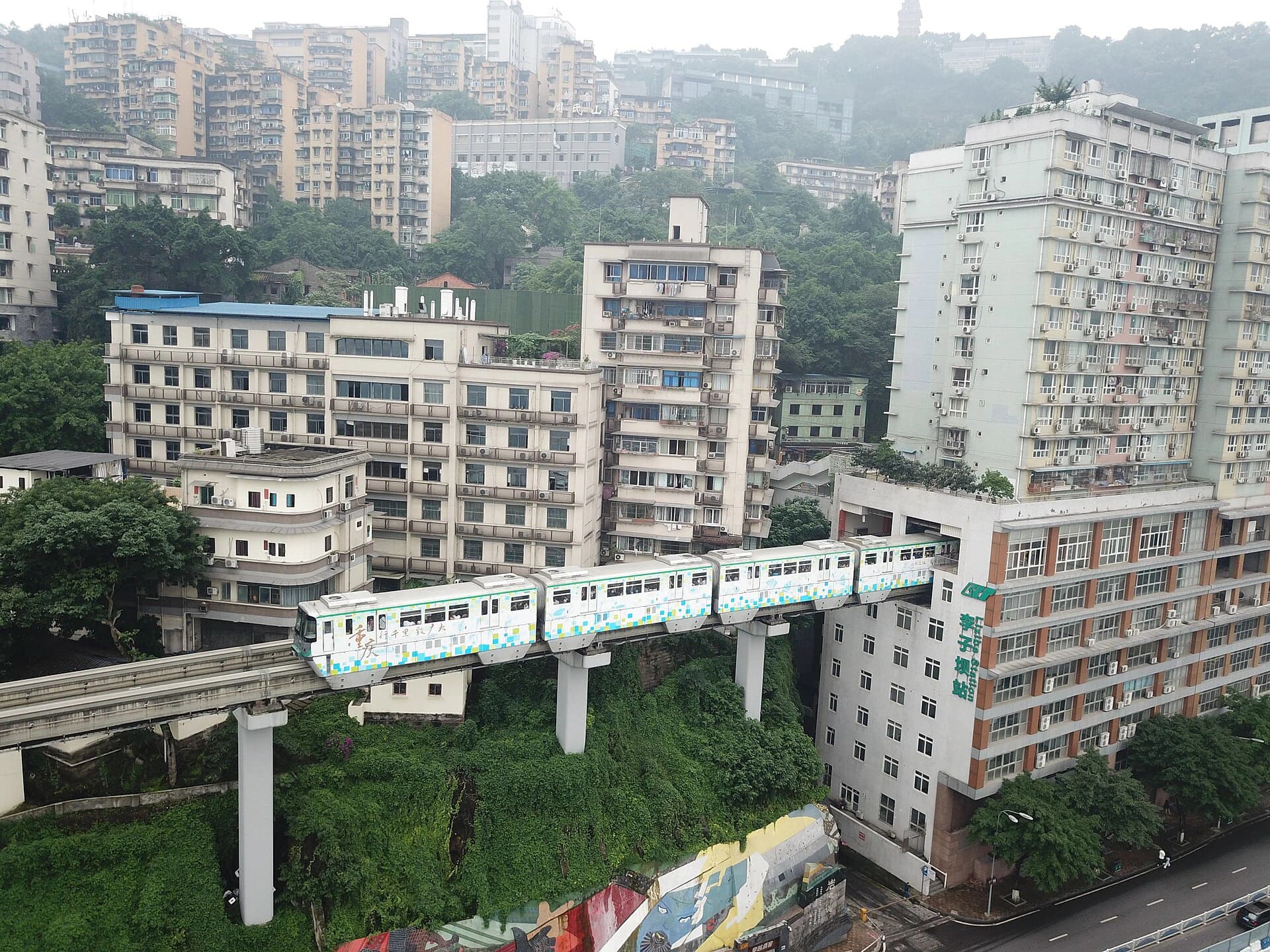
At Liziba, follow current signs down to the official viewing platform. Do not assume the first station exit is the shortest: the rail station, road and platform occupy different heights. The platform is designed for the exterior train-through-building view and keeps you out of traffic.
Make the wide frame first. Use a phone at 1× or a camera around 24–35mm, include the opening, several building floors and a stretch of track, then use burst mode as the train enters or leaves. The detailed Liziba guide covers the three best compositions and station-level logic. The Eling-to-Liziba sunset walk is a separate evening route; do it on another day rather than attaching it to this full transport circuit.
As of September 20, 2026, the official city page confirms that the viewing platform is open, but the rail renovation plan still includes partial platform work through November 30, 2026 and Hall A work through October 31. Current signs and staff directions override an old exit instruction.
10:00–11:00: return to Lianglukou and descend the Crown Escalator
Re-enter Liziba Station, take Line 2 eastbound one stop to Niujiaotuo, then transfer to Line 3 for Lianglukou. At Lianglukou, the operator directs visitors to Exit 3; the Crown Escalator entrance is about a three-minute walk.
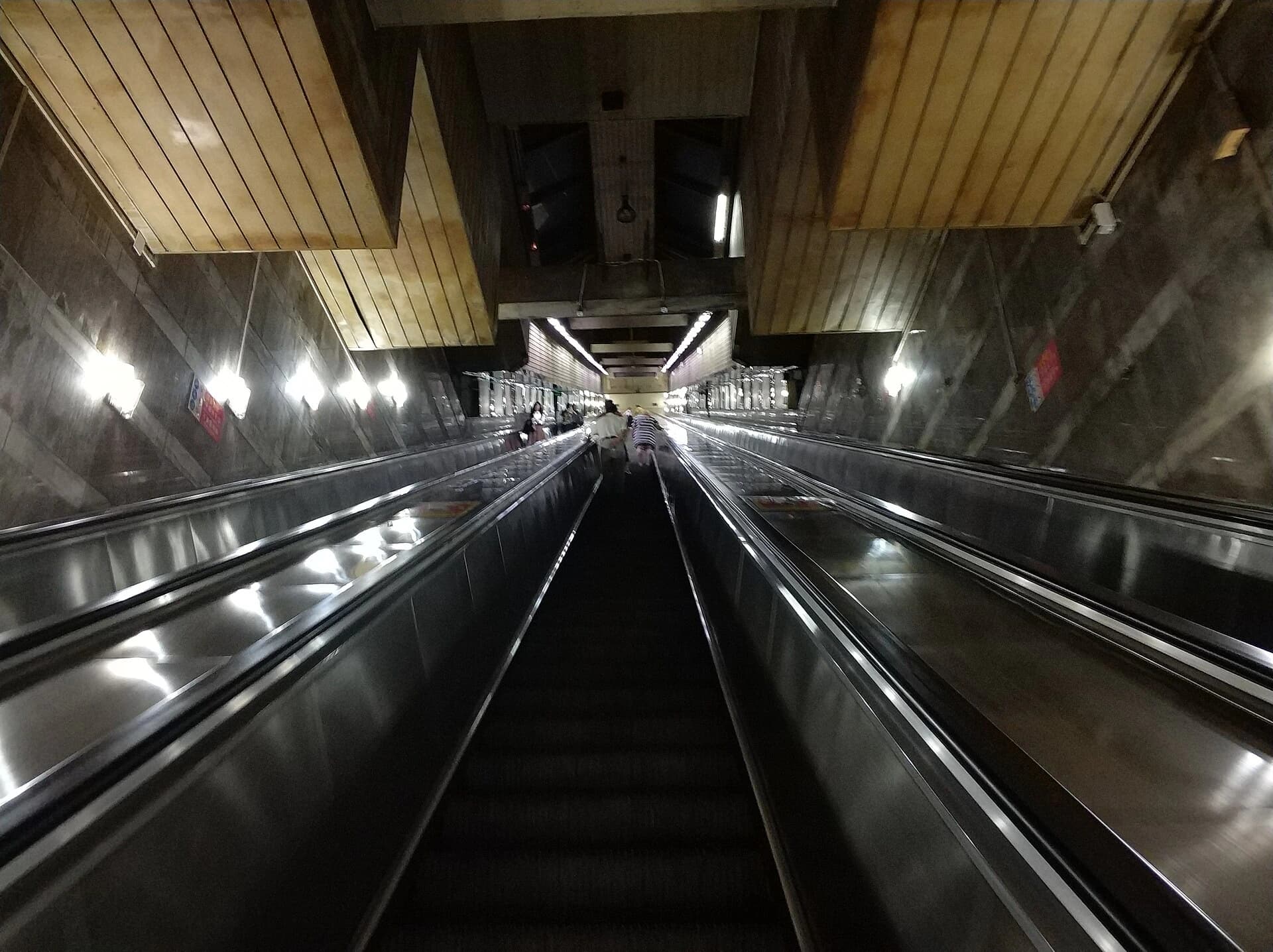
The Crown Escalator is 112 m long, rises or descends 52.7 m at a 30-degree slope, and takes roughly 2.5 minutes. The operator's current page lists 08:00–20:00, extended to 21:00 on statutory holidays. The currently published one-way fare is CNY 2; follow the displayed fare and accepted payment method at the entrance.
Ride downhill toward Caiyuanba for this route. Before stepping on, make the vanishing-point photograph from the designated public landing without blocking the entry. Once moving, face forward, hold the handrail and keep the camera stable at chest level. The operator explicitly warns riders not to turn around for photographs, lean to the side or walk around on the escalator. If the centered photograph requires twisting your body, it belongs at the landing.
The escalator has strong visual impact because the rails converge into a distant point. A phone's 1× lens is enough. Ultra-wide can exaggerate the space, but it also stretches people near the frame edge. Keep other riders anonymous where possible and do not aim a camera directly into someone's face during an everyday commute.
11:00–12:15: taxi to Kaixuan Road, then ride the city elevator up
At the lower Crown station, request a taxi or ride-hail to Kaixuan Road Elevator. AMap measures the walk at 3.1 km / 42 minutes, while a car route is 5.3 km / about 14 minutes before traffic and pickup. The car distance looks longer because roads must negotiate the terrain; it is still the better full-day choice.
Use the exact elevator pin and tell the driver Kaixuan Road Elevator (凯旋路电梯). The operator describes Kaixuan Road Elevator as a public vertical link between the lower city around Kaixuan Road and the upper city around Xinhua Road/Jiaochangkou. It has operated since 1986, lifts 32.5 m at 2.5 m per second, and currently runs 07:00–22:00.
This is the least theatrical stop and one of the best explanations of Chongqing. Ride from the lower entrance to the upper level. The cabin may be shared with commuters, so board normally, keep bags close and wait for the next car if filming would crowd the doors. The useful visual pair is one frame of the lower street before boarding and one of the upper exit after the ride. Two ordinary streets separated by a short elevator journey explain the terrain better than a close-up of buttons.
The operator's current page does not publish a fare. Use the displayed onsite fare and payment instruction; carry a small amount of cash as a fallback even if local cards or QR payment appear available. Foreign visitors should not build the day around a local transport QR that may require domestic registration.
12:15–14:30: upper-city lunch, walk to Xiaoshizi and cross by cableway
From Kaixuan Road Elevator, AMap gives 1.1 km / 15 minutes on foot to the Cableway North Station. Allow 20–25 minutes because crossings, crowds and the final approach can slow you. Eat on the upper-city side before joining the cableway queue; choose a visibly open restaurant near your path rather than detouring for a famous name.
The cableway operator's current seasonal schedule is:
- March 1–November 30: 08:00–22:00; statutory holidays 07:30–23:00.
- December 1–end of February: 08:00–21:00; statutory holidays 07:30–22:30.
The government-approved maximum ordinary fare is CNY 30 one way or CNY 50 return, effective since January 2025. Buy one way for this route. A return repeats almost the same view and can add another boarding process.
Use the official WeChat account Yangtze River Cableway (长江索道), an onsite machine or counter, or check the dated cableway product on Trip.com. Before paying, confirm the travel date, direction, time window, passenger-document requirement, cancellation terms and current operating notice. A timed product does not promise a window position or eliminate the physical queue.
Ride north to south. Keep bags compact and accept the window position staff and passenger flow make available. Make one river-wide frame instead of holding a phone against the glass for the entire crossing. If the cabin is packed, enjoy the movement and make the exterior photograph after arrival.
The cableway can pause for scheduled maintenance, strong wind, thunderstorms or other operational reasons. If it is suspended or the queue would break the ferry plan, use Metro Line 6 from Xiaoshizi to Shangxinjie. The route still works; you lose the aerial ride but protect the South Bank and ferry.
14:30–16:30: photograph the cableway from Longmenhao
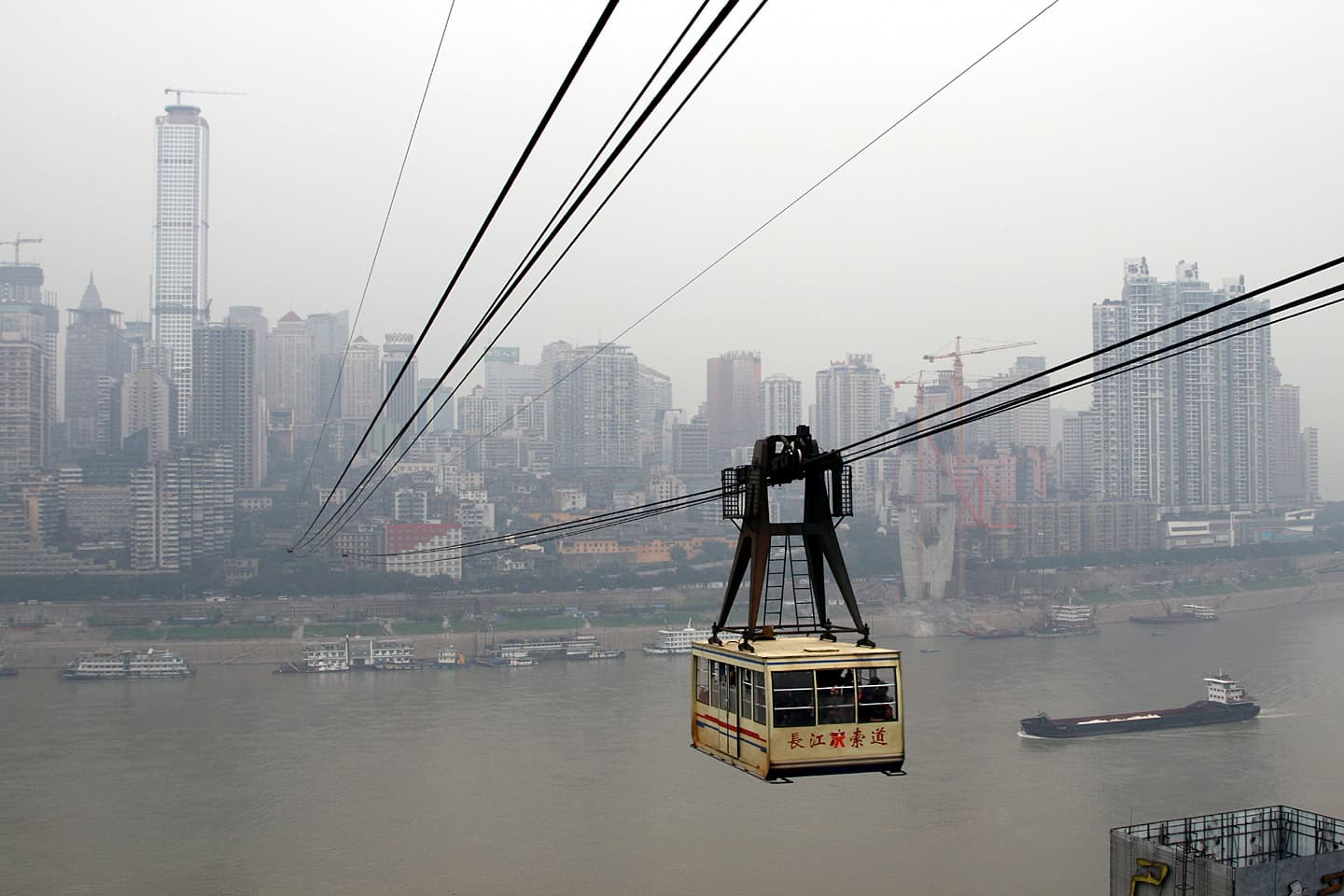
From the South Station, AMap measures the walk to Longmenhao Old Street at 0.6 km / about 9 minutes. Follow signed public paths. The South Bank is where ride and photograph finally separate: you have already crossed inside the cabin; now use a public terrace or open lane around Longmenhao to place the cabin against the river, Dongshuimen Bridge or Yuzhong skyline.
Start at 1× or 24–50mm. A longer lens can make the cabin larger, but it also compresses cables and buildings into visual clutter. Leave clear sky or river around the cabin and use continuous autofocus. The car moves steadily, so choose at least 1/500 second in daylight when using a camera. On a phone, hold focus on the cabin and shoot a short burst.
Longmenhao is also the day's recovery period. Sit, refill water and stop photographing if the route is becoming a chase. The dedicated South Bank photo route continues through more old-street and river viewpoints, while this transport day needs to leave for Danzishi.
16:30–18:15: transfer to Danzishi and protect the ferry departure
Request a taxi or ride-hail from a legal pickup point near Longmenhao to Danzishi Ferry Terminal. AMap's baseline is 5.4 km / about 15 minutes by car. The public-transit alternative takes about 48 minutes and includes roughly 1.95 km of walking, so it is a poor trade on a fixed-departure day. Allow 30 minutes for pickup and traffic.
The current official schedule for Two Rivers Ferry B (两江小渡B线) is one daily loop at 18:30:
Danzishi → Jiangbeizui → Yemaoxi → Danzishi
The published fare is CNY 15 per person, and the operator asks passengers to arrive 10–15 minutes early. Reconfirm the departure in the official operator channel on the same day. A river service can change for water level, weather, traffic control or an event, and a June announcement is not permission to assume every future date runs unchanged.
If the B loop is not operating, check whether the Two Rivers Ferry A (两江小渡) between Hongyadong, Jiangbeizui and Danzishi has a useful live departure. Do not cross town toward a pier until the operator's current timetable confirms the direction and time. If neither route fits, finish at Danzishi and keep the ferry for another day; do not substitute an expensive sightseeing cruise merely to complete a checklist.
18:30 onward: ride the river at blue hour
The B loop returns to Danzishi, so it is a moving skyline experience rather than a transfer to the north bank. Board when directed, keep the gangway and crew areas clear, and choose a deck position only after the boat is underway and staff permit access.
Use 1× for the relationship between water, bank and towers. At blue hour, expose for the bright signs and accept darker water. For a camera, begin around 1/250 second if the boat is moving, raise ISO as needed and avoid a slow shutter that turns every building into a blurred streak. A small optical-stabilised lens is more useful than a tripod on a moving deck.
After the loop, leave from Danzishi by your live metro, bus or car route. Do not schedule a tight dinner reservation immediately after the published departure: boarding, river controls and the actual trip can move the finish time.
The 3.5-hour short route
For a compact introduction, use this sequence:
Niujiaotuo → Line 2 to Liziba → Liziba viewing platform → Line 2 back to Niujiaotuo → Line 3 to Lianglukou → Crown Escalator downhill
Allow about 3–3.5 hours with photographs and transfers. Begin around 08:30 or 09:00. It gives you the two clearest expressions of Chongqing's terrain: a rail line threaded through a hillside building and a very long public escalator connecting vertical street levels.
End at the Crown lower station and leave by taxi or continue independently. Do not add Kaixuan on foot simply because its pin looks close; the checked walk is 3.1 km and consumes the energy the short plan is meant to save.
If rain is heavy, reverse the emphasis: spend less time at the exposed Liziba platform and more time on the covered Crown Escalator. If Liziba's construction diversion is difficult for your mobility, ride Line 2 through the station, stay onboard and continue to a convenient interchange without descending to the platform.
Twelve photographs worth bringing home
Treat these as outcomes, not a scavenger hunt. Eight strong frames are better than twelve rushed ones.
- Line 2 through layered hills: from inside the train, window close to the lens, no flash.
- Train plus full Liziba opening: 1× or 24–35mm from the official platform.
- The entry moment: short burst as the front car reaches the building, with track visible.
- Crown's symmetrical vanishing point: from the stationary public landing before boarding.
- One rider for scale: wait for separation between people; avoid recognisable close faces.
- Kaixuan lower-city context: entrance plus road or steps, not a sign-only close-up.
- Kaixuan before-and-after pair: lower street and upper street made from public space.
- Cableway river crossing: one wide onboard frame with water and both banks.
- Cableway cabin outside: from a public Longmenhao terrace, cabin separated from the skyline.
- Old street and transport together: masonry or a lane edge framing the moving cabin.
- Danzishi departure: ferry, pier and opposite-bank towers in one horizontal frame.
- Blue-hour river layers: water foreground, lit bank in the middle and high-rise skyline above.
For phone video, record clips of five to eight seconds and keep the device still. Begin before the train, escalator or cabin reaches the composition and stop after it clears. Avoid continuous panning; the fixed architecture explains the movement.
Tickets, payment and queue decisions
Metro and Line 2
Use the current station machine, counter or accepted transit payment method. A single-journey ticket is the dependable option when a foreign phone number, app account or local bank card prevents QR setup. Keep the ticket or token until you exit.
Crown and Kaixuan
Crown's published baseline is CNY 2 one way. Kaixuan's current operator page lists hours but not a fare, so follow the onsite display. Carry both a mobile-payment option and small cash. These are working public links, and ticketing can be simpler than a tourist attraction checkout.
Cableway
This is the only core experience worth checking in advance. Compare the official channel and the exact Trip.com product, then buy only after reading direction and refund rules. A modest queue is part of boarding; a long holiday queue can consume the day. Set a cut rule before arriving: if the displayed wait threatens the confirmed ferry departure, take Line 6 across the river.
Ferry
The schedule is the decision. Confirm route, pier, direction and departure first, then follow the operator's current purchase instruction. A price from an old post is less important than reaching the correct pier before the only useful boat.
Heat, rain and mobility choices
Chongqing's summer heat magnifies every level change. Start early, refill at lunch and use the Crown-to-Kaixuan car hop. The exposed Liziba platform and Longmenhao terraces are the first places to shorten. Keep the indoor vertical links; they deliver the route idea with less sun.
In steady rain, Line 2, Crown and Kaixuan remain the strongest core. Wet pavements around viewing areas can be slippery, while haze reduces the value of the cableway exterior image. Thunderstorms and strong wind can stop the cableway; high water, weather and navigation controls can alter ferries. Check notices before making a cross-river transfer.
This full route is not step-free. Crown is a moving escalator, Kaixuan solves one vertical segment but not every approach, and ferry gangways can change angle with the river level. Cableway cabins and queues may require standing and close boarding. Travelers using wheelchairs, walkers or strollers should plan each system independently with the operator or station staff rather than treating this circuit as an accessibility route.
For knee pain, the downhill Crown ride may still require standing balance, and the South Bank includes slopes. The easiest modified day is Line 2 ride only, taxi to the Kaixuan upper or lower entrance as appropriate, then Metro Line 6 across the river. One or two successful experiences are better than completing the list while exhausted.
Public-space and photography boundaries
- Use the official Liziba platform; do not step into the road, climb barriers or enter residential floors for an elevated angle.
- At Crown, photograph from a landing. Face forward and hold the rail while moving.
- At Kaixuan, keep lift doors, fare points and passenger flow clear. Do not turn a compact public cabin into a portrait set.
- At the cableway, obey the boarding line and staff. A ticket does not guarantee a window, and loose equipment should remain secured.
- At Longmenhao, use open public terraces and lanes. A residential doorway or closed roof is not a viewpoint.
- On the ferry, keep gangways, life-saving equipment and crew work zones unobstructed. Use a hand strap; never extend a phone or camera beyond the rail.
- Avoid flash toward train operators, cableway staff, drivers or boat crew. Ask before making a close portrait of anyone.
The Chongqing photo-spots guide has more public viewpoints for a separate photography day. It deliberately excludes private rooftops and lived-in corridors; the same boundary applies here.
Same-day checks that protect the route
Open these before departure:
- the cableway operator's current hours page and latest operating notices;
- the operator pages for Crown Escalator and Kaixuan Road Elevator;
- the current river-service notice in the official Chongqing passenger-ferry channel;
- live AMap navigation for entrances, pickups and construction detours;
- the day's weather, with special attention to thunderstorms, wind and river conditions.
Keep the route in modules. Liziba and Crown form the reliable morning. Kaixuan and the cableway form the central vertical-to-river sequence. The ferry is the time-sensitive evening module. When one module fails, exit cleanly instead of dragging the delay through the rest of the day.
For a longer trip that compares Chongqing's terrain-led transport with public urban systems in Shanghai, Hangzhou and Shenzhen, use the China futuristic cities route.
Image credits
- Crown Escalator photograph: Siyuwj / Wikimedia Commons, CC BY-SA 3.0.
- Liziba Line 2 photograph: David290 / Wikimedia Commons, CC BY-SA 4.0.
- Yangtze River Cableway photograph: 慕尼黑啤酒 / Wikimedia Commons, CC BY 3.0.