Sinan Mansions
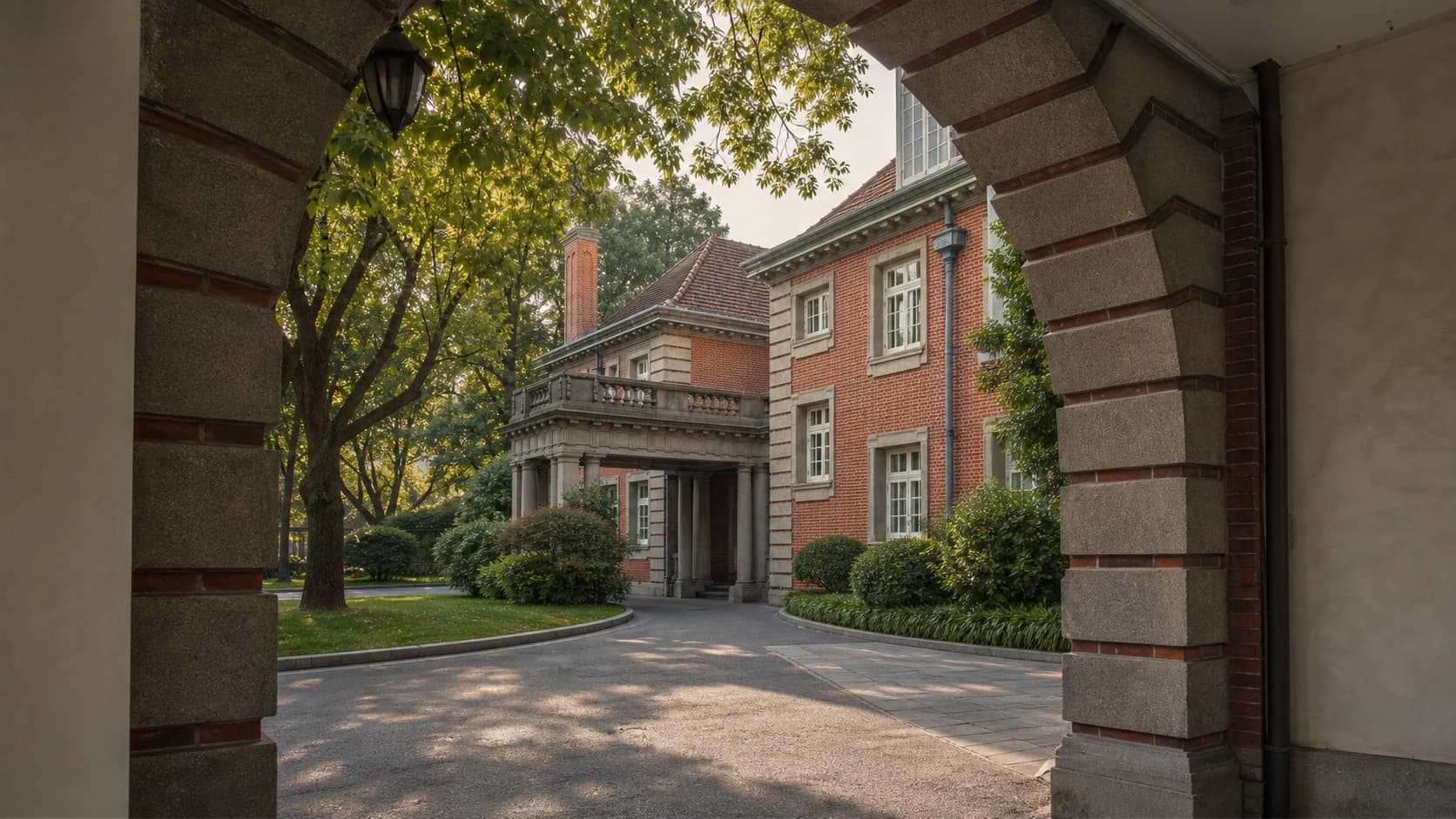
Sinan Mansions (思南公馆, Sīnán Gōngguǎn) is a landscaped group of 51 garden houses built mainly in the 1920s and 1930s. It is not one mansion with an interior tour. Its value is a calm architectural passage between Fuxing Park, Sinan Road, cultural venues, and Xintiandi.
Treat It as a Route Stop
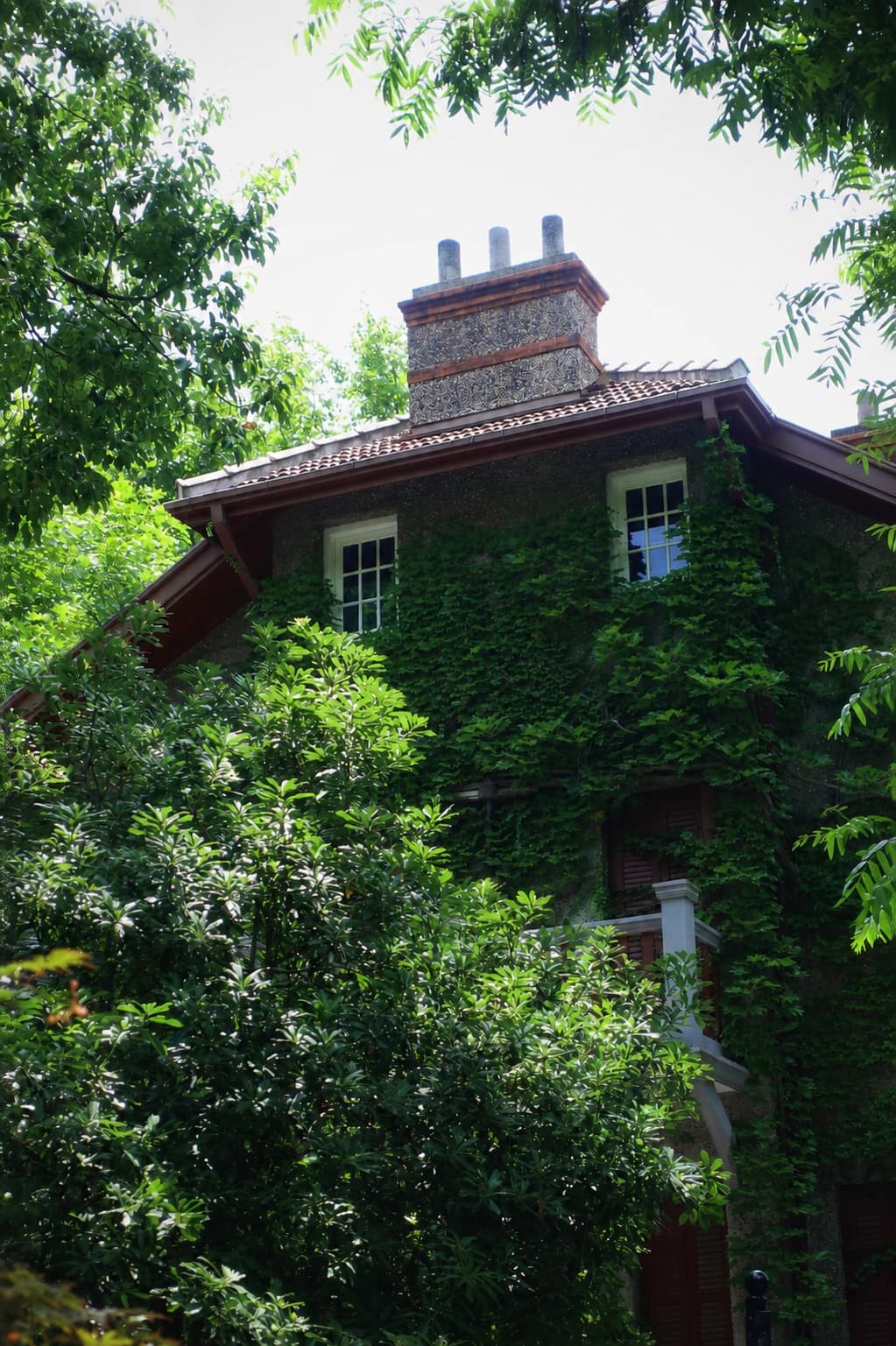
Architecture fans can spend 60–90 minutes comparing house types, planted setbacks, balconies, eaves, and lane proportions. Most visitors need 30–45 minutes unless they add a bookstore, event, café, or memorial residence. There is no dramatic central hall waiting at the end.
Begin at Fuxing Park, enter the public lanes around Middle Fuxing Road, and walk toward Sinan Road. Look above garden walls, not through windows. Add Sinan Books or a current exhibition only when it solves a real interest or rest need. Continue to the former Zhou Enlai Residence if its current entry hours fit, then finish toward Xintiandi.
Use an Architecture Checklist, Not a Mansion Checklist
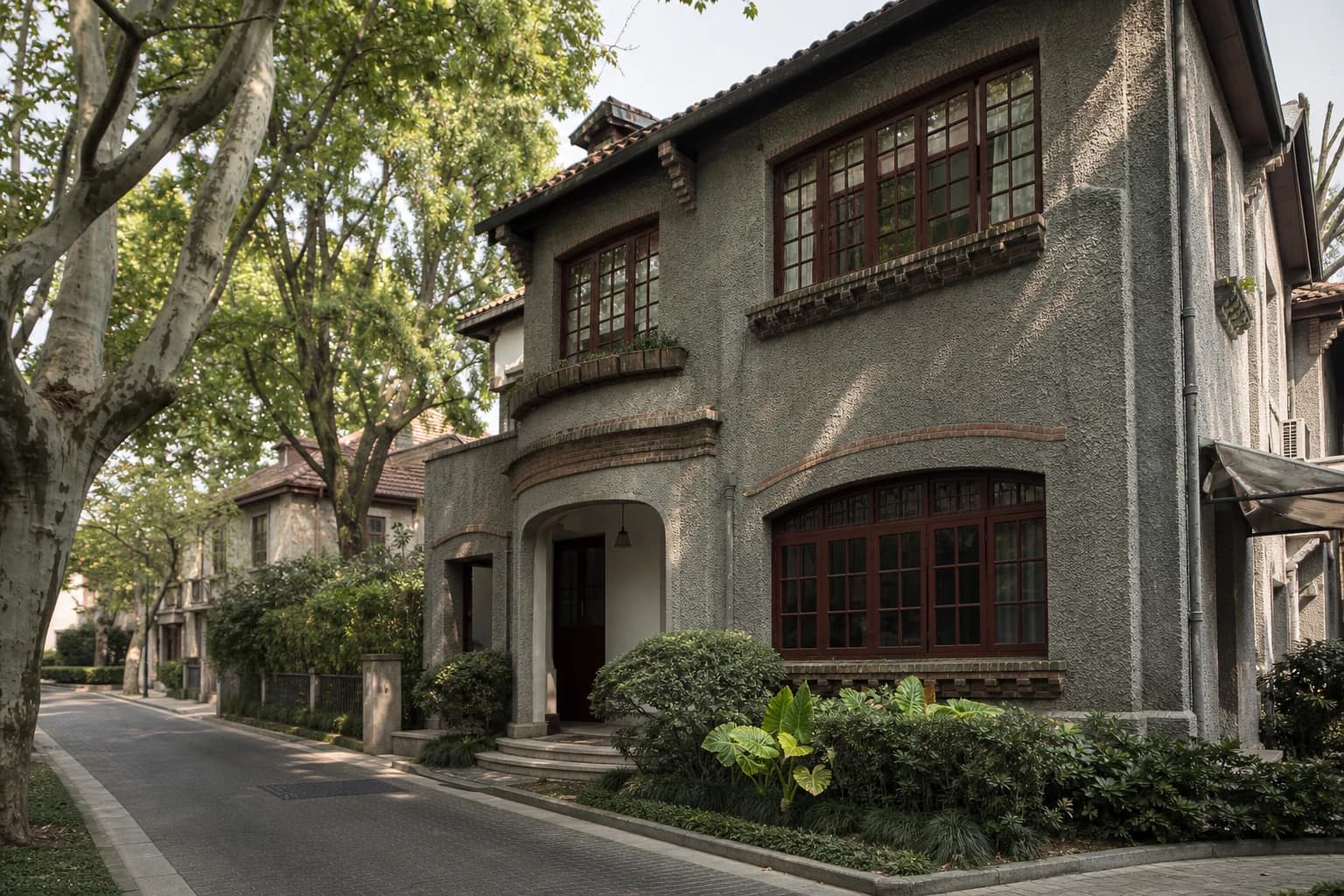
The district makes more sense when you compare details across several houses: pebble-dash versus smoother plaster, red or dark timber windows, tile shapes, balcony depth, garden setbacks, and how plane-tree shade changes the façade. You are reading a neighborhood ensemble, not collecting entrances to 51 separate attractions.
Keep the camera on public paths. Garden walls, occupied windows, hotel areas, and private doors mark real boundaries even when the architecture is photogenic. A good sequence is one whole-house view from the lane, one material detail, and one image showing the trees and street together.
Build the Visit Around Books, Not a Café List
The most characteristic current layer is literary. Start with Sinan Books (思南书局), where a small display or themed selection can give the neighborhood a subject, then check whether Sinan Literature House (思南文学之家) has a public event. When the official program lists a reading, writers' exhibition, Literature Month, or International Literature Week session that fits your date, let that event determine the timing of the walk.
Do not copy an old exhibition title into the itinerary: these programs can last only days. If nothing is scheduled, the route still works as architecture plus a bookstore; if an event is the main reason for coming, confirm its date, registration, language, and venue through the current Sinan program before traveling.
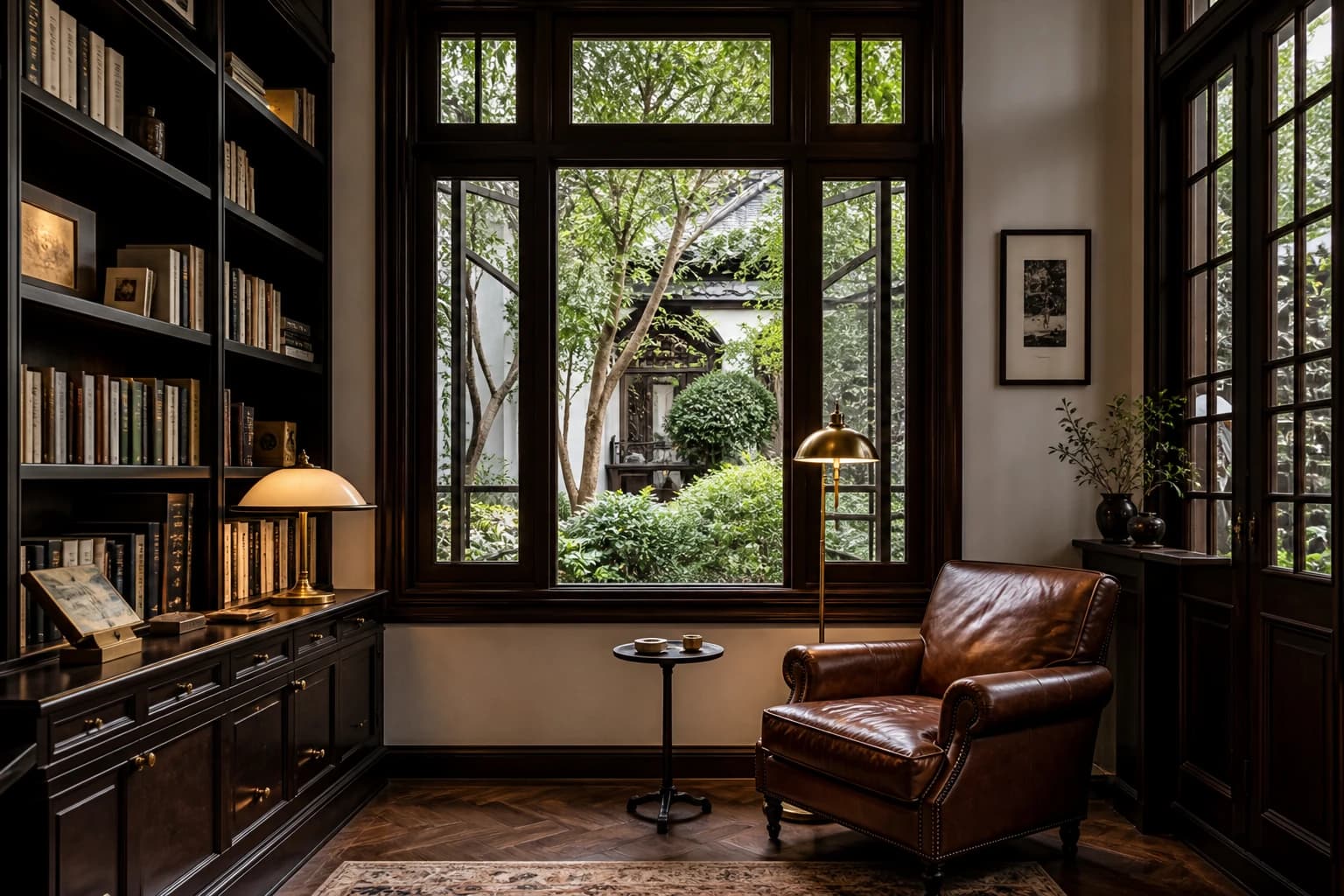
Inside a bookstore, resist photographing every shelf. Browse a themed table, look for bilingual art or city books, and treat the room as a place to read rather than a set. Book titles, displays, and event layouts change; the durable experience is the contrast between a domestic-scale garden house and a public literary use.
The Stable Layer and the Changing Layer
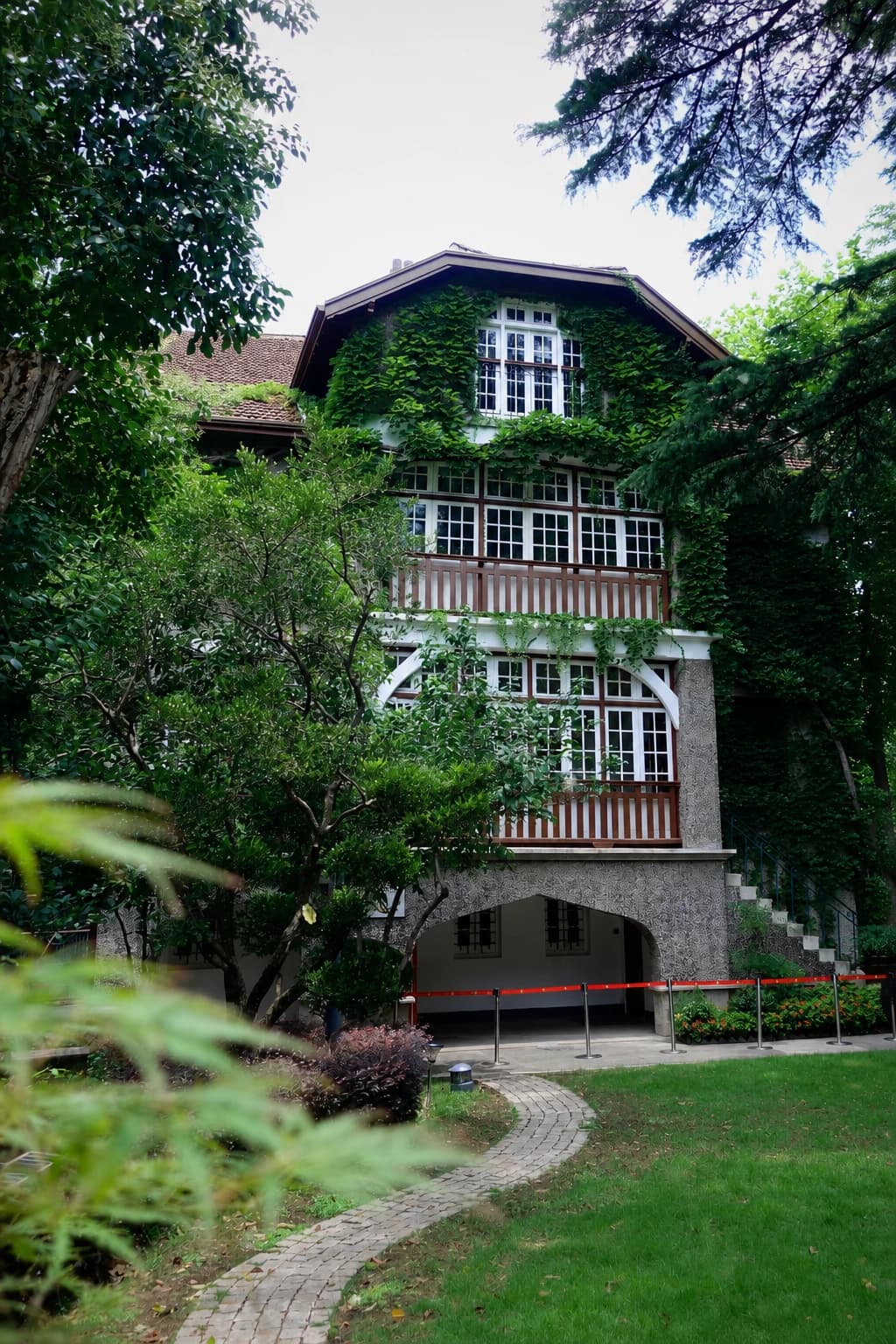
The houses and route are stable; shops, exhibitions, weekend markets, book events, and restaurant tenants are not. A current literary program can make the visit more meaningful, but never promote one café or pop-up into the reason the district matters.
The public outdoor areas are free. Individual interiors keep their own hours and entry rules. Navigate to 思南公馆, around 505–523 Middle Fuxing Road; Site of the First CPC National Congress · Xintiandi Station on Lines 10 and 13 is the nearest major stop.
Keep private entrances clear and do not photograph through windows. Older interiors can have steps and narrow doors, while planted paths become slippery after rain. The most useful comparison continues to Xintiandi, where similar historic forms have been commercialized at a much larger scale.
Where to Eat and Stay
For a casual stop, use the café or bookstore only when its current menu suits you. For a full meal, widen the search toward Huaihai Road, Xintiandi, or the residential streets west of Sinan Road rather than insisting on a table inside the protected compound. The neighborhood's strongest food advantage is range—Shanghai cooking, noodles, bakeries, and international dining within a short ride or walk—not one permanent “Sinan” dish.
The Former French Concession is the most natural place to stay when leafy walks, cafés, and small-scale historic streets are a priority. Xintiandi is more polished and convenient for dining and metro interchange; People's Square is better for a first-time visitor balancing all parts of Shanghai. Staying inside or immediately beside Sinan Mansions is optional atmosphere, not a requirement for enjoying the route.