1933 Old Millfun
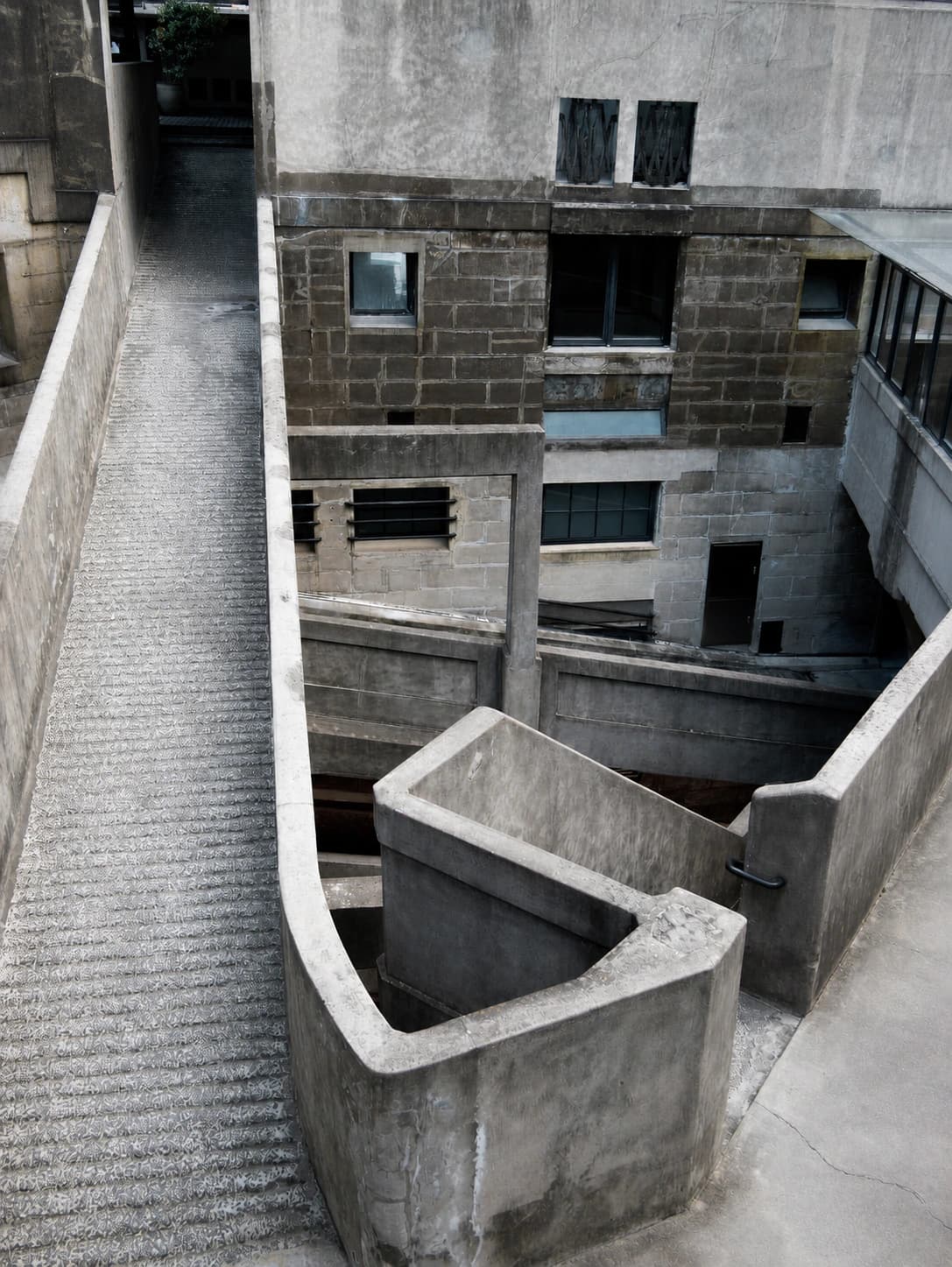
1933 Old Millfun (1933老场坊, 1933 Lǎochǎngfāng) is a former municipal slaughterhouse whose concrete ramps, bridges, columns, and circular inner building now attract architecture fans and portrait photographers. That description also contains the honest verdict: the building is the attraction. Do not come expecting a busy creative park, a museum, or reliable entertainment.
Go or Skip?
Go if concrete geometry, adaptive reuse, or a dark industrial atmosphere is a primary interest. The overlapping bridges and sloping passages are genuinely unusual, and changing levels reveals new compositions every few minutes. Skip it if you want shops, polished exhibitions, child-focused activities, or a cheerful landmark. Recent visitor reports repeatedly describe the building as empty, confusing, and oppressive; those are drawbacks for a casual tourist but part of the appeal for the right photographer.
This is a 45–75 minute route stop, not a half-day destination. If the first 20 minutes leave you cold, there is no hidden must-see attraction deeper inside.
A Route That Explains the Building
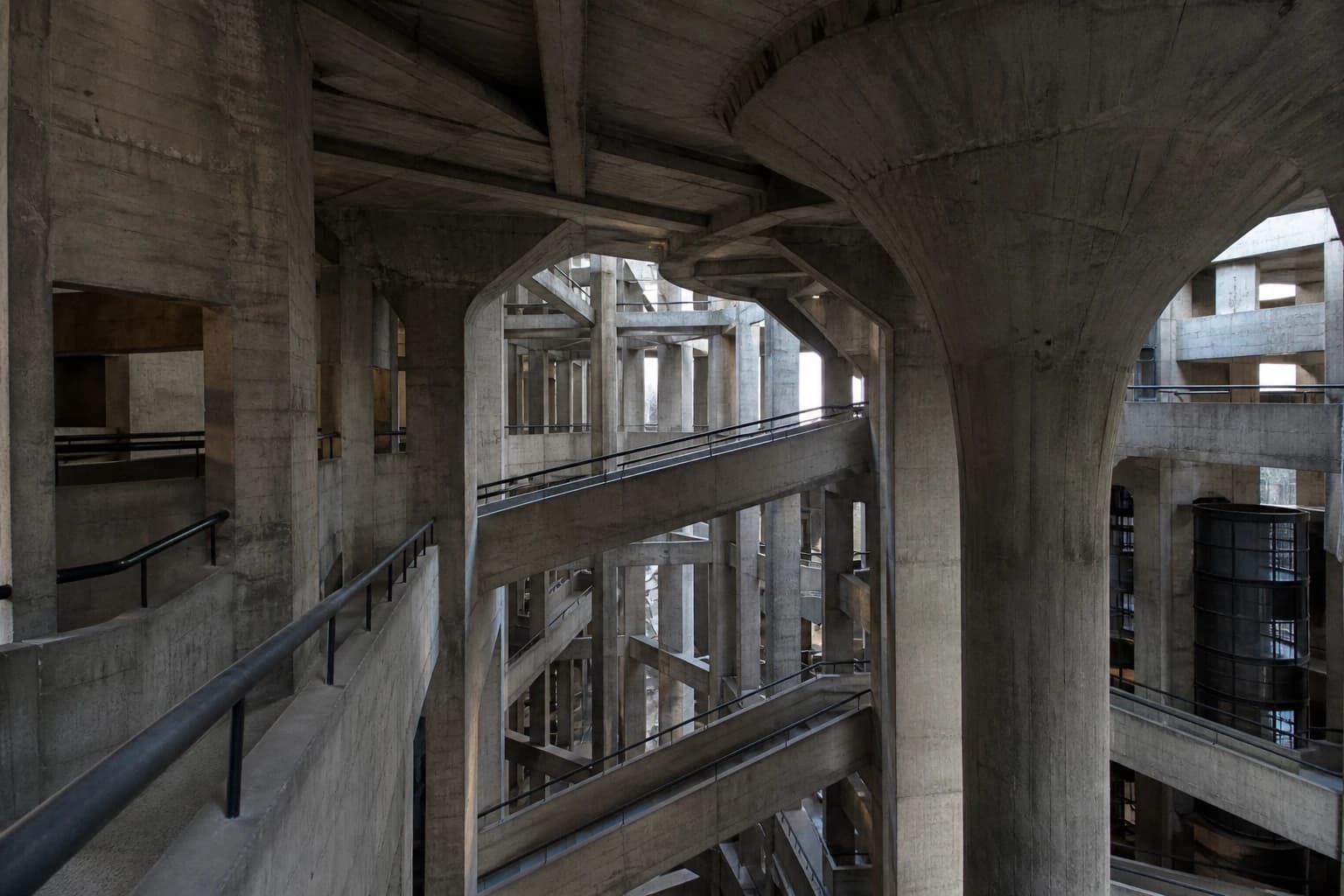
Start at the ground-floor central void. Compare the rectangular outer block with the circular inner structure, then look for the umbrella-shaped columns before climbing. Take one ramp upward, cross the void on a bridge, and return on a different staircase. This simple up-and-across sequence makes the former movement system legible and avoids walking the same dim corridor repeatedly.
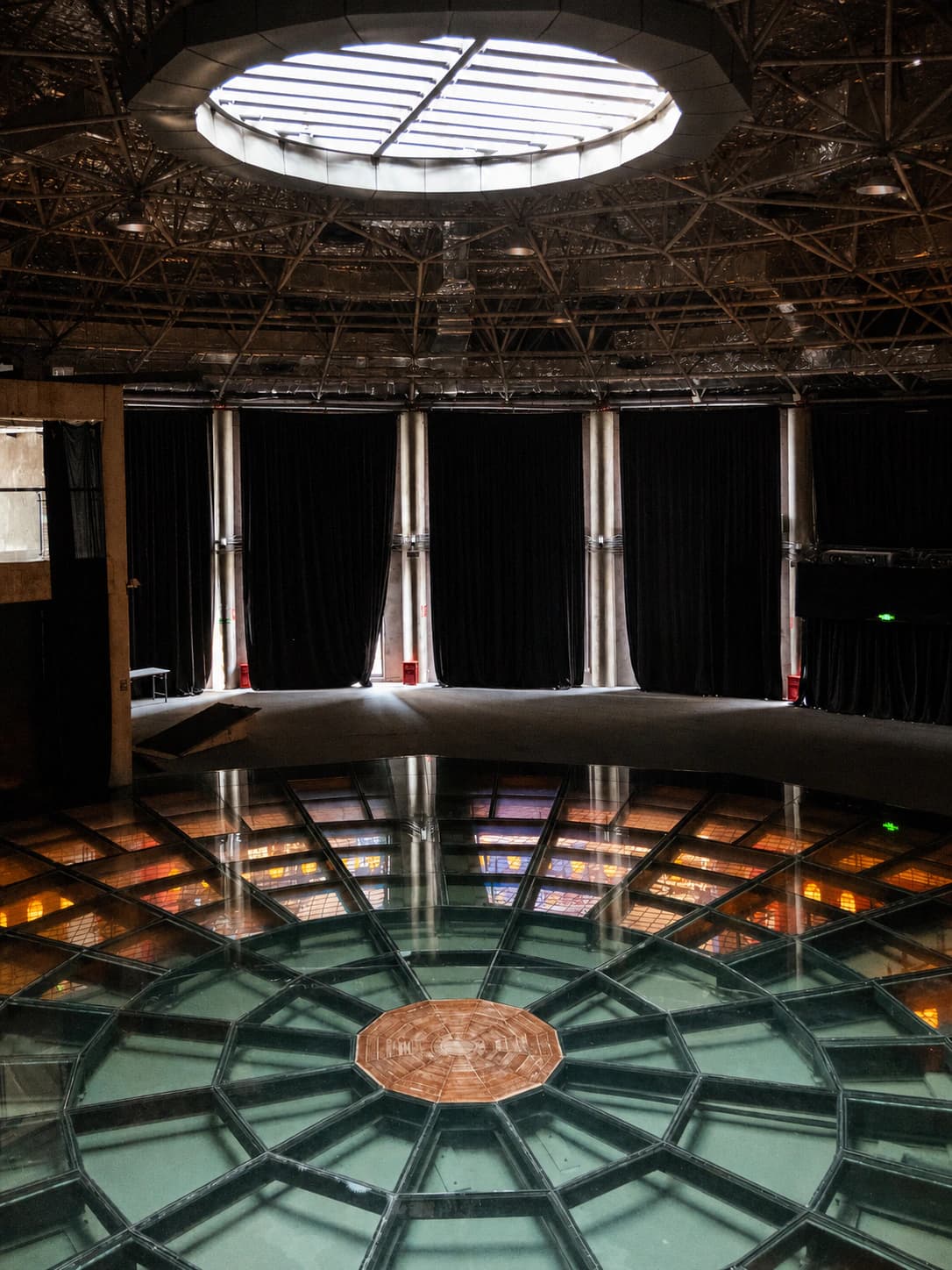
On the upper levels, check whether the circular Air Stage is open. Its skylight and trusses add a dramatic final space, but private events can close it. Treat access as a bonus, not the reason for making the trip.
Photograph Movement, Not Just Concrete
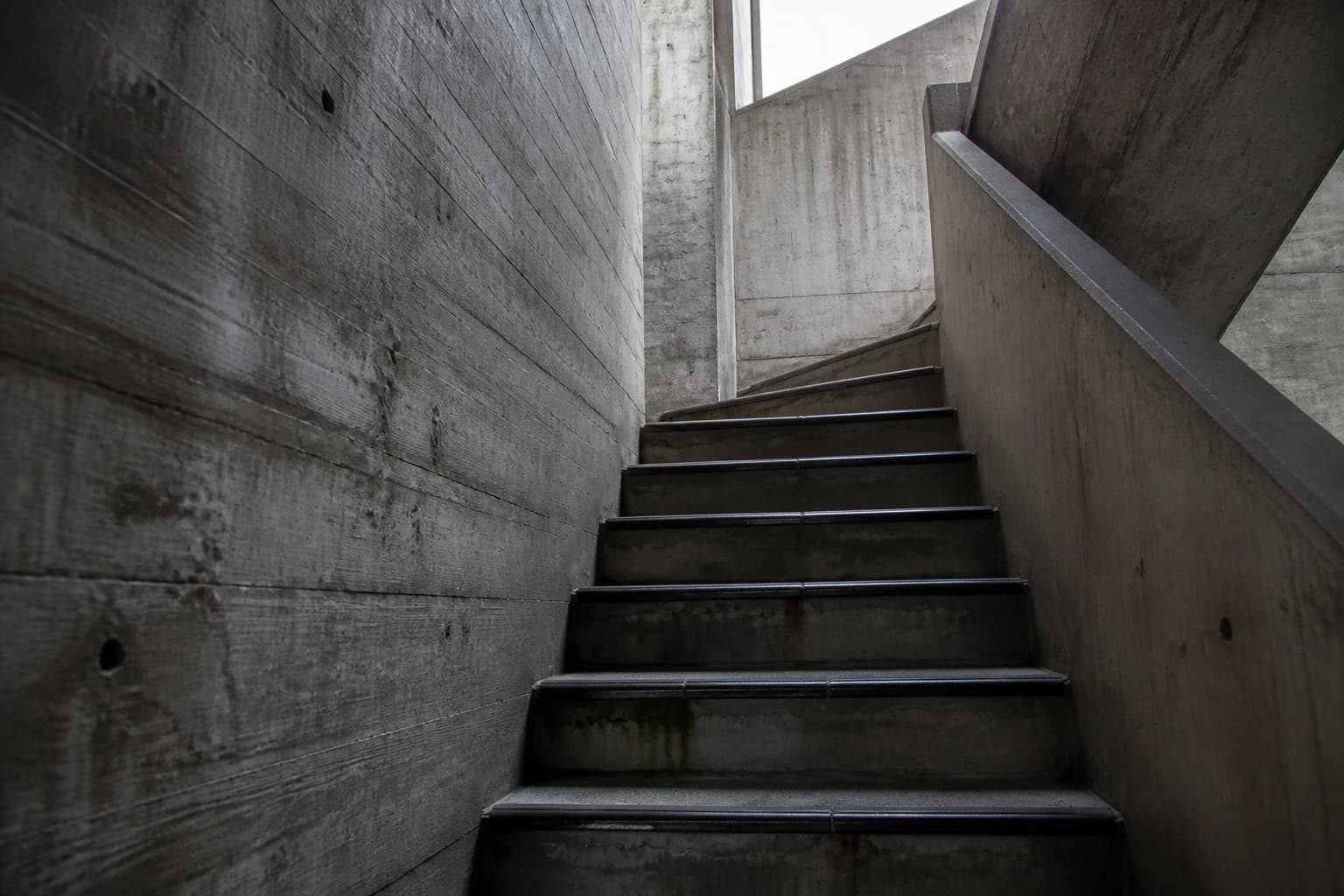
The strongest images explain how the building feels to move through. Use a stair or railing as a foreground line, then let a bridge carry the eye across the void. Photograph a broad ramp and a narrow stair as a pair; their difference reveals more about the former circulation system than an isolated portrait against a gray wall.
Light changes quickly between the open void and enclosed passages. Expose for the concrete near the window rather than trying to brighten every dark corner. In wet or humid weather, ramps and stairs can become slick, and a phone held over a railing is easy to drop. Keep bags close and do not climb barriers for symmetry.
Read the Former Workflow
The confusing circulation is the most revealing part of 1933. The square outer block and circular inner building were separated by a tall void, then connected by bridges and sloping passages so different flows could move through a compact industrial process. Umbrella-shaped columns support broad floor plates, while the open voids and thick concrete help explain the building's cool, dim atmosphere.
Read it in sequence rather than as abstract sculpture: start where the outer and inner forms are easiest to compare, follow one animal ramp upward, cross a bridge, then look for the narrower worker stairs and alternate exits. You do not need a gruesome reconstruction of every operation. The contrast between broad ramps and human-scale escape routes already shows how the architecture separated movement, safety, light, and ventilation. Ignore supernatural stories and precise design statistics unless the site itself documents them.
Light, Access, and Practical Details
A weekday afternoon gives the concrete passages stronger directional light and usually leaves more room for photographs. The best views are across the central void rather than against a single wall. Tripods, lighting, costume shoots, and commercial sessions may require permission.
- Address: 611 Liyang Road, Hongkou District; search 1933老场坊 in Amap.
- Metro: Hailun Road on Lines 4 and 10, followed by roughly a 10-minute walk.
- Admission: General circulation has usually been free, while event rooms and private areas can charge or close.
- Hours: Published hours and tenant schedules vary. Check the current entrance notice before a special evening journey.
- Mobility: Expect stairs, ramps, uneven transitions, and semi-open passages. Ask staff which levels can be reached by lift.
Pair the stop with the North Bund or a Hongkou walk. Do not depend on a café or exhibition inside; changing tenants are the least durable part of the visit.
Eat Outside and Build a Hongkou Half-Day
Plan food outside the complex. The most reliable choices are the ordinary restaurant blocks between Hailun Road and Sichuan North Road, where you can decide by visible menus, table turnover, and the meal you actually want. Do not force an industrial-themed café stop simply because it is inside the building.
For a stronger afternoon, continue to the North Bund for open river views or build a history-focused Hongkou route toward the Shanghai Jewish Refugees Museum. Check the museum's current reservation and closing arrangements before depending on it. These additions give 1933 context: one stop explains industrial circulation, another the district's layered urban history, and the riverfront shows today's redevelopment.
Stay around the North Bund or Hongkou only when several northern-Shanghai sights anchor your itinerary. For most first-time visitors, People's Square or the Bund offers easier citywide access while keeping 1933 a short metro ride away. The building itself is not a reason to choose a hotel nearby.