Yu Garden Shanghai
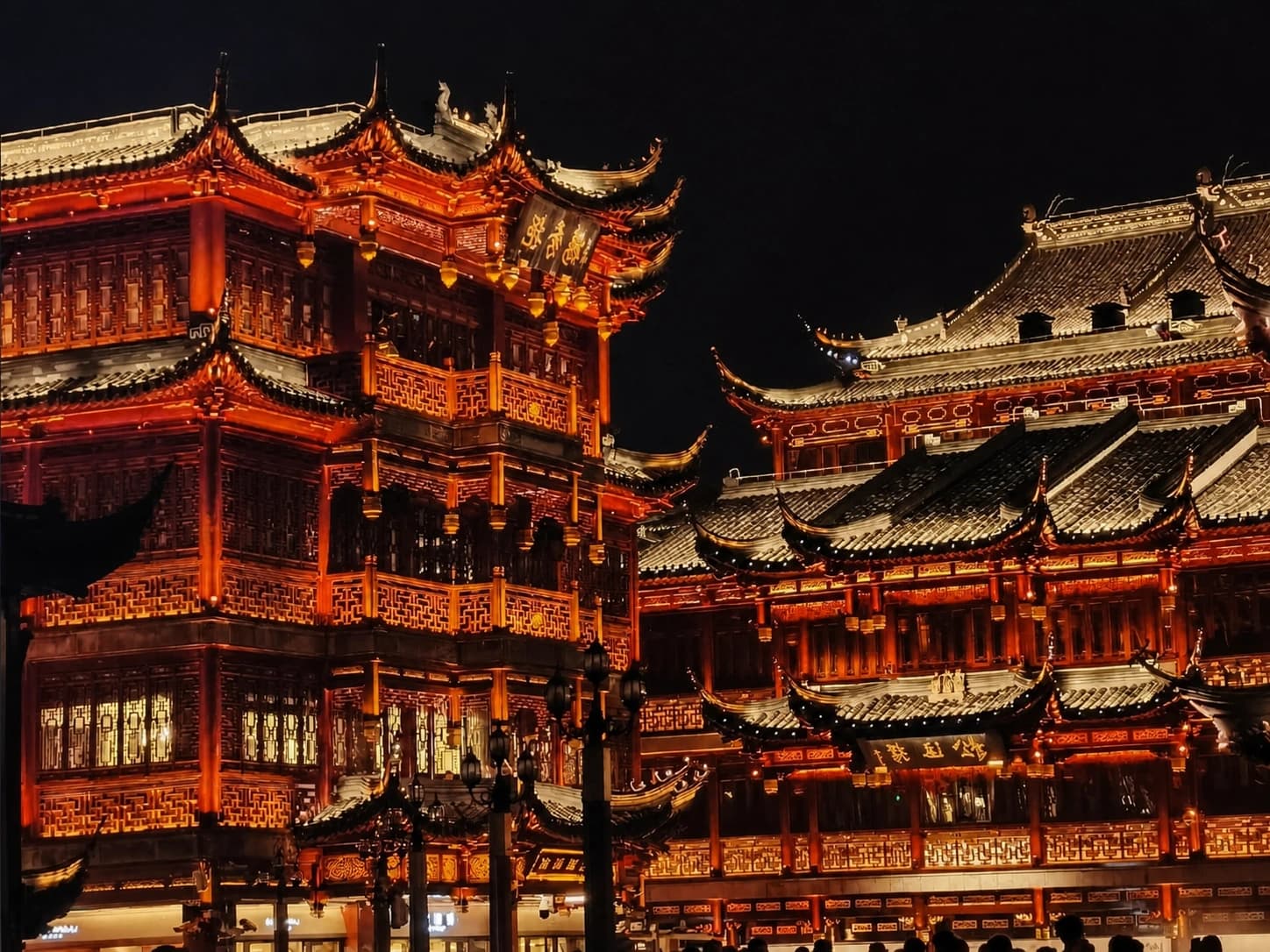
Yu Garden (豫园, Yùyuán) is a ticketed Ming-dynasty private garden hidden inside the much larger Yuyuan commercial precinct. The Nine-Turn Bridge, teahouse, food streets and City God Temple sit outside the garden ticket. This distinction solves the most common arrival problem: follow signs for the Yu Garden entrance, not merely the “Yuyuan Tourist Area.”
Allow 90–120 minutes inside and another hour only if you deliberately want the bazaar or City God Temple.
Choose the gate
- North Gate, 168 Fuyou Road: accepts individual visitors and groups. Use it when approaching from the metro or when you want to start with the older main garden sequence.
- South Gate, 279 Yuyuan Old Street: individual visitors only, near the Nine-Turn Bridge side. Use it when the bazaar is already part of the plan.
Both gates have ticket windows, and the official Shanghai Yu Garden mini-program sells online tickets. International visitors should carry their passport and allow time for manual help if the mini-program does not accept their document or payment method.
A focused garden route
1. Sansui Hall and the Grand Rockery
Begin with the early reception spaces and the large rock composition. Do not rush to climb for one viewpoint. Observe how a wall, doorway or turn hides the next scene; controlled reveal is a core garden technique.
2. Wanhua Chamber and corridors
Move through planted courtyards and covered passages. Compare the shapes of lattice windows and the pictures they frame. Old trees, seasonal flowers and potted plants change the emphasis throughout the year, so a fixed “blossom checklist” is less useful than careful looking.
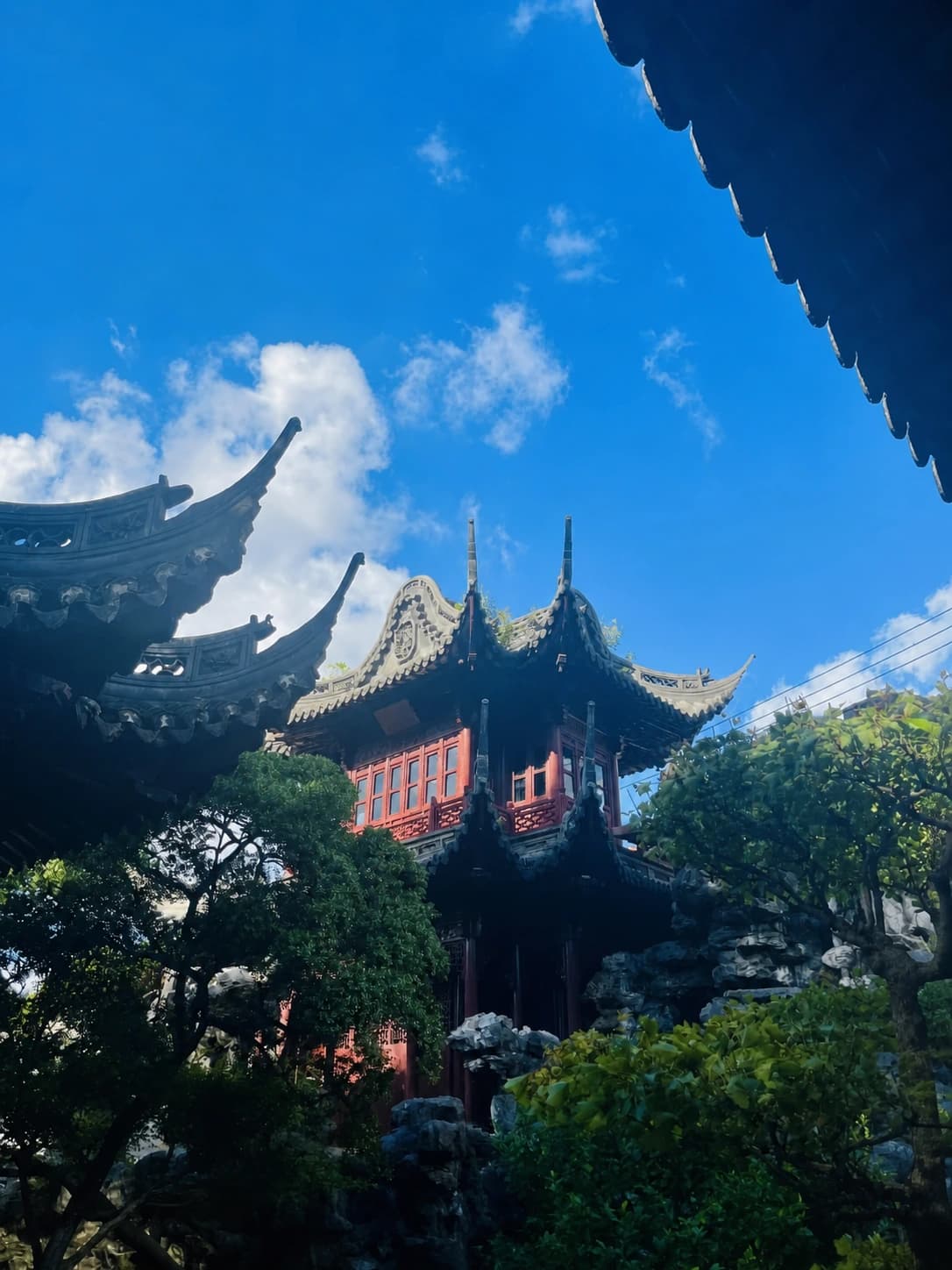
3. Dianchun Hall and historical layers
This area connects the private garden with the Small Sword Society occupation in the nineteenth century. Read the hall as reused political space rather than treating every room as part of one unchanged Ming household.
4. Yulinglong and Yuhua Hall
Slow down around the celebrated porous rock. Shift position to see how openings, water, planting and architecture form several compositions. The point is not only the stone's fame, but how it controls sightlines in a small space.
5. Inner Garden and opera-stage finish
Use the smaller courtyards as the final contrast after the denser main garden. Follow the current signs to the available exit; maintenance and crowd controls can adjust circulation.
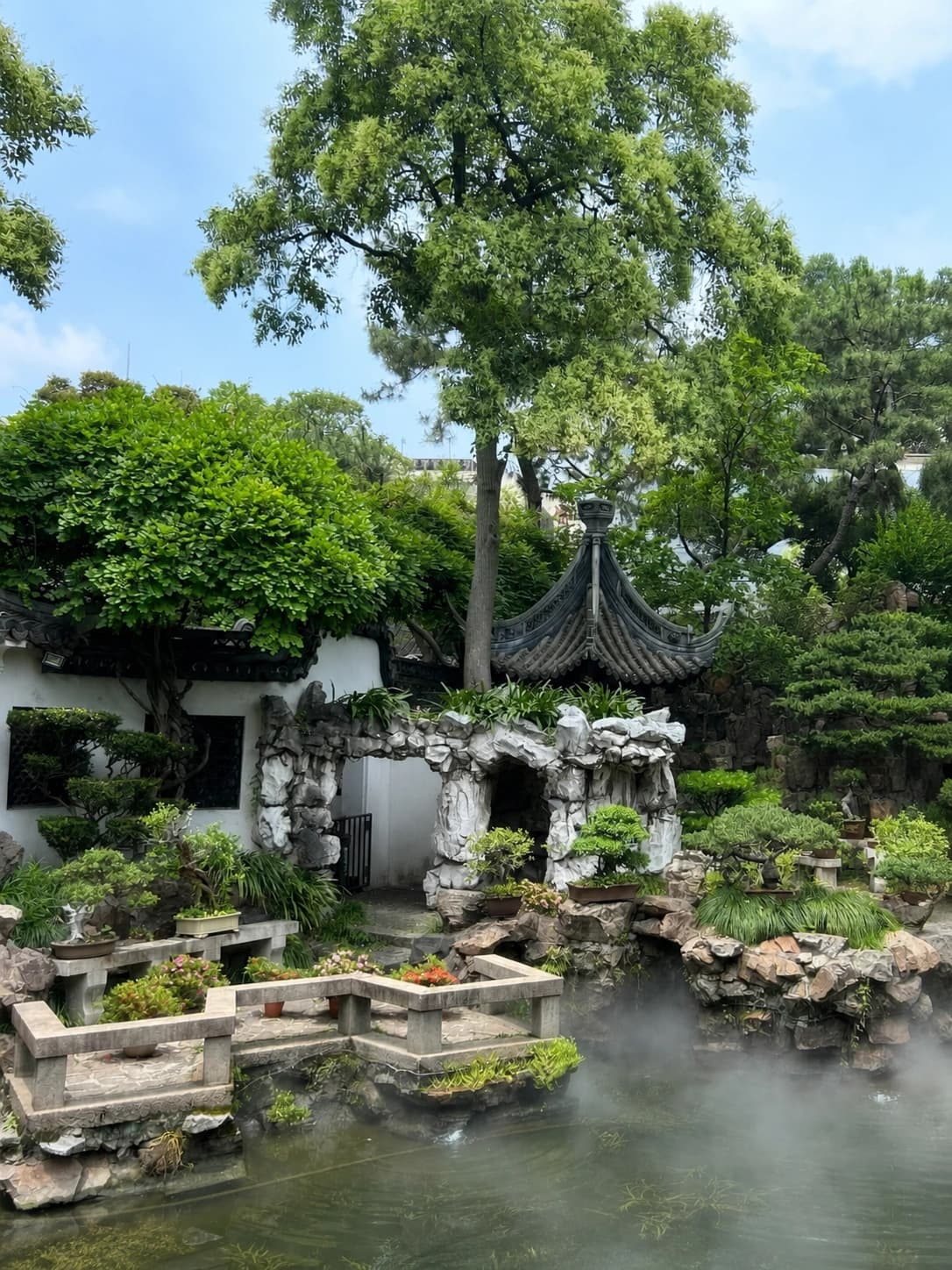
The former third image showed nearly the same pond-and-rockery area as this photograph and was removed rather than appended as another “route/facilities” illustration. Neither remaining image should be used as a navigation map.
Current official hours and admission
The official Yu Garden visitor page currently lists:
- 09:00–16:30, with last entry at 16:00;
- closed Mondays, except national public holidays; Spring Festival uses separate notices;
- ¥40 in peak seasons, April 1–June 30 and September 1–November 30;
- ¥30 in off-seasons, July 1–August 31 and December 1–March 31.
Eligible students aged over 6 through 18, full-time undergraduate-and-below students and visitors aged 60 or above receive half-price admission with accepted proof. Young children and other listed groups may qualify for free admission. Check the official wording for document eligibility instead of assuming a foreign card will be accepted automatically.
When to visit
Enter near opening for quieter corridors and easier wide views. Late afternoon can be atmospheric, but last entry leaves little margin and some rooms may begin closing. Rain deepens the stone and roof colours, while smooth paving and steps require care.
Lantern festivals, flower displays, opera and seasonal activities are dated programs. The commercial precinct's famous lantern event is not proof that the ticketed garden has extended hours or an included performance. Check the official news page for your date.
Crowds, photography and access
- Pause in side courtyards instead of blocking narrow bridges and moon gates.
- Photograph through a frame, then move; the next turn often provides a different composition with fewer people.
- Rockery steps, thresholds and tight corridors make a complete step-free route difficult. Ask staff at the chosen gate for the current accessible circuit.
- Keep food for after the garden. Small paths and historic rooms are better experienced without open drinks or a large takeaway bag.
Metro, food and the next stop
Use Yuyuan Garden Station on Lines 10 and 14, then navigate to your chosen north or south gate. Search the full gate address in Amap; the station is not directly beside the ticket window.
After the garden, choose one layer:
- Religion: City God Temple, keeping its halls separate from the food streets.
- Food: share one or two Old City snacks, comparing queue, portion and price rather than collecting every famous name.
- River: walk toward Shiliupu or a confirmed Jinling East Road ferry service.
- History: continue toward Shanghai Old Street and the surviving city-wall/Dajing Pavilion area.
Avoid adding Nanjing Road, the full Bund, a river crossing and Lujiazui to the same half day. Yu Garden rewards slow observation and the bazaar already adds crowd fatigue.