Regional Cuisines of China
The “Eight Great Cuisines” are a useful map, not a complete taxonomy. China also has major food worlds in the northwest, northeast, Yunnan, Guizhou, Hainan, Xinjiang and among ethnic communities. Travel by meal format and city, not by trying to complete a national checklist.
The eight traditions
| Tradition | Flavor and technique | Representative dishes | Best travel base |
|---|---|---|---|
| Sichuan (川) | layered chile, numbing pepper, pickling, many non-spicy flavors | mapo tofu, twice-cooked pork, fish-fragrant eggplant | Chengdu |
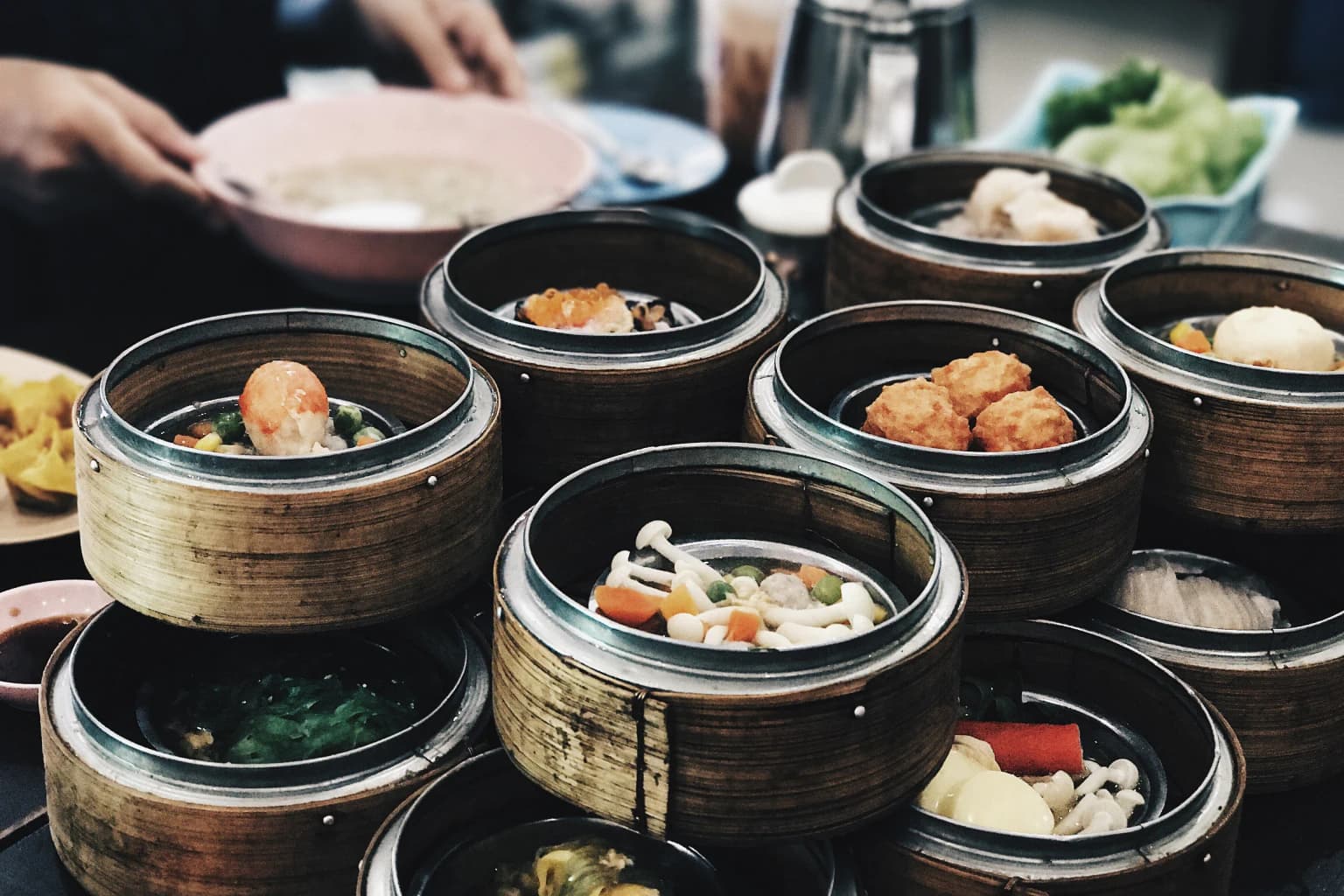
| Cantonese (粤) | freshness, roast meats, steaming, soup, dim sum | har gow, white-cut chicken, roast goose | Guangzhou, Shunde |
| Hunan (湘) | fresh chile, sour-fermented flavors, cured meat | chile-fried pork, steamed fish head, cured-meat platter | Changsha |
| Shandong (鲁) | northern banquet craft, seafood, stocks, scallion | braised sea cucumber, sweet-sour carp, Dezhou chicken | Jinan, Qingdao |
| Jiangsu (苏) | careful knife work, braising, river/lake ingredients | lion's-head meatballs, Nanjing salted duck, dried-tofu threads | Nanjing, Yangzhou, Suzhou |
| Zhejiang (浙) | seasonal, light-fresh profiles and refined small dishes | Longjing shrimp, Dongpo pork, yellow-croaker soup | Hangzhou, Ningbo, Shaoxing |
| Fujian (闽) | seafood, soups, red rice wine lees, sweet-sour balance | Buddha Jumps Over the Wall, oyster omelet, red-wine-lees dishes | Fuzhou, Xiamen, Quanzhou |
| Anhui (徽) | mountain produce, preserved ingredients, slow braises | stinky mandarin fish, hairy tofu, one-pot braise | Huangshan region, Hefei |
No single dish summarizes a cuisine. Sichuan includes delicate soup and vegetable dishes; Cantonese food is not only dim sum; Hunan heat differs from Sichuan's numbing profile.
Essential traditions beyond the eight
Northwest: wheat, lamb and clear structure
Xi'an and Lanzhou use noodles, flatbreads, lamb/mutton and beef in formats suited to solo meals. Try roujiamo, liangpi and paomo in Xi'an; Lanzhou beef noodles are a breakfast or lunch structure, not merely one famous shop.
Xinjiang: grill, pilaf and dairy
Lamb skewers, polo rice, baked naan, laghman noodles and yogurt reflect oasis and pastoral food systems. Confirm portion size: large shared plates are common. Halal travelers should still verify certification and kitchen practice rather than assuming every Xinjiang-branded restaurant is identical.
Northeast: large portions and preservation
Dongbei cooking uses pickled cabbage, potatoes, beans, mushrooms and substantial braises. Harbin adds Russian-influenced bread, sausage and dining-room traditions. Order fewer dishes than the group size suggests; plates are often generous.
Yunnan: altitude, fungi, herbs and sour flavors
Kunming introduces rice noodles, steam-pot chicken and seasonal mushrooms; Dali adds Bai flavors; Xishuangbanna brings Dai herbs, lime and grilled foods. Wild mushrooms require proper identification and cooking—use established kitchens and obey their timer.
Guizhou: sour fermentation and chile
Sour soup fish, fermented chile and rice-based snacks make Guiyang and Qiandongnan distinct from neighboring Sichuan. The region is a strong choice for travelers who want acidity and fermentation, not only heat.
Breakfast is the fastest way into a regional cuisine
Breakfast is cheap, quick and the most local meal of the day, and it changes sharply from city to city. Plan one breakfast per city around the local format:
| City | Local breakfast | How it works |
|---|---|---|
| Wuhan | Hot-dry noodles (热干面), sanxian doupi (三鲜豆皮), mianwo (面窝) | "Guozao" (过早) is eaten on the street from about 06:30. Sesame-paste noodles are tossed, not soupy. |
| Guangzhou | Morning tea: har gow, rice-noodle rolls, boat congee (艇仔粥) | A sit-down meal. See the dim sum guide. |
| Shanghai | The "four heavenly kings": flatbread, fried dough stick, rice ball (粢饭团) and soy milk, plus xiaolongbao and shengjian | Lane-side counters, best before 09:00. Salty soy milk (咸豆浆) is set with vinegar and topped with dried shrimp and seaweed. |
| Nanjing | Duck-blood vermicelli soup (鸭血粉丝汤), beef potstickers, duck-fat sesame cakes | Light soups. |
| Tianjin | Jianbing guozi (煎饼果子), gabacai (锅巴菜) | Street griddles. Locals argue fiercely about fillings, so order the plain classic. |
| Beijing | Steamed buns, douzhi (豆汁) with fried rings, stewed liver (炒肝) | Douzhi is fermented mung-bean juice and an acquired taste. Order a small one only if curious. |
| Xi'an | Meatball pepper soup (胡辣汤), roujiamo, zenggao | See the Xi'an food guide for the breakfast lanes. |
| Chongqing | Xiaomian (小面), wanza noodles (豌杂面) | Spicy noodles from 06:30. Ask for 微辣 or 不辣. |
| Chengdu | Dan dan noodles, red-oil wontons, sweet-water noodles | See the Chengdu food guide. |
| Changsha | Rice noodles (米粉) with a chosen topping, sugar-oil rice cakes | Pick the topping (码子) at the counter. |
| Guiyang | Changwang noodles (肠旺面), beef rice noodles, sticky rice | Blood tofu, crisp pork bits and red oil. Strongly flavored. |
| Kunming | Small-pot rice noodles (小锅米线), cross-bridge noodles | Cooked to order in small copper pots. |
| Lanzhou | Beef noodles (牛肉面) | Choose the noodle thickness, from 毛细 (very thin) to 大宽 (wide). Morning is the classic time. |
| Fuzhou / Xiamen | Dingbianhu (锅边糊), shacha noodles (沙茶面), peanut soup | Seafood-based soups in Fuzhou; satay-like shacha broth and sweet peanut soup in Xiamen. |
| Shenyang | Hand-pulled noodles, chicken racks (鸡架), hanging-oven flatbread | Hearty, closer to a full meal. |
| Hong Kong | Pineapple bun with butter (菠萝油), Hong Kong French toast, milk tea | Cha chaan teng counters. Cash or Octopus is still useful. |
Old-style breakfast places. Most do the following:
- Opening hours: open by 06:30 and slow down after 09:30.
- Ordering: you pay at the counter first and collect from the window.
- Cost: ¥8–20 covers a full breakfast almost everywhere on the mainland.
Choose by appetite
- Clear and ingredient-forward: Cantonese, Zhejiang, Jiangsu.
- Chile without numbing emphasis: Hunan or Guizhou.
- Numbing and aromatic complexity: Sichuan or Chongqing.
- Noodles and lamb: Xi'an, Lanzhou or Xinjiang.
- Mushrooms, herbs and sourness: Yunnan.
- Big shared braises: Northeast.
The China food city chooser turns these preferences into a realistic route.
Avoid the checklist trap
Choose one breakfast, one specialist lunch and one shared dinner per city. A market or pedestrian street is useful for comparison, but the best regional understanding often comes from ordinary neighborhood restaurants with short menus and visible turnover. Branch quality and seasonal ingredients change; prefer a current menu over a permanent “best restaurant” claim.
Dietary reality
Vegetables may be cooked with lard or meat stock, and “vegetarian” menus can use egg or dairy. Halal, allergy and vegan travelers should show a precise bilingual card and verify the kitchen. The vegetarian and vegan guide explains hidden ingredients and temple dining.
Final rule
Use cuisines to understand place, technique and ingredients—not to award a national winner. Two coherent meals in the right city teach more than ten famous dishes ordered in one tourist street.