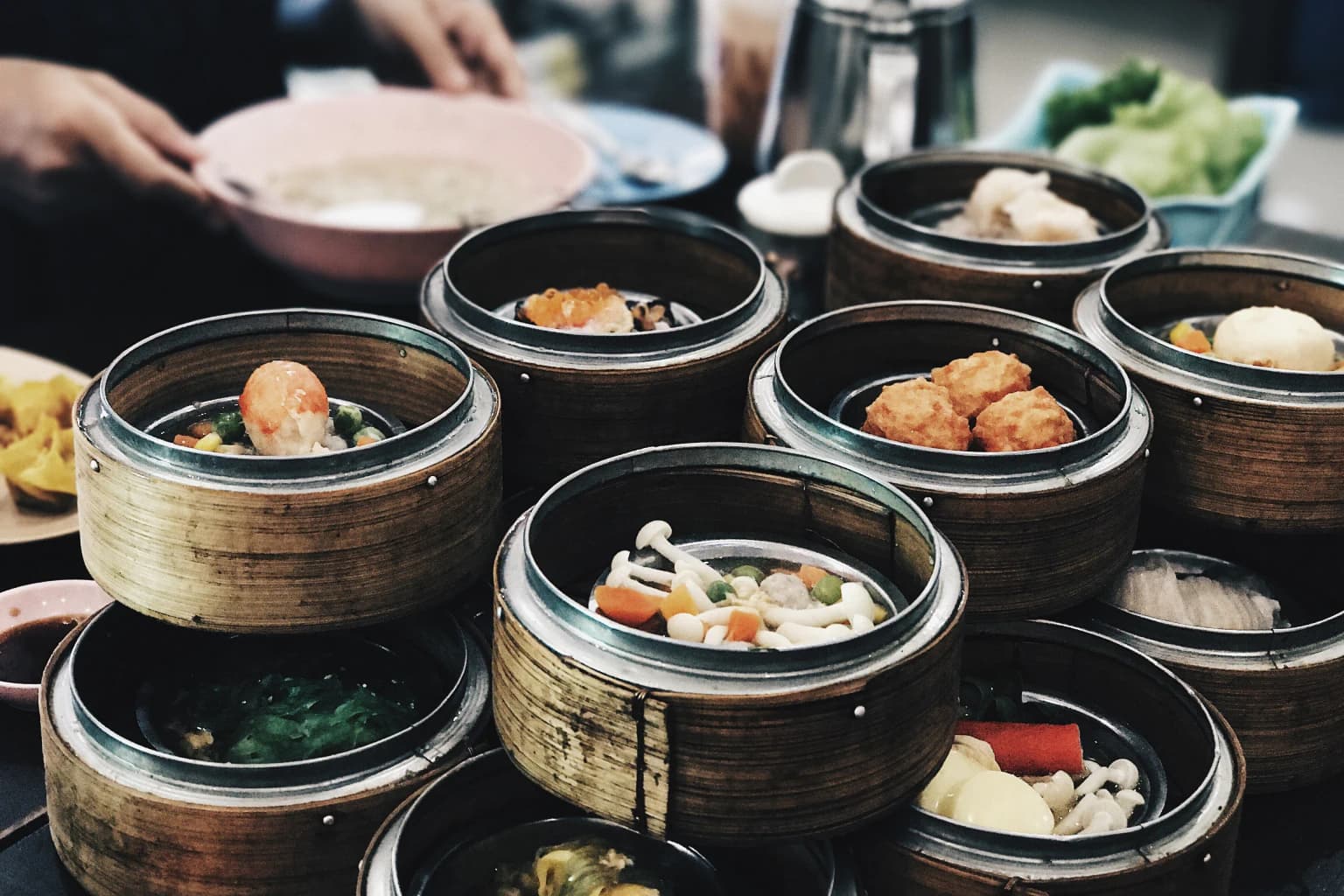
Dim Sum and Cantonese Morning Tea
Yum cha (饮茶, drinking tea) is a shared meal built around tea and small dishes. In Guangzhou, many tea houses group dishes into price bands such as small, medium, large, special or premium. The menu symbol or stamp—not the visual size of the basket—determines the price.
What happens when you sit down
Choose a tea first. A per-person tea charge (茶位费) is normal and hot water refills are usually available. Pu'er, jasmine, tieguanyin and chrysanthemum–pu'er are approachable choices. Some diners rinse bowls and chopsticks with tea or hot water, but this is a custom, not a substitute for restaurant hygiene.
Ordering may use a paper card, tablet or QR code. Traditional trolley service exists but is not universal. Ask whether the kitchen is still serving dim sum: an all-day restaurant may stop specific items after the morning or lunch period.
A balanced first order
For two people, begin with four or five dishes, not one of everything:
- one steamed dumpling: har gow (虾饺) or siu mai (烧卖);
- one rice-noodle roll: cheung fun (肠粉) with shrimp, beef or plain filling;
- one braised/steamed dish: black-bean ribs or chicken feet if desired;
- one crisp item: turnip cake, taro dumpling or spring roll;
- one sweet or staple: custard bun, egg tart or congee.
This balances steamed, crisp, soft and sweet textures. Add later if still hungry. Small baskets accumulate quickly, and premium seafood creations can cost far more than classic dishes.
Read the classics
- 虾饺 har gow: translucent shrimp dumpling; eat hot before the wrapper dries.
- 干蒸烧卖 siu mai: open pork-and-shrimp dumpling; confirm ingredients if avoiding pork.
- 肠粉 cheung fun: soft rice sheet with soy sauce; fillings vary.
- 豉汁蒸排骨: pork ribs steamed with black bean.
- 凤爪: braised chicken feet, valued for skin and sauce rather than meat volume.
- 萝卜糕: pan-fried turnip/radish cake; often contains dried shrimp or pork.
- 叉烧包: steamed barbecue-pork bun.
- 流沙包: molten salted-egg custard bun; open carefully because it can burn.
Vegetarian-looking dumplings and cakes may contain lard, dried shrimp, oyster sauce or stock. Ask directly.
Guangzhou, Hong Kong and elsewhere
Guangzhou morning tea often rewards an early, unhurried table and may have broad price categories. Hong Kong has everything from neighborhood tea houses to refined hotel dim sum; table charge, service charge and booking norms vary. Foshan and Shunde connect dim sum to a wider Cantonese food trip.
Do not cross a city for one viral branch without checking today's queue and service hours. Community reports show that even famous brands and branches can vary in freshness; freshly steamed food and visible table turnover matter more than a permanent ranking.
Where to go: a working shortlist
Guangzhou
The Guangzhou food guide compares the main teahouses by setting and spend.
- Classic garden or old-brand teahouses: Panxi, Lian Xiang Lou and Tao Tao Ju usually cost ¥60–100 a head.
- Hotel dim sum with a river view: expect several times that.
- Neighborhood teahouses: ¥40–60 a head. Some cut dim sum prices in the afternoon.
Hong Kong
Old trolley teahouses still exist, but they are crowded, mostly cash or Octopus only, and you will usually share a table.
| Teahouse | Area | What it is like |
|---|---|---|
| Luk On Kui (六安居) | Sheung Wan | Old-style trolley hall with shared tables. Tea can come in a lidded cup (more fragrant, but hot to handle) or a pot. Good for egg tarts, sesame cake and duck-feet rolls. |
| London Restaurant (倫敦大酒樓) | Mong Kok | Trolleys and fresh rice rolls on the second floor, with shared tables. The third floor gives you your own table for about HK$1 more tea charge per person, but you walk downstairs for many items. Weekday prices are lower. |
| Sun Hing (新興食家) | Kennedy Town | Opens around 03:00 and closes mid-afternoon. Small, scruffy and very good value. Expect a queue and table sharing. |
| Chung's Kitchen (鐘廚) | 8/F, 1 Peking Road, Tsim Sha Tsui | Harbour-view room with discounted dim sum at HK$7–9 a plate in set windows. See the note below this table. |
| Victoria Harbour Restaurant (海港酒家) | Several branches | Comfortable, spacious and family-friendly, though the cooking is safe rather than exciting. |
Chung's Kitchen discount windows. In mid-2026 the discount ran 10:00–15:30 on weekdays and 10:00–12:00 on weekends and holidays. Tables are limited to 90 minutes. Take a queue number in the GULU app or from the door kiosk.
Hong Kong practicalities.
- Payment: carry cash or a loaded Octopus card for the old teahouses.
- Sharing tables: when staff seat you with strangers (搭枱), it is normal and not rude.
- Queue numbers: these can be skipped if you are not present when called. Some systems make you re-register once five or more numbers have passed you.
Etiquette without anxiety
Share dishes with serving chopsticks when provided. Refill another person's tea before your own; a light two-finger tap on the table is a common thank-you gesture. Do not worry about performing every custom perfectly. Order respectfully, keep the meal moving and ask before photographing other diners or working carts.
Cost and queue checks
- Ask about tea charge, service charge and minimum spend.
- Note the price band beside each dish.
- Confirm “market price” seafood before ordering.
- Weekends around 09:00–11:00 can be busiest; earlier or after the main rush is calmer.
- Some dishes sell out; order the priority items first.
Useful phrases
- 请给我们一壶普洱。 — Please give us one pot of pu'er.
- 这个点心是什么价位? — What price category is this dim sum?
- 这里面有猪肉/虾吗? — Does this contain pork/shrimp?
- 先点这些,不够再加。 — We will start with these and add more if needed.
Final rule
Start with tea and four contrasting dishes. A good yum-cha meal is a long shared breakfast, not a race to collect every famous dumpling.