China in February
February belongs to Spring Festival. In 2027, Lunar New Year's Eve falls on 5 February, Lunar New Year's Day on 6 February and the Lantern Festival on 20 February. During this time you'll see temple fairs, flower markets, lion dances, lantern shows and family banquets that you won't see in any other month. You'll also be traveling alongside the year's largest movement of people. Booking-sensitive destinations can cost two or three times their normal price, and some small family restaurants close for a week.
The month rewards a clear choice. Either build your trip around the festival in one or two well-chosen bases, or travel after the Lantern Festival when prices fall back and the weather in the south begins to turn.
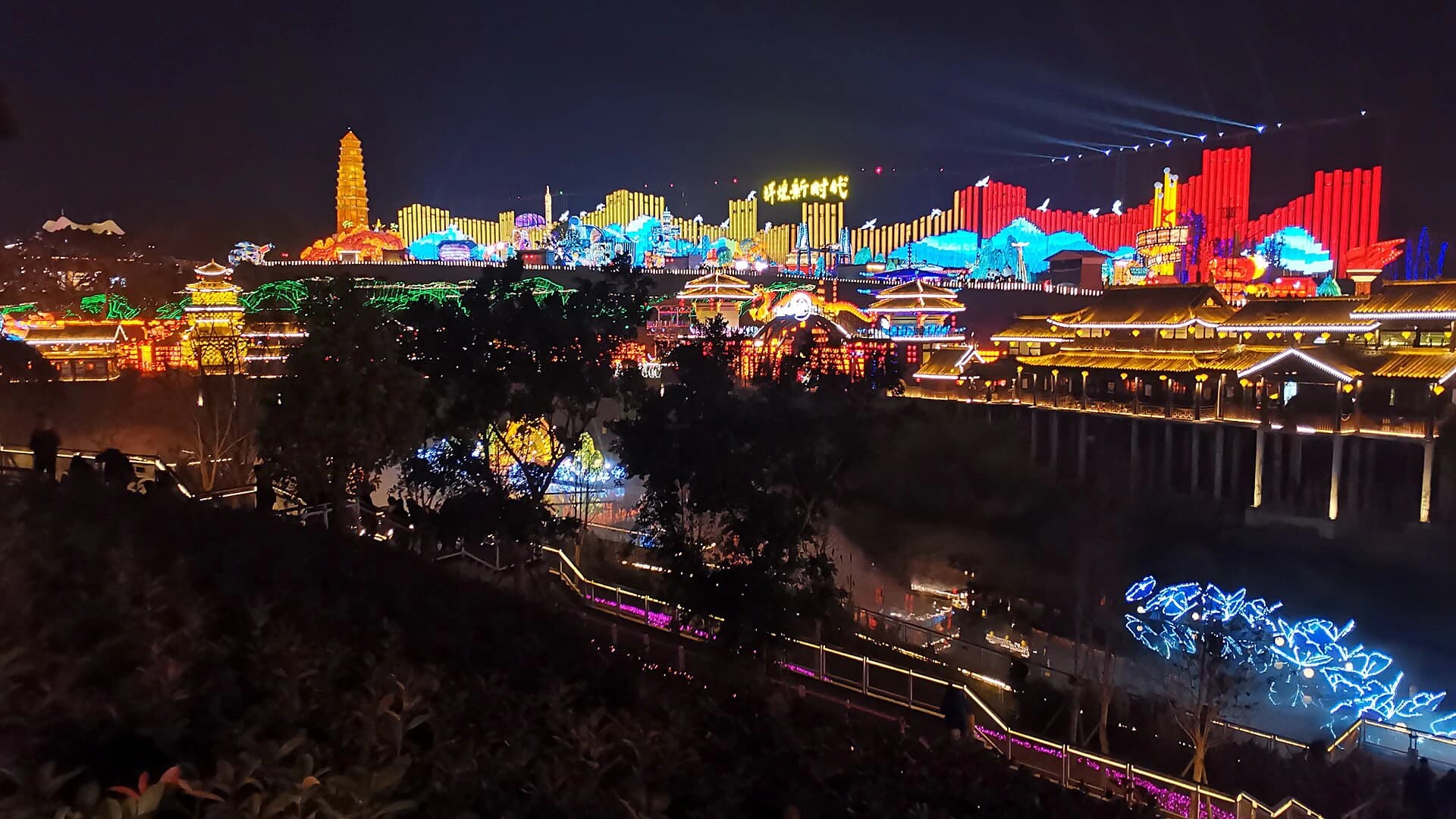
Photo: PermanentM · Source · CC BY-SA 4.0
February weather by city
| City | Avg high | Avg low | Rain | Wet days |
|---|---|---|---|---|
| Beijing | 6 °C (44 °F) | -4 °C (24 °F) | 6 mm | 2 |
| Xi'an | 9 °C (49 °F) | -1 °C (30 °F) | 13 mm | 5 |
| Shanghai | 11 °C (51 °F) | 4 °C (39 °F) | 65 mm | 10 |
| Chengdu | 13 °C (55 °F) | 6 °C (42 °F) | 12 mm | 8 |
| Guangzhou | 20 °C (68 °F) | 12 °C (54 °F) | 56 mm | 9 |
| Kunming | 18 °C (65 °F) | 6 °C (42 °F) | 12 mm | 4 |
| Harbin | -6 °C (21 °F) | -18 °C (0 °F) | 4 mm | 4 |
| Lhasa | 10 °C (51 °F) | -4 °C (24 °F) | 2 mm | 1 |
- Harbin and the northeast: Still deep winter, with highs around −6 °C, but daylight grows quickly through the month.
- Beijing and Xi'an: Cold, dry and often sunny, with bare trees and very little snow.
- Shanghai: Grey and damp at 4–11 °C, with about ten wet days. Indoor cold is the main discomfort.
- Guangzhou: Late February often brings huinantian (回南天), "return-south weather". Warm, wet air condenses on cold walls and floors, so indoor surfaces drip and floors turn slippery. It passes in a few days.
- Kunming: Dry and bright at 19 °C, one of the best climates in China this month.
- Lhasa: Sunny and dry. Tibetan New Year (Losar) often falls close to the Han Chinese New Year, and permit availability around it can change, so check with your Tibet agency.
How Spring Festival changes travel
| Period (2027) | What happens | What to do |
|---|---|---|
| About two weeks before 6 Feb | The rail and air rush builds as workers and students go home | Book long-distance trains on release day, 15 days ahead |
| 5 Feb, New Year's Eve | Shops close early; families eat at home or in booked banquet rooms | Reserve dinner or eat at your hotel; enjoy the empty trains and streets |
| 6–8 Feb, the first days | Temple fairs, lion dances, crowded famous sights; many neighborhood restaurants shut | Pre-book timed sites; plan meals in malls, hotels and tourist areas |
| About 11–14 Feb | The return wave; trains back to big cities sell out | Avoid intercity moves on the last two or three days of the official break |
| 20 Feb, Lantern Festival | Lantern displays and riddles; the festival season formally ends | A good evening layer in cities that run lantern events |
The official 2027 mainland break, including adjusted working weekends and the rail rush dates, is normally announced in November. Watch the public holidays page and the detailed Chinese New Year 2027 travel guide.
Where prices jump, and where they don't
In 2026, one traveler compared several thousand hotels across 300-plus cities, Spring Festival rates against ordinary weeks. The steepest rises were in the warm south and in cultural cities popular for family trips. Rates commonly doubled in Chaozhou and Shantou, Quanzhou and Fuzhou, Xishuangbanna, Hong Kong, Macau and Sanya. Cities in Jiangxi and southern Anhui, such as Huangshan and Jingdezhen, were also in high demand. In big northern cities and the northwest, prices stayed moderate.
This makes Beijing, Xi'an, Harbin and the Gansu–Qinghai circuit relative bargains over the festival. In winter 2025–26, most of the northwest's major sights stayed open, including Mogao, the Crescent Lake dunes, Jiayuguan, the Zhangye Danxia and Qinghai Lake. A few seasonal extras were the exception, such as the Chaka salt-lake train.
Where to go in February
Beijing: temple fairs and a lived-in festival
Beijing turns its parks into temple fairs (庙会) for the first days of the new year, with snacks, folk performers and crowds. The Forbidden City, Temple of Heaven and Lama Temple are busy but run normally. Reserve timed tickets as soon as they open, seven days ahead for the Palace Museum. Lama Temple sees a huge crowd of worshippers on the first morning of the new year.
Zigong: China's lantern capital
Zigong in Sichuan stages the country's best-known lantern festival, with giant illuminated installations. It traditionally runs from before Spring Festival into March. It is an easy two-day side trip from Chengdu or Chongqing by high-speed train, and the Zigong 2-day itinerary pairs the lanterns with the dinosaur and salt museums. Each edition announces its own dates and ticket system, so confirm the current one before booking.
Harbin: late-season ice
Harbin's ice park and snow sculptures continue into February. Warm spells can shorten the season, so plan any Harbin trip for the first half of the month. Early February is also the best time for five-star rime in Jilin City.
Dunhuang and the Silk Road: empty deserts
The northwest's off-season makes Dunhuang quiet, with few visitors at Mogao and sunsets over the Crescent Lake dunes. Days are near freezing and nights well below, but the skies are usually clear. Book Mogao only through the Dunhuang Academy's official channel.
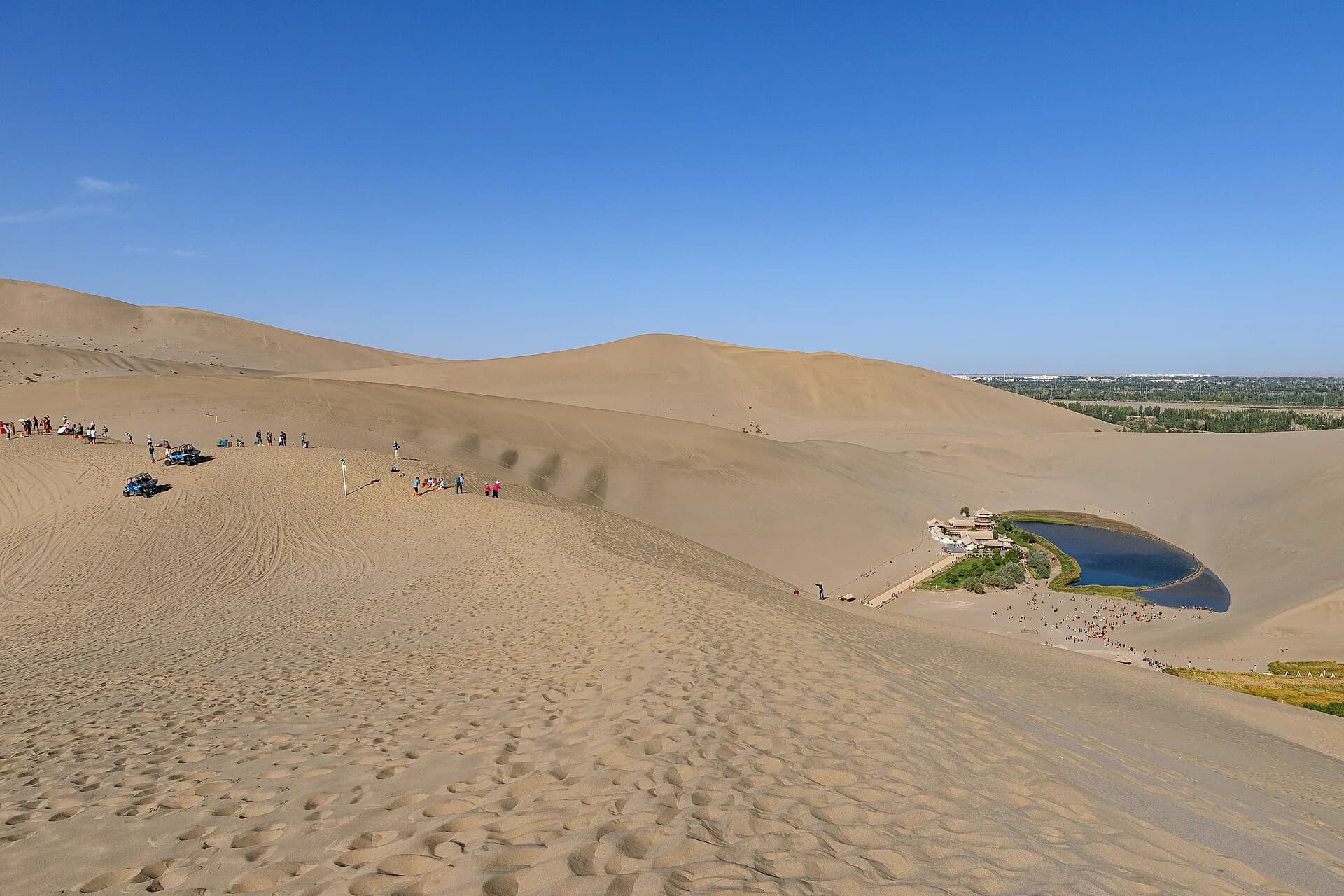
Photo: N509FZ · Source · CC BY-SA 4.0
Guangzhou and Hong Kong: flower markets and parades
In the last three days before New Year's Eve, Guangzhou holds its Lunar New Year flower markets (年宵花市), where families buy kumquat trees, peach blossom and orchids. In Hong Kong, the Chinese New Year night parade and harbor fireworks are the festival highlights. Hotel rates and crowds peak around them, so book well ahead.
Xishuangbanna and Sanya: warm, but book early
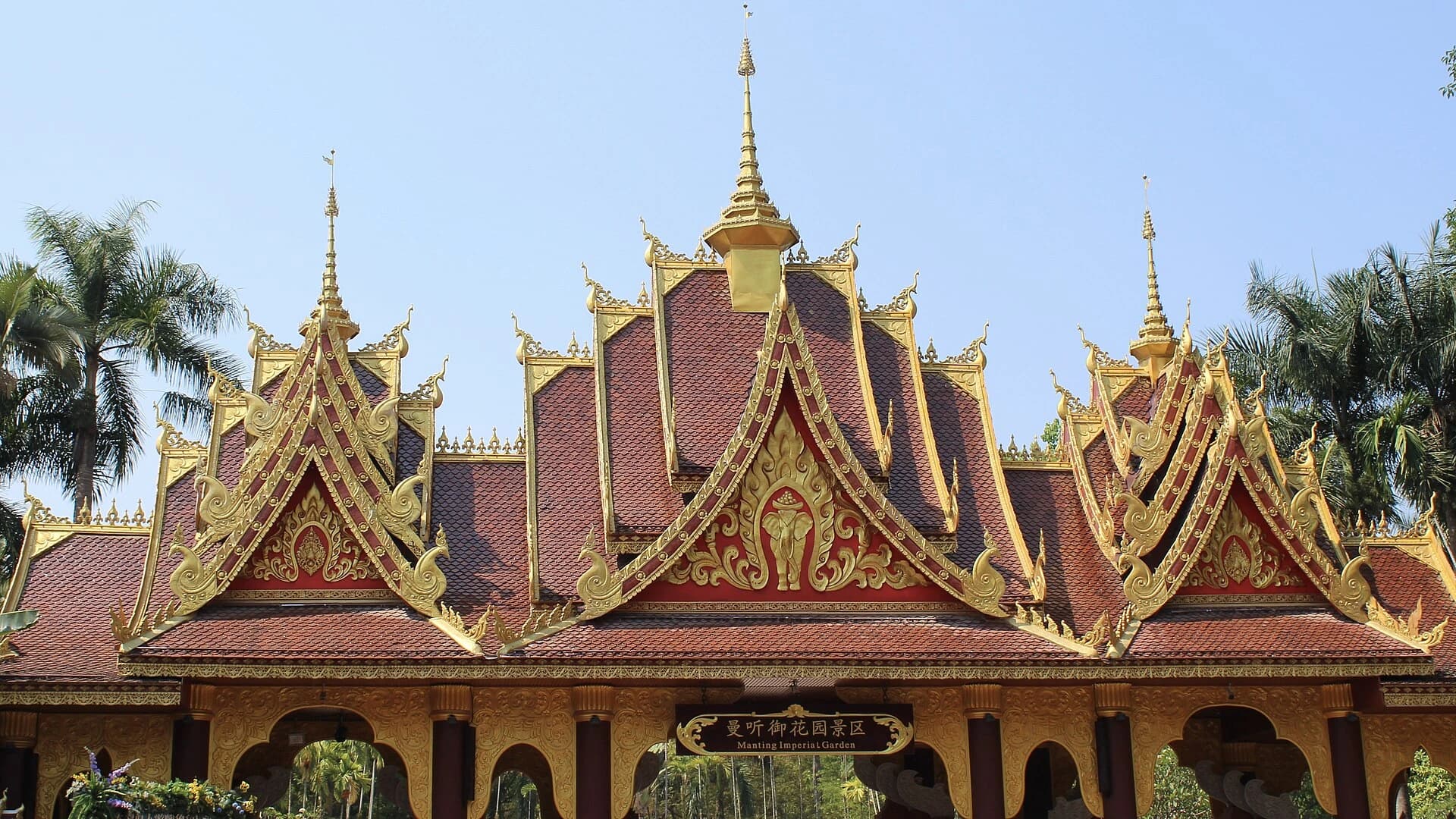
Tropical Xishuangbanna and Sanya are at their sunniest, but they are also the most expensive destinations of the festival. After the Lantern Festival, prices fall back sharply and the weather is still warm.
In season in February
| What | Where | When | How to do it |
|---|---|---|---|
| Plum blossom | Plum Blossom Hill on Purple Mountain, Nanjing; Lingfeng and Chaoshan, Hangzhou; East Lake Plum Garden, Wuhan | Mid-February to mid-March, depending on cold snaps | Go on a weekday morning. A late snow on open plum flowers is the local photographers' dream |
| Lantern displays | Zigong; the Xi'an City Wall; the Qinhuai lantern fair in Nanjing | Through the Lantern Festival (20 February 2027) | Visit after 21:00 on a weekday, when family crowds have gone home |
| Canola in bloom | Luoping, eastern Yunnan | Late February to mid-March | The Jinjifeng (金鸡峰丛) karst viewpoint is best at sunrise. Pair it with Kunming |
| Festival food | Everywhere | New Year's Eve to the Lantern Festival | Dumplings at midnight in the north, sticky rice cake (年糕) for a "higher" year, and sweet tangyuan on Lantern night. Hotels sell reunion-dinner set menus to travelers |
The classic route around Spring Festival
| Stop | February conditions | What to change |
|---|---|---|
| Beijing and the Great Wall | Temple fairs and heavy holiday visits to the palaces; still cold and dry | Book the Palace Museum at 20:00 seven days ahead. It normally closes on Mondays but opens on holiday Mondays |
| Xi'an | In 2026, the Terracotta Army, city wall, Huaqing Palace and Tang Paradise opened every day from New Year's Eve through the seventh day. Museums that close one weekday each week, such as the Shaanxi History Museum on Mondays, open on public holidays | Book the Shaanxi History Museum as early as possible. The city wall's lanterns are the evening highlight |
| Shanghai, Suzhou and Hangzhou | In smaller Jiangnan cities, most Chinese restaurants close from the afternoon of New Year's Eve. Travelers have repeatedly found only fast-food chains and hotel restaurants open that night | Book a hotel reunion dinner, carry snacks for the first two days, and plan meals around big malls, which reopen first |
| Chengdu pandas | Holiday crowds at the South Gate, under the winter timetable (entry from 08:00) | Book as soon as the 14-day window allows, and use the West Gate: bus 409 from Junqu Zongyiyuan station on Metro Line 3 |
| Guilin and Yangshuo | Still the dry season, with holiday crowds on Yangshuo's West Street | Book Li River tickets before you arrive; raft operations stay limited by low water |
| Zhangjiajie | A holiday surge on top of winter fog and ice | Reserve Tianmen Mountain cable car slots and park entry several days ahead in the 张家界一机游 (Zhangjiajie Yijiyou) mini-program |
Seasonal hours, closures and prices
- New Year's Eve and New Year's Day: Many sights close early or open late on these two days. Recheck each one the day before.
- Chengdu panda base: Winter hours (entry from 08:00) last until 28 February. The 07:30 start returns on 1 March.
- Huangshan: Winter admission of ¥150 lasts until the end of February.
- Jiuzhaigou: Low season until 31 March; see the January guide for prices.
- Northwest extras: In winter 2025–26, the main Gansu and Qinghai sights stayed open, but seasonal extras such as the Chaka salt-lake train did not run.
- Tibet: Ask your agency how permits will work around Tibetan New Year. The rules have changed from year to year.
Booking and practical advice
- Move on the quiet days. New Year's Eve afternoon and New Year's Day itself are usually the calmest travel days of the festival, because everyone is already home.
- Avoid the last days of the break. The return wave fills trains out of hometowns and back into the big cities.
- Confirm opening on New Year's Eve and Day. Many attractions shorten their hours on those two days. Check each one a day before.
- Plan meals deliberately. Book a New Year's Eve dinner (hotels and big restaurants sell set menus), and keep a list of mall food courts for the first three days.
- Carry some cash. Red-envelope culture is everywhere, and some small vendors at temple fairs prefer cash.
- Expect fireworks. They are banned in central Beijing, Shanghai and many other city centers but allowed in suburbs and smaller towns, where midnight can sound like a battle.
Two February routes
Eight days around the festival: Beijing 4 nights (temple fairs, palaces, the Great Wall) → Xi'an 4 nights, for the Terracotta Army and the city wall lantern displays. Two big northern cities with moderate prices and few transfers.
Nine days after the Lantern Festival: Guangzhou 3 nights → Xiamen 3 → Quanzhou 3, starting after 20 February 2027 once the south's prices drop and the spring warmth arrives. See the Fujian heritage 9-day route.