A Black Myth: Wukong route through Shanxi
Shanxi is the strongest place to turn an interest in Black Myth: Wukong into a real journey, but the useful trip is not a race through every online “location” list. The province is large, many sites are active religious places or protected monuments, and the relationship between a real building and the game is often described too loosely.
A first route should make Datong the northern base, choose Hunyuan and Yingxian as separate road decisions, use Taiyuan as the transport hinge, and add Foguang Temple and Shuanglin Temple only when the trip reaches seven or eight days. This route is for a player following the game's cultural sources for the first time. For a period-, structure- and conservation-led journey, use the Shanxi ancient architecture route instead.
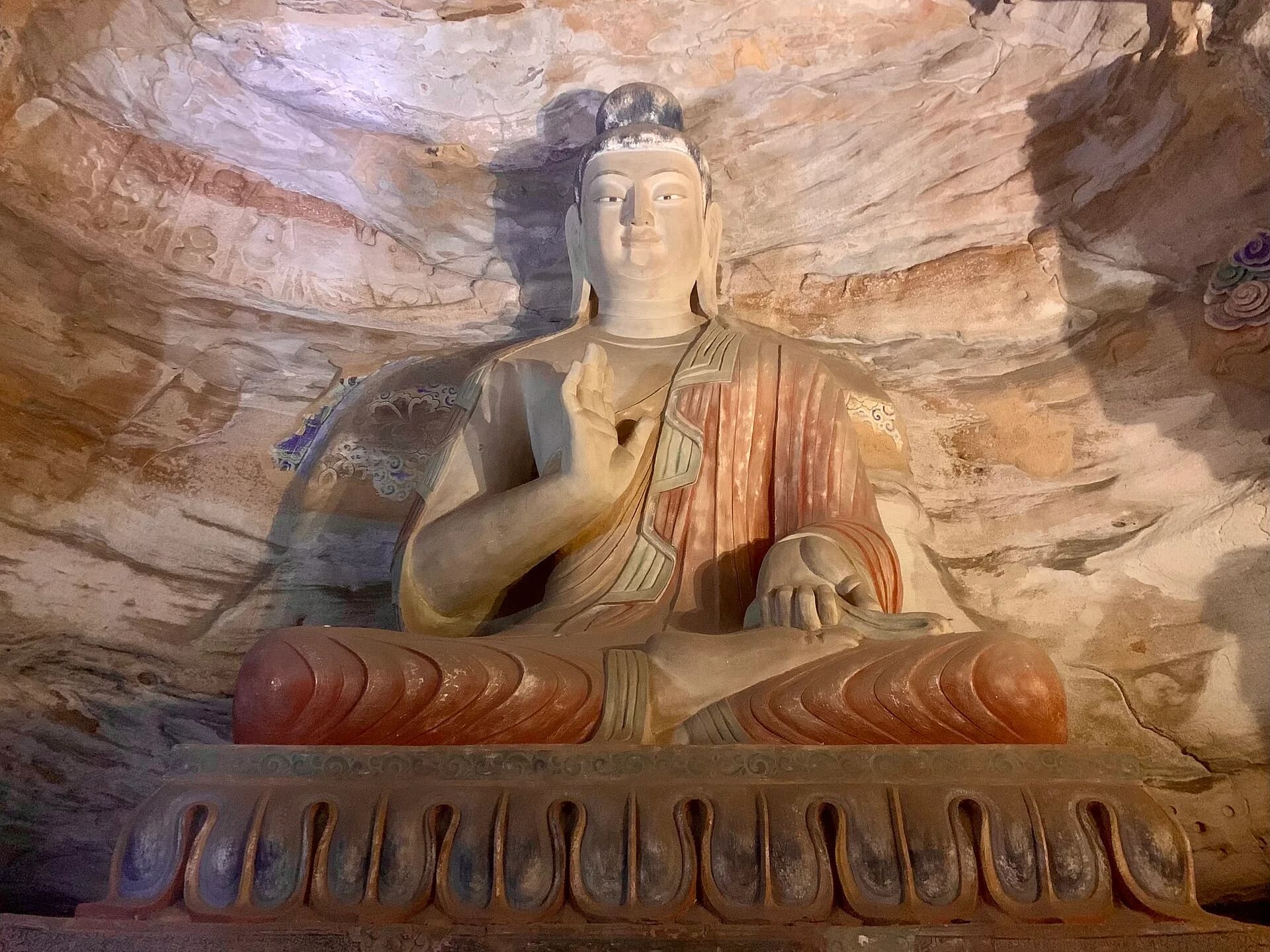
Yungang belongs to Shanxi's officially promoted game-linked route, while the caves remain a much older religious and artistic landscape with conservation rules of their own. Photograph by Dudva, CC0 1.0.
Know what “location” means before you travel
Use four evidence levels rather than calling everything an official filming site.
| Label | What it proves | Examples and limits |
|---|---|---|
| Documented scan | A reliable source says the production captured the real site to build digital assets | A Ministry of Culture and Tourism think-tank brief names Shanxi's Fucheng Yuhuang Temple and Chongfu Temple among sites scanned. This does not mean every visible game scene is a complete digital copy of either place. |
| Documented manual reconstruction | A reliable source says artists reconstructed a site or its details where direct scanning was difficult | The same brief says Iron Buddha Temple was manually recreated. It is a stronger relationship than visual resemblance, but still not a promise that every surviving figure appears unchanged in the game. |
| Officially promoted game-linked stop | Shanxi's culture and tourism authority included the real site in its route connecting game elements with the province | Yungang, Shanhua, Hanging Temple, Yingxian Wooden Pagoda, Foguang Temple and Shuanglin Temple all appear in that route. Inclusion does not by itself reveal whether the team scanned the whole site, one object, one texture or only drew on it as a reference. |
| Player resemblance or route context | A place looks familiar to players or helps the trip work | Huayan Temple, Pingyao's streets, Jinci and Shanxi Museum can deepen the journey without being claimed here as direct production locations. |
The Ministry brief is unusually precise about scanning and manual reconstruction. The 2024 Shanxi culture-and-tourism route is broader: it connects “real locations of Shanxi elements” across an eight-day drive. Treat it as evidence of official route curation, not as a current opening calendar or a production log for every stop.
This distinction changes how you look. At a documented scan, compare a specific figure, surface or structural form only when a reliable source identifies it. At an officially promoted stop, look for wider visual language—cave composition, cliff architecture, timber massing, bracket forms or dense sculptural groups—without inventing a one-to-one scene match.
Choose five, seven or eight days
| Time | Route shape | Hotel changes | What you gain | What you cut |
|---|---|---|---|---|
| 5 days / 4 nights | Datong 3 nights → Taiyuan 1 | 1 | Yungang, Shanhua, Hunyuan and Yingxian with separate road days | Foguang, Taihuai and Pingyao |
| 7 days / 6 nights | Datong 3 → Wutai County 1 → Taiyuan 1 → Pingyao 1 | 3 | Adds Foguang and Shuanglin without a brutal Taiyuan return drive | Central Wutai Mountain temple day |
| 8 days / 7 nights | Datong 3 → Wutai County 1 → Taihuai 1 → Taiyuan 1 → Pingyao 1 | 4 | Separates Foguang's architecture from Wutai's sacred landscape | Southern Shanxi and Jincheng still remain another trip |
Open-jaw travel helps: arrive in Datong and leave from Taiyuan, Pingyao or a larger onward rail hub. Reversing the route works, but preserve the same number of nights and do not make the first day a long flight, a train and a county temple.
Five days: the northern first chase
Day 1 — arrive in Datong and learn the labels
Stay inside or just outside the old-city core. After dropping luggage, begin at Shanhua Temple, which appears on the official game-linked route. Use the exact Shanhua AMap pin.
Give it 60–90 minutes rather than photographing one roof. Read the gate-to-hall sequence, courtyard spacing, roof profiles and bracket work. Ask what fabric is old, repaired or presented later. Follow each hall's photography sign; an active religious or protected interior is not a game set.
Walk onward to Huayan Temple only if energy and current admission allow. Huayan is valuable context for Liao–Jin architecture and sculpture, but this guide does not promote it as a confirmed production location. That honesty makes the visit more useful: compare it with Shanhua as real architecture rather than searching every doorway for an unverified screenshot.
Day 2 — Yungang as the anchor
Reserve Yungang Grottoes before assigning the rest of the day. The current official baseline opens reservations in advance and provides a passport route for international visitors, but same-day cave access can change for conservation. Use the Yungang AMap pin.
Allow at least three focused hours after entry plus transport and identity checks. AMap's current planning model puts Yungang roughly half an hour by car from Datong's old-city core before live traffic. This is not an old-city add-on.
Choose one of two crowd strategies only after checking official hours: the first official slot and early priority for congested open caves, or a late reverse-flow visit while extended summer hours are explicitly active. Read the same-day open-cave notice. A saved post cannot reopen a conserved cave.
Check the exact Yungang listing on Trip.com as a commercial comparison, then let official timed admission, passport matching and conservation notices control. Keep the evening empty or use a short old-city walk. Dense cave art is more rewarding with interpretation than with a second major ticket.
Day 3 — Hunyuan and the Hanging Temple decision
The Hanging Temple has two legitimate products: the exterior composition and the narrow, capacity-controlled climb. Decide which one you are buying before leaving Datong. The general scenic-area entry does not automatically include climb inventory.
Current 2026 official rules cap climb tickets and divide inventory between online and staffed channels. Passport holders have a staffed process when face recognition is not available, but a window is not a guarantee that tickets remain. Check the authorized overseas product on Trip.com, carry the original passport, and compare general admission with the climb component.
Use the exact Hanging Temple AMap pin. The exterior is the better choice for vertigo, limited mobility, severe weather or a queue that would consume the day. The climb adds tight circulation, exposed steps and close structural experience. It does not replace the full silhouette from below.
Do not add a full Mount Heng ascent by default. The visitor centre, Hanging Temple and mountain junction are different nodes; shuttle, cableway, walking route and final return all have separate cutoffs. If the climb queue expands, cut Mount Heng first.
Day 4 — Yingxian, then Taiyuan
Give Yingxian Wooden Pagoda its own outward block. Visitors cannot climb the pagoda under current conservation rules. The point is to read its full timber mass, roof rhythm and bracket relationships from the ground, then use the accessible first-floor interpretation if open.
Use the Wooden Pagoda AMap pin. Allow 60–90 minutes for a focused visit. Add nearby Jingtusi, about 400 metres away, only after confirming public access.
A private vehicle can link Hanging Temple and Yingxian in one day: fresh AMap planning gives about 56.4 km / 53 minutes by car between the pins. That number proves physical proximity, not a comfortable itinerary. A scarce climb ticket, queue, lunch and interpretation can erase the saving. The five-day plan keeps them separate.
Continue to Taiyuan after Yingxian only with a booked vehicle or a verified station transfer. “Yingxian” and “Yingxian West” are different stations with different onward connections. Keep luggage in the vehicle or a confirmed staffed facility; do not assume a monument ticket desk stores suitcases.
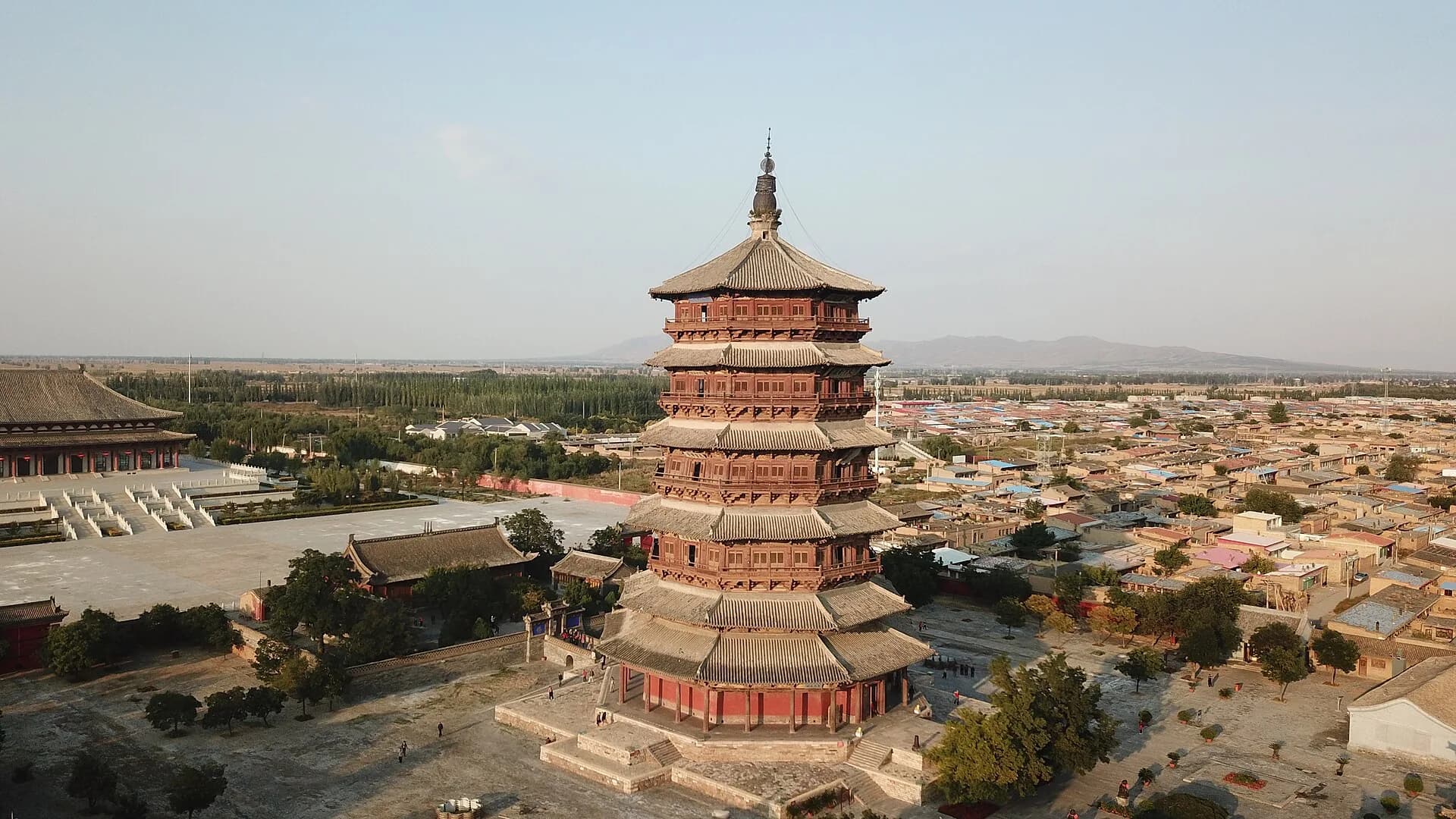
Photo: Charlie fong · Source · CC BY-SA 4.0
The ground-level visit is the current public experience; this elevated view does not imply that visitors can climb the pagoda or reach the photographer's position. Photograph by Charlie fong, CC BY-SA 4.0.
Day 5 — Taiyuan context and departure
Shanxi Museum can organize what you have seen into a province-wide chronology. It appears in the official tourism route, but this guide uses it as interpretation rather than claiming the museum itself as a scanned game environment. Check the live gallery list and reservation before building the day around it.
Choose Jinci instead when water, timber halls and sculpture matter more than a broad museum. Jinci is a context stop here, not a claimed game location. Check the exact Jinci product on Trip.com, then verify live historic-core access, passport handling and included sites.
Do not add Pingyao as a two-hour detour before departure. The five-day route ends in Taiyuan because another hotel change would give you an address, not an experience.
Seven days: add Foguang and Shuanglin
Keep Days 1–3 in Datong. The longer route changes Day 4 into a one-way move and protects two additional official game-linked stops.
Day 4 — Yingxian to Wutai County
Visit Yingxian early, then transfer to a hotel in Wutai County, not the central Wutai Mountain temple cluster. Fresh AMap planning gives about 148.6 km / 2 hours 50 minutes by car from the pagoda to the county bus-station anchor. That is a transfer day with one monument, not an invitation to add another temple.
Agree on the driver, legal pickup, luggage, tolls, waiting and final hotel before departure. Mapped transit exists, but a route result does not establish today's bus or rail departure, through-ticket or final connection. Arrive before dark and protect the next morning.
Day 5 — Foguang Temple, then Taiyuan
Foguang Temple is an officially promoted game-linked stop and one of the route's strongest architecture encounters. The East Main Hall deserves near-and-far looking: first read its place on raised ground, then the roof silhouette, large bracket sets, timber surface and the relation between the frame and permitted interior view.
The Foguang AMap pin is about 32.0 km / 39 minutes by car from the Wutai County bus-station anchor in the current model. County reporting has described a dedicated heritage line, but a launch notice is not today's timetable. Confirm the exact stop and last return or keep a licensed driver.
Allow one to two hours on site. Do not combine Nanchan Temple merely because it shares the county name. After Foguang, continue to Taiyuan; a fresh road plan from Shanxi Museum to Foguang is about 168.6 km / 2 hours 12 minutes one way, which explains why a Wutai County overnight is more humane than a return day trip.
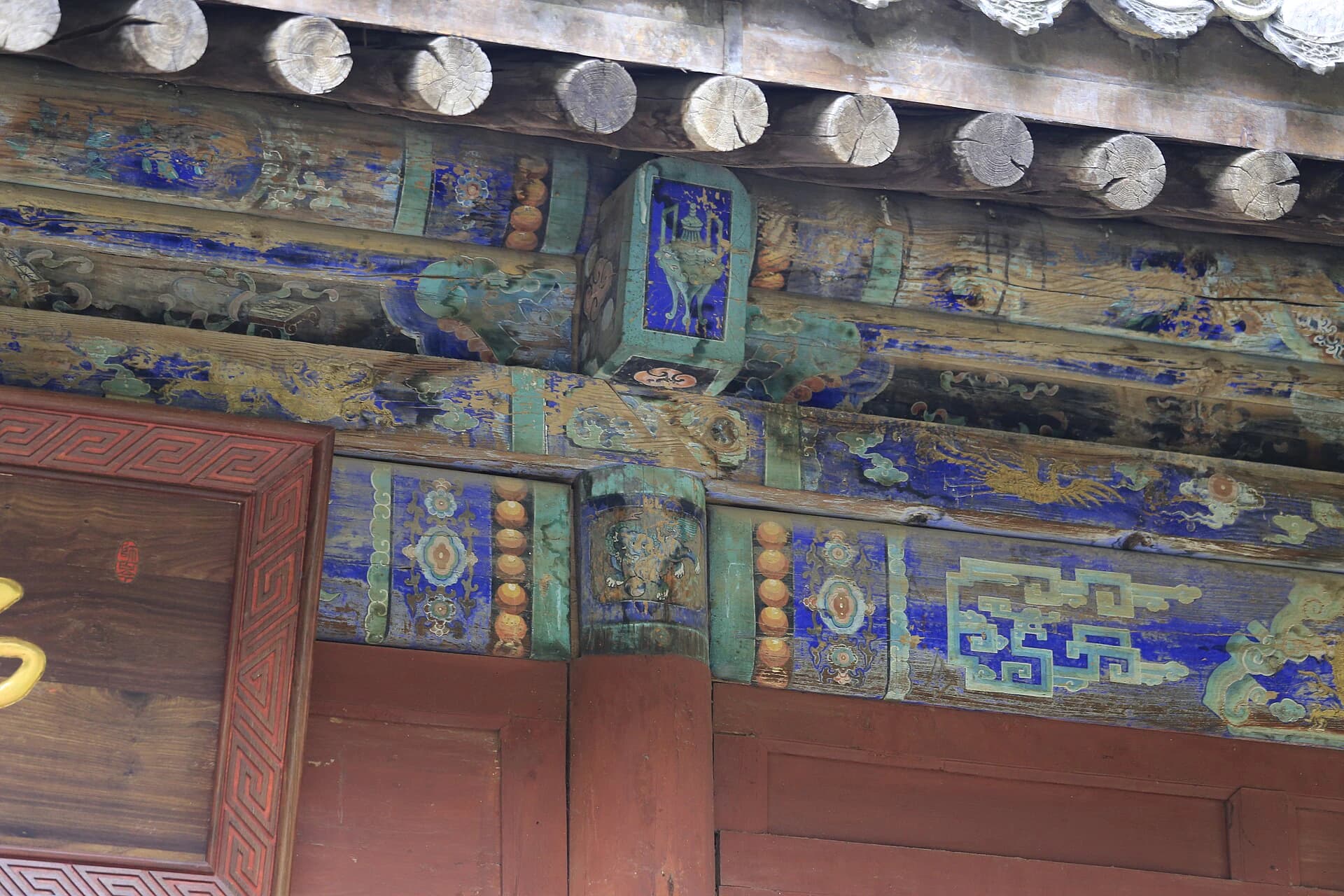
Photo: Zhangzhugang · Source · CC BY-SA 3.0
Look closely at material, bracket form and surviving painted surface, while letting current barriers and photography signs control the visit. Photograph by Zhangzhugang, CC BY-SA 3.0.
Day 6 — Taiyuan to Pingyao
Use the morning for Shanxi Museum or Jinci, then take a live-verified train to Pingyao. Store luggage before entering the walled city. Pingyao Ancient City is route geometry and historical context; this guide does not pretend every wall or courtyard has a documented game relationship.
The public street network and the paid monument product are separate. Use the afternoon for one financial-history spine, one city-wall or government-office choice and ordinary lanes. Do not scan every included ticket gate just because a product lasts several days.
Day 7 — Shuanglin Temple and departure
Shuanglin Temple belongs to the officially promoted game-linked route and rewards slow study of painted sculptural groups. It is outside the wall and uses a separate ticket. The Shuanglin AMap pin is about 8.5 km / 20 minutes by car from the broad ancient-city pin in current planning. The 6.2 km mapped walk takes about 1 hour 24 minutes before heat, traffic or on-site standing, so it is not the default.
Current conservation work partially closes the Thousand Buddha Hall through a published period ending in September 2028. Confirm which halls and sculptures are visible, the separate ticket and the foreign-passport process before going. Conservation screens are not obstacles to photograph around.
Leave a rail buffer. A six-kilometre straight-line impression does not include finding a car, luggage collection, old-city vehicle limits or station security.
Eight days: give Wutai Mountain a religious day
The eight-day version follows the seven-day structure but does not drive from Foguang directly to Taiyuan on Day 5.
Day 5: visit Foguang, then continue to Taihuai. AMap gives about 51.4 km / 1 hour 4 minutes by car from Foguang to Tayuan Temple before mountain controls. Sleep inside or near the permitted central base only after confirming how your vehicle and hotel interact with the current gate.
Day 6: use the Wutai guide for a restrained Taihuai circuit: Tayuan Temple, Xiantong Temple and Pusa Ding, then one optional uphill finish if weather and legs allow. This is a sacred Buddhist landscape, not another sequence of game assets. Worshippers have priority. Do not pose in front of rituals, imitate combat, touch offerings, block a doorway or assume interior photography.
Current scenic notices control vehicle bookings, road restrictions and outer-peak routes. A July 2026 notice prohibited walking to the outer peaks; old five-terrace hiking itineraries do not override it. The site is high and exposed. Wind, rain, snow and cold can change steps and roads outside the season you expected.
Continue to Taiyuan after the temple day or early the next morning. AMap's planning result from Tayuan Temple to Shanxi Museum is about 210.7 km / 2 hours 41 minutes by car before gate and traffic delay. Day 7 becomes Taiyuan to Pingyao; Day 8 is Shuanglin and departure.
Tickets, photography and religious conduct
Book in this order:
- long-distance arrival and departure transport;
- Hanging Temple climb only if the climb is essential;
- Yungang's timed entry;
- county drivers and luggage handling;
- Wutai vehicle or gate requirements;
- Pingyao and Shuanglin after checking conservation.
Carry the original passport used for any booking. A QR code, reseller message or screenshot does not guarantee that the gate can match a foreign document. Use official or explicitly authorized channels and never enter a false Chinese identity number.
Photography rules are site- and hall-specific. At one stop, exterior photography may be open while an interior statue, mural or worship hall prohibits it. Read the current sign, turn off flash, keep tripods and costume props out of narrow circulation, and ask before photographing clergy, worshippers or staff. A game-inspired pose is harmless only when it does not convert a living temple or conservation zone into a private set.
Do not touch sculpture, timber, wall paintings, cave surfaces or bracket work. Never cross a barrier to reproduce an online angle. At Yungang, a cave closure protects the monument. At Yingxian, the no-climb rule protects the structure. At Shuanglin, conservation limits are part of responsible access.
Stairs, weather and physical fit
The route is not technically a trek, but its effort accumulates through stone surfaces, thresholds, cave standing, temple steps and long road days.
- Hanging Temple climb: narrow, exposed and capacity-controlled. Choose the exterior for vertigo, balance concerns or limited mobility.
- Yungang: substantial walking and standing even when an internal shuttle operates. Prioritize fewer open caves with interpretation.
- Yingxian: the pagoda cannot be climbed, but ground-level standing and outdoor exposure remain.
- Foguang: rural approach and compound steps require stable footwear; facilities can be limited.
- Taihuai: altitude, uphill paths and stairs make Pusa Ding or Dailuoding separate physical choices.
- Pingyao and Shuanglin: uneven historic surfaces and compact thresholds can create barriers even when the road transfer is short.
Spring and autumn offer better temperatures but can bring wind, dust and sharp morning cold. Summer adds heat, rain, holiday crowds and exposed queues. Winter gives short daylight, icy steps, severe cold and possible mountain-road disruption. Never promise snow or a clear mountain view. Put a weather buffer before Wutai, and keep Shanxi Museum or a slower Taiyuan day as the substitute.
Luggage and hotel changes
The five-day version is easiest because it changes hotels once. The seven-day version changes three times; the eight-day version changes four. Each change must solve distance rather than decorate the route.
- Datong: stay in or just outside the old city for the temple walk and county pickups. Compare Datong hotels on Trip.com, checking vehicle approach, lift, heating or cooling and luggage storage.
- Wutai County: a functional overnight that protects Foguang, not a substitute for Taihuai.
- Taihuai: use only in the eight-day version for the sacred landscape and mountain gate geometry.
- Taiyuan: the rail and road hinge; one night is enough when the museum or Jinci is the only context stop.
- Pingyao: stay near a gate that a vehicle can legally approach. Carrying luggage deep into the pedestrian core wastes the evening.
Keep a small day bag with passport, water, layers, power bank and offline Chinese place names. Leave the main suitcase with the hotel or driver only under explicit terms. A roadside temple, scenic visitor centre or ticket office is not automatic luggage storage.
Cut-first rules
When the route slips, remove stops in this order:
- a claimed “same angle” that lacks reliable evidence;
- Huayan or another context stop after the confirmed game-linked site is complete;
- Mount Heng after Hanging Temple;
- Jingtusi after Yingxian;
- an extra Pingyao ticketed compound;
- the entire Taihuai branch, preserving Foguang and the transfer;
- Foguang itself when weather or road disruption makes the county journey unsafe or threatens departure.
Do not cut Yungang interpretation to add another façade. Do not combine Hunyuan and Yingxian merely because the provincial promotional route once placed both on one day. Do not add southern Xiaoxitian, Jincheng Yuhuang Temple or Iron Buddha Temple inside eight days: those game relationships are important, but they create a second road journey through southern and southeastern Shanxi.
The strongest first pilgrimage has fewer claims and more time. You will see how real caves, timber halls, cliff construction and sculptural groups supplied a visual vocabulary, while still meeting each site as a protected place with its own history. That is a more faithful journey than forcing every resemblance into an “official location.”