Yungang Grottoes
Yungang is Datong’s schedule anchor, not a quick add-on to the old city. The site combines a long approach, numbered cave groups, conservation controls and intense crowd concentration around a few famous interiors. A selective three-hour route is usually more meaningful than rushing past every number.
Booking with a foreign passport
The current official baseline opens reservations 15 days ahead and still requires a real-name reservation for visitors using free-admission policies. An official visitor guide provides a passport channel for international travellers. Use the current Yungang official account or authorized platform, enter the document exactly as shown, and carry the original passport.
If the online field rejects the document, contact the official service desk rather than entering a false Chinese ID number or buying a “guaranteed” workaround. Confirm the time slot, accepted passport process, last entry and language options again before travel.
Check the exact Yungang listing on Trip.com only as a commercial comparison. Official admission, timed entry, passport matching and conservation notices remain controlling.
Choose one of two crowd strategies
First-slot strategy: take the earliest official slot, move directly toward the day’s most congested open highlights, then slow down after the first surge. Several visitors found that prioritizing Cave 6 and the major group around caves 16–20 reduced later queue pressure, but availability can change.
Late reverse strategy: use this only when the operator publishes extended summer hours for your date. Begin farther along the numbered sequence and return toward the popular central caves after the main daytime flow. Never apply this strategy under ordinary hours.
The two approaches are conditional, not contradictory. Weather, group arrivals and conservation work can change the better choice.
A focused looking route
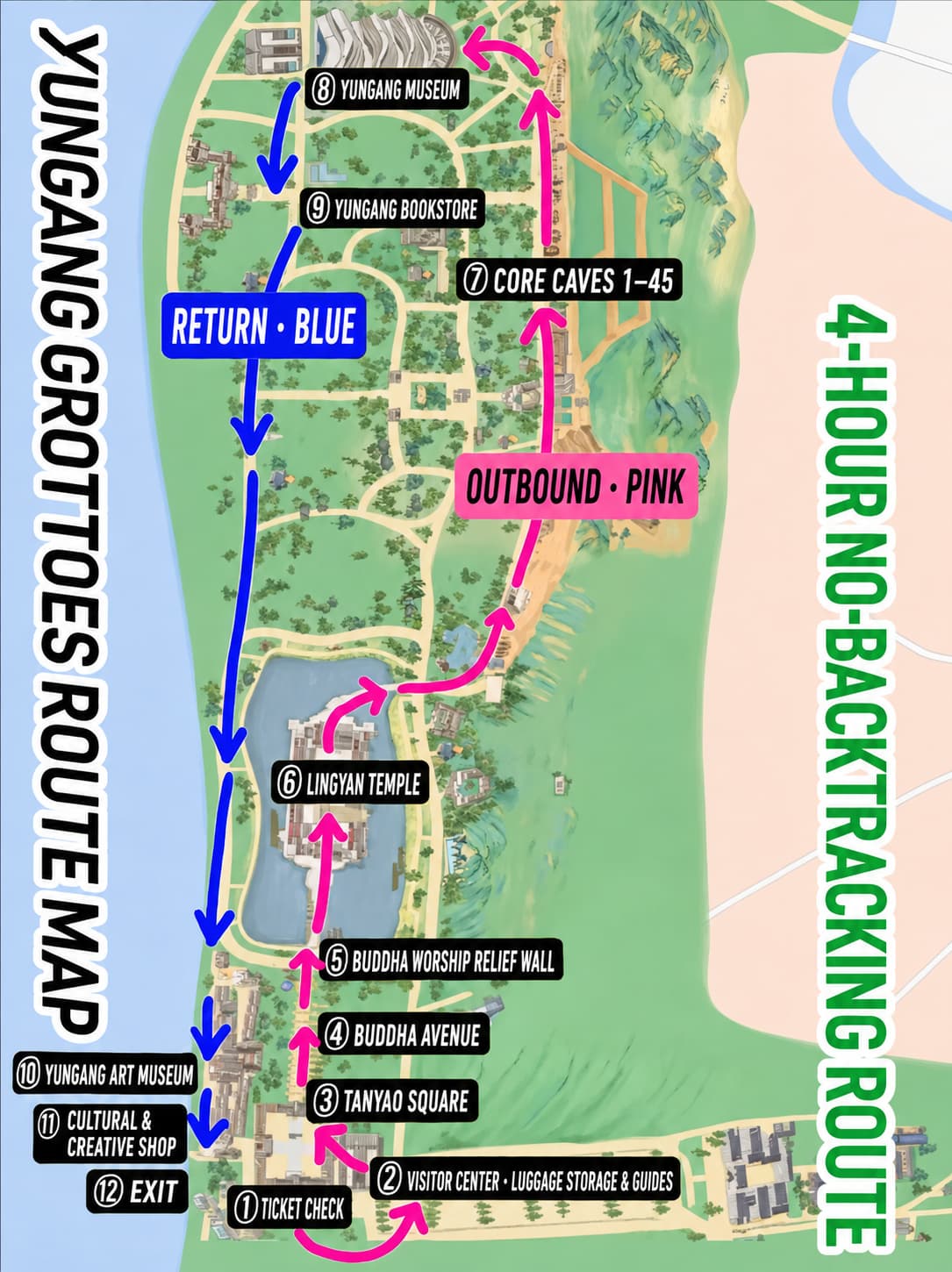
Start with the site map and the current open-cave board. Build a short list from the open sections rather than memorizing a fixed “must-see” order. Visitors repeatedly found strong value in slowing down around caves 5–6, 12 and 16–20 when open, but none is guaranteed.
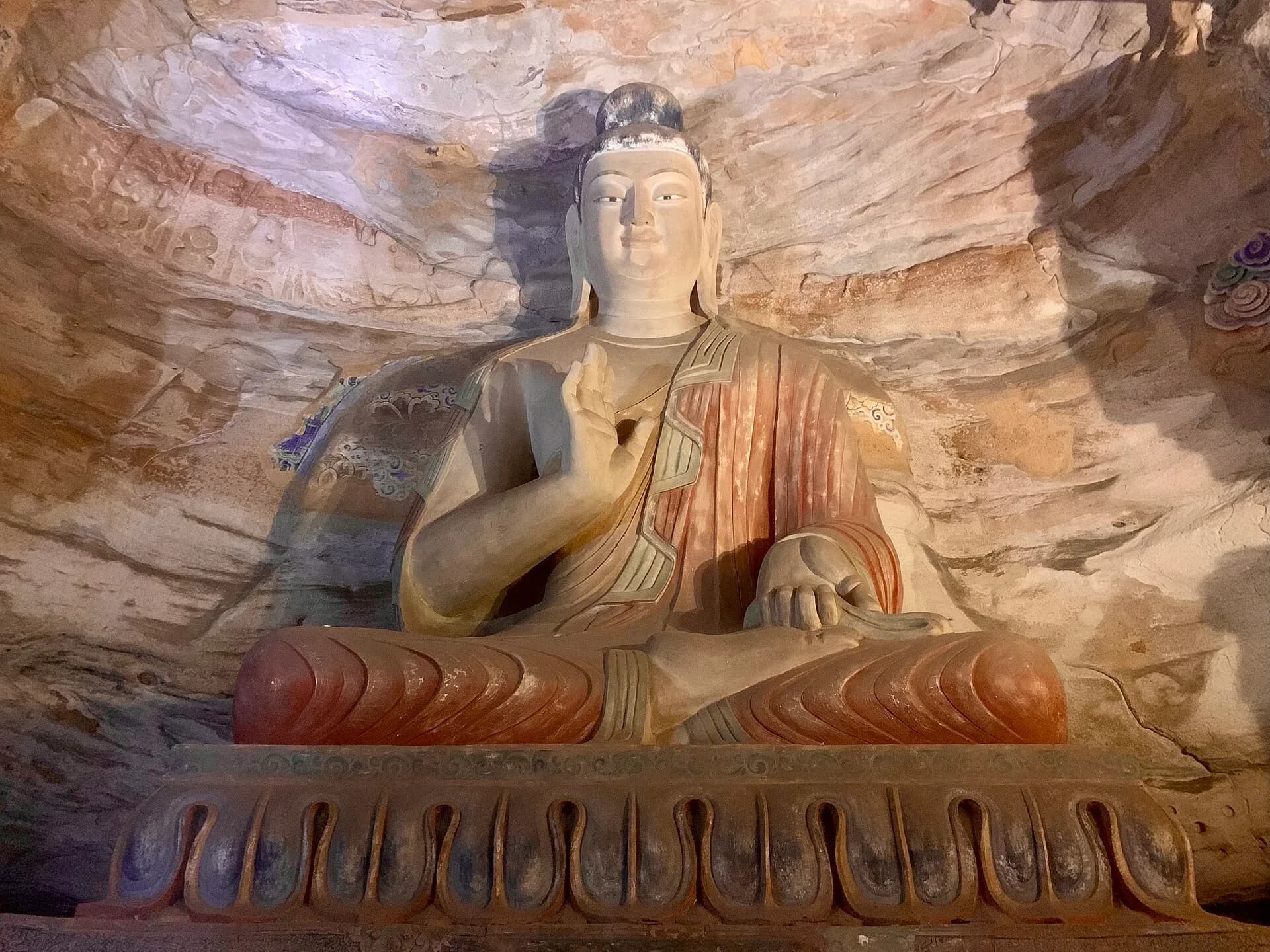
Inside, compare scale, facial style, carved architecture, surviving pigment and the relationship between a cave’s central image and its surrounding surfaces. Use an official guide or audio interpretation if available; dense sculpture becomes much easier to read with historical context.
Photography restrictions, flash bans, barriers and one-way circulation protect fragile surfaces. Do not stop a moving line for a long photo or touch the rock. An image you cannot take is not a lost visit.
Pace and mobility
Allow at least three focused hours after entry, plus transport and identity checks. Families and older travellers often benefit from a slower route and any officially operating internal shuttle, but a shuttle does not remove all walking or standing. Midday queues can be substantial, especially around a small number of caves.
From Huayan Temple, AMap estimates about 19.3 km / 31 minutes by car; mapped public transport is roughly 18.3 km / 1 hour 18 minutes before waiting and traffic. The live 晋游宝景区直通车 service is another option, with departures adjusted to demand.
What can change on the day
Caves can close or reopen for conservation with little relevance to last month’s guide. Read the official notice on the morning of the visit and again at the entrance. Do not interpret a closed cave as permission to cross a barrier or demand a substitute interior.
If several desired caves are unavailable, concentrate on the open sequence and the museum or interpretation spaces that are operating. Yungang’s value lies in understanding a changing protected complex, not collecting a fixed list of cave numbers.
English route maps
Use these diagrams to compare routes, zones, floors, and visit order. Operating routes can change, so follow current signs and staff instructions on the day.