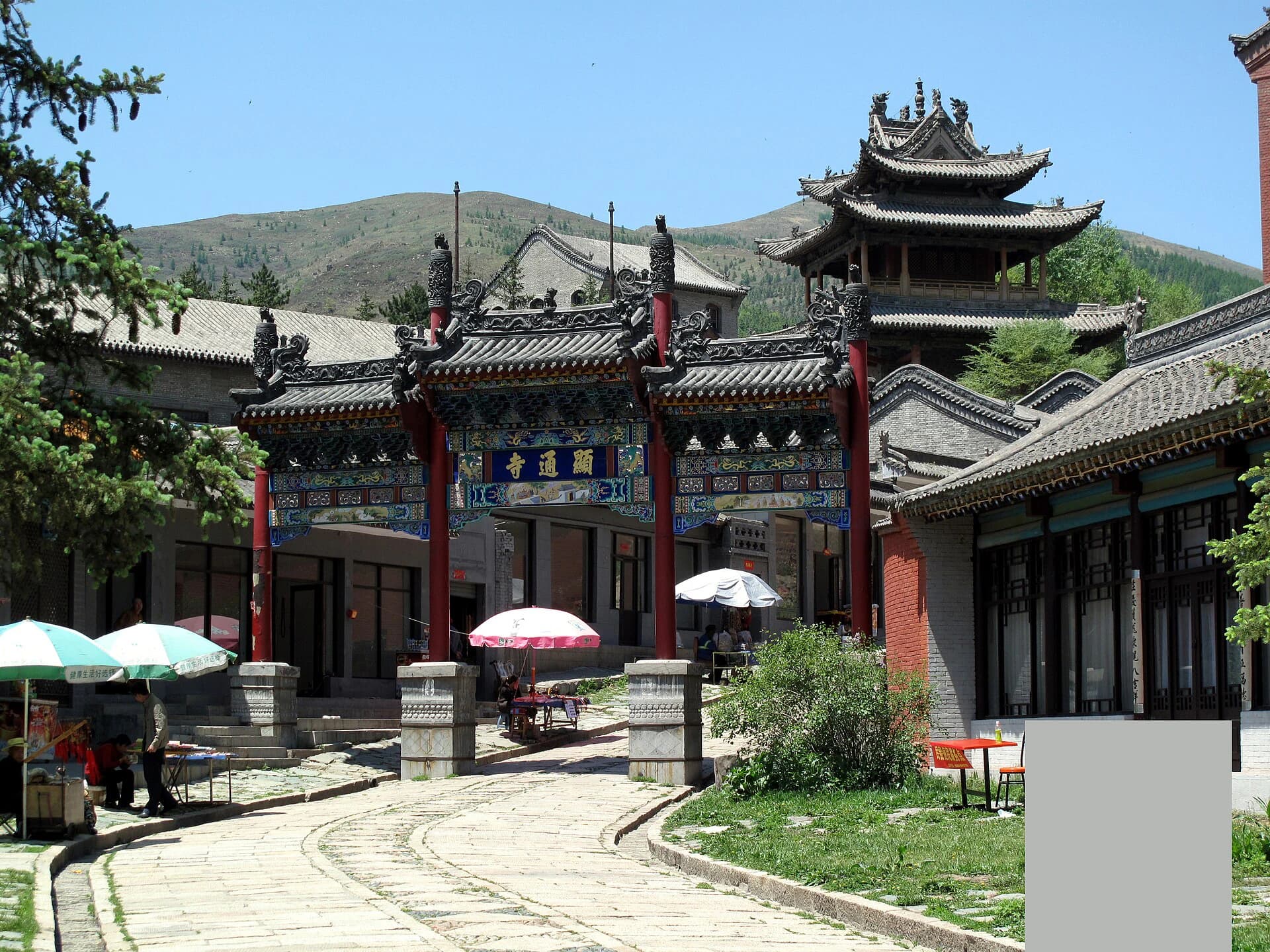
Photo: G41rn8 · Source · CC BY-SA 4.0
Wutai Mountain and Wutai County
Wutai Mountain (五台山) is a large Buddhist sacred landscape, not one summit or one temple. A first visit normally centers on Taihuai's temple cluster and the surrounding mountain scenery. Foguang Temple, the remarkable Tang-era timber hall in Wutai County, requires a separate road plan outside that core sightseeing day. Treating both as one walk is the common itinerary error.
Choose the trip you actually want
| Trip | Minimum useful time | Main decision |
|---|---|---|
| Taihuai temples and mountain setting | One full day, better with an overnight | Which temples and how much walking or uphill transport? |
| Foguang Temple architecture | A separate half to full day, depending on road transfer | How to reach it and get back without a vehicle? |
| Both | Two days minimum | Which night base avoids needless backtracking? |
For a first Taihuai day, choose a few sites with different purposes: a major monastic compound, a hillside view and time to watch ordinary pilgrimage respectfully. Do not attempt to tick off dozens of temples. Religious services, halls and photography permissions can change by site; worshippers have priority over a visitor's photo. The area sits high, so cold, sun and thin air can be felt even outside winter.
A comfortable Taihuai sequence
Start early in the central temple area, work between nearby compounds on foot or by the permitted local transport, and leave the uphill viewpoint for weather that actually provides a view. Keep lunch and a rest break near the core, then choose one more temple in the afternoon. Some visitors prioritize Wuye Temple for popular devotion; others prefer quieter architectural time at Xiantong, Tayuan or Pusa Ding. Choose according to the experience you want rather than a single “must-see” ranking.
The scenic administration issued 2026 vehicle-booking and road-control notices, and a July 31, 2026 notice prohibited walking to the outer peaks across the scenic area. Do not improvise a five-terrace hike from old online routes. Check the current scenic notices for the date, entry, vehicle and trail rules before travel.
Follow a two-day temple route
Day 0, arrive and sleep in Taihuai. Establish whether your vehicle can enter the scenic area on your date and where the hotel is relative to any controlled gate. Arriving the evening before protects a full temple morning. Ask the hotel which stops the local transport currently serves; a map pin inside the large scenic boundary does not prove a hotel is beside the central temples. Dinner and an early night are more useful than a hurried after-dark temple dash.
Day 1, central Taihuai on foot. Begin at Tayuan Temple and its white pagoda, then walk the short link to Xiantong Temple for a larger monastic compound. The mapped walking distance is about 500 m / 7 minutes, before visiting time. Pause for lunch near the central cluster. From Xiantong, continue to Pusa Ding, another roughly 600 m on the map but with an uphill approach that changes the effort. Notice how the central compounds differ: Tayuan's pagoda as a landmark, Xiantong's sequence of halls, Pusa Ding's elevated view and imperial architectural language. Allow a generous half day or more for these three, including worship activity, steps and rest.
In the afternoon, choose one of two finishes. Stay among the central temples for a slower architecture and pilgrimage day, or climb toward Dailuoding only if the signed path, weather and your legs allow; its stairs make it an optional exercise, not the walk between the first three temples. Eat and sleep in Taihuai again, or move to Wutai County only after arranging the next morning's vehicle.
Day 2, Foguang Temple as a separate county outing. Go directly to Foguang in daylight and leave time to see the East Main Hall slowly: its timber frame, bracket sets and surviving sculptural setting explain why the site matters far beyond a photograph of its roof. Keep to permitted viewing areas and any no-photo instructions. From central Taihuai the mapped road is about 49 km / 1 hour 5 minutes by car before traffic and scenic-area controls; from Wutai County bus station it is about 32 km / 45 minutes. These figures are driving estimates, not a public-bus timetable. If taking the county route reported in 2026, confirm the actual stop, departure and last return directly before going. Carry food or plan a county meal; do not rely on a café at the temple.
Short and long versions
- One day: spend it in Taihuai. A first-time temple circuit and mountain atmosphere are more satisfying than a same-day dash to Foguang and back.
- Two days: Taihuai on Day 1, Foguang on Day 2. This is the cleanest first visit for both sacred landscape and Tang architecture.
- Three days: add a weather/rest day in Taihuai or one carefully chosen additional county heritage stop after verifying access and road time. The outer five peaks are not a default hiking extension; obey current route restrictions.
Rain or snow can change the hill steps and county roads. If the weather degrades, keep to the central compounds and move any uphill viewpoint. A traveler with limited mobility can still appreciate the lower courtyards while treating Pusa Ding and Dailuoding as separate, stair-heavy choices.
Why Foguang needs its own day
Foguang Temple holds one of China's most important surviving Tang timber halls. Its value is the architecture, sculpture and setting, not a long list of tourist facilities. The road journey through Wutai County is separate from Taihuai's managed scenic network. County media reported a dedicated public line in May 2026, but its exact departure and return times need confirmation for your date. A pre-arranged licensed vehicle can be simpler for a small group; agree on waiting time and pickup before you leave.
Base, tickets and onward route
Stay around Taihuai for an early temple start and a calmer evening; check the property's exact relation to the scenic gate and the permitted vehicle route. Stay in Wutai County if Foguang and other county heritage are the main purpose, accepting a longer journey into the mountain core. Compare Wutai hotels on Trip.com by location and current access rules.
Bring your passport for any identity-bound admission and confirm what scenic admission does or does not include. A broad “Wutai Mountain ticket” is not a promise that every temple, shuttle, vehicle or guided visit is included. Dress in layers, use shoes with grip and carry cashless payment plus a backup plan for weak reception. A late return to Taiyuan or Datong is possible only when the road, gate and your final transfer have been settled in advance. Check rail connections from the station you will actually use.
Plan your Wutai Mountain Travel Guide: Taihuai Temples and the Separate Foguang Temple Trip trip
Useful bookings related to this city guide
Make the five decisions
Plan Wutai Mountain without adding random stops
Choose the trip shape first, then use live booking and transport information for your exact date.
How Many Days?
One full day serves the central Taihuai temple area. Give Foguang Temple a separate road day if Tang timber architecture is a priority.
Choose Your Route
- In Taihuai, select a few different temples and a weather-ready viewpoint. On another day, visit Foguang with return transport fixed before departure.
Book These First
- Check current scenic vehicle booking, temple entry and the prohibition on walking to outer peaks. Verify any Foguang public-bus timetable locally.
Explore by Area
- Taihuai is the mountain temple base; Foguang is in Wutai County outside that core; the five outer terraces are subject to separate restrictions.