Zhongjie Walk
Zhongjie is a living pedestrian commercial street layered over the old Shengjing urban core. Historic commercial buildings, archaeological traces, malls, new façades and reconstructed old streets coexist. Calling all of it ancient is inaccurate; calling it only a mall misses the surviving city history.
Use Zhongjie Pedestrian Street — open in AMap. From Shenyang Imperial Palace, the mapped walk is about 1.1 km / 15 minutes.
How to read the street
Start near the palace side, identify documented commercial façades and old street alignments, then continue along the main pedestrian axis. When a themed indoor lane or recreated façade appears, enjoy it as contemporary presentation rather than original fabric.
Recent reports conflict sharply. Some visitors like the lights, snacks and shopping; others encountered roadworks, mud, aggressive queues or disappointing viral food. Check current construction before fixing a route and never enter a closed work zone for an old photo angle.
Use three tests as you walk. First, look for a construction date or conservation plaque instead of judging age from grey bricks. Second, ask whether a façade belongs to a surviving commercial building, a restored shell or a new themed interior. Third, compare the historic street alignment with the modern mall entrances and service lanes. The mixture—not a claim that everything is original—is the point.
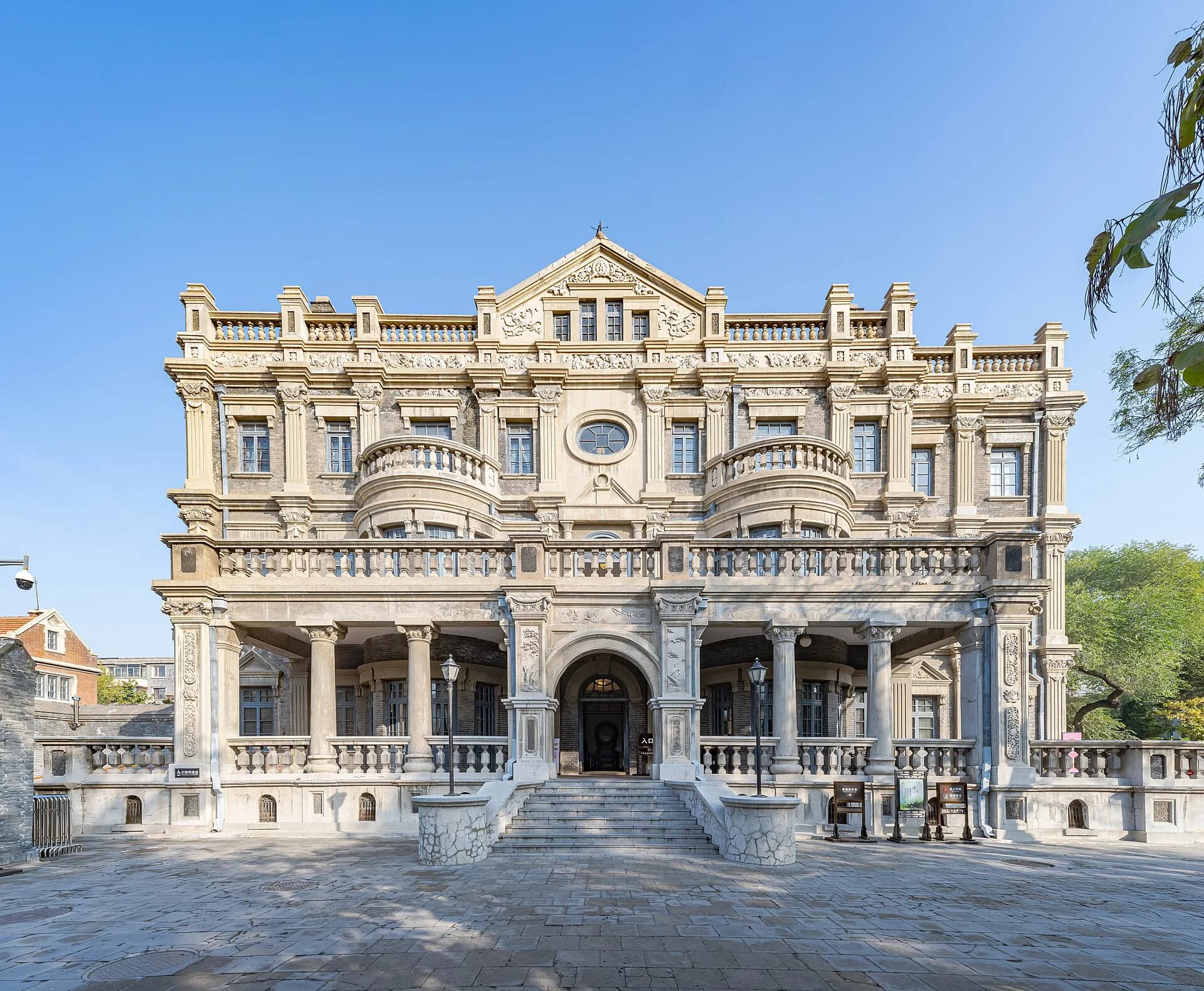
Use the former Jishun Silk Store (吉顺丝房旧址) as one concrete architecture stop along Zhongjie. Read its heritage identification, then look above the current shop signs at the upper windows, ornament and roofline. Compare that older commercial frontage with the entrances of a contemporary mall nearby. The contrast makes the street's changing scale visible without requiring a paid interior or a rooftop viewpoint. If a storefront name has changed, the historical building name is the useful reference.
Return to the main pedestrian axis after that stop and choose one food break. This gives the walk a simple rhythm: palace-side arrival, a documented commercial building, the active shopping street, then dinner.
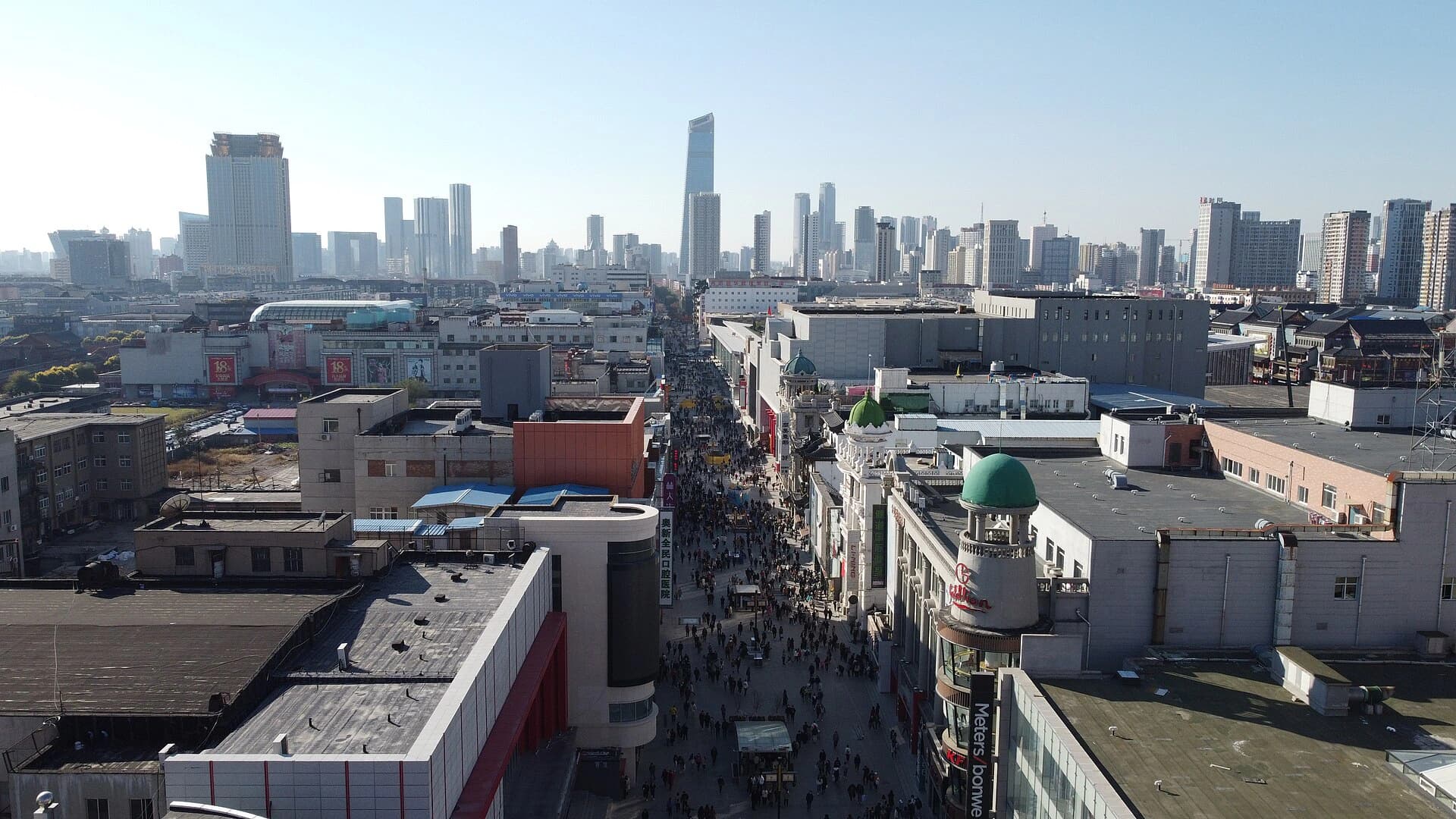
Photo: Techyan · Source · CC BY-SA 4.0
One-queue food rule
Choose one snack category or one sit-down meal. Set a maximum queue time and abandon any shop that will consume the walk. Saved business lists age quickly; verify the current branch, menu, price and allergen information.
Ask whether the price is per item, portion, box or weight before ordering. Buy one unfamiliar item first and share it. Old brand, retro signage and a long queue do not prove that a branch occupies its historic premises or still uses an older recipe.
Daylight or evening?
Daylight is better for reading brickwork, plaques and the boundary between surviving and rebuilt fabric. Evening is better for the active commercial layer and lighting, but it hides construction detail and can amplify queues. A practical compromise is to start 60–90 minutes before dinner, finish the architecture pass in daylight and choose one meal after dark.
The pedestrian section is easier than many historic lanes, but crossings, temporary works, winter ice and crowded shop thresholds can interrupt a step-free line. Keep residential/service access clear and do not photograph shop workers or diners at close range without permission.
Pairing without overload
Use Zhongjie after the palace or Zhang residence because the walk adds a commerce layer without another ticketed interior. If you have already spent five hours in museums, shorten it to one pass and dinner; the street does not become more historical by completing every mall.
Verdict
Zhongjie works best as the final layer after the palace and residence: one historic-commercial walk, not an all-night snack challenge.