China Industrial Museum
The museum occupies part of Shenyang's former foundry-industrial landscape and interprets machinery, production and the city's industrial development. It is not an operating-factory tour or permission to climb equipment.
It matters because Shenyang's modern identity cannot be explained only through palaces and political residences. The museum adds factory scale, state-led industrialisation, technical labour and urban change. The building and machines are evidence of production systems, but neither alone tells the worker story without labels, testimony and context.
Use China Industrial Museum — open in AMap. Allow 1.5–3 hours depending on open halls and how much technical interpretation you read.
Build the route around the foundry setting
Begin with the historical overview, then enter the large machinery and foundry spaces. Visitors who already understand engineering can move quickly; general visitors benefit from choosing a few objects and asking what they made, who operated them and how production changed the city.
Use five questions for each selected machine: What did it produce? What powered it? Which skills and risks did operation require? Where did its materials and products move? What replaced it or made it obsolete? Then look for worker housing, welfare, gender, safety and environmental context rather than turning industrial history into a parade of heroic equipment.
A practical 90-minute route is overview → foundry space → three representative machines → one worker/social-history section. Use the remaining time for an exact current exhibition, not every open hall.
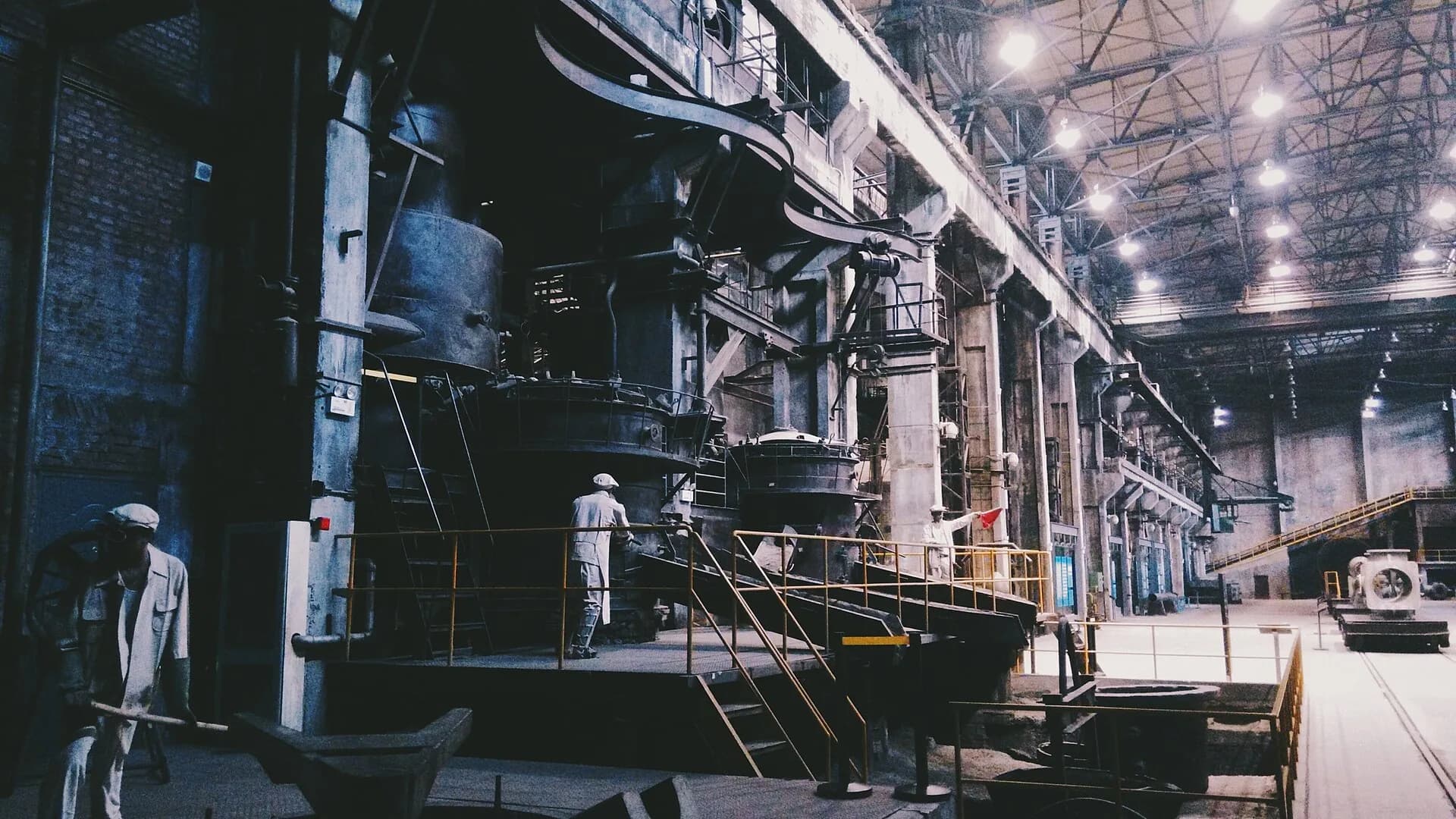
Photo: Yumingshe · Source · CC BY-SA 4.0
Open halls and temperature are live gates
Recent reports conflict on reservation requirements and how many floors or halls were open. They also consistently warn that factory-scale interiors can be very hot in summer and cold in winter. Confirm the current calendar, passport entry, open halls and accessible route; dress for the interior rather than assuming museum climate control.
Official May 2026 museum-week coverage confirms the institution was active, but does not establish its ordinary opening hours or passport-entry process. Ask specifically about the foundry hall, upper floors, temporary closures and last admission.
Keep behind barriers, do not touch machinery unless an interactive element explicitly permits it, and supervise children around edges and heavy objects.
Large halls can involve echo, glare, long concrete distances and few rest points. Confirm lifts, step-free hall connections, seating and accessible toilets. Families should choose a small number of machines and use scale comparisons; technical detail is more memorable than forcing every label.
Combine it with Xita
AMap estimates Xita at 5.8 km / 14 minutes by car. The bus route is about 37 minutes with 1.1 km of access walking. An industrial afternoon followed by dinner in Xita is a coherent low-backtracking plan.
Verdict
This is one of Shenyang's most distinctive museums, especially for industrial history, but only if the open halls and indoor temperature suit your day.