Shenyang Imperial Palace
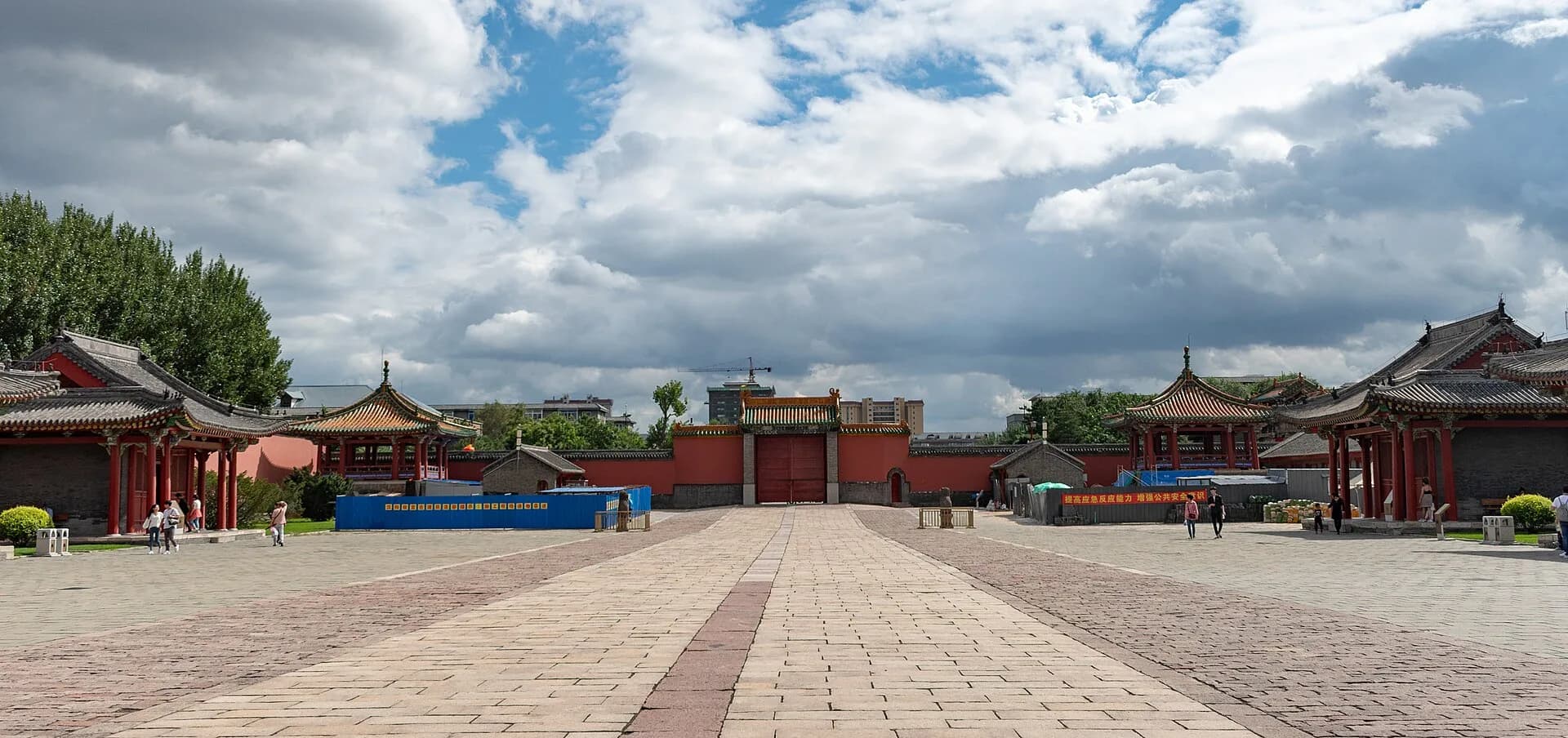
Shenyang Imperial Palace (沈阳故宫, also called Mukden Palace) is the city's essential first visit, but its value is easy to miss if you judge it only by size. The earliest sections were built for the rising Qing court before the dynasty moved its capital to Beijing in 1644. Later emperors retained Shenyang as a secondary capital and added new ceremonial and cultural buildings.
UNESCO describes a complex of 114 buildings whose layout preserves an unusual relationship between Chinese palace traditions and Manchu, Mongolian and other northern cultural influences. The east, central and west sections were created in different phases. Walking them in that order turns a collection of colourful roofs into a readable history of changing power.
Plan two hours for architecture or three hours if you want current exhibitions. Use Shenyang Imperial Palace in AMap for the correct entrance area.
Who will enjoy it?
Choose the palace if you like architecture, political history or places where layout explains how an institution worked. It rewards visitors who slow down for roof forms, building height, courtyard relationships and signs rather than trying to photograph every doorway.
It may disappoint anyone expecting Beijing's scale, extensive furnished interiors or an all-weather museum. Many of the strongest features are exterior architecture; summer heat, winter cold and crowded thresholds shape the visit.
The best 2–3 hour route
1. East section: Dazheng Hall and the Ten Princes' Pavilions
Start with the palace's most distinctive spatial idea. Dazheng Hall is an octagonal ceremonial building rather than a long rectangular throne hall. The ten pavilions facing its court were associated with the left and right wings and the Eight Banners, organizations that combined military, administrative and social functions.
Do not photograph the hall and leave. Stand near the southern end of the court and look at how the pavilions distribute authority along both sides while Dazheng Hall closes the axis. The official palace interpretation notes architectural details drawing on multiple traditions, including the tent-like form, Chinese timber construction and decorative influences associated with Tibetan Buddhism.
Allow 35–50 minutes. This is the section that most clearly explains why the palace is not merely a provincial version of Beijing.
2. Central section: government below, residence above
Continue through Daqing Gate toward Chongzheng Hall, used for court and political ceremonies. Then notice the change in height around Phoenix Tower and the raised residential court behind it. The physical climb separates the governing space below from the imperial household above.
Around Qingning Palace and the adjoining residential buildings, use the permanent interpretation to understand living arrangements and Manchu court customs. Do not assume every room is original, permanently open or fully furnished; architecture, later display and temporary exhibition are different forms of evidence.
Allow 50–70 minutes. Crowds often compress around Phoenix Tower and narrow doorways. Step aside after entering a courtyard rather than stopping on the threshold.
3. West section: Wensu Pavilion and the later palace
The west section changes the story again. Wensu Pavilion was added under the Qianlong emperor as a library associated with the Siku Quanshu project. Its restrained green, blue and dark roof palette differs deliberately from the yellow-dominated ceremonial buildings.
This is not a promise that a famous manuscript or every adjoining hall will be visible. Focus on why a purpose-built imperial library appears here: later Qing rulers continued to use Shenyang as a place of dynastic memory after political power had moved to Beijing.
Allow 30–45 minutes, then add only the exhibitions that match your interests. Temporary shows, performances, night sessions and individual building access change independently.
Booking and passport rules
The palace uses real-name reservation and requires the original document used for booking. Its official notice lists passports among the accepted booking and entry documents for non-mainland visitors. However, the current calendar, time slots, concessions and authorised sales channels can change.
Use the official Shenyang Palace Museum website or the venue's official WeChat account immediately before paying. The museum has warned visitors against buying admission through unlisted third parties. Seasonal night opening, extended hours and event tickets are not part of ordinary daytime admission unless the current notice says so.
Crowds, climate and accessibility
Courtyards are exposed, interiors can be tight and summer visitors report intense heat even with an early start. Go near opening, carry water and move outdoor sections to the coolest part of the day. In winter, stone and brick surfaces can be slippery and wind makes stationary reading uncomfortable.
Historic thresholds, steps and the raised residential court limit the ordinary route. Contact the palace for the current accessible entrance and open step-free sections; do not assume every major building can be reached without stairs.
Follow current signs for bags, tripods and photography. Never use flash where prohibited, lean on historic fabric or block a doorway for portraits. A wide courtyard view usually explains the architecture better than a close-up taken in a queue.
How to pair it with the city
AMap places Zhang Xueliang Residence about 0.6 km / 8 minutes away on foot and Zhongjie about 1.1 km / 15 minutes away. The three form Shenyang's strongest walkable historical cluster.
Do not treat that as a nonstop six-hour checklist. The residence itself needs 1.5–3 hours, and both sites have exposed courtyards. Take a lunch or café break after the palace. If you arrive late, choose either the residence or Zhongjie rather than rushing both.
Final verdict
Visit for the transition from an Eight Banner court to an imperial secondary palace. Two hours reveals the architecture; three allows selected exhibitions. The key is to compare the three sections with one another—not to compare every building with Beijing.