Xumi Fushou Temple
Xumi Fushou Temple (须弥福寿之庙) was built for the Sixth Panchen Lama's 1780 visit to Chengde. It is often skipped because Putuo Zongcheng looks larger in photographs, yet visitors who value compact architecture and close detail frequently prefer Xumi's quieter, more garden-like sequence.
That purpose gives Xumi a different historical job from Putuo. Instead of calling both “Tibetan-style temples”, ask what each imperial commission was meant to communicate, which forms were adapted at Chengde and how court ceremony, religious hospitality and architecture met.
Who should choose it
Visit if you want to understand why Chengde's imperial temples are not interchangeable, or if you prefer a focused 60–90 minute route to another large climb. Skip it when time is so short that you will only hurry through courtyards on the way to Putuo.
A compact route
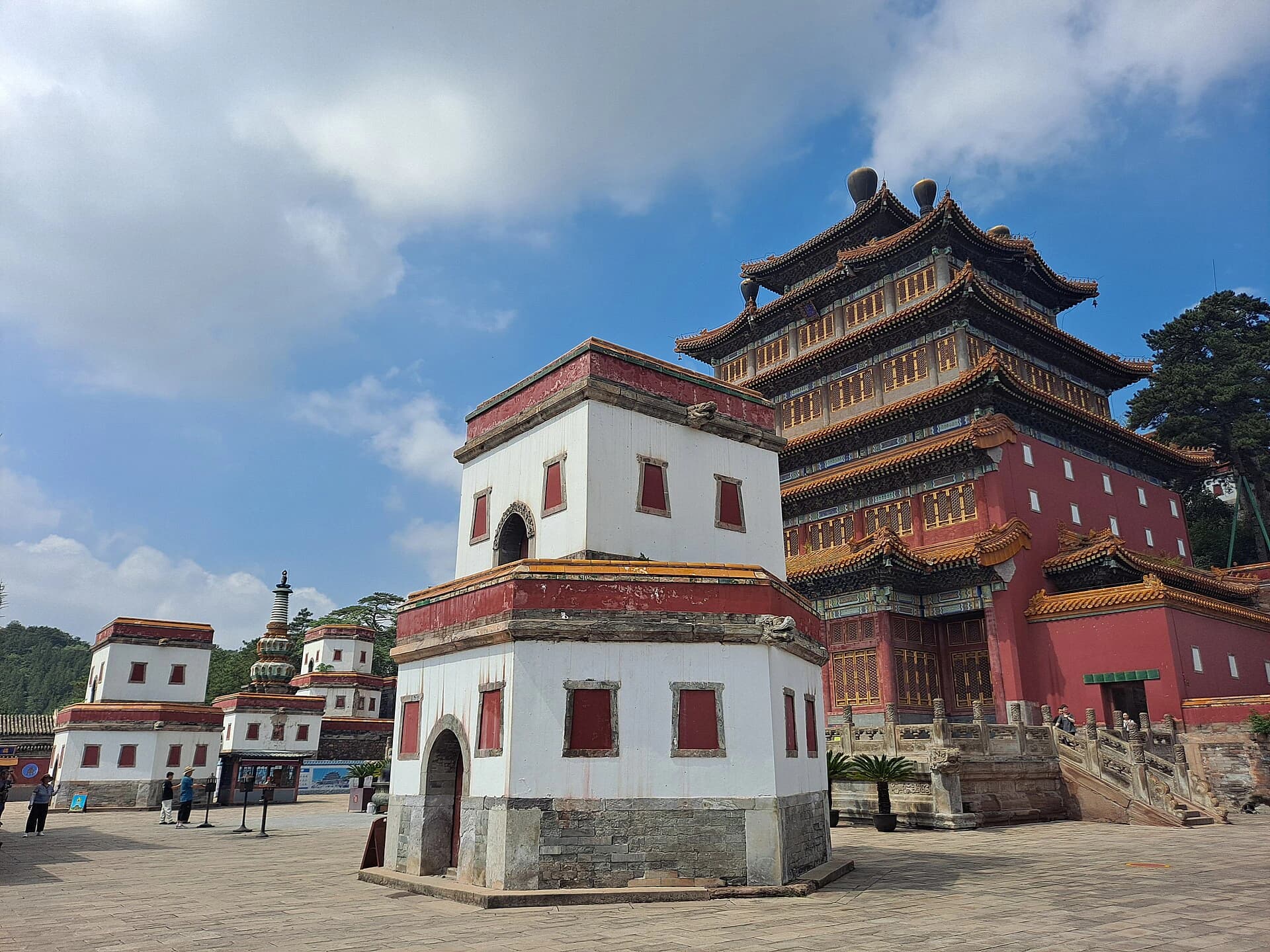
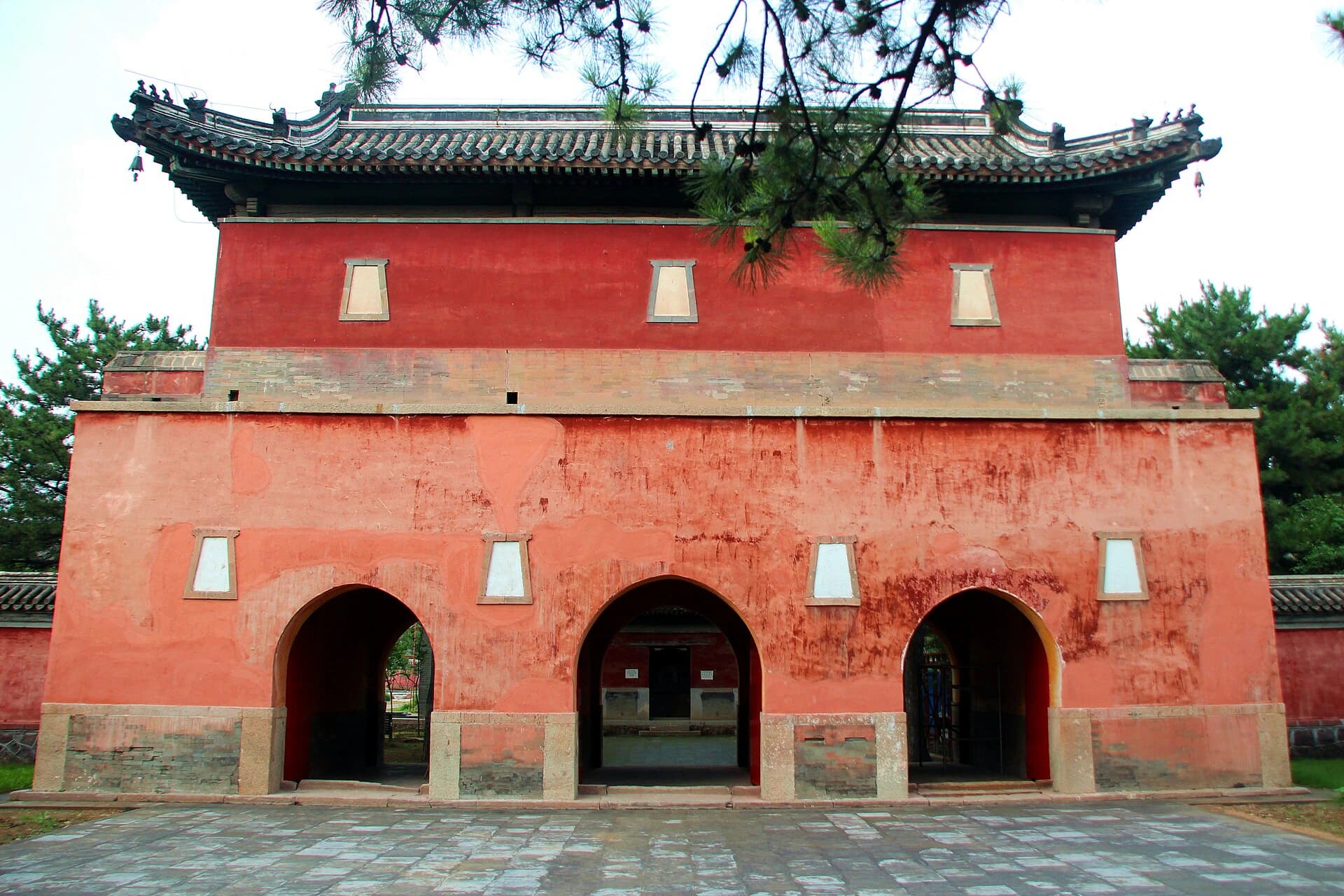
Use the south ticket entrance Xumi Fushou Temple South Entrance — open in AMap. Follow the signed circuit through the lower courts, the red-platform galleries and the main hall ensemble. Give time to the relationship between Tibetan Buddhist forms, imperial Chinese construction and garden-like framed views.
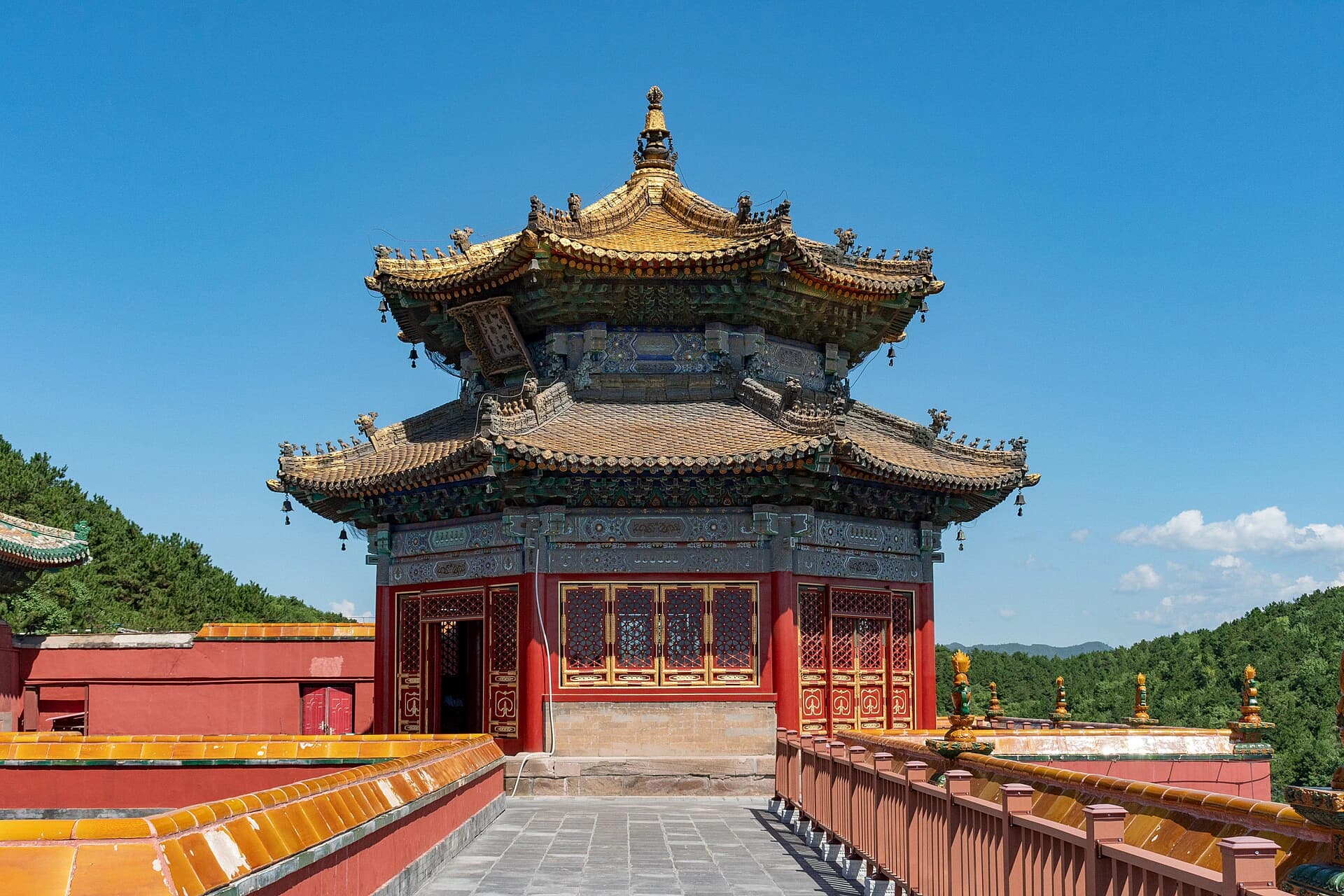
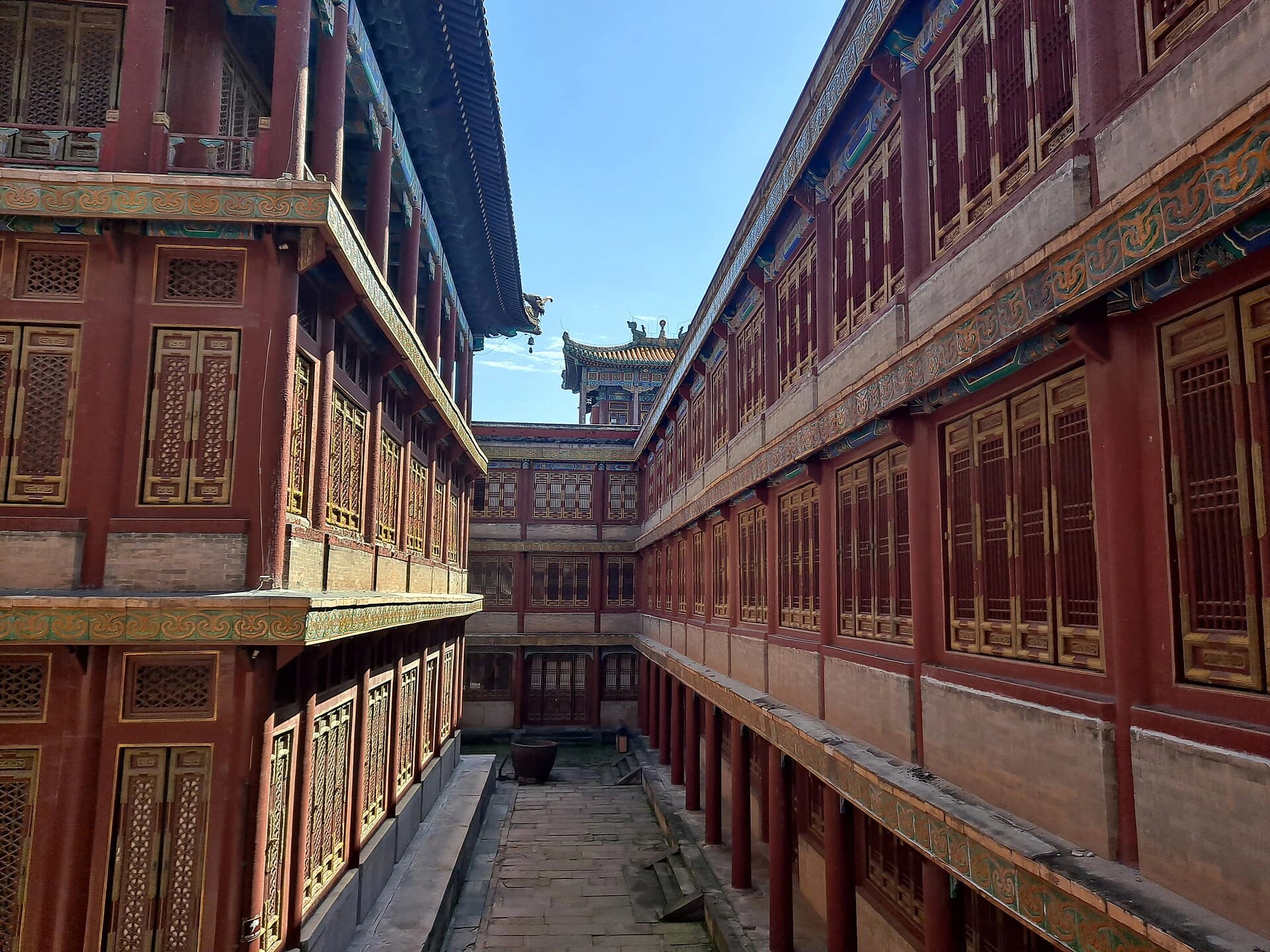
Visitor reports highlight the gilded roof dragons and glazed longevity pagoda, but access to upper levels or a specific hall can change. A photograph of a roof does not prove that its terrace is open.
Read the route at three scales: the lower axial approach, the red-platform mass and galleries, then close roof and glazed-tile detail. Framed views toward neighbouring hills and buildings are part of the composition, but they do not authorise climbing onto an unsigned terrace for a wider photograph.
Putuo walking link
AMap estimates the walk from Xumi's south entrance to Putuo's south entrance at 0.7 km / 10 minutes. This is a useful physical pairing, and visitors also report a shuttle at some times. Do not depend on the shuttle until the operator confirms today's service, and do not assume one admission covers both sites.
If both are open, visit Xumi first for the historical context and more compact sequence, then decide whether your energy and the weather justify Putuo's uphill route.
Practical checks
Confirm current halls, repairs, foreign-passport entry, photography and the ticket relationship with Putuo. The same 2026 procurement that signals a changing commercial layer does not establish live performances or dining.
The May 2026 heritage-bureau procurement confirms that Putuo and Xumi's visitor-service layer was changing. It is not evidence that a proposed costume rental, dining venue, performance or other product has opened. Ask separately about heritage admission, worship/ritual restrictions and optional commercial services.
Historic thresholds, stairs and upper galleries can restrict access. Ask which lower courtyards and viewpoints form a step-minimised route, and whether the shuttle—if running—serves the public entrance rather than only a ticketed group route.
Verdict
Xumi rewards travellers who compare architecture rather than rank temples by size. It is the clearest antidote to treating Chengde's imperial religious landscape as one repetitive checklist.