Jinjiang Wulin Village
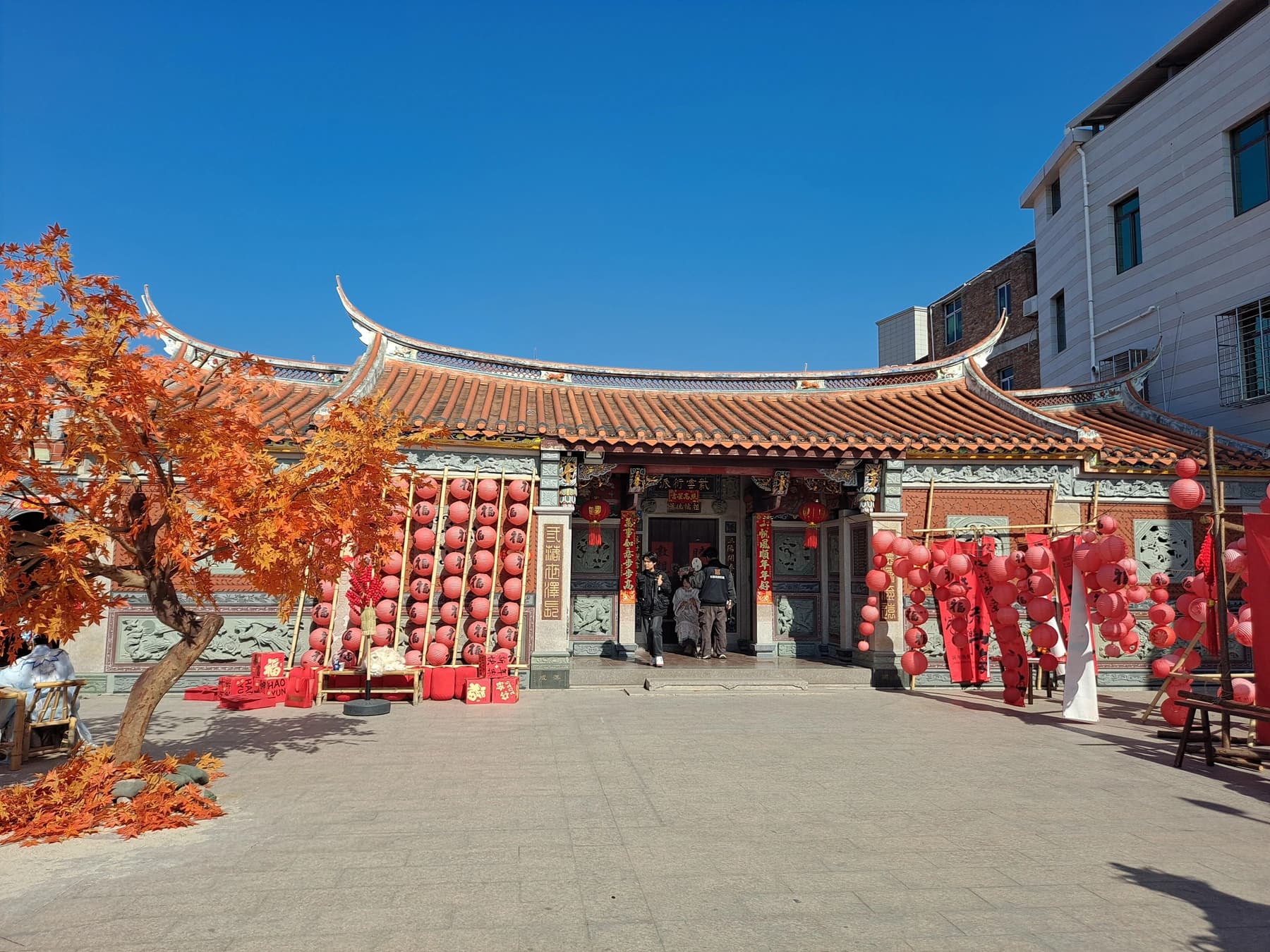
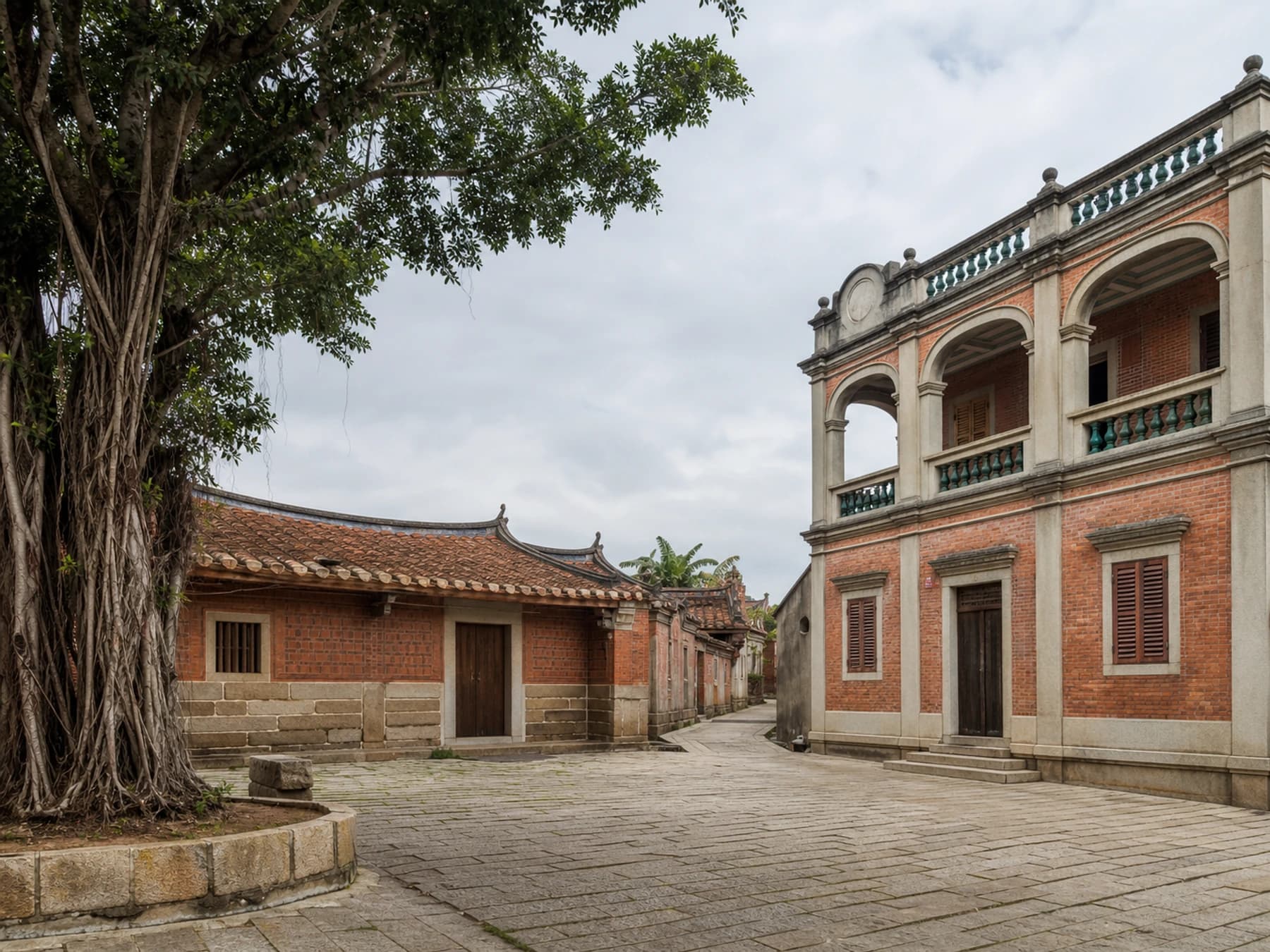
Wulin is strongest when you compare southern Fujian red-brick courtyard houses with taller overseas-Chinese residences shaped by migration and remittance. Follow the official public circuit, read named-building interpretation on site and do not assume every attractive doorway is open.
Allow two to three hours. Some structures are exhibition spaces, others can be closed, under repair or residential. Keep drones, tripods and portrait setups within current rules and never enter a private courtyard without explicit permission.
The verified map location is in Jinjiang, south of central Quanzhou. Xunpu to Wulin is about 21.1 km / 30 minutes by car before traffic. Chongwu is another 47.1 km / 57 minutes east, so it belongs on a different day.
Use a three-question reading method
At each named building, ask who commissioned it, which materials or forms came from southern Fujian, and which details reflect an overseas connection. That turns Wulin from a portrait backdrop into a legible migration landscape. Red brick, granite trim, arched verandas and decorative facades can coexist, but they do not all prove the same date or origin; use the current plaque for the individual house.
Visitor reports consistently rate Wulin more highly than Quanzhou's heavily commercial portrait districts when the goal is architecture. That does not make every lane a museum. Walk slowly, keep residential thresholds clear, and treat cafes and costume studios as optional additions rather than the reason the village matters.
Two buildings to give the walk a story
Find Chaodong Building (朝东楼) and the Qiaopi Museum (侨批馆) on the visitor map; both appear in Jinjiang's official architecture route. At Chaodong, first study the facade, windows and relationship to the neighbouring houses. If its exhibition is open, use it to understand the migration story behind the building.
At the Qiaopi Museum, spend time with one letter and its remittance record where displayed. Look for the sender, recipient and family needs described, then connect those documents to the houses you have just seen. Use signed public lanes between the two and include a seated break. If interiors are closed, keep the exterior walk and read the plaques; village access does not guarantee that every building is open.
Plan the transfer, not just the visit
Save 梧林传统村落 in Chinese and pin the correct Jinjiang location. From central Quanzhou, a direct ride is simplest for most international visitors; ask the driver to use the official visitor entrance, not a similarly named village. Before leaving the car, check the return supply in your map app. At quiet times, booking the outbound leg does not guarantee an immediate vehicle back.
Morning gives softer light and more comfortable lanes, while late afternoon can be attractive if you already have a reliable return. In hot weather, put the exposed public circuit first and take indoor exhibition breaks later. Two focused hours are usually more useful than trying to enter every commercial space.
Image and access reality
For current restoration, closures and named-house identities, rely on the village's signs and the official Quanzhou tourism channel. If a doorway lacks an invitation or public sign, assume it is private.
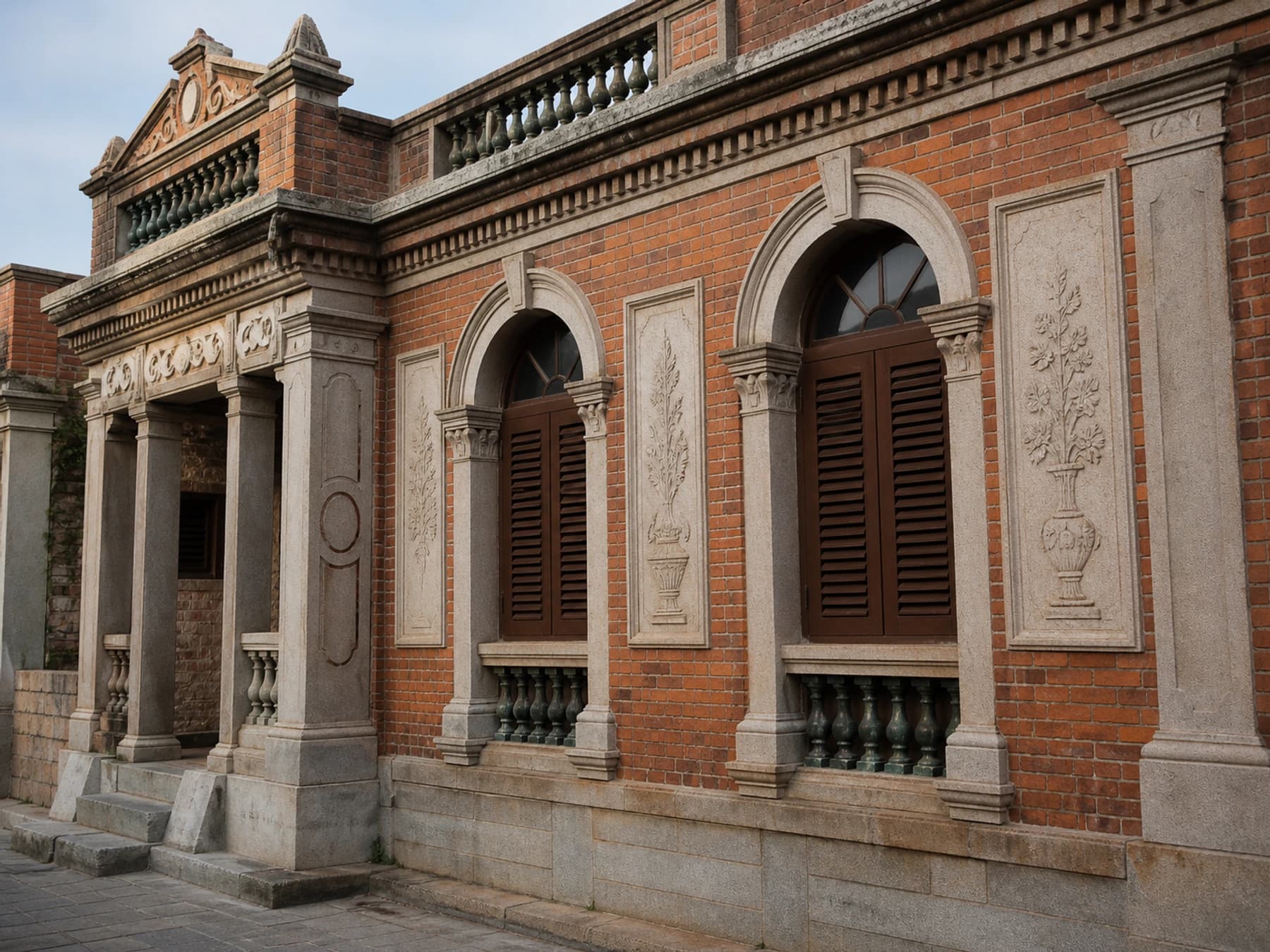
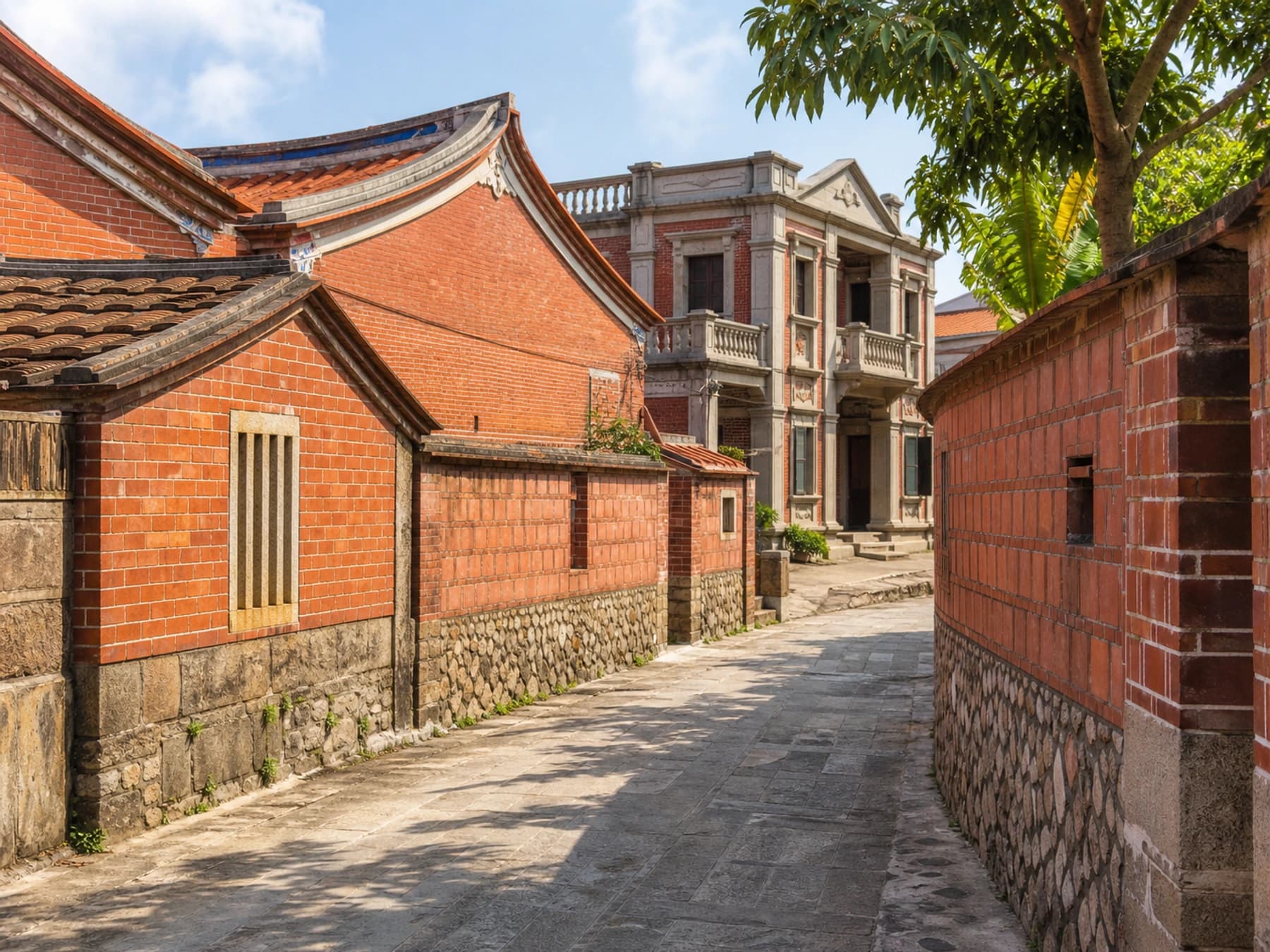
Most value lies in the public lane-and-exterior sequence. Thresholds, steps, heat and uneven paving can limit access to named houses, so ask at the visitor entrance for the current reduced-step circuit rather than assuming every exhibition interior is reachable.