Spa, massage and wellness in China: choose the service before the venue
The words spa, massage, foot therapy, bathhouse, hot spring and ear cleaning can appear beside each other on Chinese map apps. They describe very different experiences. A neighbourhood foot-massage session may keep you fully clothed in a shared room. A hotel spa may involve oil, draping and a private treatment room. A 汤泉 (tāngquán) complex may be a half-day of gender-separated bathing, showers, saunas, food and mixed-gender lounges. A destination 温泉 (wēnquán) may require transport, swimwear and a full afternoon. 采耳 (cǎi'ěr) places instruments in or near the ear canal and deserves a separate risk decision; it is neither a routine part of tea nor medical care.
For most first-time visitors, the easiest low-commitment choice is a 60- to 90-minute foot bath and foot massage at a business with a posted menu, current reviews, an itemized order and a clear reception desk. Choose a body massage only after deciding whether you want clothed pressure work or oil massage. Choose a bathing complex when showers, soaking and lounging are the main activity. Choose a hot-spring resort when the water source and setting justify the travel time.
This guide helps you buy one specific service with informed consent. It does not recommend treatments for pain or illness, rank businesses, or imply that a luxurious interior proves hygiene, licensing or respectful conduct.
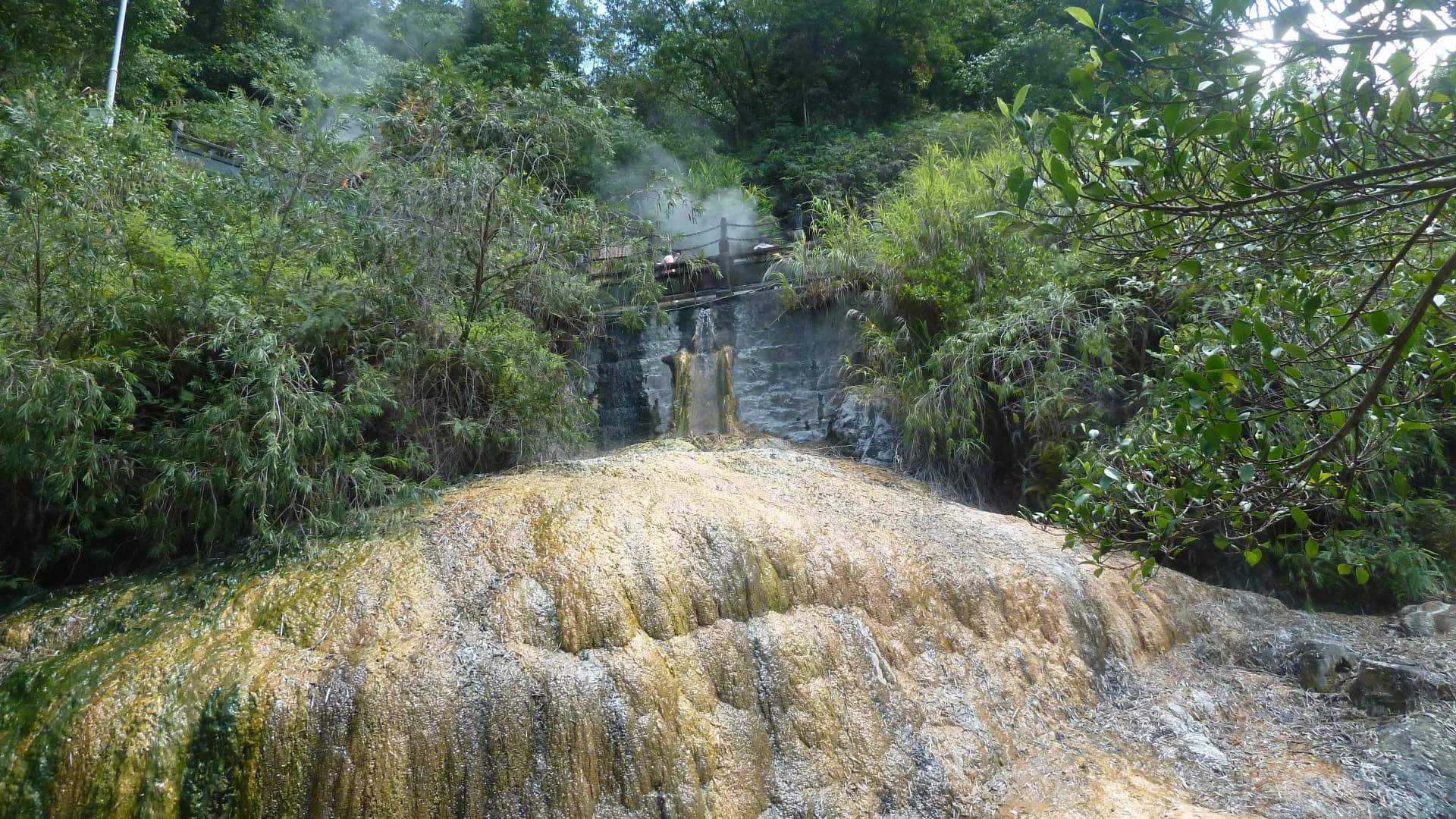
A visible geothermal source is different from a heated leisure pool. At Tengchong Rehai, the geothermal landscape is itself the attraction; visitor bathing, if offered, is a separately operated product whose current access and rules must be checked. Photo by STW932, licensed under CC BY-SA 4.0.
Decide in 60 seconds
| Product | What you are usually buying | Clothing and space to confirm | Time to protect | Best fit | Main question before paying |
|---|---|---|---|---|---|
| 足疗 / 足浴 foot therapy or foot bath | Soak plus foot and lower-leg massage; shoulders or head may be included | Usually clothed; shared recliners or a private room | Often 60–90 minutes | Tired feet after walking, lowest cultural friction | Does the advertised duration include soaking, waiting and a sales explanation? |
| 按摩 / 推拿 body massage | Pressure-based work; the exact technique and body areas vary | Clothed for many pressure sessions; oil treatments require a draping plan | Often 60–120 minutes | A focused relaxation session | Is this clothed massage or oil massage, and which areas are included? |
| 水疗 / SPA hotel or day spa | Treatment room, oil or skin products, showers and perhaps wet facilities | Private room is common, but underwear, disposable garments and draping vary | Allow check-in plus treatment and changing | Privacy, quiet and predictable service style | What is the total price after room, oil, product and service charges? |
| 洗浴 / 汤泉 bathhouse or bathing complex | Entry to wet areas and lounges; food, massage, scrubs and overnight use may cost extra | Wet zones are often gender-separated; shared leisure zones often require facility clothing | Three hours to most of a day | Rain, cold weather, long layovers or group downtime | Which zones and how many hours does the admission include? |
| 温泉 hot-spring venue | Pools or baths marketed around a thermal-water source, sometimes inside a resort | Swimwear, shower rules and gender arrangement vary | Half-day or overnight after transport | A destination wellness day | Is the water source documented, and which pools are operating on your date? |
| 采耳 ear cleaning | A personal service using tools around or inside the outer ear | Recliner or bed; practitioner gender and room privacy vary | Usually sold as a timed add-on or standalone service | Only travelers who understand and accept the physical risk | What tools enter the ear, how are they processed, and can every inserted step be declined? |
The table describes common formats, not promises. A single business may combine several categories, and the lowest online price may be only an entry product. Read the selected option rather than relying on the venue name.
Foot therapy: the simplest first booking
Search map apps for 足疗, 足浴 or 足道. A basic session commonly begins with a warm foot soak while the practitioner works on the shoulders, neck or arms, then moves to the feet and lower legs. That sequence is common enough to expect but never safe to assume. Confirm the included body areas and whether any skin removal, herbal packet, oil, hot stone, scraping or tool-based foot care is optional.
The word 疗 in a shop name does not turn a leisure service into medical treatment. If you have new swelling, severe pain, loss of sensation, a suspected fracture, an infected nail or a wound, a foot-massage counter is not the place to diagnose it. Ask a qualified clinician what is appropriate.
The traditional Chinese medicine experiences guide covers the separate clinical pathway for medical tuina, acupuncture, cupping and prescribed herbs, including practitioner, consent, record and urgent-warning checks.
The five-line order
Show this before the session starts:
我要这个基础足疗,九十分钟。请确认总价。不要加项目,不办卡。力度不舒服我会说。
I want this basic 90-minute foot-therapy session. Please confirm the total price. No add-ons and no membership card. I will tell you if the pressure is uncomfortable.
Then ask when the clock starts. Some packages describe total room time; others describe hands-on time; the soak or preparation may be counted differently. A precise answer matters more than whether a package says 60, 80 or 90 minutes.
Shared recliner rooms can be social and noisy. Televisions, snacks, conversation and smoking policy vary. If quiet or smoke avoidance matters, ask “有无烟房吗?” (Do you have a non-smoking room?) and verify whether the room fee changes. A private room may improve quiet and privacy but does not by itself establish quality or legitimacy.
Body massage and hotel spa: settle clothing first
按摩 (ànmó) is a broad word. 推拿 (tuīná) may signal pressure, kneading and joint movement performed through clothes or a provided outfit. 精油按摩 means an essential-oil massage and usually involves undressing to an agreed level, draping and direct skin contact. A menu may also list Thai-style stretching, hot stones, head massage, shoulder-and-neck work or branded techniques. Names are not standardized enough to define the session without questions.
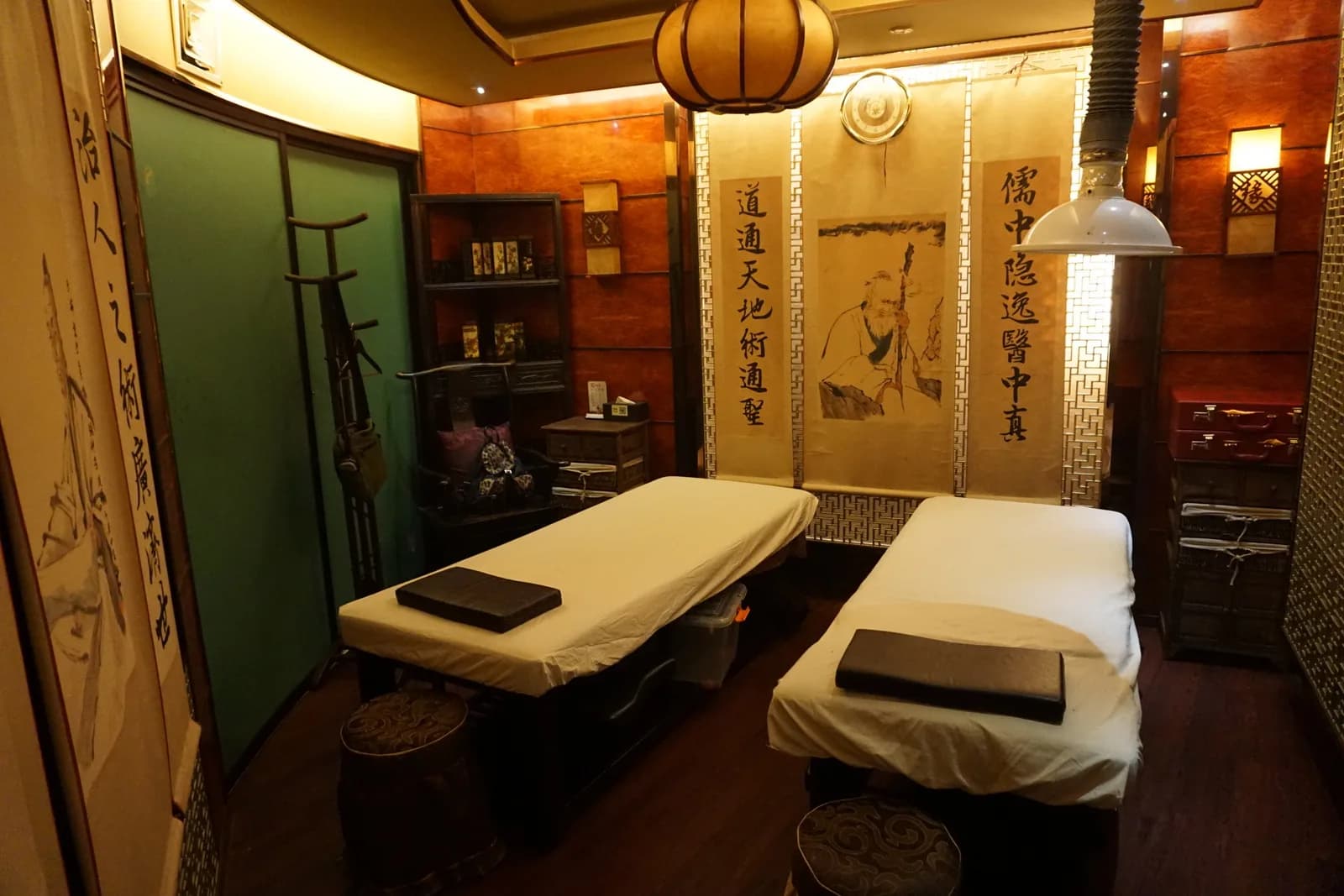
A private room answers the space question, but you still need agreement on clothing, draping, practitioner gender, body areas and products. Photo by Ctny, licensed under CC BY-SA 4.0.
Before changing, ask:
- 需要换衣服吗?穿什么? — Do I need to change? What do I wear?
- 会用精油吗?什么牌子? — Will you use oil? Which product?
- 全程会盖毛巾吗? — Will I be draped with a towel throughout?
- 请不要按这里。 — Please do not massage here.
- 我想要女技师 / 男技师。 — I would like a female / male practitioner.
- 门可以留一条缝吗? — Can the door remain slightly open?
Requesting a practitioner of a particular gender is a normal planning question, though staffing may require a wait or make the request unavailable. Ask before payment if it is essential. Couples should also clarify whether a “couples room” means two beds in one room, simultaneous start times and two practitioners, rather than a package name alone.
Pressure is not a test of endurance. Use 轻一点 (lighter), 重一点 (stronger), 这里不要按 (do not press here) and 请停一下 (please stop). Consent can change during the service. Pain, numbness, dizziness or feeling unsafe is a reason to stop, get dressed and speak to reception. A responsible business can end or adjust a service without debating whether your reaction is normal.
Hotel spas usually cost more because of location, language support, changing facilities and a standardized guest process. That premium may be worthwhile for a traveler who values clear draping, a visible hotel complaints channel and a short elevator ride back to the room. It still does not remove the need to ask whether tax, service charge, facility entry, shower time or a product upgrade is included.
Bathhouse and tangquan: map the building before undressing
A modern 洗浴中心 or 汤泉 can be closer to a leisure complex than a small bathhouse. The entry product may include a locker, showers, hot and cool pools, sauna or steam rooms, facility clothing and mixed-gender relaxation floors. Restaurants, fruit, cinema rooms, gaming, massage, body scrubs, private rest rooms, overnight stays and premium zones may be charged separately.
The first decision happens at reception:
- Ask for the floor map and identify the locker, shower, wet zone, mixed lounge and exit.
- Confirm whether the admission is valid for a fixed number of hours and what an overstay costs.
- Ask what is included: towel, slippers, toiletries, facility clothing, buffet, fruit, sauna and rest seat.
- Check whether a deposit, wristband charge or locker fee applies.
- Ask whether children can enter each zone, whether opposite-gender caregivers may assist, and what age or height rule the venue currently uses.
Wet areas are commonly gender-separated and may involve nudity. Mixed-gender lounges commonly require the venue's pajamas or another specified outfit. This arrangement is common, not universal. Travelers who are uncomfortable changing in communal space should ask about private changing cubicles or choose a hotel spa with a private treatment room. Do not discover the layout only after surrendering shoes and receiving a locker key.
Phones and photography deserve special care. Even when a phone is permitted in a lounge, it may be prohibited in lockers, showers, pools, saunas and sleeping areas. Keep it stored in intimate spaces. Never photograph another guest, a changing area or a practitioner without explicit permission.
Large complexes may advertise 24-hour operation, but that does not mean every pool, kitchen, sauna, children's area or massage desk runs all night. Overnight rest can also involve bright exit lights, shared-room noise and a separate rest-seat or room fee. If sleep is the actual need, compare the total with a hotel rather than treating bathhouse admission as lodging.
Hot spring: source, bathing product and resort are three separate claims
The Chinese national standard GB/T 35555-2024 is the current basic specification for hot-spring service, and tourism standards separately address water quality and service management. Those standards are a reason to ask for documented source and current inspection information; they are not a reason to assume every venue using 温泉 in marketing pumps untreated natural water into every pool.
Ask three different questions:
- Where does the source water come from? A geothermal well or spring is different from municipal water heated on site.
- What happens before it reaches this pool? Cooling, circulation, disinfection, dilution and pool-specific additives can differ.
- What is operating today? A resort may rotate small pools, close outdoor zones in storms or maintenance, or sell day admission separately from hotel access.
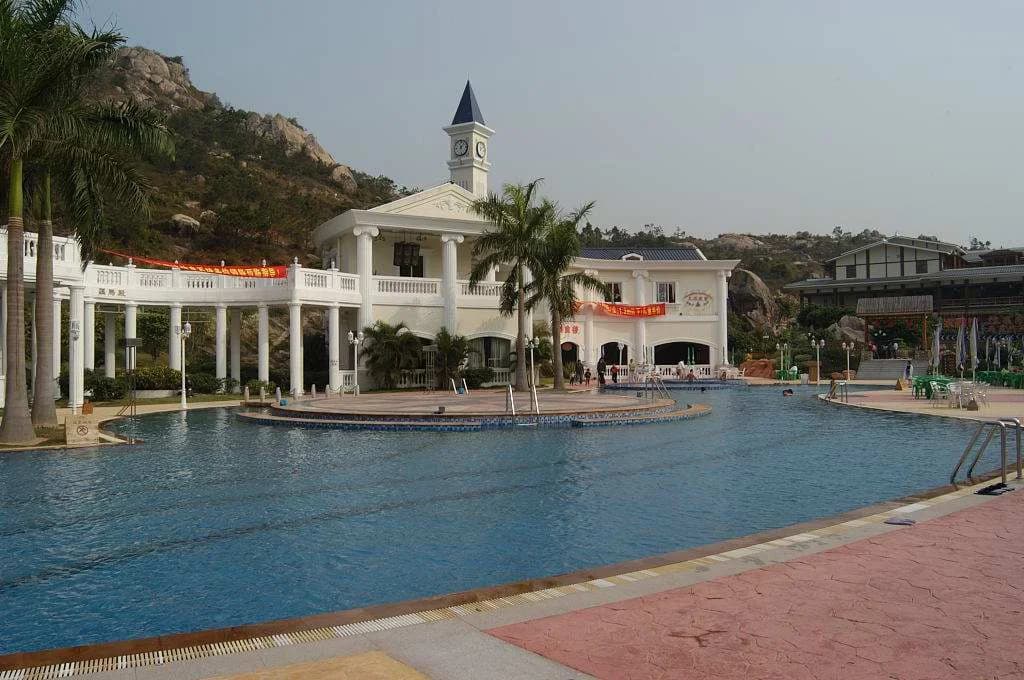
A resort pool can look like an ordinary swimming facility even when the wider property markets a hot-spring experience. Confirm the source, pool list, water treatment, swimwear rule and day-guest access separately. Photo by Emitchan, licensed under CC BY-SA 3.0.
For a real day trip, transport is part of the product. Confirm the final bus or train, app-taxi availability at closing time, wet-bag storage and whether your hotel can hold luggage. Our Xifeng hot-spring decision guide shows how to test one destination against transfer time, live ticket inclusions and child rules. Tengchong's Rehai guide explains why a geothermal sightseeing area and a bathing venue should not be treated as the same ticket.
Use hot pools conservatively
China's public-place hygiene rules cover public bathhouses, and national standards set environmental and hygiene requirements. A traveler still has to make a live judgment. Look for a clean changing area, non-slippery circulation route, functioning filtration, current inspection or water-quality information and staff who can answer basic questions. Strong fragrance, colored water or steam does not prove a therapeutic ingredient or cleanliness.
The US CDC's current public guidance offers sensible personal precautions for any hot tub: shower first, do not swallow the water, stay out when ill with diarrhea, avoid alcohol before and during use, and speak to a healthcare professional before hot-tub use during pregnancy. It also advises that children under five should not use hot tubs. Follow the venue's stricter rule where applicable.
Leave a hot pool if you feel dizzy, faint, overheated, short of breath or unwell. Use handrails and non-slip footwear where allowed. People with pregnancy, cardiovascular conditions, impaired sensation, open wounds, fever or other significant health concerns should seek individualized medical advice before heat exposure. No pool label, mineral list or massage menu replaces that advice.
Ear cleaning: treat it as an optional invasive service
Commercial 采耳 may combine external ear cleaning, lights, cameras, feathers, tuning sounds, massage and tools placed in the ear canal. The sensory presentation can make it feel gentle, but the tool position is the relevant risk.
At a February 2026 National Health Commission press conference, an ear specialist explained that earwax helps protect the ear canal and that unsafe tools can carry fungi or injure canal skin, potentially causing inflammation. The practical conclusion for a traveler is modest: routine deep cleaning is not necessary for everyone, and a commercial operator should not diagnose infection, hearing loss or impacted wax.
Skip commercial ear cleaning if you have ear pain, discharge, bleeding, sudden hearing change, active infection, a foreign object, a known eardrum perforation, tubes or recent ear surgery. Seek medical assessment instead. If you choose the experience, keep it external and conservative, ask to see the tool-processing or single-use procedure, decline drops and unagreed products, and stop immediately if you feel pain or vertigo.
Use a separate consent script:
只做外耳清洁,不要深入耳道,不要滴任何液体。疼或不舒服就马上停。
External-ear cleaning only. Do not go deep into the ear canal and do not add any liquid. Stop immediately if it hurts or feels uncomfortable.
In a Chengdu teahouse, ear cleaning is a separate commercial service rather than part of ordering tea. The Chengdu teahouse and mahjong guide explains how to decline it without turning the tea visit into a negotiation.
Read the price as a stack, not one number
Do not memorize a national “normal price.” City, district, room type, duration, practitioner level and facilities make that number misleading. Instead, inspect the stack:
| Layer | What to verify |
|---|---|
| Base service | Exact name, hands-on duration, included body areas or facility zones |
| Space | Shared recliner, private room, couples room or premium floor surcharge |
| Practitioner | Standard, senior or named practitioner; gender request; waiting time |
| Products | Oil, herbs, scrub, disposable garment, ear drops, hot stones or skincare |
| Facilities | Bath admission, shower, sauna, buffet, fruit, overnight seat or private rest room |
| Time | When the clock starts, late-arrival rule, overstay fee and last entry |
| Payment | Deposit, service charge, tax treatment, cancellation and refund route |
China's current Consumer Rights Protection Law implementing regulation requires service items, content, prices and pricing methods to be displayed clearly. For prepaid service, the written contract should state the service, price or fees, refund method and breach responsibility. That makes a screenshot of the selected package, a reception confirmation and an itemized receipt practical protections rather than awkward requests.
Avoid buying a large membership during a first visit. “Today's discount” does not reveal whether you will return, whether another branch accepts the balance, how expiration works or how an international traveler can recover funds. If you deliberately consider prepayment, request the written terms and refund method before transferring money.
Tipping is not a universal automatic percentage. Pay the displayed total unless the business clearly explains an optional gratuity practice. Do not let uncertainty become an invitation to accept an unexplained charge.
A two-minute legitimacy and boundary check
Use evidence you can observe rather than stereotypes about decor, opening hours or private rooms.
At the listing stage: match the Chinese business name, street address and recent exterior photos. Read current reviews for process patterns, not a single dramatic claim. Check whether the phone number and booking account lead to the same business. Use the planning workflow in China's app guide to cross-check the map listing.
At reception: look for a posted menu with service name, duration and price; ask for the total in writing; identify the changing or treatment arrangement; state practitioner-gender and body-boundary requests; and confirm that a receipt is available. A business should be able to describe what it sells without coded persuasion.
Inside the service space: verify that the room matches the agreement, fresh linen is present, the door and draping work as discussed, and any reusable tool has a credible cleaning or sterilization process. A sealed packet proves only that the packet was sealed; it does not establish what happened before packaging. Ask rather than inventing reassurance.
Late opening, dark lighting, private rooms or a particular style of sign do not by themselves prove unlawful or unsafe activity. Conversely, a chain logo or hotel address does not guarantee respectful conduct. Leave when staff refuse to state the service and price, pressure you into an ambiguous add-on, ignore a boundary, block your exit or make you feel unsafe.
Hygiene checks that a traveler can actually make
National public-place standards provide a regulatory baseline for bathhouses, including hygiene management, environmental indicators and handling of shared items. Travelers cannot audit a facility from the lobby, but they can check visible controls:
- Linen and clothing: fresh towel, sheet, headrest cover and facility pajamas for each customer; a separate used-linen collection point.
- Feet and basins: a basin that is visibly cleaned between customers; any liner fitted before use rather than already holding residue.
- Reusable tools: a clear single-use, cleaning, disinfection or sterilization workflow appropriate to the tool; no tool moved directly from another guest.
- Hands and skin: hand hygiene before direct contact; practitioner skin lesions covered; no product applied to broken skin.
- Wet zones: drains working, walking surfaces maintained, pool rules visible and staff present; cloudy water, sticky surfaces or strong chemical odor deserve a question or an exit.
- Air and smoke: ventilation that matches the room, and a smoking policy you can tolerate.
Visible cleanliness reduces uncertainty but cannot prove water chemistry or infection control. If a condition makes exposure consequential, choose the more controlled option or skip the service.
Privacy, gender and solo-traveler decisions
For a solo traveler, put the booking in a map or hotel message thread, share the business name with a trusted contact, and keep your phone, passport and payment method under your control. The solo female travel guide has a broader transport and accommodation framework; for wellness services, the specific controls are practitioner gender, room type, door preference, draping and the right to stop.
Gender-segregated wet zones may not have detailed English explanations. Transgender and non-binary travelers should ask the venue privately before purchasing because local facility rules and staff handling vary. A private hotel spa room or in-room hotel service from an identified provider may reduce communal-changing friction, though provider identity, boundaries and charges still need confirmation.
Families should never assume that a child can enter an opposite-gender changing room with a parent. Age and height thresholds can change by venue. Ask about changing assistance, pool temperature, child access, quiet areas and family rooms on the actual date. Our China family travel guide explains why a venue's family label does not resolve stroller, nap or toilet logistics.
For older travelers, prioritize non-slip access, handrails, elevators, a shorter session and a clear exit route over the number of pools or treatment rooms. Ask whether the practitioner can avoid forceful stretching and whether a companion may remain nearby.
Payment, disputes and leaving cleanly
Before service, save the Chinese venue name, selected package, quoted total and cancellation rule. Pay through a traceable method when possible; see the separate Alipay and WeChat Pay setup guides. After service, check the itemized bill before authorizing payment and retain the receipt.
If a small discrepancy appears, point to the written selection and ask reception to remove the unapproved item. If a consumer dispute cannot be resolved, China's State Administration for Market Regulation directs consumers to the national 12315 platform or the local 12315 hotline. The platform needs the operator's identity or address, your requested resolution and supporting evidence, so screenshots and receipts matter. Use 110 for an immediate threat to personal safety and 120 for a medical emergency.
Do not argue alone in a closed room. Dress, move to reception or a public area, and contact your hotel or a trusted person. A disputed upsell is a consumer issue; unwanted touching, restraint or threats require a different and more urgent response.
A practical booking script
Copy the relevant lines into your phone before arrival:
- 请给我看项目、时间和总价。 — Please show me the service, duration and total price.
- 这个价格包括房间、用品和服务费吗? — Does this price include the room, products and service charge?
- 什么时候开始计时? — When does the timer start?
- 不要加项目,也不要办卡。 — No add-ons and no membership card.
- 我想要女技师 / 男技师。 — I would like a female / male practitioner.
- 请先告诉我下一步做什么。 — Please tell me what you will do next.
- 这里不要碰。 — Do not touch here.
- 轻一点 / 重一点。 — Lighter / stronger.
- 请马上停。 — Please stop immediately.
- 请给我消费明细和收据。 — Please give me an itemized bill and receipt.
- 我不同意这个加项,请删掉。 — I did not agree to this add-on; please remove it.
Translation apps can help with menus, but a translated treatment name is not consent to every step. Ask the staff to point to the exact line item and type the total into a calculator or chat message.
Match the experience to the day
After a walking-heavy sightseeing day: choose a basic foot session near the hotel, keep it under 90 minutes, decline tools and upgrades, and return before public transport becomes sparse.
On a rainy afternoon: a bathing complex can replace outdoor plans if the wet-zone arrangement, admission hours and return transport suit the group. Bring dry underwear, a wet bag and any personal toiletries you prefer.
For a quiet couple experience: book a hotel or established day spa only after confirming a true two-bed room, simultaneous practitioners, draping and the full price. “Couples” can describe marketing rather than layout.
For a hot-spring destination day: allow the transfer, changing, showering, short soak cycles, food and return. Do not attach a late train or flight to an isolated resort checkout.
For a cultural curiosity: tea, massage and ear cleaning are separate choices. You can enjoy a teahouse without adding a body service, and you can decline ear cleaning without rejecting local culture.
When tired, ill or uncertain: skip. Wellness products are optional. A shower, meal and early night can be the better travel decision.
The final check before you lie down or enter the water
You should be able to answer six questions: What exactly did I buy? What is the total? How long is it? What will I wear? Who will touch which areas? How do I stop? For a bathing venue, add which zones are included and how do I get back? For ear cleaning, add what enters the ear and why am I choosing it?
If the answers are clear, the experience can be straightforward and restorative. If they remain vague after a direct question, choose a simpler package, a more transparent venue or no service at all.