Longjing Tea Route
The most useful Hangzhou tea day is not a sequence of shops. Start at the China National Tea Museum, then move through tea landscape and finish with one deliberate tasting in Longjing Village. This order gives you enough vocabulary to ask better questions before money enters the conversation.
The route
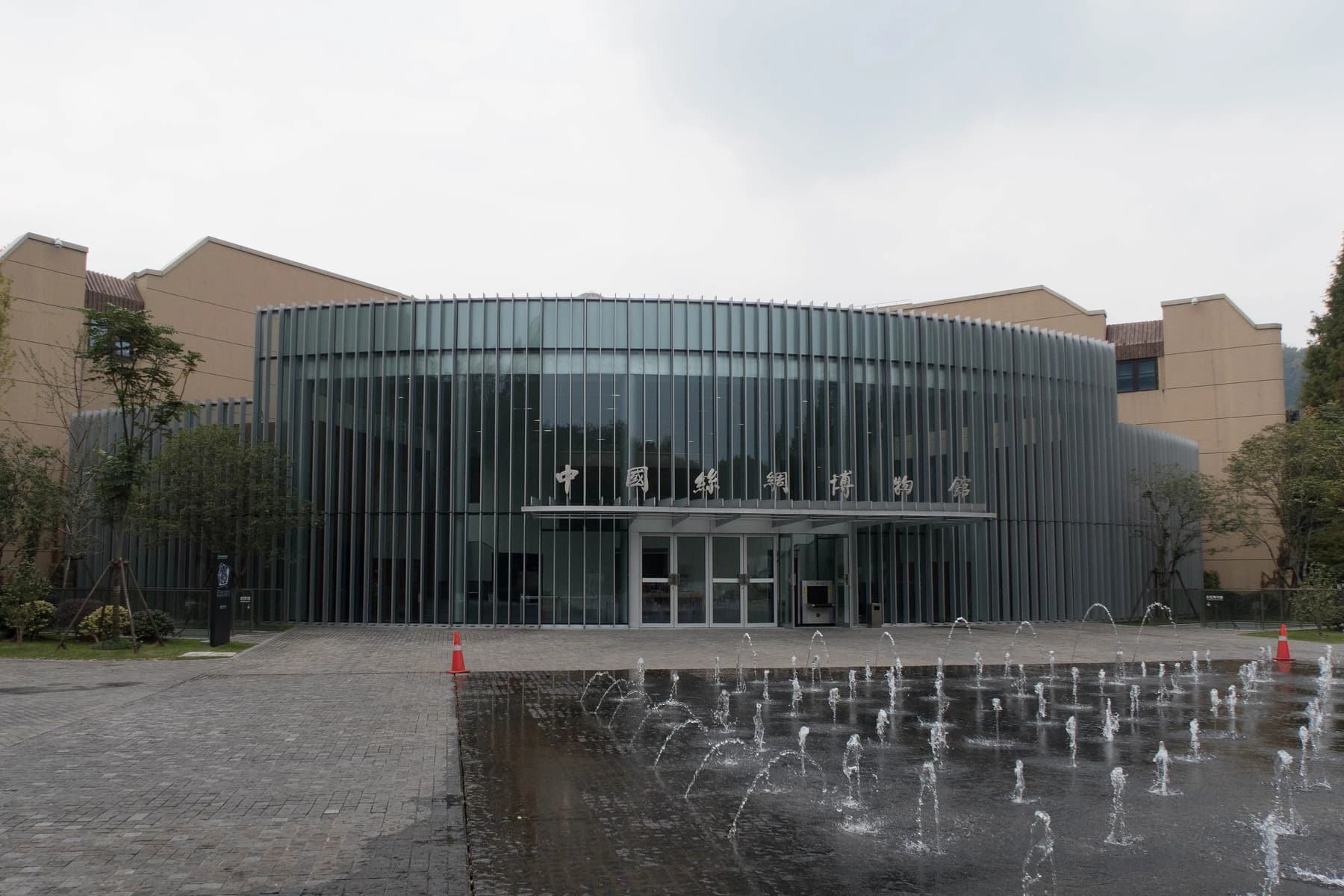
1. China National Tea Museum, Shuangfeng campus
Use the Shuangfeng campus for the broad story of tea: plant, processing, regional families, utensils and social practice. Check the official museum site for the current campus information, exhibition status and visitor notice. Do not rely on an old blog's hours or assume the two campuses share one entrance.
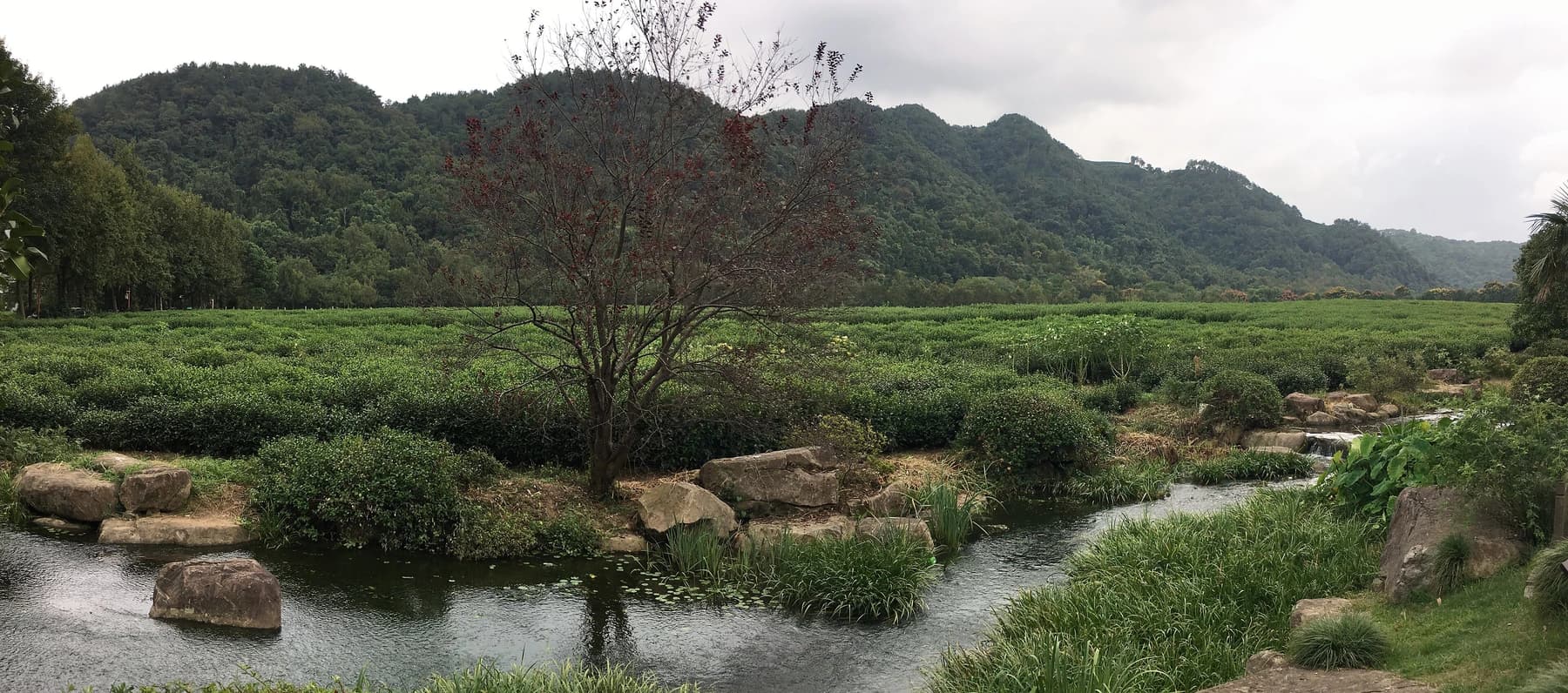
Photo: Fredlyfish4 · Source · CC BY-SA 4.0
Choose a 60–90 minute spine: processing methods, major tea categories and Longjing context. A visitor who reads every label can spend much longer, but the field landscape supplies the second half of the story.
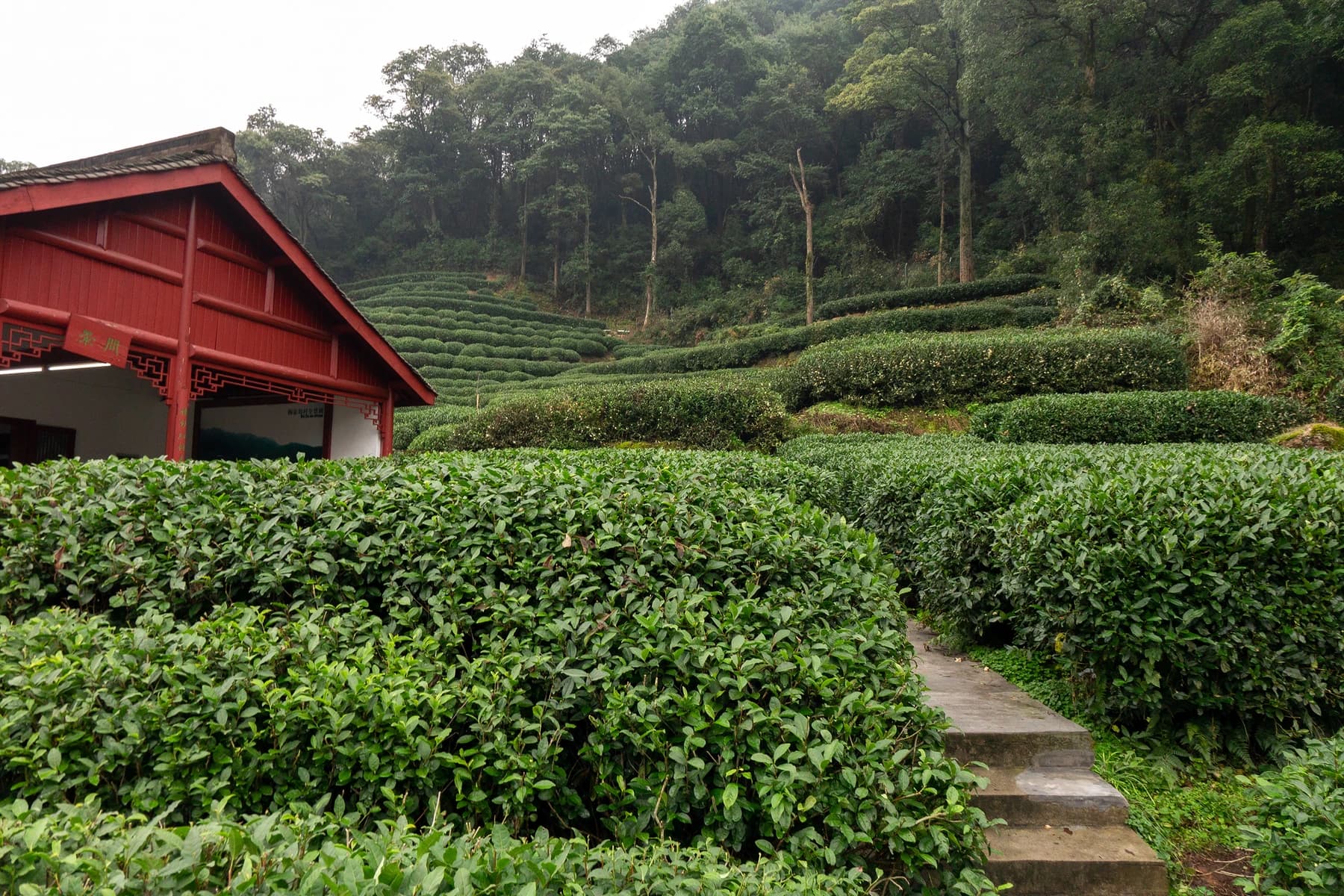
2. Tea landscape
Continue toward Longjing Village by car or ride-hail. Route planning gives roughly 3.2 km and ten minutes before traffic from the Shuangfeng museum node. Walk only signed or clearly public sections. Tea plots are agricultural land; do not step between rows, pick leaves or enter a courtyard for photographs without permission.
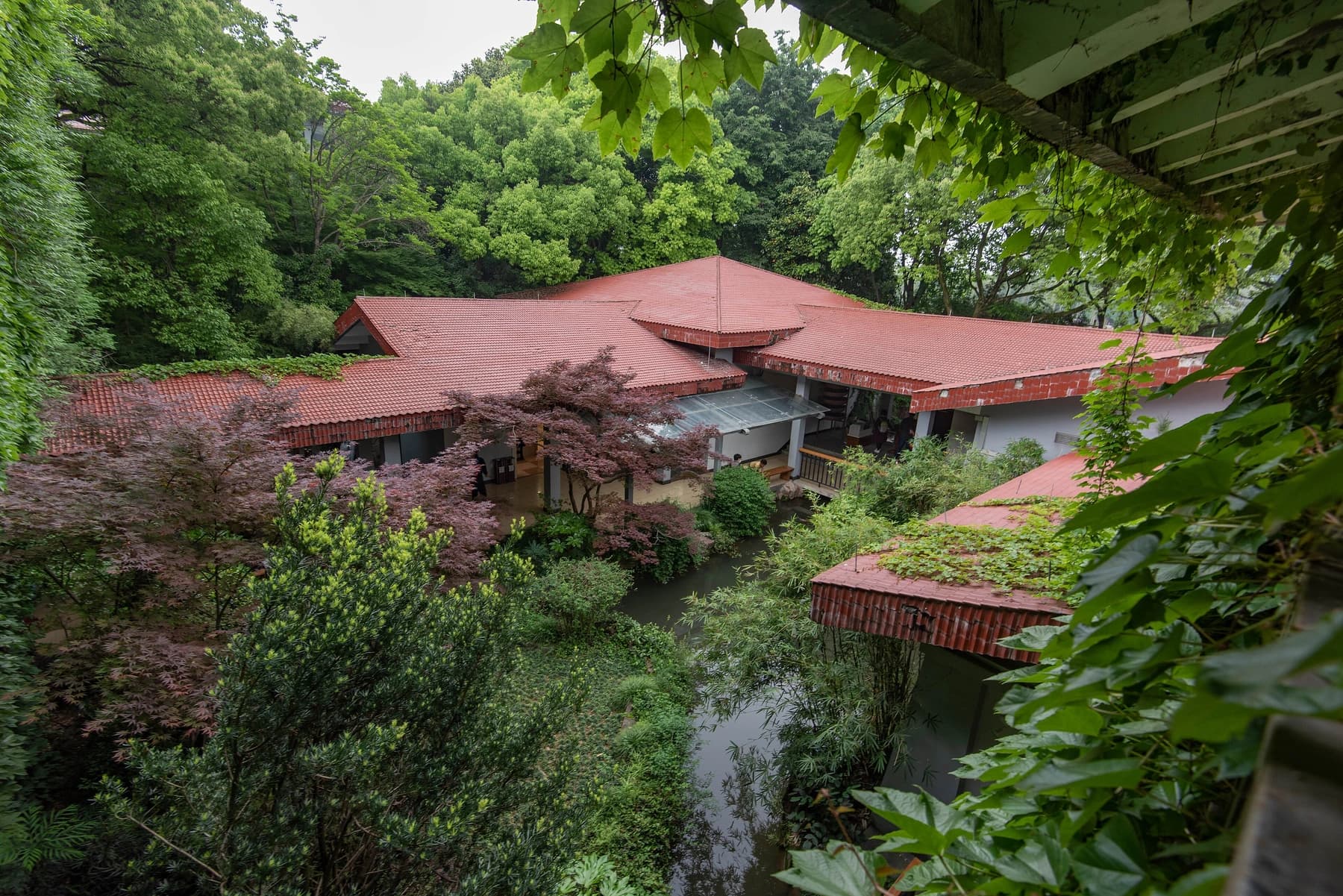
Photo: Siyuwj · Source · CC BY-SA 4.0
3. Longjing Village tasting
Choose one tasting rather than accepting the first roadside invitation. Before tea is brewed, ask:
- What is the precise origin area?
- Which cultivar is it?
- What harvest period and year?
- What grade or sorting standard?
- What is the price per stated weight and the total package price?
- Can the dry leaf and brewed leaf be compared in good light?
If the answers remain vague or change after tasting, leave politely. A long ceremony, family story or scenic terrace is not independent proof that the leaves come from the claimed core area.
Understanding “Longjing” claims
Longjing describes a style and protected geographic context with distinctions that matter to price. Tourist conversations often compress origin, cultivar, harvest and grade into one prestige phrase. Treat each as a separate question. Early spring picking can command high prices, but early is not automatically better for every palate and authenticity cannot be judged from price alone.
Brewing as an evaluation tool
Ask for a simple transparent glass or gaiwan brew, a clear water temperature explanation and a second infusion. Look for aroma, balance, texture and how the leaf opens. Do not let a seller hide the measured leaf quantity or present only a heavily staged first infusion.
Buy a small sealed amount first. Confirm net weight, storage advice and whether the package is the exact tea tasted. Gift boxes can cost more than their contents and are difficult to compare.
Add Lingyin—or keep tea slower
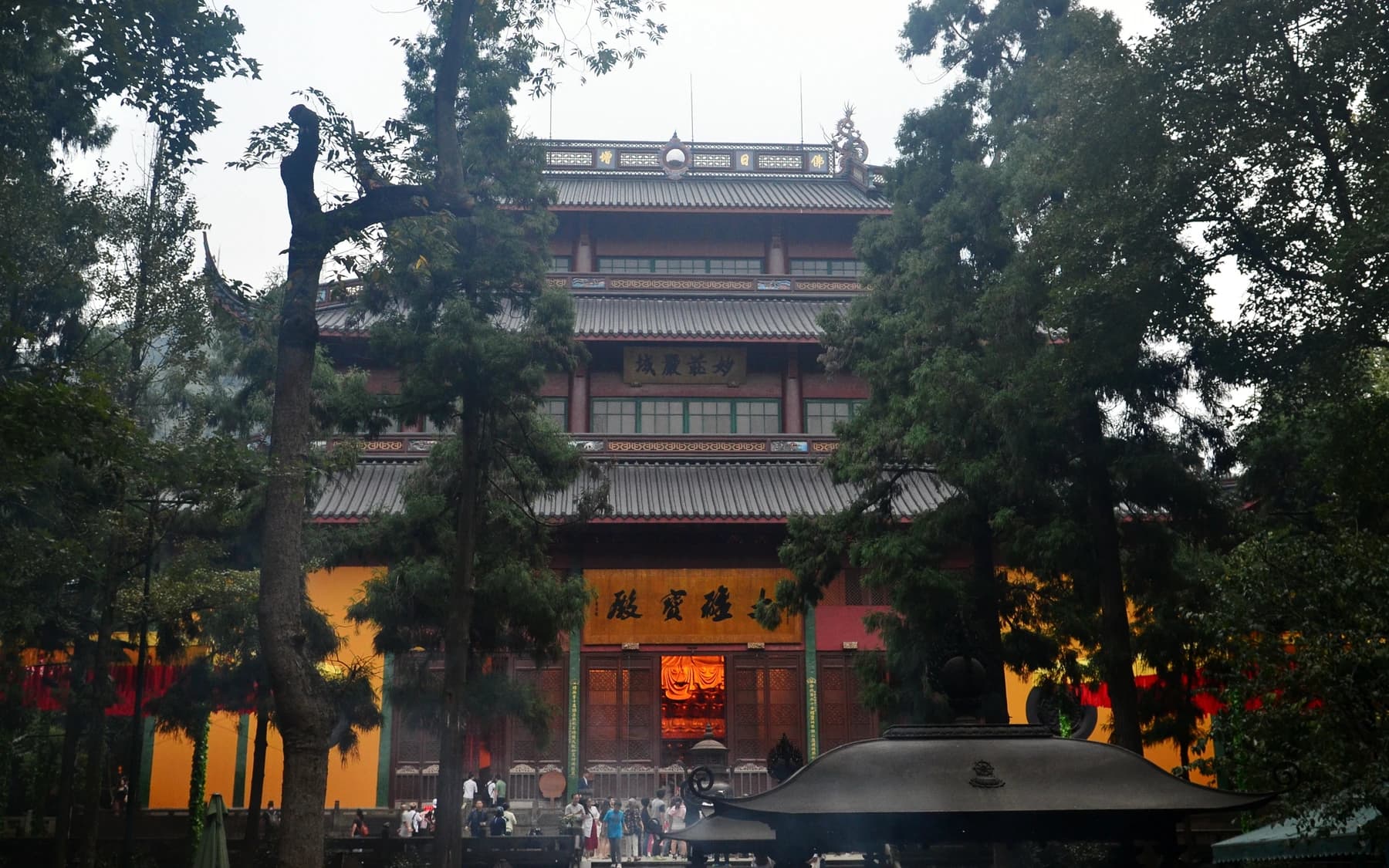
The efficient full day is Lingyin and Feilai Peak → Shuangfeng museum → Longjing Village. Lingyin to the museum is about 4.1 km by road in planning. If tea is your main interest, omit Lingyin and add the museum's other campus only after verifying what is open and how the two sites differ.
Common mistakes
- Going to a shop before the museum and having no independent vocabulary.
- Following a driver to an unnamed “tea museum” that is actually a retail showroom.
- Assuming every green field near West Lake produces the same grade or protected-origin tea.
- Photographing workers or private homes at close range without consent.
- Buying a large package because refusing tea feels impolite.
Who should skip the village
If sales conversations make you uncomfortable, visit the museum and public landscape, then buy from a transparent specialist shop in the city. The route remains worthwhile without a village purchase. Travelers with limited mobility should verify gradients and vehicle drop-off before relying on a field walk.