Hangzhou Grand Canal Walk
The useful Hangzhou canal visit is a short directional route, not a list of every waterside museum and restored lane. Begin at Gongchen Bridge (拱宸桥), understand why this crossing mattered, choose one specialist interior, then walk roughly 1.5 km south to Xiaohe Historic District (小河历史文化街区).
Route in order
1. Gongchen Bridge
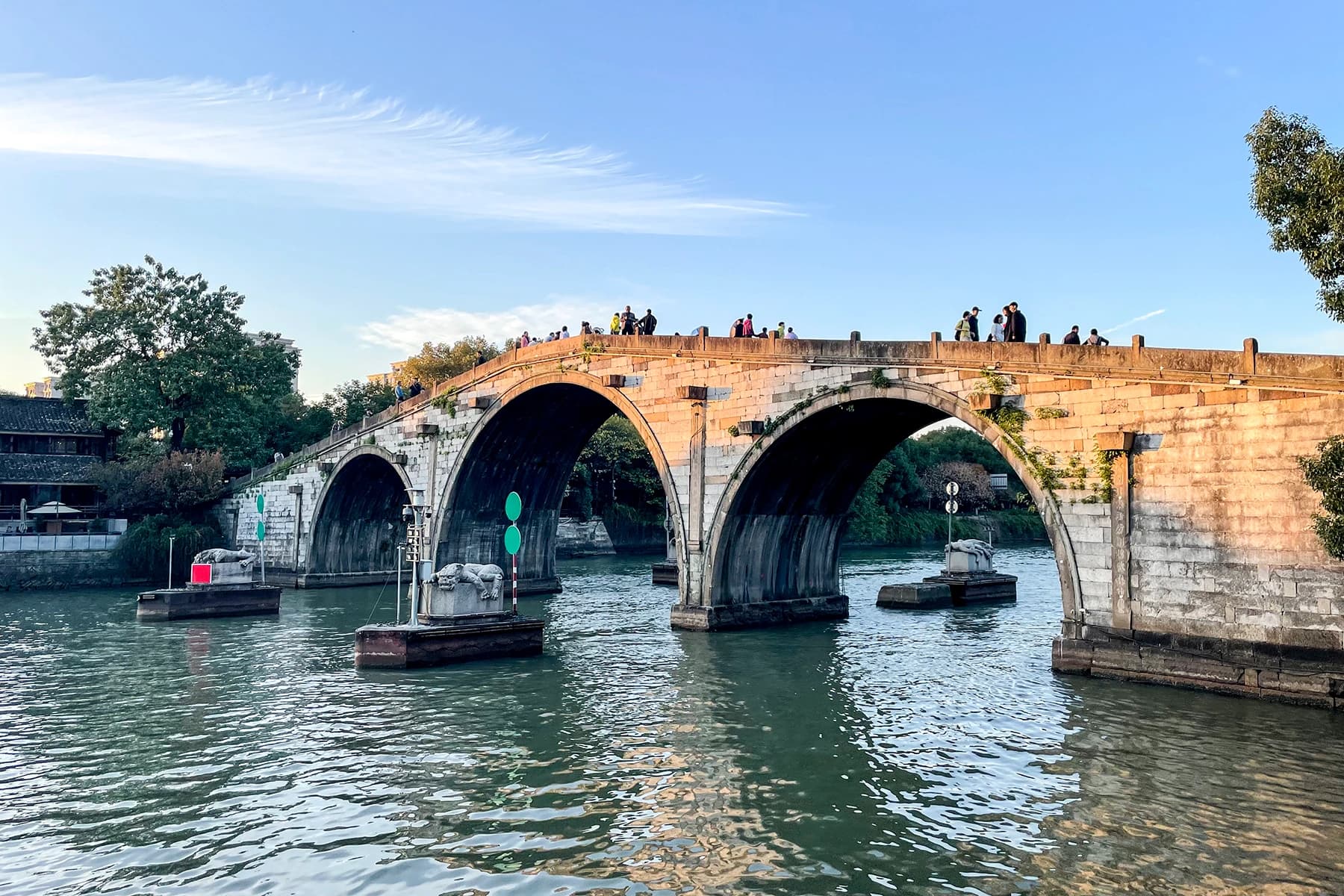
Approach from the canal bank before crossing so the stone arches, towpath relationship and water width remain visible. The bridge is both infrastructure and landmark. Notice the steep pedestrian profile and how the commercial banks face the crossing.
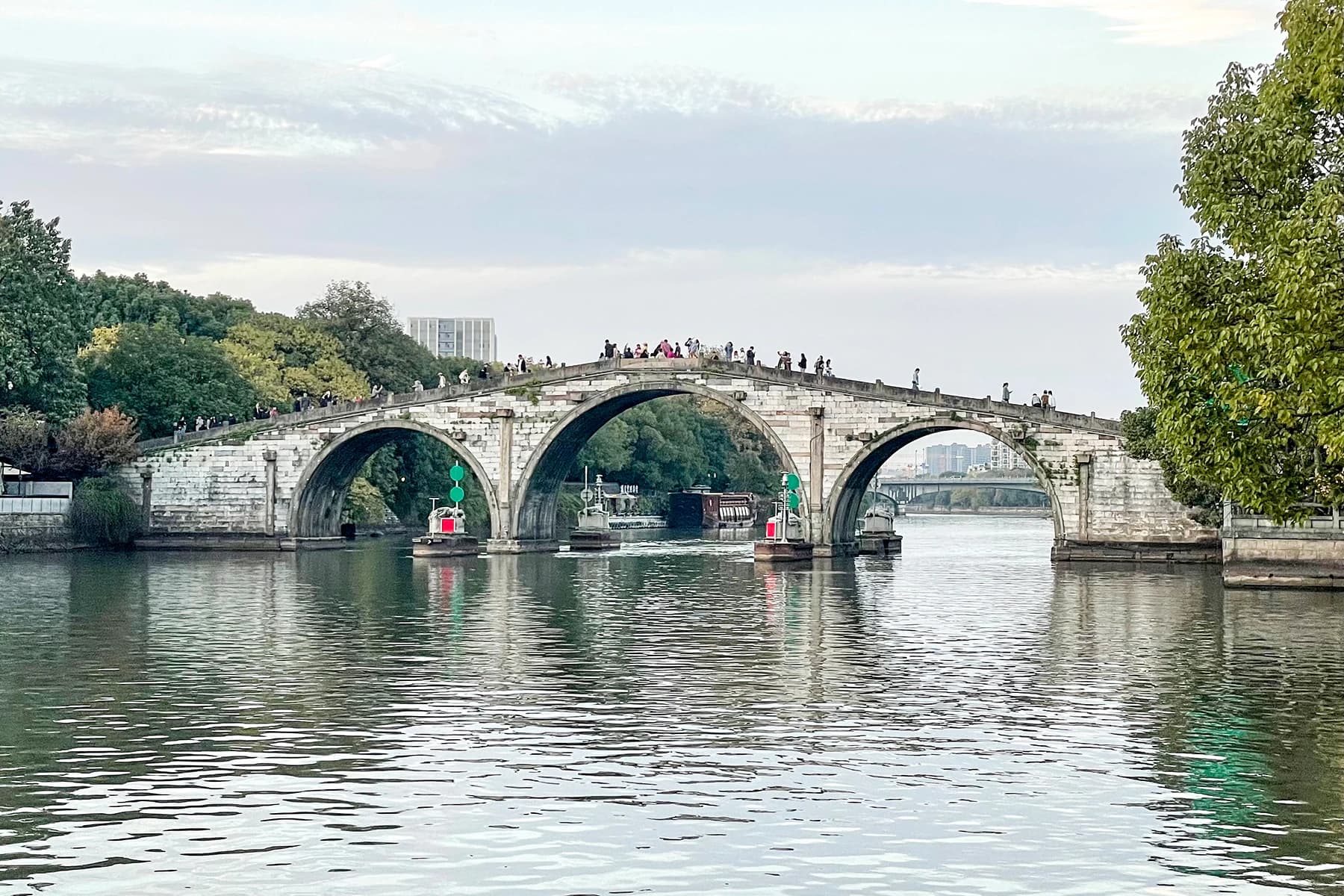
Photo: Windmemories · Source · CC BY-SA 4.0
Cross slowly and keep clear of residents and delivery movement. The bridge can be slippery in rain and is not the easiest step-free crossing; verify the nearby accessible alternative if needed.
2. Choose one specialist museum
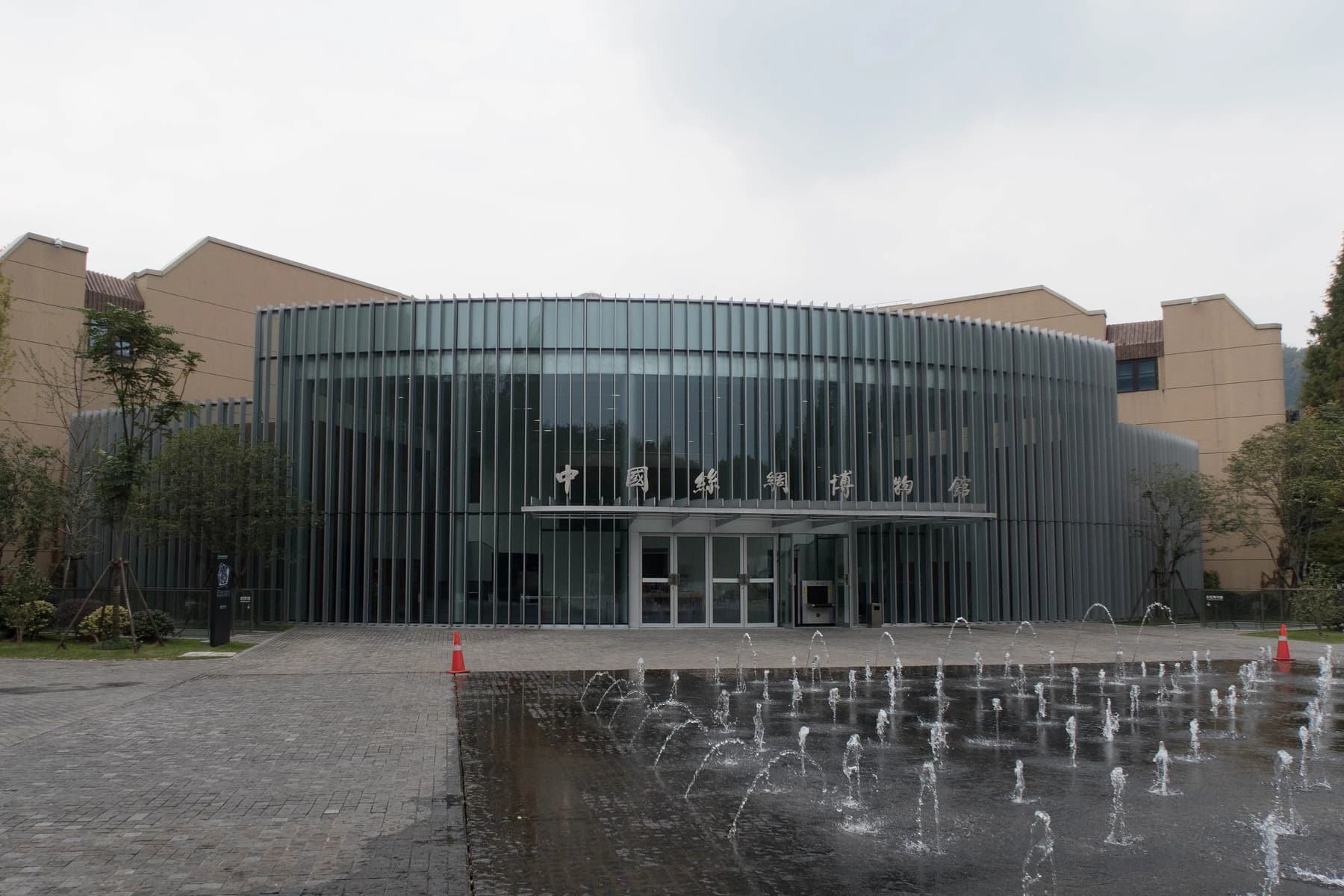
The surrounding canal district contains museums and heritage spaces connected to crafts, industry and everyday life. Choose according to the current exhibition and closure day rather than trying to enter all of them. One focused interior gives the outdoor warehouses and worker neighborhoods more meaning.
Check the live institution notice before travel. A saved map listing does not prove that a gallery is open, that English interpretation is available or that a temporary exhibition remains installed.
3. Walk to Xiaohe
The verified planning distance from Gongchen Bridge to Xiaohe is about 1.5 km or 20 minutes on foot before stops. Follow the canal-side public route south, using the water as the organizing line. Xiaohe is smaller in scale: domestic facades, narrow waterways and adapted buildings replace the monumentality of the bridge.
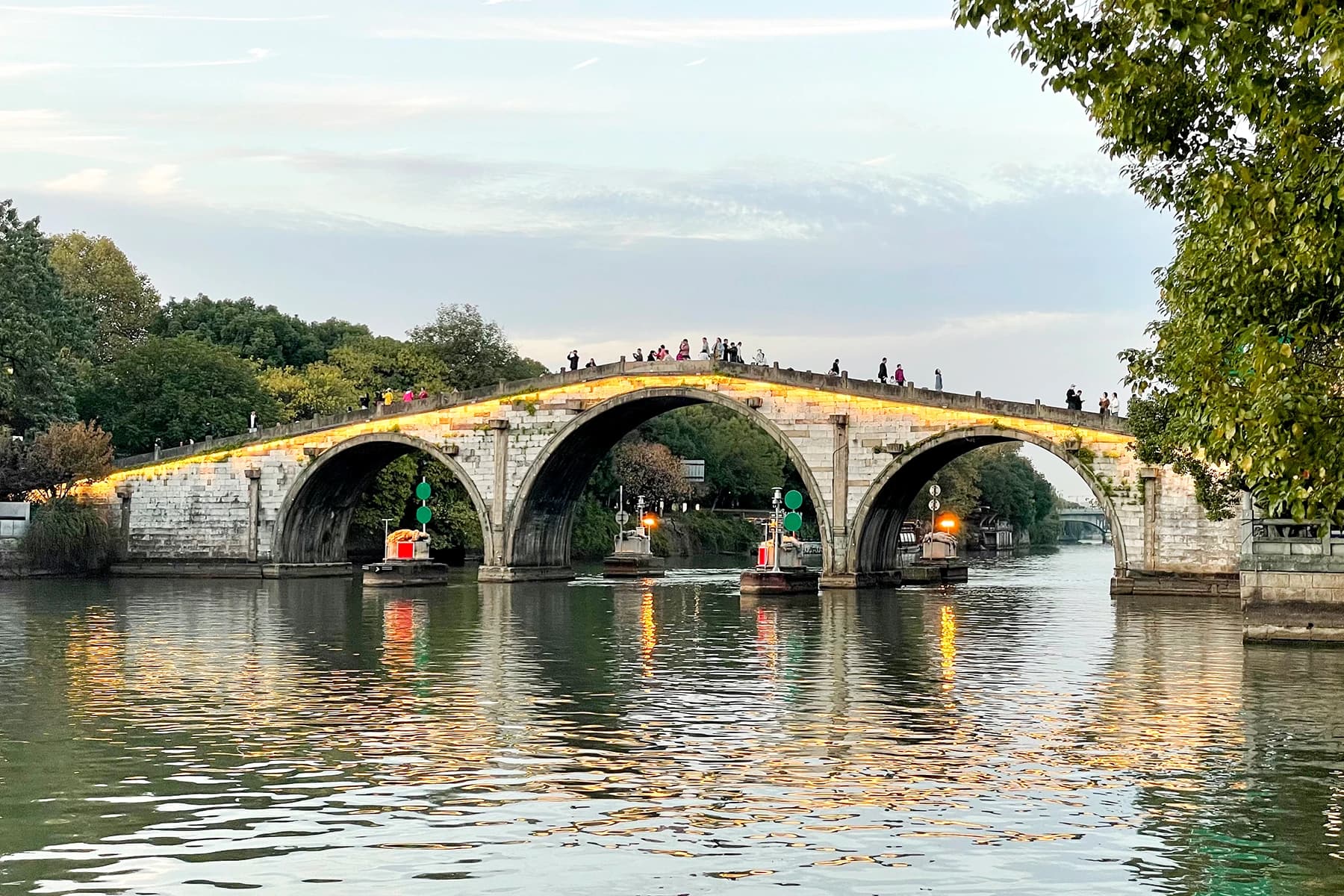
Photo: Windmemories · Source · CC BY-SA 4.0
What to read in Xiaohe
Look for the relationship between street and water access, the scale of former homes and workshops, and the boundary between lived neighborhood and visitor-oriented reuse. Some buildings remain private or function as ordinary businesses. Do not photograph residents through windows or block narrow lanes for staged portraits.
Half day or evening?
- Half day: best when a museum is central. Begin around opening time, then walk south and finish with lunch or tea.
- Late afternoon: best for exterior architecture and softer light, but museum time becomes fragile.
- Evening: useful for atmosphere and food only. Do not claim to understand the canal's historical layers from illuminated facades alone.
Pairing logic
The strongest third-day sequence is Xixi Wetland in the morning, then a vehicle transfer to Gongchen Bridge and the Xiaohe walk. Xixi to Gongchen is roughly 12.6 km by road in planning. The places share water as a theme but perform different geographic and historical jobs.
For a fourth-day return from Liangzhu, use the canal only as a flexible evening buffer. The archaeological park to Gongchen transfer is about 21.7 km by road before live traffic, so do not promise a fixed sunset arrival.
Common mistakes
- Treating Gongchen Bridge as a taxi photo stop and missing the canal bank.
- Entering every small museum without checking subject or opening day.
- Expecting Xiaohe to be an untouched old town rather than a living and adapted district.
- Combining the canal with a full West Lake circuit merely because both involve water.
- Assuming a canal cruise is necessary; the walking route explains spatial relationships better for a first visit.
Food and shopping
Choose places with a focused menu, visible turnover and prices shown before ordering. Craft products should identify material and maker; canal imagery on packaging does not prove local production. Keep the food stop subordinate to the route rather than moving between near-identical cafés.