Mount Tai
Mount Tai (泰山, Tài Shān; UNESCO's “Mount Taishan”) is far more than a summit viewpoint. Its long vertical journey links imperial and religious history, stone inscriptions, gates, temples, ancient trees and dramatic ridges. The best first visit begins by choosing how much of that ascent you want to earn on foot.
Compare the three strongest products
| Product | Core sequence | Effort | Best for |
|---|---|---|---|
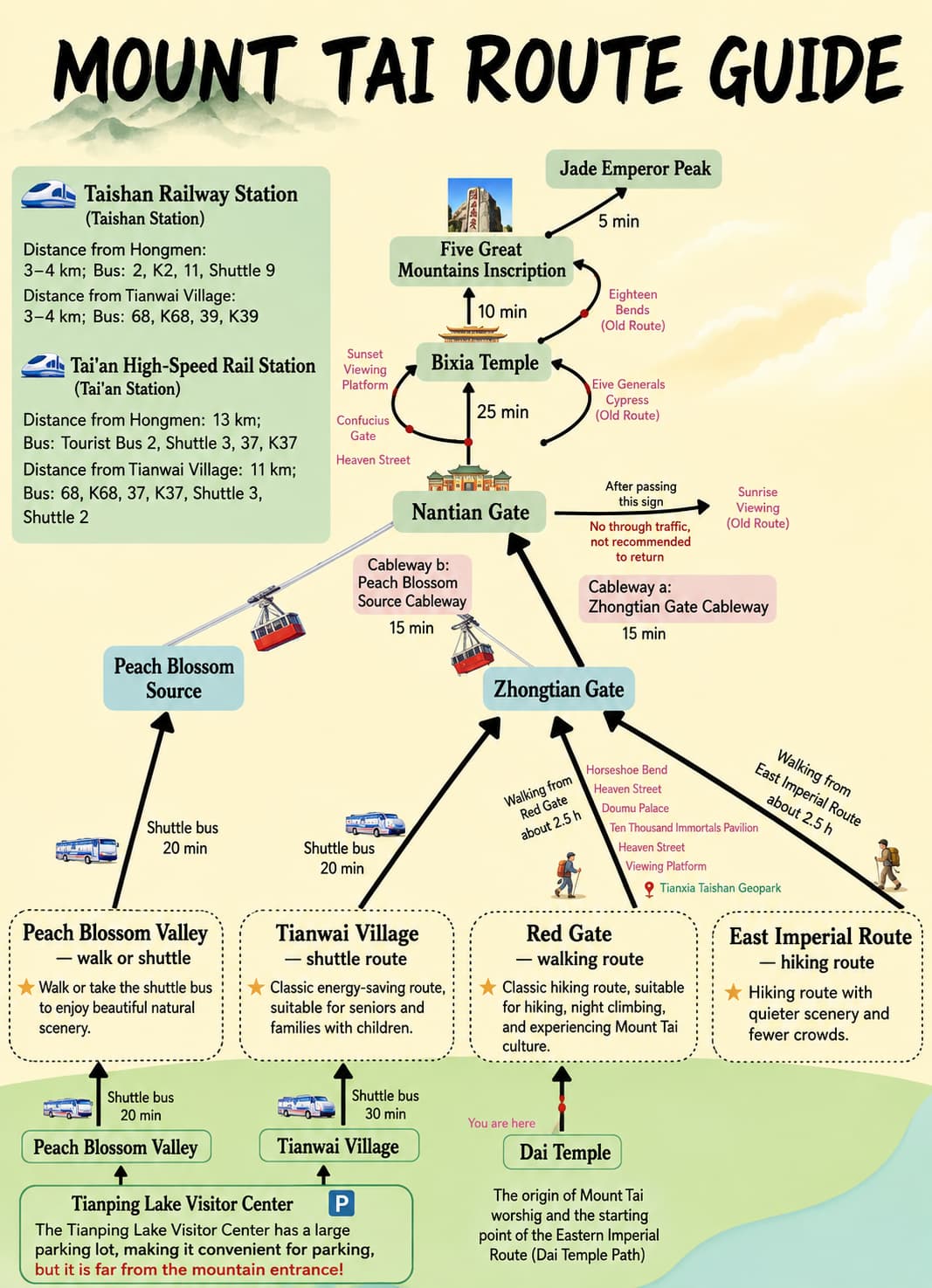
| Full Red Gate ascent | Red Gate → historic stair route → Mid-Heaven Gate → upper stairs → summit area | Highest; official baseline is about 9.5 km, 7,863 steps and 5 hours for a fit visitor | Walkers who want the complete cultural ascent |
| Tianwai assisted summit | Tianwai Village → managed bus → Mid-Heaven Gate → cableway when operating → upper area | Lowest of the three, but still involves high-altitude walking and stairs | Limited time, reduced stair tolerance or mixed-ability groups |
| Mixed ascent | Tianwai Village → managed bus → Mid-Heaven Gate → walk the upper historic stairs | Substantial upper climb without the full lower ascent | Most travelers who want both efficiency and real mountain character |
These are products, not fixed guarantees. Reserve the exact entrance and time, then verify the bus, cableway, weather and descent separately on the travel day.
Full Red Gate: the complete historic ascent
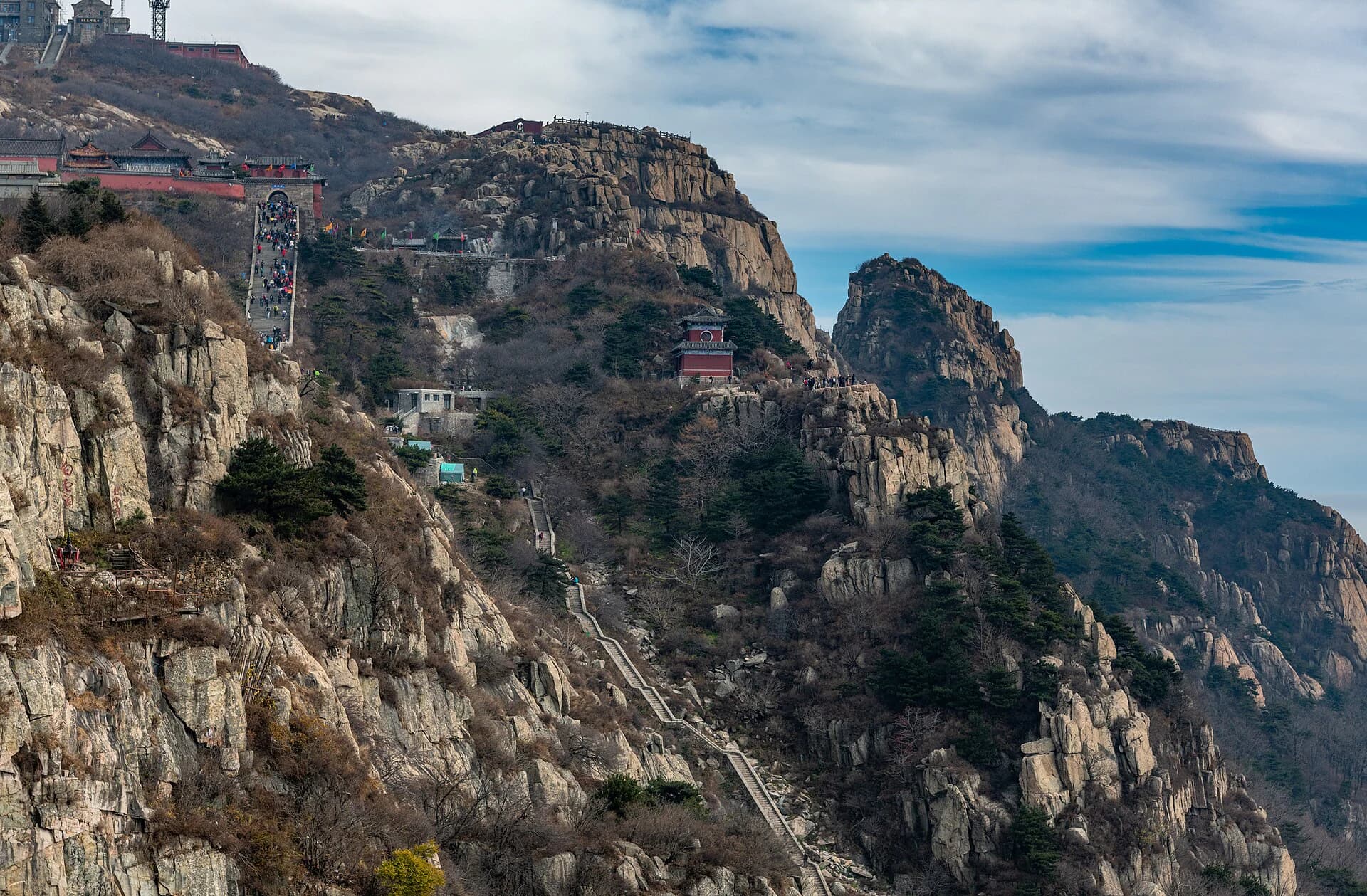
Choose Red Gate when the climb itself is the reason to visit. The lower and upper stairs build the cultural landscape gradually: inscriptions, gates, temple layers and changes in vegetation make the ascent meaningful long before the summit. Start early enough to protect the upper route and your descent; walking down the same steep stairs can be harder on knees than expected.
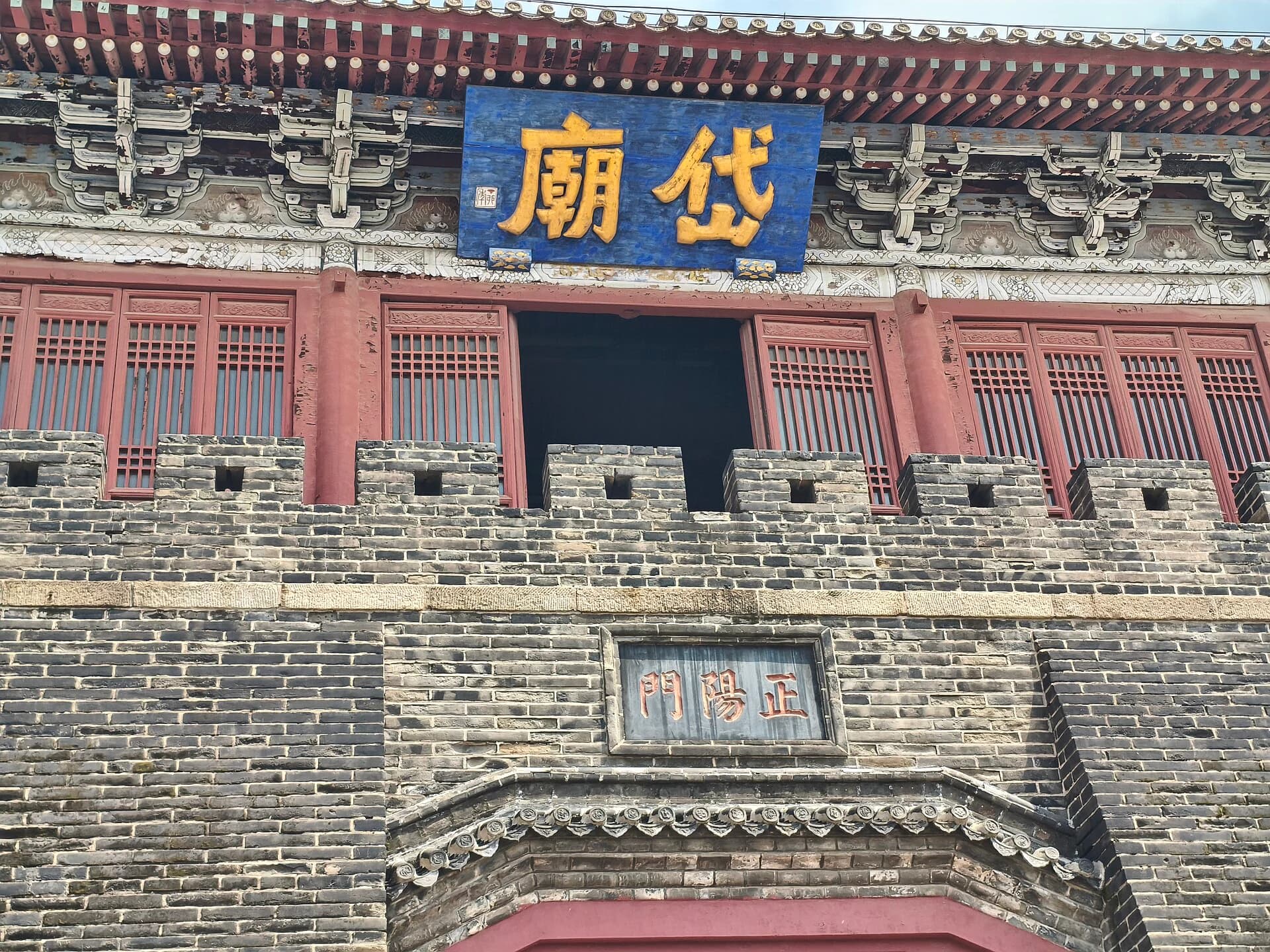
Check the non-mainland-adult Red Gate resource on Trip.com. Select the correct entry window and confirm the passport instructions, purchase cutoff, cancellation terms and final inclusions. It is admission—not a bus, cableway, guide, transfer, summit stay or sunrise promise. Treat Dai Temple as a separate ticket unless the final selected checkout explicitly includes it.
Tianwai Village: the reduced-effort summit product
The Tianwai route replaces the long lower stair ascent with the managed mountain bus. The current official service model describes a roughly 30-minute ride to Mid-Heaven Gate; from there, a separate cableway can reduce the upper climb when it is operating. This is the clearest option for travelers who value the upper landscape more than the full pilgrimage-like ascent.
Check the Tianwai admission plus one-way uphill bus resource on Trip.com. The current non-mainland-adult product includes admission through Tianwai Village and the uphill bus to Mid-Heaven Gate. It does not include the cableway, downhill bus, guide, hotel transfer or return to Tai'an. Recheck the time slot and manual passport-verification instructions at checkout.
Do not plan to walk the managed vehicle road. If the cableway is suspended by weather, maintenance or crowd control, reassess the upper climb rather than treating the full stairs as an automatic substitute.
Mixed ascent: bus first, then earn the upper stairs
For many first-time visitors, the best balance is the Tianwai bus to Mid-Heaven Gate followed by the upper historic stairs toward South Heaven Gate and the summit area. It preserves the most dramatic walking section while removing the long lower climb. Families or mixed-ability groups can also choose different lower products and regroup only if communication, ticket slots and live operations make the meeting realistic.
A second mixed pattern—walking Red Gate to Mid-Heaven Gate and using the cableway above—works for travelers who want the historic lower half but need to protect their knees or time. Decide before the upper branch, because cableway operation and inventory are live and the descent may use a different product.
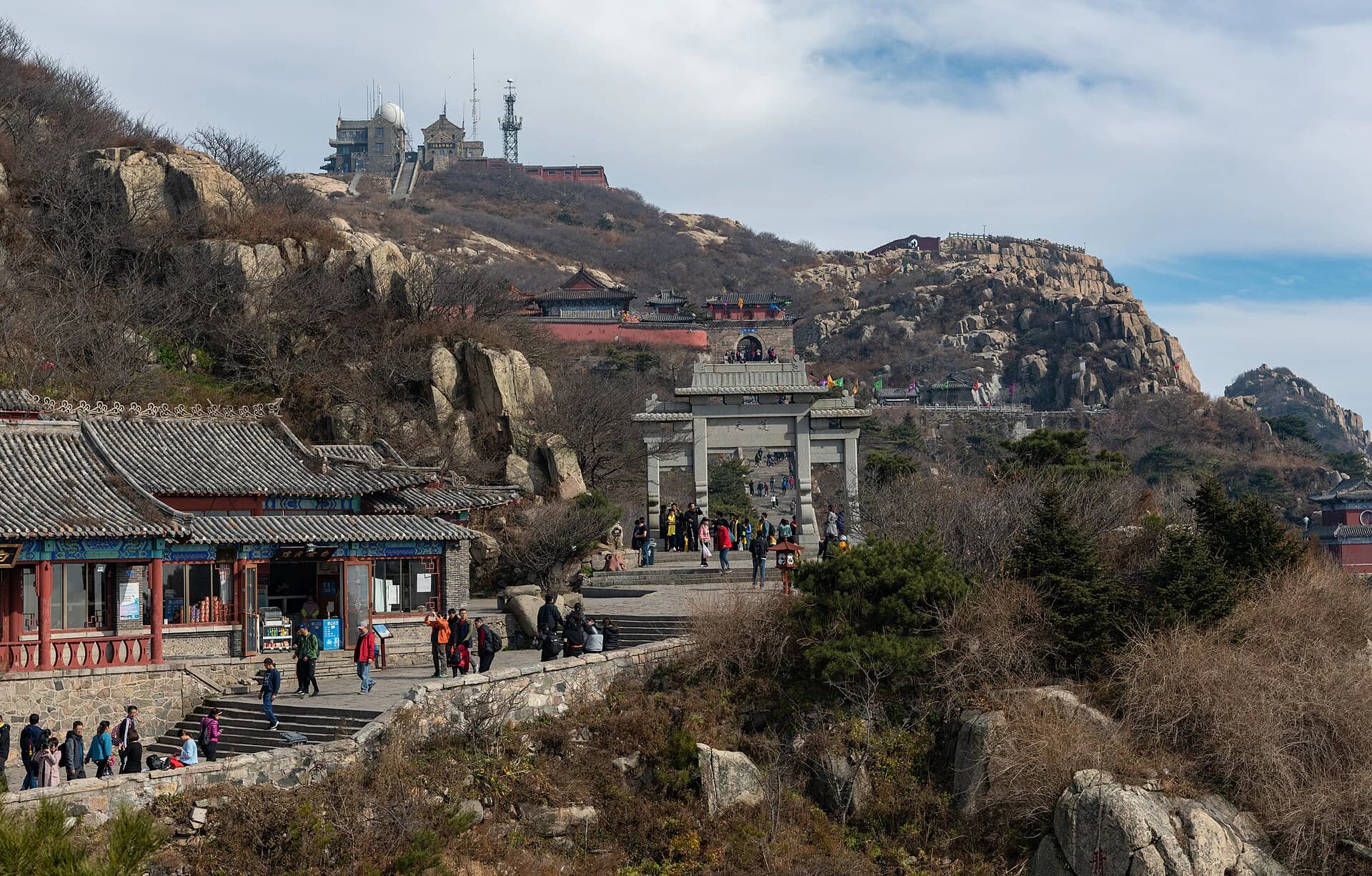
Summit, descent and sunrise
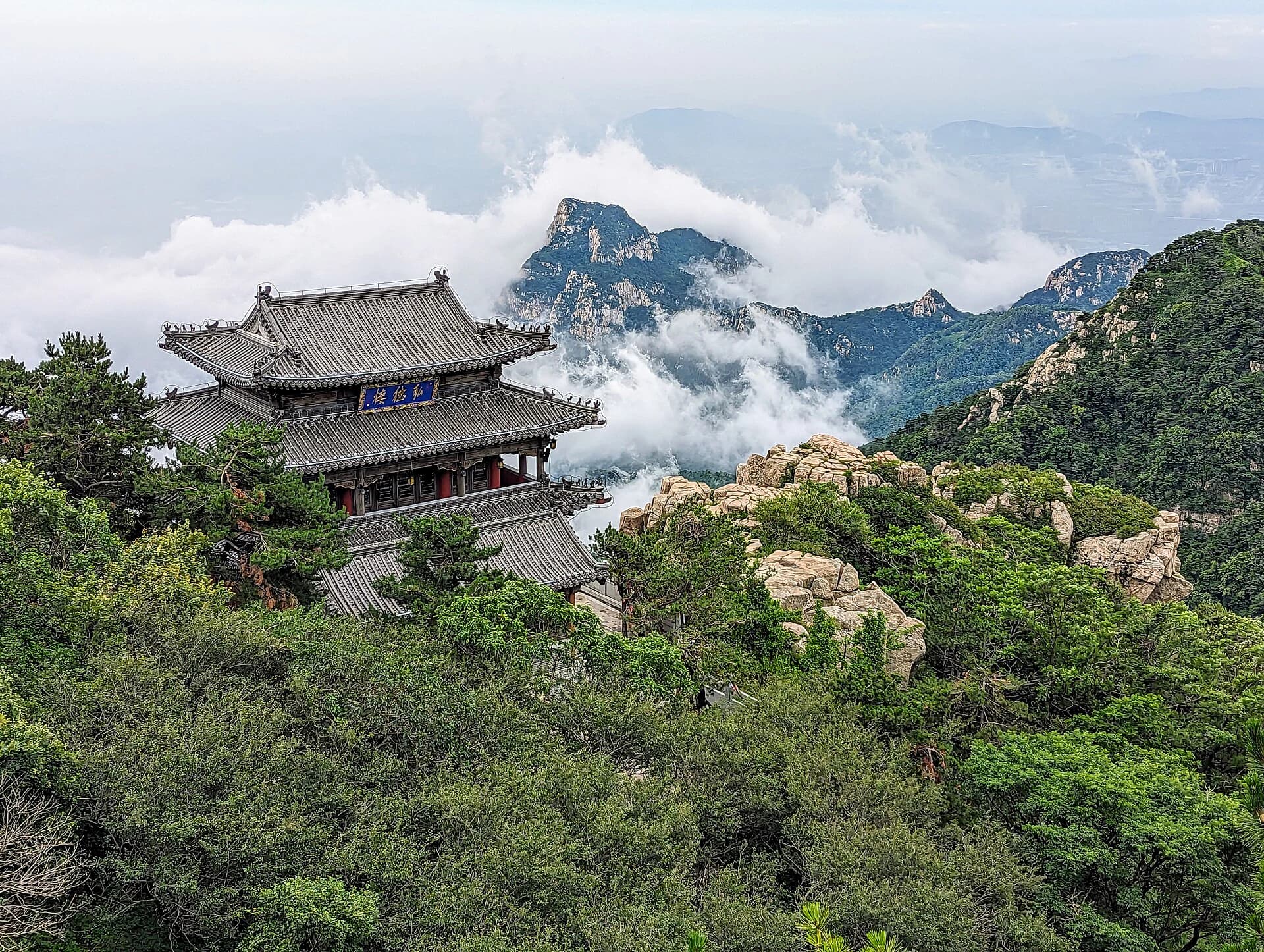
Once above South Heaven Gate, keep time for the upper built landscape, inscriptions and viewpoints rather than treating Jade Emperor Peak as the only goal. Follow current signs: the photographs and map identities do not establish an open shortcut or a precise internal route.
Choose the descent before your turnaround time. Cableway and bus are separately ticketed, weather-sensitive services. Trip.com currently exposes a distinct Mid-Heaven Gate to Tianwai one-way downhill bus resource; it excludes mountain admission and cableway. Passport users should confirm the accepted document in the live checkout because that resource uses the broader phrase “valid ID.”
Sunrise can be a memorable extra, but it is a forecast-dependent product rather than the mountain's guaranteed payoff. A night ascent requires a live Red Gate reservation window—Red Gate is not simply open 24 hours—and night allocation can sell out. Check the official forecast, entrance notice and route status, carry a reliable light and warm layers, and allow for the concentrated descent demand after dawn. Do not tie the return to a tight train.
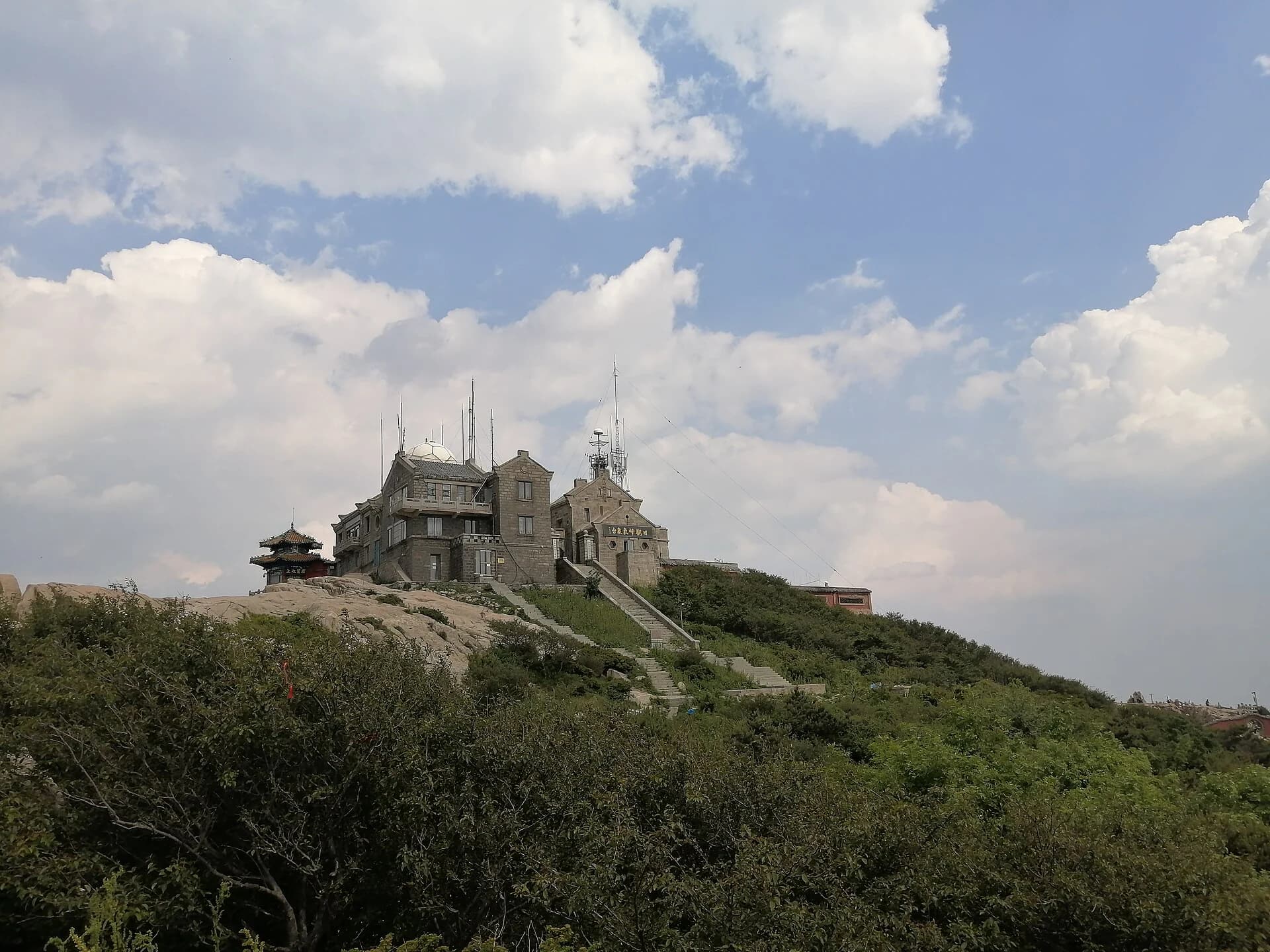
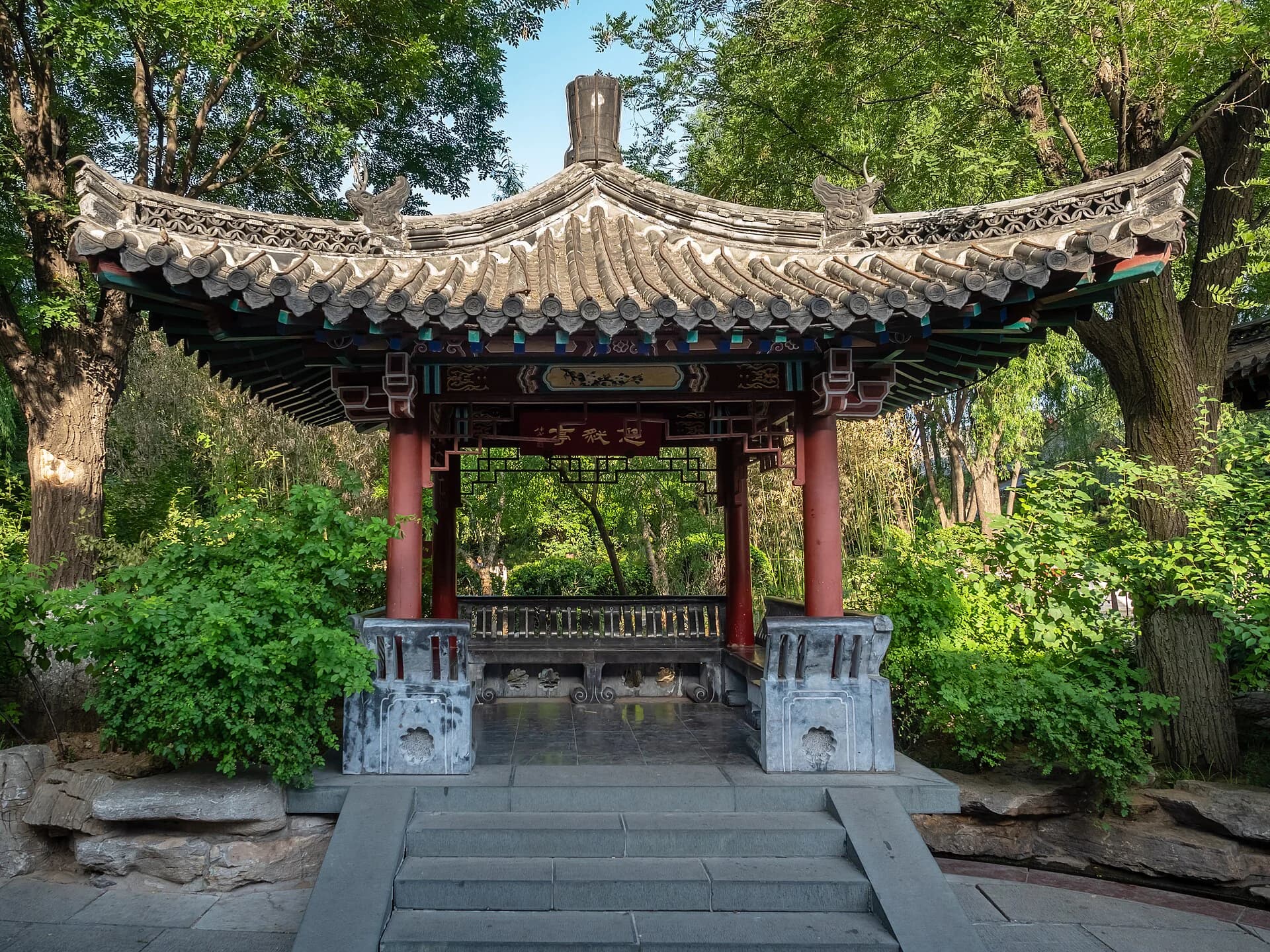
Photo: Yumeto · Source · CC BY-SA 4.0
Tickets, passport and repeat entry
The current official baseline checked in August 2026 separates the main costs:
- Mount Tai admission: CNY 115;
- Tianwai Village–Mid-Heaven Gate scenic bus: CNY 40 each direction;
- Mid-Heaven Gate cableway: CNY 100 one way.
Prices, inventory, operating hours and suspension rules can change. Admission, bus and cableway are never one assumed bundle; buy only the components named in your selected checkout.
All visitors must reserve a specific entrance and time. International visitors and anyone unable to use the resident-ID self-service gate should carry the original passport and reservation order and use the staffed manual inspection channel. Confirm that the selected checkout accepts your document before a tightly timed trip.
The admission has a three-day validity window after first check-in, but that does not create unrestricted re-entry. Every second entry still needs a new free reservation in the official Mount Tai WeChat system for a specific entrance and time.
Weather and mountain rules
Mountain weather can change faster than conditions in Tai'an. Check the official scenic notice and forecast, then confirm your entrance, bus and cableway separately. Strong wind, thunderstorms, ice, fire controls, maintenance or crowd limits can close part or all of the product. Stay on marked managed routes, keep out of closed side trails, and protect the last descent.
Smoking and open flame are prohibited under the mountain's forest-fire rules. Drones and other restricted items can also be barred. These checks belong at the planning step; once the route is open, the day should focus on the cultural ascent and landscape rather than chasing a single weather effect.
Getting to the correct entrance
- Open the Red Gate Visitor Centre on AMap. On the 21 August 2026 model, it was about 12.4 km / 27 minutes by road from high-speed Tai'an Station and 3.7 km / 13 minutes from central Taishan Station.
- Open the Tianwai Village Visitor Centre on AMap. The same model put it about 12.3 km / 22 minutes by road from Tai'an Station and 2.6 km / 9 minutes from Taishan Station.
These are dated road models, not live traffic or scenic-transport schedules. Route to the external visitor centre named on your reservation; do not use a summit or internal gate pin as a city drop-off.
For a balanced trip, place Dai Temple on arrival day and keep Mount Tai as a separate full day. The Tai'an guide explains which rail arrival and base fit each product.
English route maps
Use these diagrams to compare routes, zones, floors, and visit order. Operating routes can change, so follow current signs and staff instructions on the day.