Jinshan Scenic Area
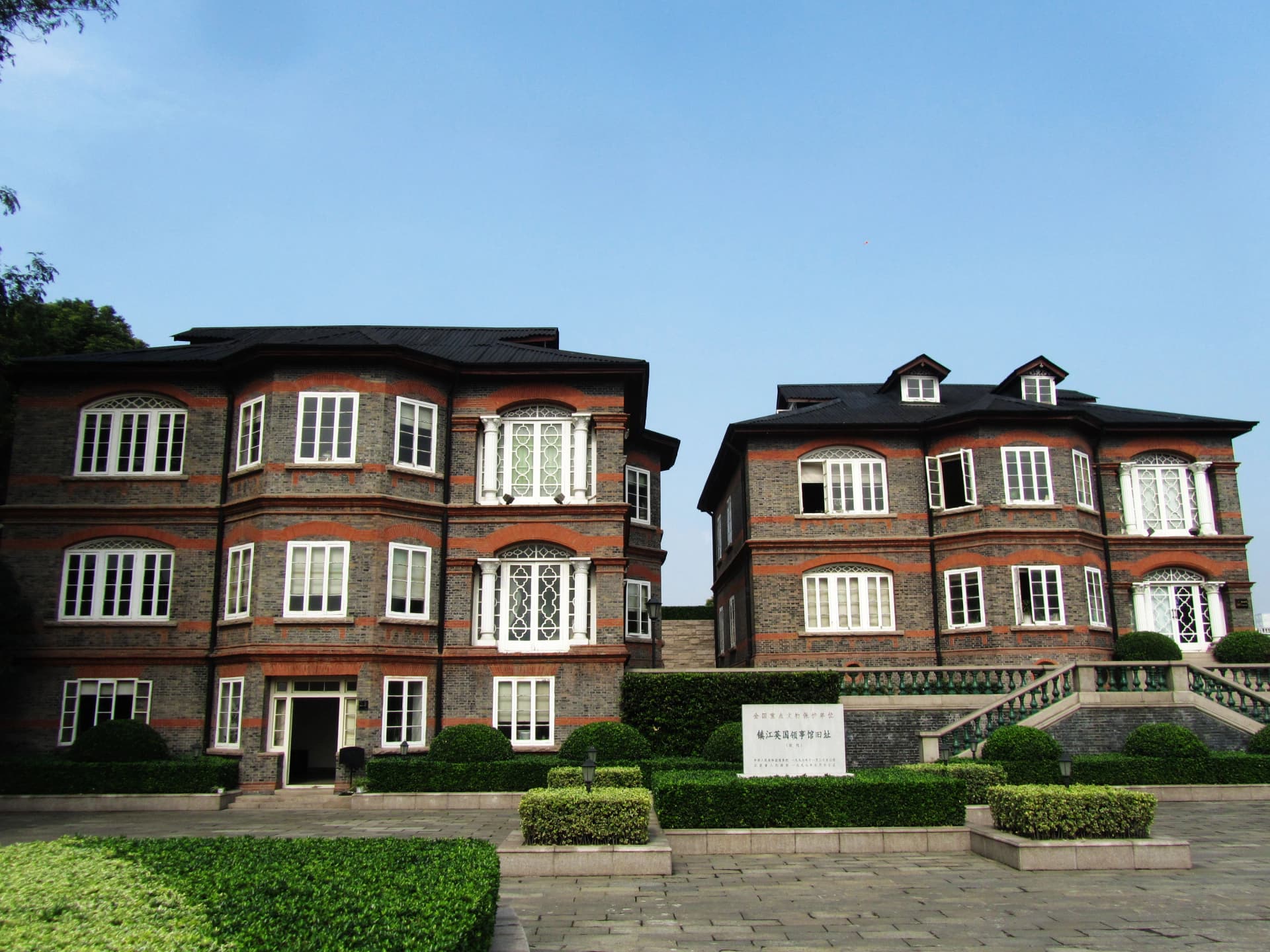
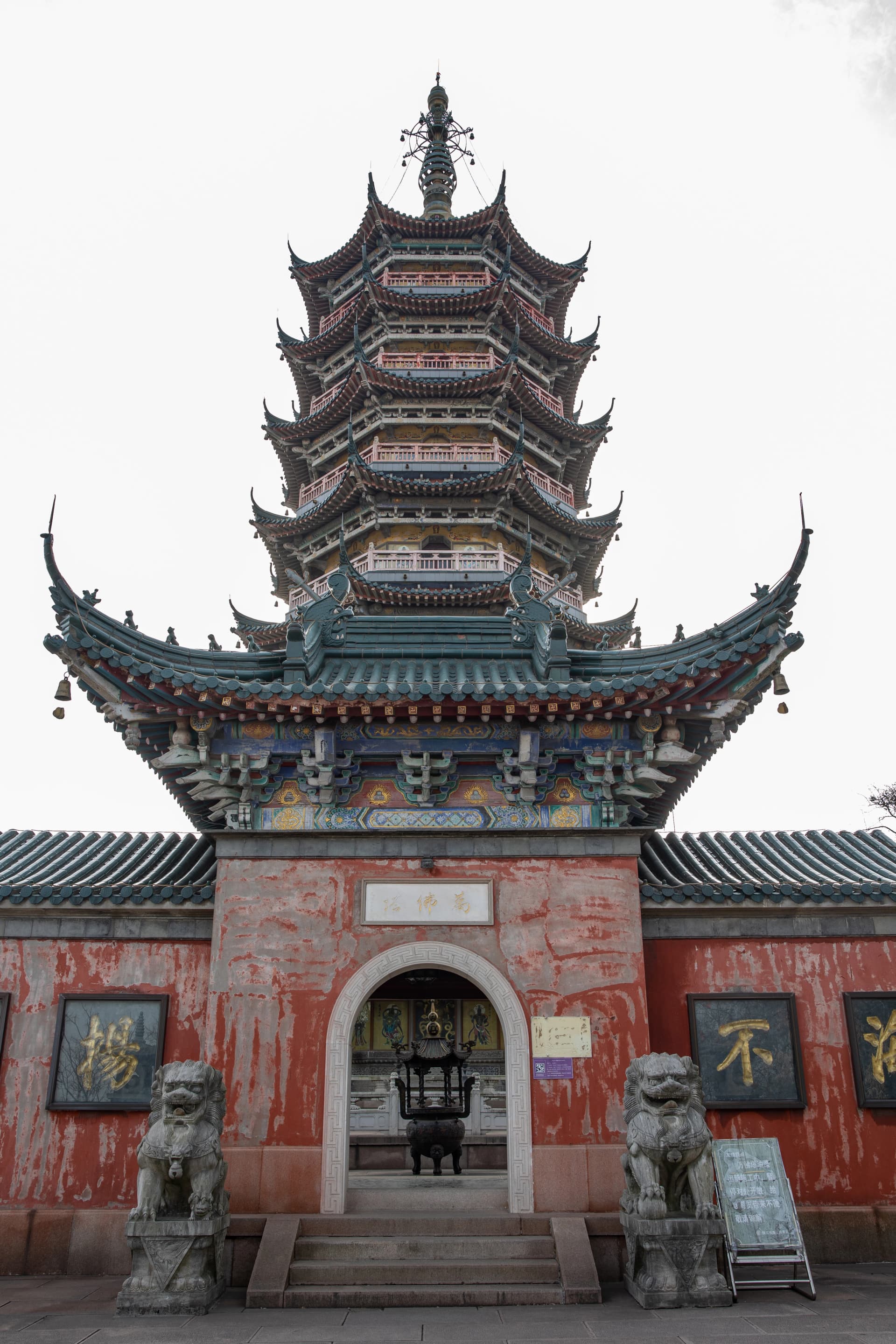
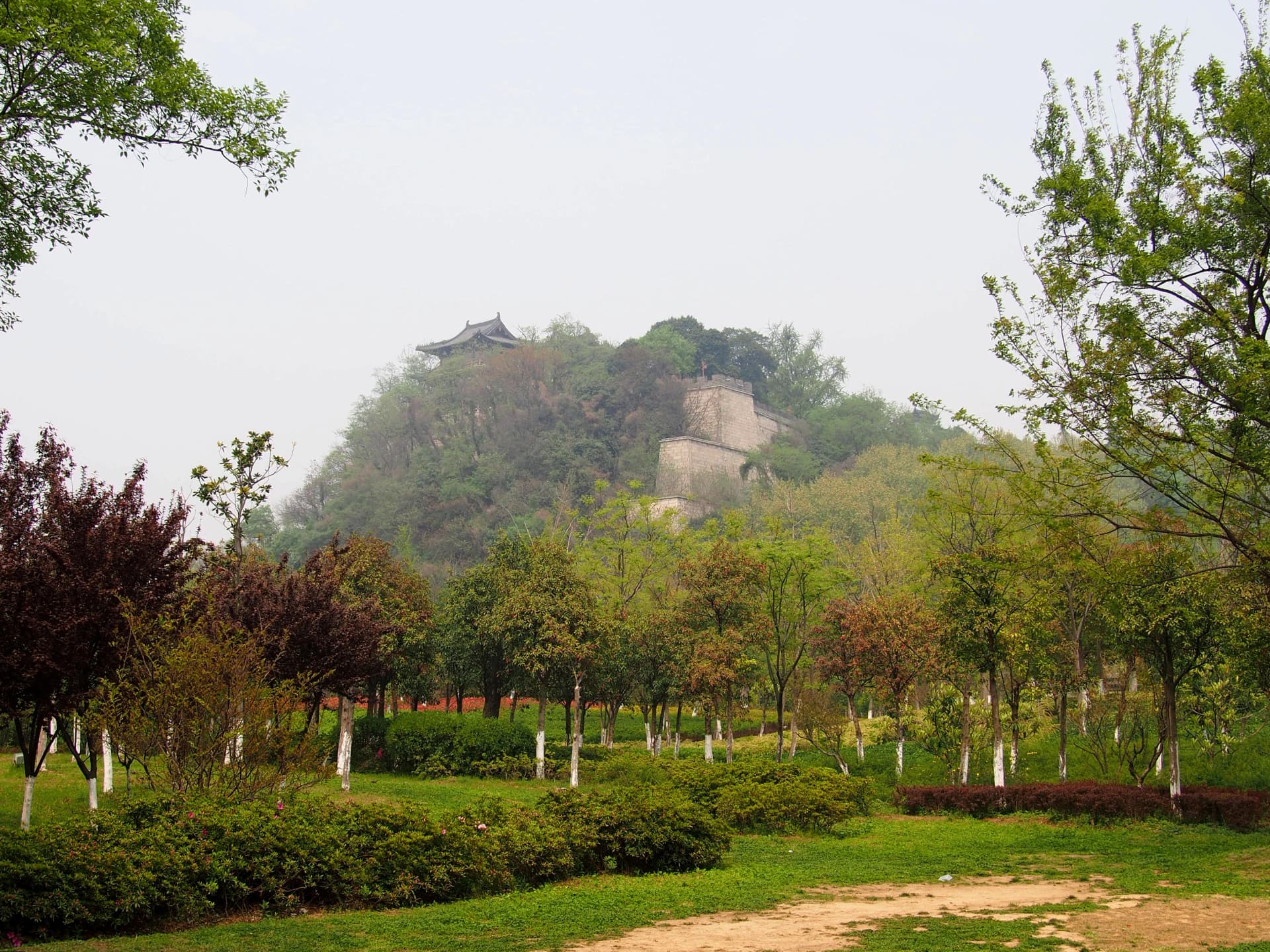
Jinshan's appeal is the way a Buddhist complex occupies an entire low hill. Roofs, stairs, halls and Cishou Pagoda rise in compact layers, while gardens and water soften the descent. It feels more like moving through one architectural composition than climbing a mountain.
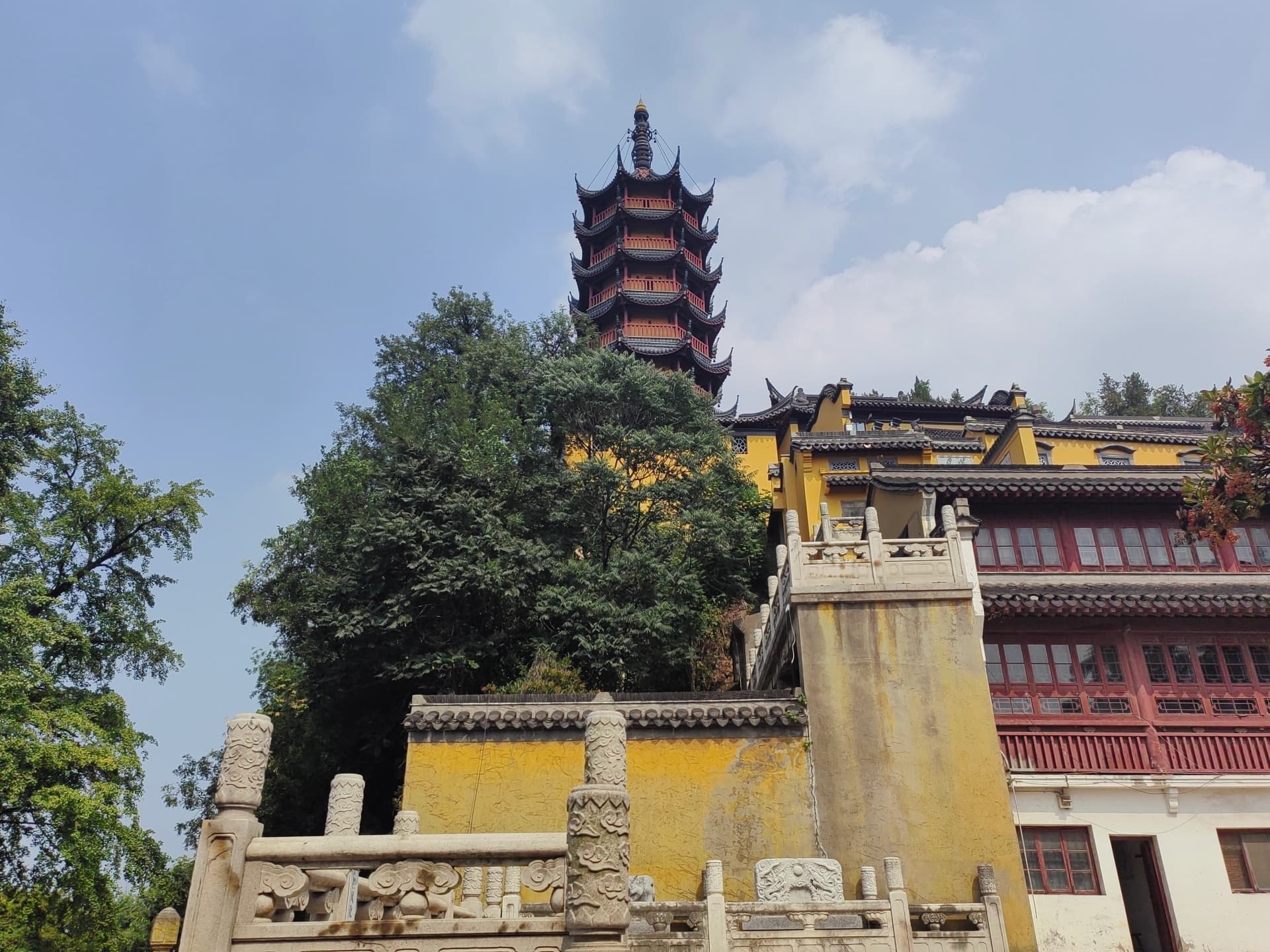
Photo: Yumeto · Source · CC BY-SA 4.0
Temple architecture in a compact lake-and-hill setting
Start with the spatial idea. Jinshan is often described as a temple wrapping a hill: halls and terraces climb so closely that architecture and terrain become difficult to separate. Look up between courtyards for pagoda views, then turn outward where the temple edges meet the garden and lake landscape.
The religious complex remains active. Give worshippers space, keep voices low in halls and ask before photographing devotional activity. This restraint makes the architectural sequence easier to notice.
Choose a focused or slower visit
| Visit | Best for | Shape |
|---|---|---|
| Focused | First-time architecture and limited time | Main temple ascent → one pagoda viewpoint → direct descent |
| Slower | Gardens, waterfront and a calmer half day | Temple core → outer garden/library layer → waterfront pause |
Visitors repeatedly report that the broader setting deserves more time than a single temple stop. Still, the focused route is satisfying when another Zhenjiang product is the priority.
Walk the managed sequence
Route to the Jinshan Park visitor centre on AMap, then follow the current entrance and internal signs. Begin with the lower temple spaces and climb through the connected halls rather than jumping between isolated photo points.
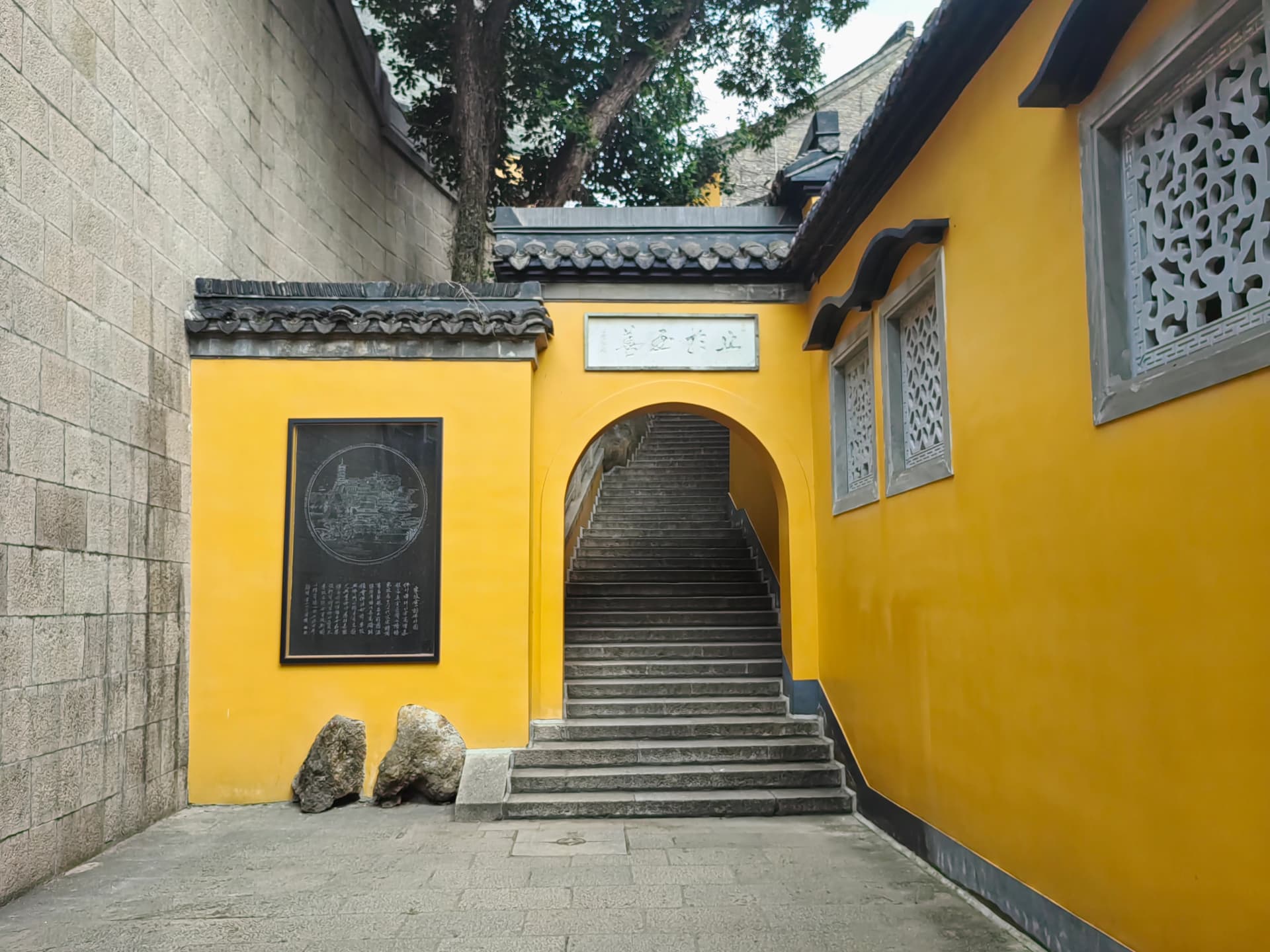
Photo: Yumeto · Source · CC BY-SA 4.0
On the descent, decide whether the garden and waterfront layer still adds value. Internal rooms, tower access and one-way visitor flow can change, so the on-site sequence outranks an old route diagram.
Choose one extension after the temple
For a compact visit, finish the temple ascent and descent before deciding how much park to add. Allow roughly two hours for a selective visit, or three hours or more if you enjoy gardens and frequent stops. Visitor accounts range from a little over two hours to longer than three; the difference is largely how much of the outer landscape they include.
Two extensions give that extra time a purpose:
- Wenzong Pavilion (文宗阁): choose the garden-and-library layer if buildings and literary history interest you. Follow the current signs after leaving the temple; check whether the building itself is open before planning an interior visit.
- Zhongling Spring (中泠泉), also signed “天下第一泉”: choose the spring-and-waterfront side for a slower landscape finish. Look back across the water for the relationship between Cishou Pagoda and the temple roofs, which is harder to see from the stairs inside the complex.
Treat these as alternatives when time is short. The temple has repeated steps, so a low summit does not make every route easy for a small child. In hot weather, shorten the ascent or the outer walk according to your energy; keep a pause between them. The pagoda is a visual landmark, and your visit need not depend on climbing inside it.
Temple etiquette and interpretation
Jinshan carries layers of Buddhist history, imperial-era rebuilding and popular legend. Use those stories to read the site, but keep the physical evidence in view: changing rooflines, stone thresholds, narrow vertical transitions and the way later buildings gathered around an older sacred hill.
If you want deeper interpretation, use the optional guide from the Zhenjiang city guide. A guide does not include admission or transport.
Boats and seasonal layers remain optional
Lake boats, performances, flowers and special events are separate, changeable products. They are not required for the core visit and are not automatically included in admission. Treat them as a same-day decision after checking weather, operating hours, exact route and return.
Ticket, gate and return
The official booking page checked on 25 August 2026 listed 08:30–16:30 and a seasonal adult baseline of CNY 50 in January, February, June, July, August and December, and CNY 65 in the other listed months. Reconfirm the chosen date because events, weather and temporary closures can change entry.
Check exact Jinshan admission on Trip.com. It covers only the resource named at checkout. Do not assume boats, a guide, another mountain or a Three Mountains pass. The foreign-passport workflow was not fully exposed on the public booking surface; confirm the accepted document and redemption method before payment and carry the original passport.
AMap's dated model placed Zhenjiang Station about 2.8 km / 9 minutes by car from the visitor centre. Xijin was about 1.6 km / 22 minutes on foot, useful for continuing to the Xijin–Museum guide when weather and closing times fit.