Zhenjiang
Zhenjiang turns a short Yangtze stop into four genuinely different experiences. Jinshan folds temple architecture into a low hill and garden landscape. Jiaoshan adds an island, calligraphy and fortifications. Beigushan is the compact ridge for river views and Three Kingdoms stories. Xijin Ferry and Zhenjiang Museum reveal the city's port history through streets, buildings and objects.
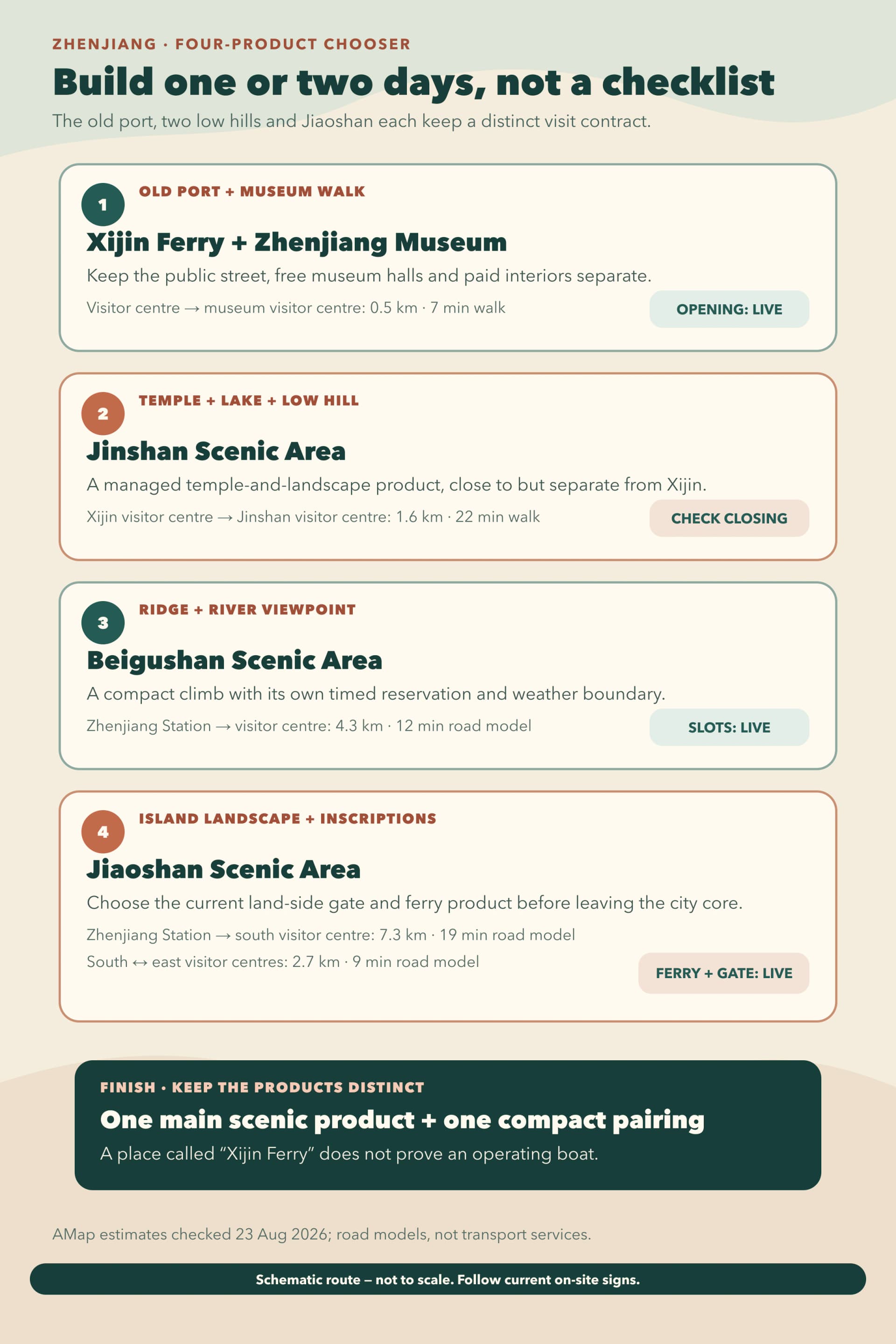
The illustration is a product chooser, not a scale map. It keeps the four visits separate and does not draw a ferry route or imply one combined ticket.
Stay overnight for the complete first route
The two-day flagship proves that three places are enough when the shape is complete: Jinshan and the Xijin–museum history corridor share one western day, while Jiaoshan receives a protected second day. Beigushan remains the shorter substitute when the island crossing is unsuitable, not a compulsory fourth stop.
Why Zhenjiang works in one or two days
The city is compact enough for a focused day, but varied enough to reward an overnight. Repeated visitor accounts show the same useful pattern: one long day can hold two or three products, while Jiaoshan is better protected for a second morning because its crossing and fuller island route add time.
Choose by interest rather than trying to complete “Three Mountains.” Jinshan is the signature temple landscape; Jiaoshan is the richest inscription-and-island product; Beigushan is the shortest historical ridge; Xijin–Museum is the most flexible history walk.
Choose among three hills and the western history corridor
| Product | Go for | Good first shape |
|---|---|---|
| Jinshan | Temple architecture, a low climb, gardens and waterfront | Focused temple-and-pagoda visit or a slower half day |
| Jiaoshan | River-island atmosphere, stele forest, cliff inscriptions and batteries | Secure the live crossing, then choose low-level history or a fuller climb |
| Beigushan | Yangtze views, Three Kingdoms associations and literary history | Compact ridge-and-pavilion visit |
| Xijin Ferry–Museum | Old-port streets, modern history and museum collections | Public street first, then free museum halls and optional paid interiors |
Build the first day
For the strongest first day, start with Jinshan Scenic Area, then continue to the Xijin Ferry–Zhenjiang Museum corridor. AMap's model checked on 21 August 2026 placed the Xijin visitor centre about 1.6 km / 22 minutes on foot from Jinshan's visitor centre and the Xijin–museum pair only 0.5 km / 7 minutes on foot apart.
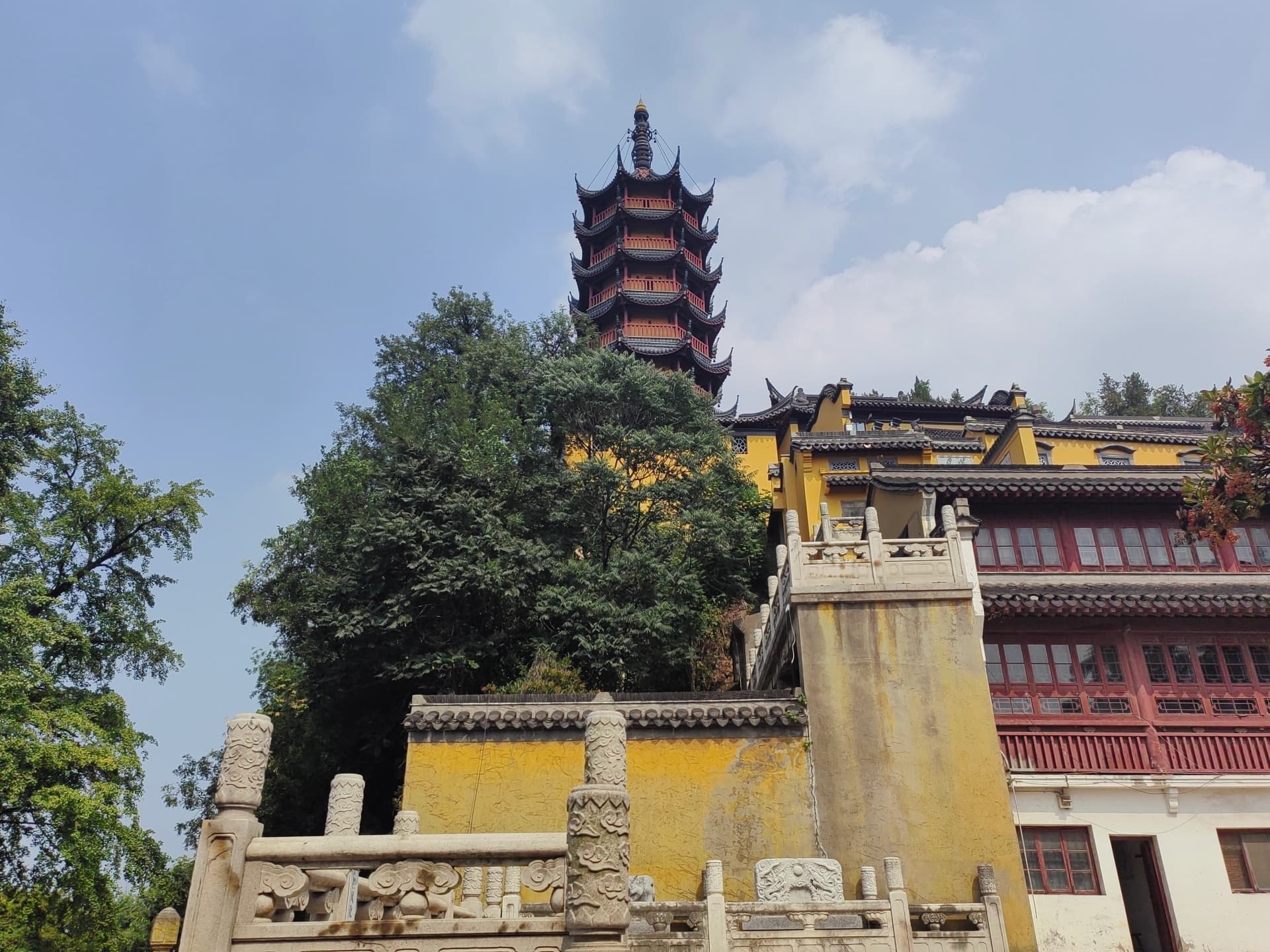
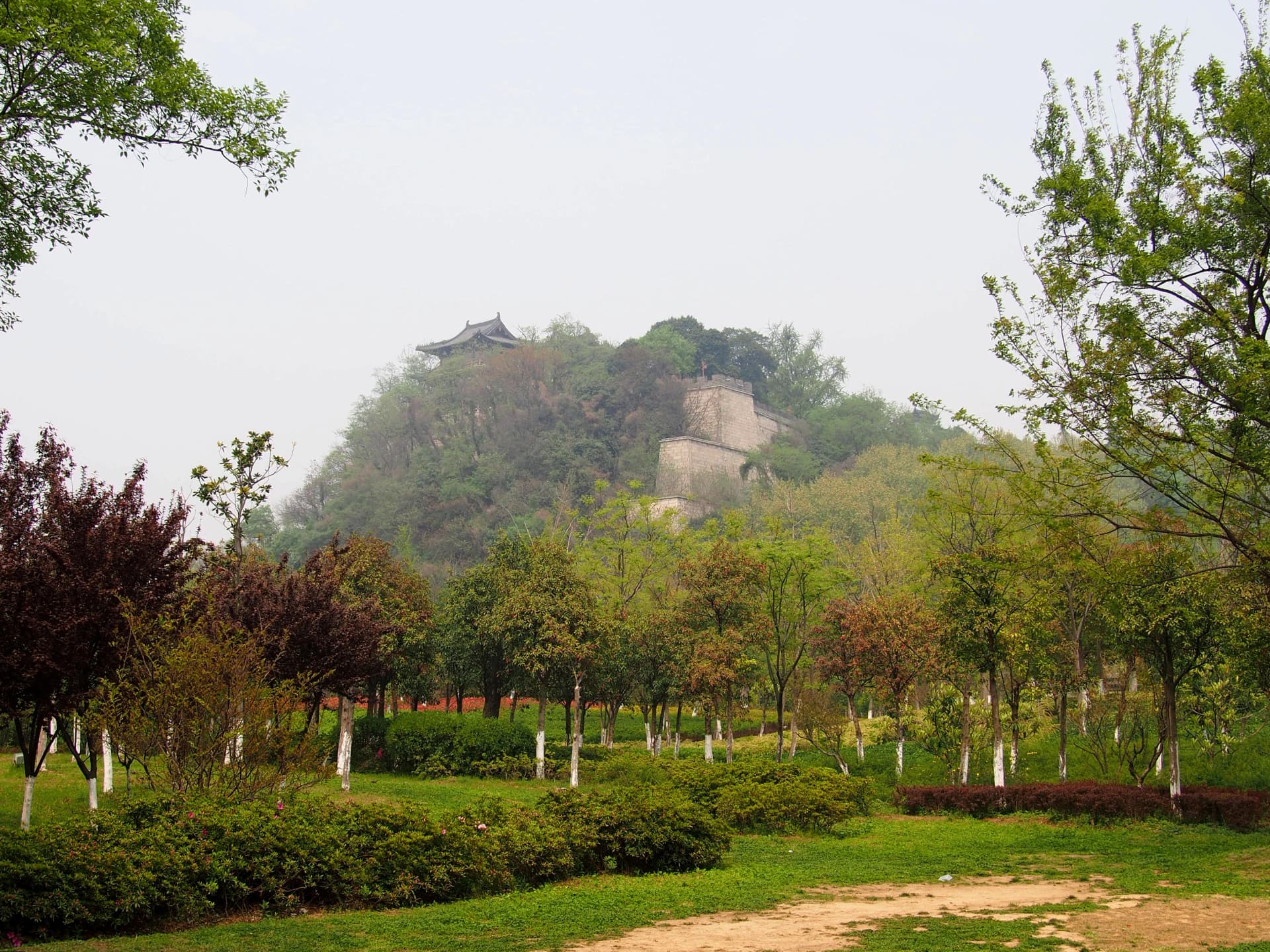
Photo: Yumeto · Source · CC BY-SA 4.0
These are outside walking models, not a promise of a step-free route or shared admission. In heat, rain or a late start, use a short road transfer and keep the museum depth flexible.
Add a second product without rushing
Choose Jiaoshan Scenic Area when inscriptions, island landscape and military history are the priority. Check the day's crossing and return before leaving the hotel; wind and water conditions can change the access plan.
Choose Beigushan Scenic Area when you want a shorter climb with a broad Yangtze view. It pairs more easily with an arrival or departure day, but the current timed reservation still matters.
Pearl S. Buck and Nanshan as optional layers
Pearl S. Buck's former residence adds a compact literary-history stop rather than another headline attraction. It sits about 2.0 km / 27 minutes on foot from the museum in the dated AMap model, so add it only when its opening window and your energy fit.
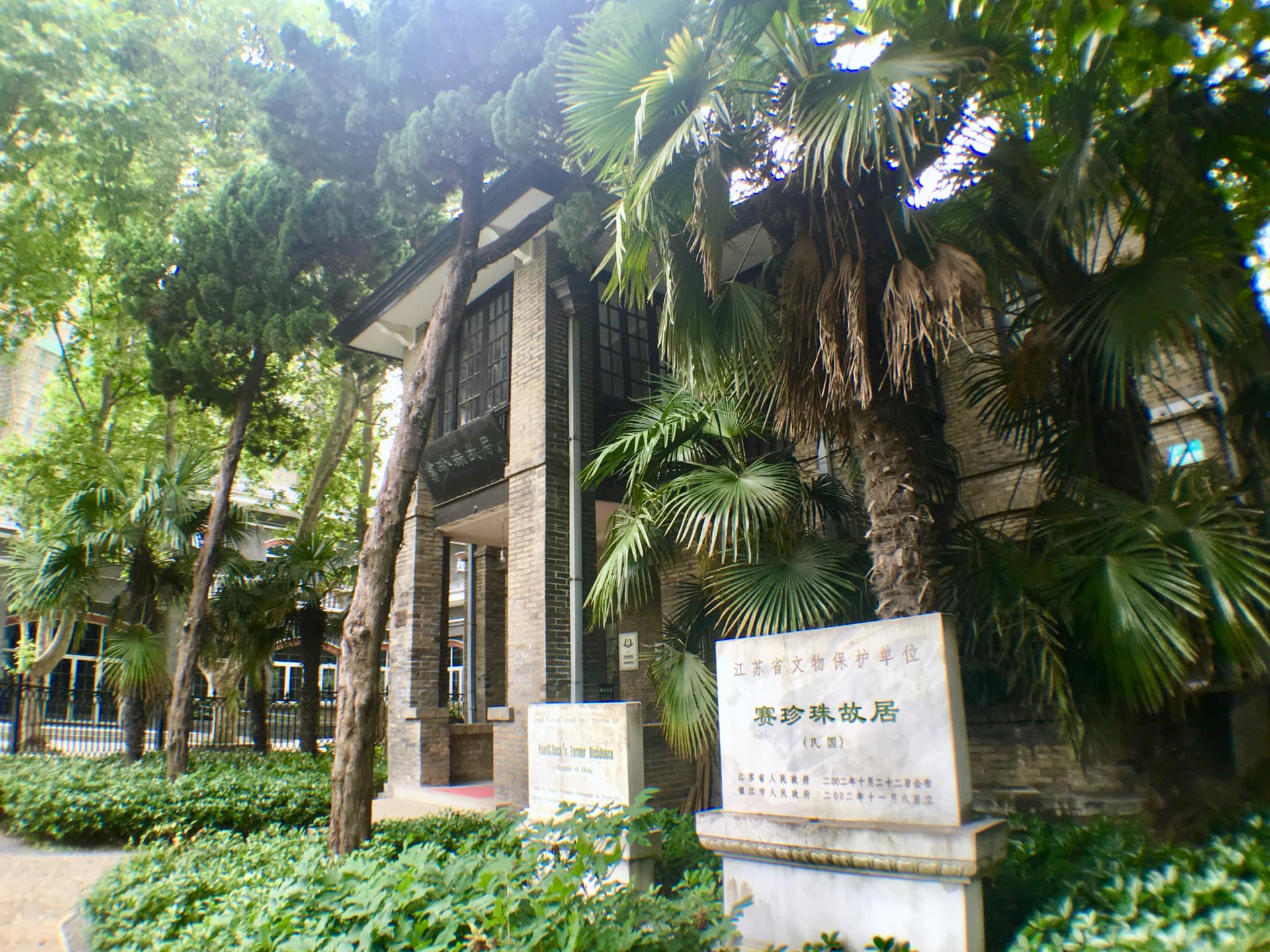
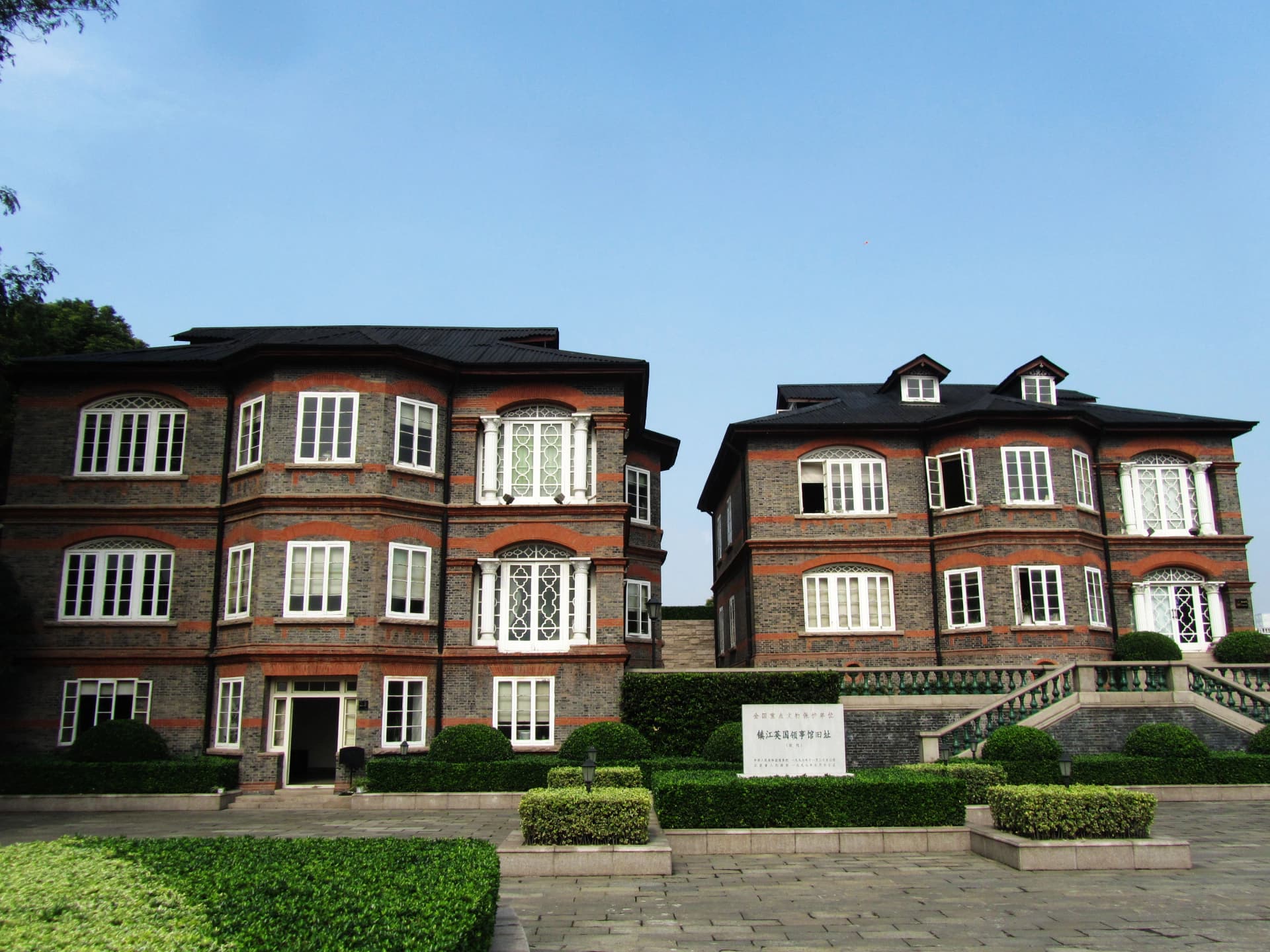
Photo: 賈夢龍 · Source · CC BY-SA 4.0
Nanshan is a separate green city product, not a quick extension of the western history corridor. Keep it for a third day or a repeat visit after checking the exact open area and return.
Arrival and base choices
Zhenjiang Station and Zhenjiang Coach Station form the practical central arrival cluster. Zhenjiang South Station and Nanxu Coach Station are a separate southern cluster and were farther from every first-package attraction in the dated map models.
Stay around the railway station for balanced access, or near Xijin/Jinshan for the strongest evening and morning history rhythm. Compare Zhenjiang hotels on Trip.com, then verify the exact pin, international-guest policy, luggage storage and cancellation for the selected room. Use live rail inventory rather than treating map geometry as a timetable.
Book exact products
Jinshan, Jiaoshan and Beigushan have separate admission shelves. There is no dependable evergreen Three Mountains pass. Use the exact attraction page, confirm the date, accepted document, cancellation and redemption, and never assume a Jiaoshan ferry or another hill is included.
Travellers who want interpretation can consider the optional eight-hour English guide. It is a guide-only service: admission, Jiaoshan crossing, transport, meals and museum entry arrangements are not included. Confirm the meeting point and intended sequence before booking.
Illustrated guides
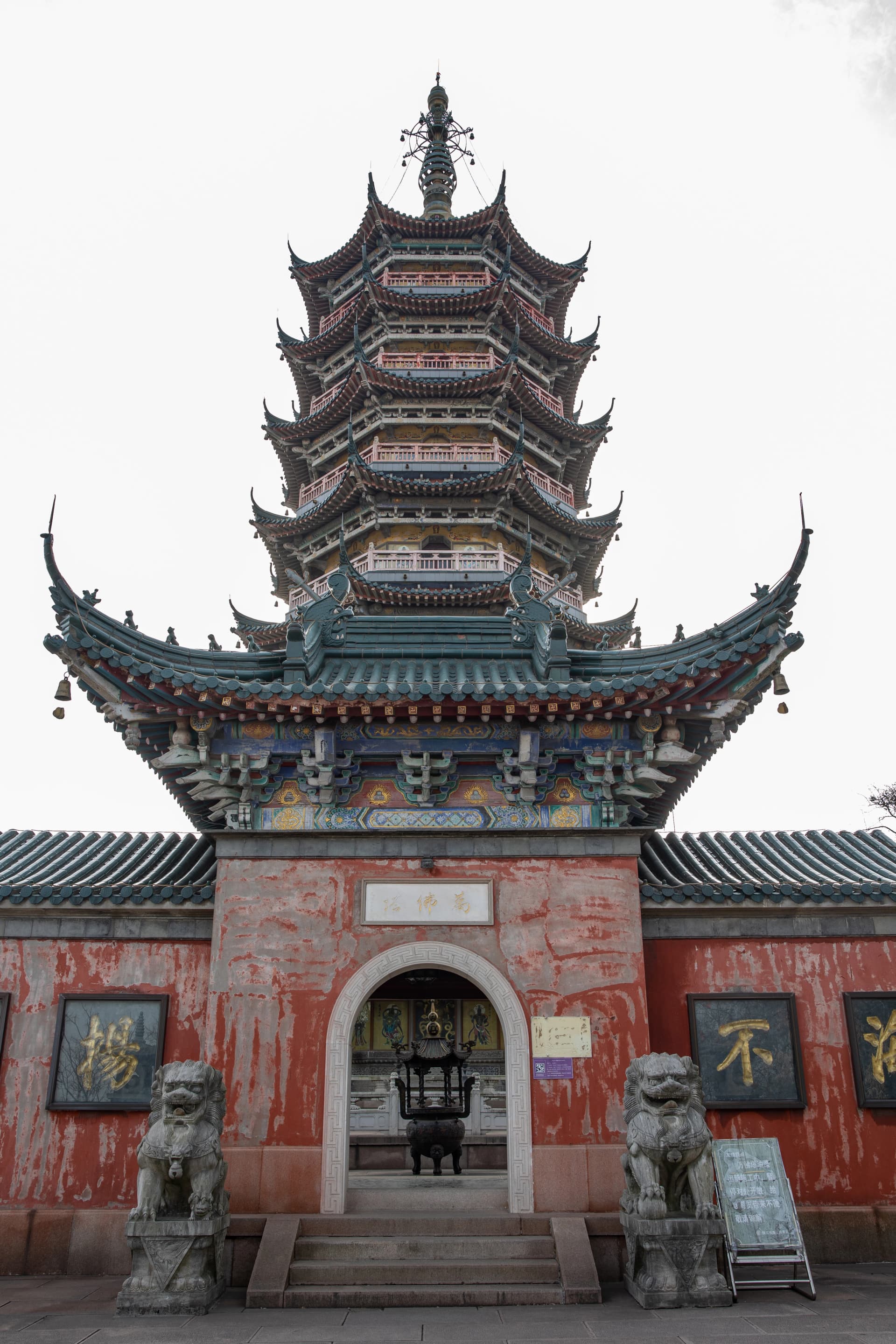
The most satisfying first visit is not a completion race. Choose one hill for landscape and one corridor for history, then add a second mountain only when it brings a different story.