Wuhan Yangtze Ferry
A public ferry is one of the clearest ways to understand Wuhan's three-town geography. The crossing changes scale from Hankou's commercial riverfront to Wuchang's hillside landmarks, but it remains an operating transport service. Routes, numbered gates, payment and last sailings must be checked live.
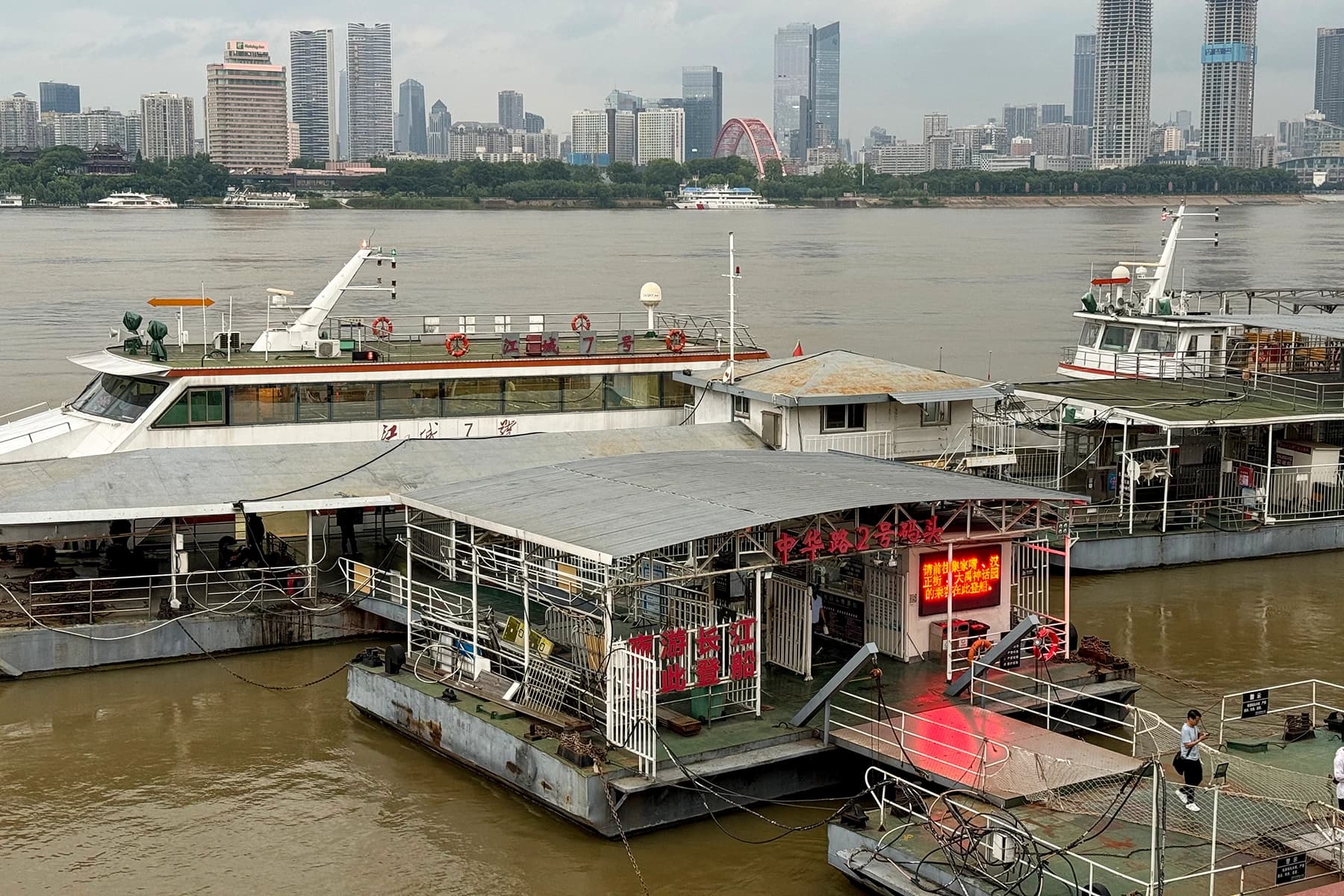
Photo: Windmemories · Source · CC BY-SA 4.0
Build the crossing correctly
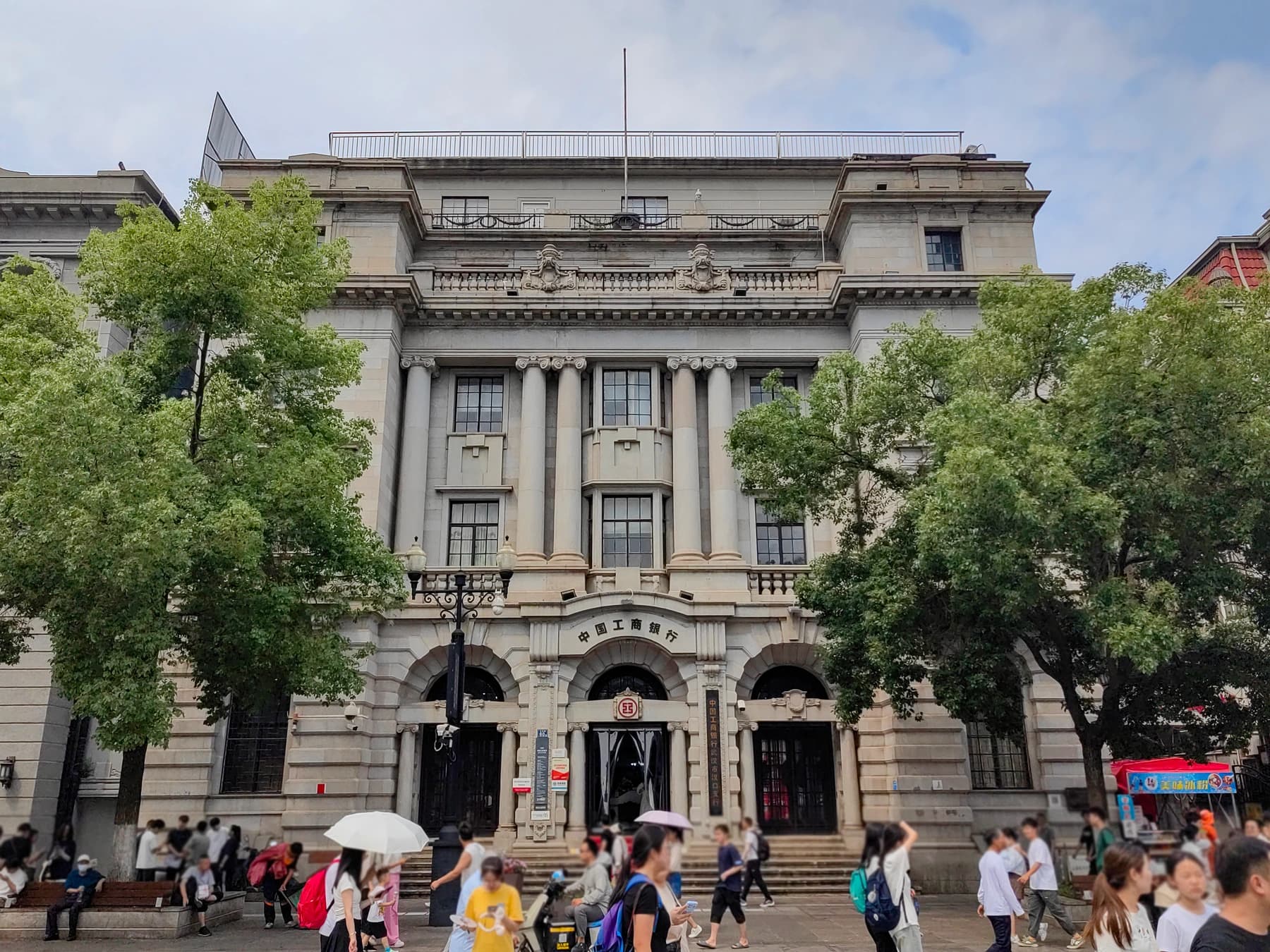
The intended three-town itinerary walks from Jianghan Road to the verified Wuhan Customs ferry pier in Hankou, then takes an active public route toward the Zhonghua Road pier area in Wuchang. Amap estimates the approach from Jianghan Road at about 1.1 km / 15 minutes on foot.
Before joining a queue, confirm all five items on current pier signage or with staff:
- the exact route is operating;
- the numbered departure gate;
- the actual receiving pier;
- accepted payment for a foreign visitor;
- the last useful sailing for your onward plan.
Do not board merely because a boat is departing in the right direction. Some services may be sightseeing products, limited-stop routes or seasonal operations.
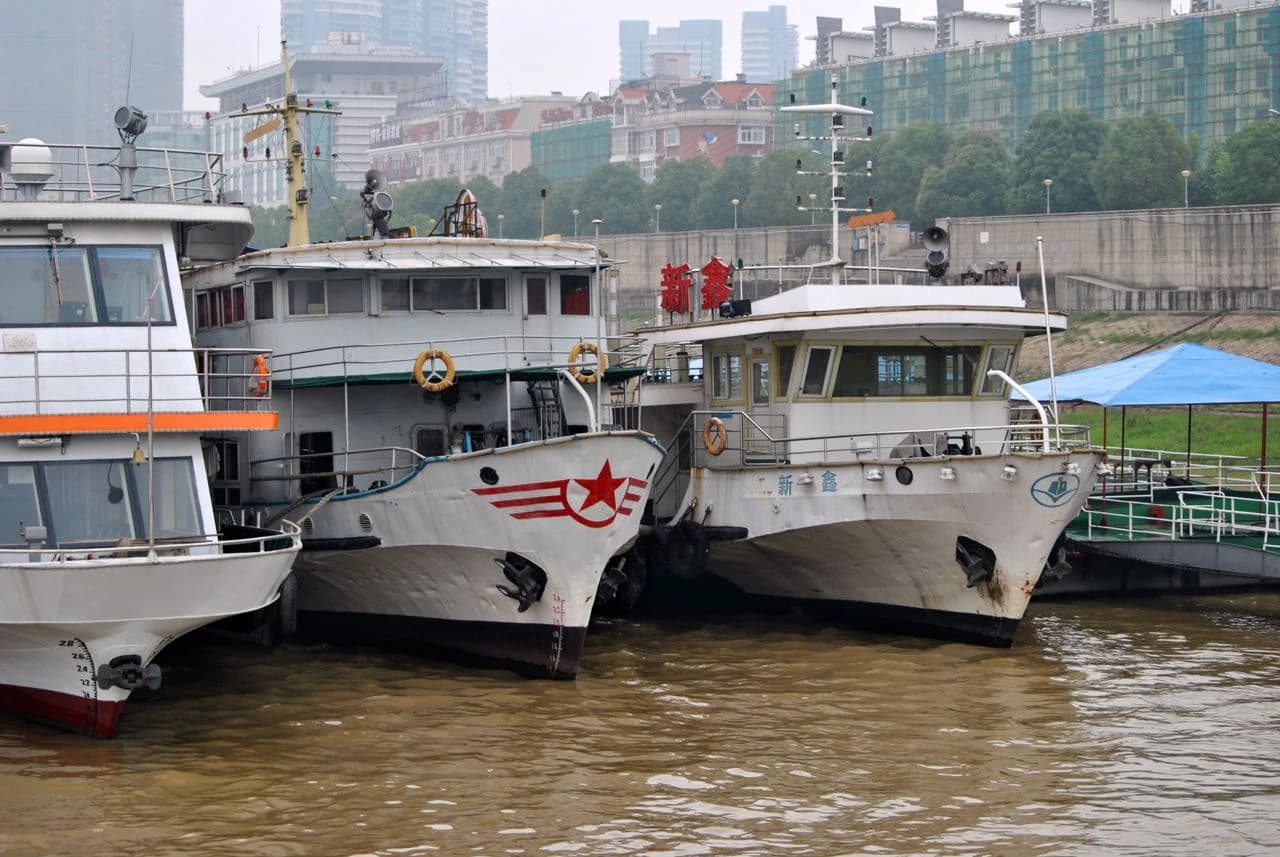
Photo: Howchou · Source · CC BY-SA 3.0
Price and timetable discipline
A Wuhan transport-department response published in April 2026 confirms the current ordinary-ferry fare is CNY 1.5. The latest explicit Wuzhong Line operating baseline available from the same authority is 06:30–20:00 between Wuhan Customs and Zhonghua Road; 2026 holiday notices confirm the line is still operating and identify 16:00–20:00 as a crowd peak. Keep these useful numbers, then check the pier display because a public ferry, fast service and sightseeing boat have different fares and conditions.
Individual travelers normally buy at the active pier. The advance reservation rule introduced in 2025 applies to qualifying travel-agency groups; do not copy a group QR workflow into an independent-visitor guide. Ask staff which gate serves 武中线 and keep the ticket or payment screen until arrival.
Allow a buffer for security, queues and missed departures. Keep metro or road transport as the fallback if reaching a hotel, train or timed booking matters.
Weather can cancel the plan
Fog, thunderstorms, strong wind, high water and navigation controls can delay, reroute or suspend river services. Never pressure staff to operate or interpret a closed gate as an invitation to find another boarding point. In poor conditions, enjoy the accessible riverfront and cross by metro.
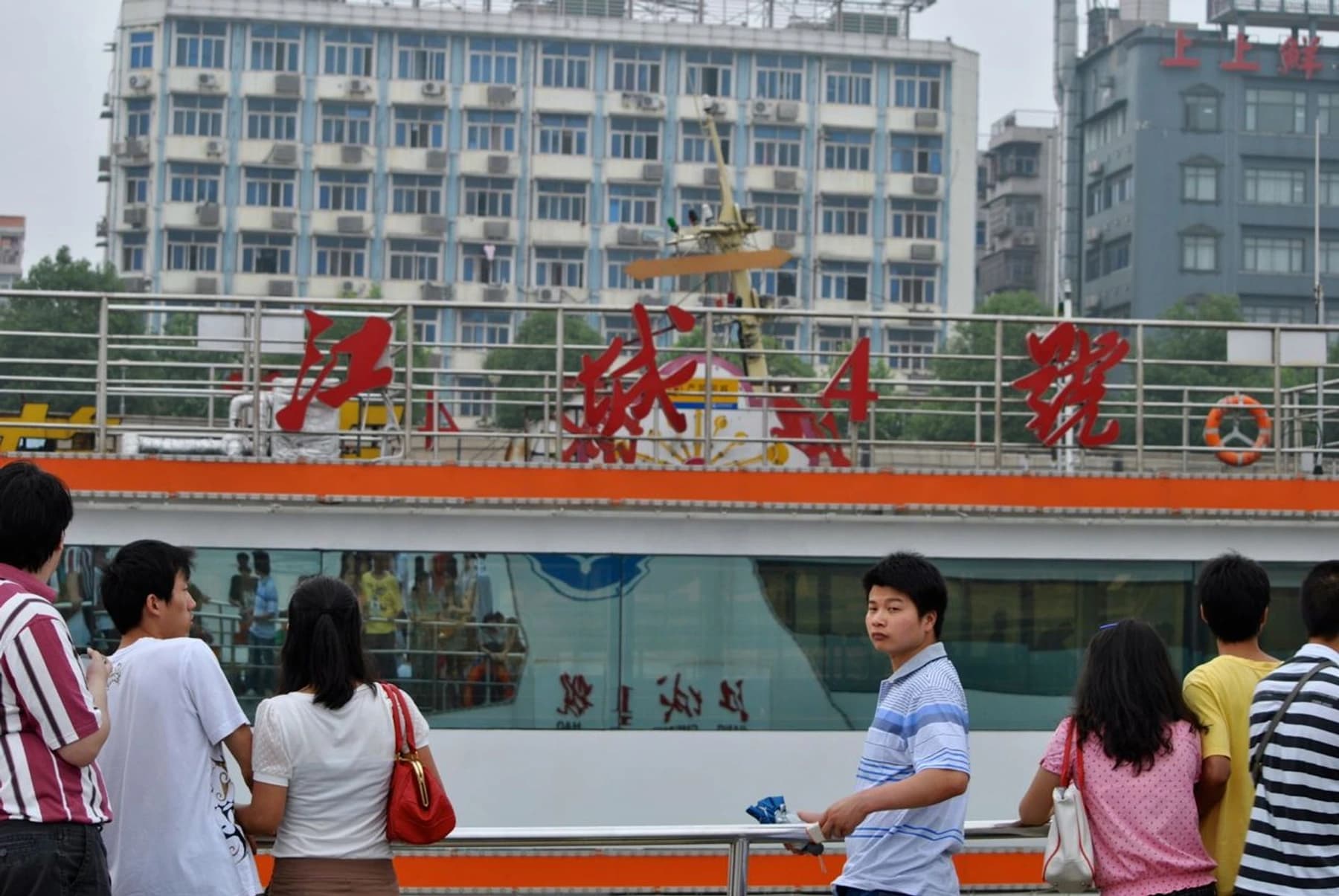
Photo: Howchou · Source · CC BY-SA 3.0
For the best sequence, approach through historic Hankou, cross in daylight or early evening, and keep the Wuchang arrival flexible.
On arrival, choose one onward purpose: walk the Wuchang riverfront, continue toward Tanhualin, or connect by metro. Do not board an immediate return solely for photographs if queues are building; the geographic value comes from completing the cross-river transition and reading how the two banks differ.