Historic Hankou and Jianghan Road
Jianghan Road is often presented as a shopping street, but its stronger value is as an entry into Hankou's commercial and river-port history. The useful route moves from the pedestrian corridor through selected side streets toward the Wuhan Customs House and the Yangtze riverfront.
Use former concession-era district carefully. Different foreign concessions, Chinese municipal/commercial institutions and later city development occupied adjacent but not identical spaces and dates. A bank, customs building, residence and modern replica façade should not be assigned one generic colonial story.
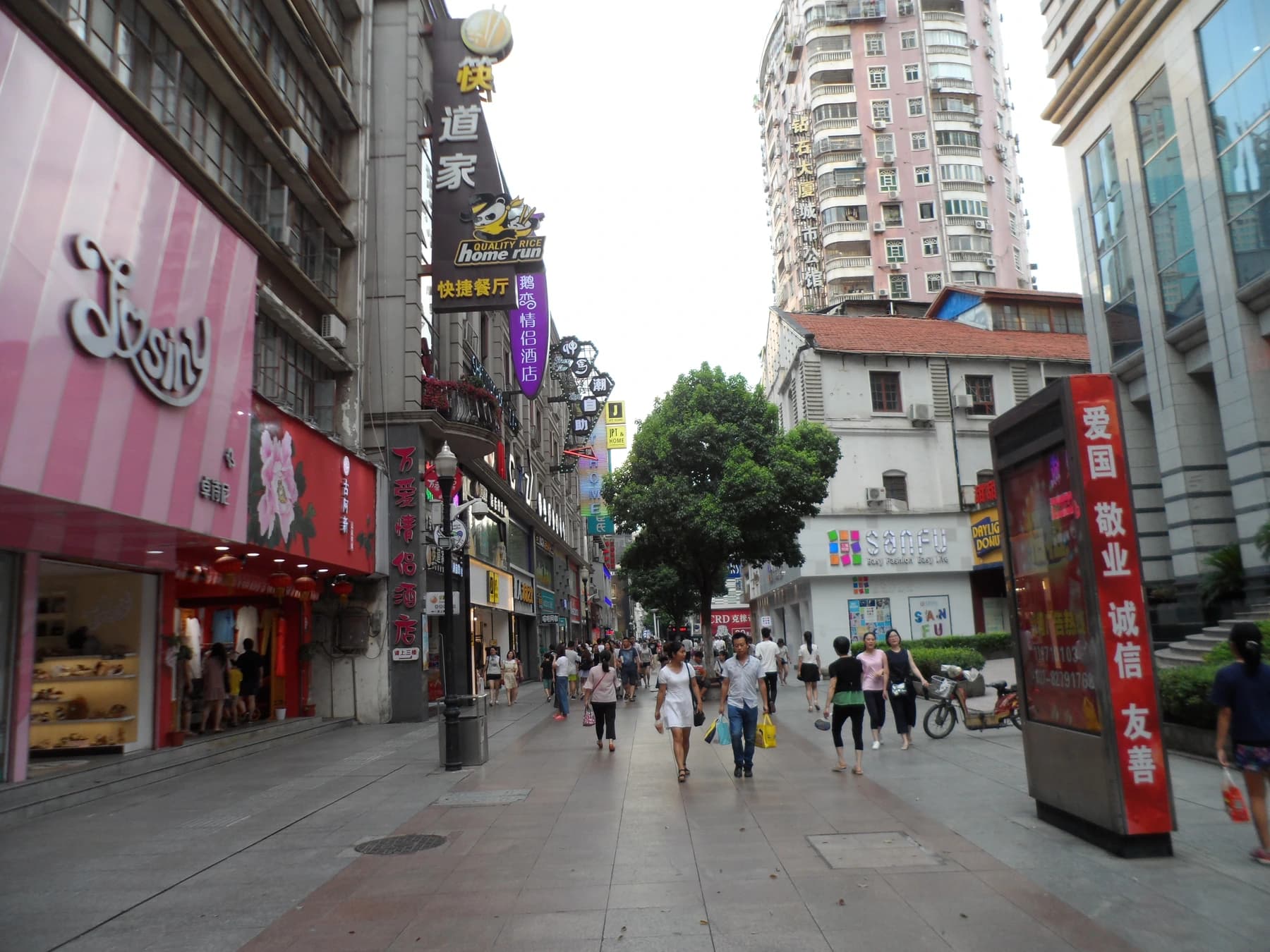
Photo: 螺钉 · Source · CC BY-SA 4.0
A two- to three-hour route
Begin near the verified Jianghan Road map location and walk slowly enough to compare building scale, stone or rendered façades, former financial premises and the street's later commercial adaptation. Choose a few side streets instead of collecting every heritage plaque. Many buildings have changed use, and a historic exterior does not imply public interior access.
Continue toward the Wuhan Customs House, which gives the route a clear river-port endpoint. From Jianghan Road to the verified Wuhan Customs ferry pier, Amap estimates about 1.1 km / 15 minutes on foot. Allow more time for crossings, photographs and side streets.
Read each selected building with four fields: original function, construction date, designer/owner when documented, and current use. Then ask how proximity to river transport and finance shaped the street. This turns decoration into urban history and prevents unsupported claims based on façade style alone.
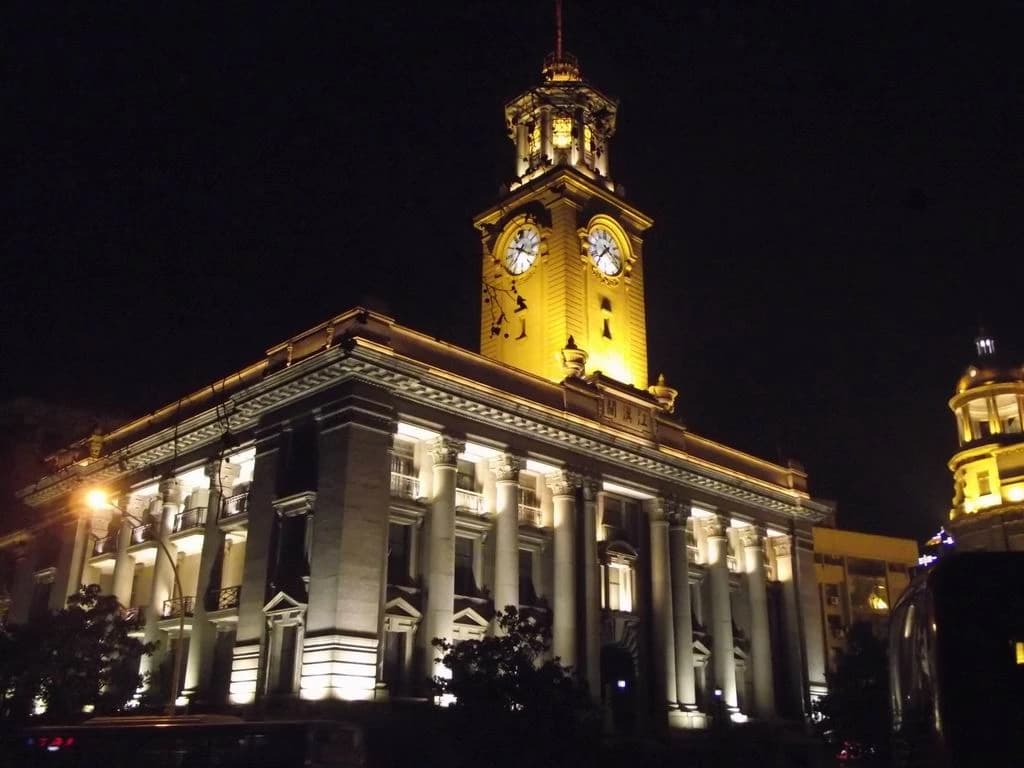
Photo: The Fool's Age of Wandering · Source · CC BY-SA 2.0
What to avoid
Do not reduce the district to one viral café or assume every ornate building belongs to the same historical period. Check labels, distinguish verified history from decorative reuse and stay in public space. Residential doors, active offices and private courtyards need normal urban respect.
Evening lighting adds atmosphere, but a first architecture-focused visit is easier in daylight. Summer afternoons can be oppressive; rain makes road crossings and polished paving less comfortable. Keep a metro exit or indoor pause available.
Public pavements are free, but museums, interiors, rooftop viewpoints and events may have separate calendars. Never imply interior access from an exterior plaque. For mobility, choose fewer side streets, avoid peak pedestrian flows and confirm the step-free riverfront ramp rather than assuming every embankment stair has an alternative beside it.
Finish with a real river crossing
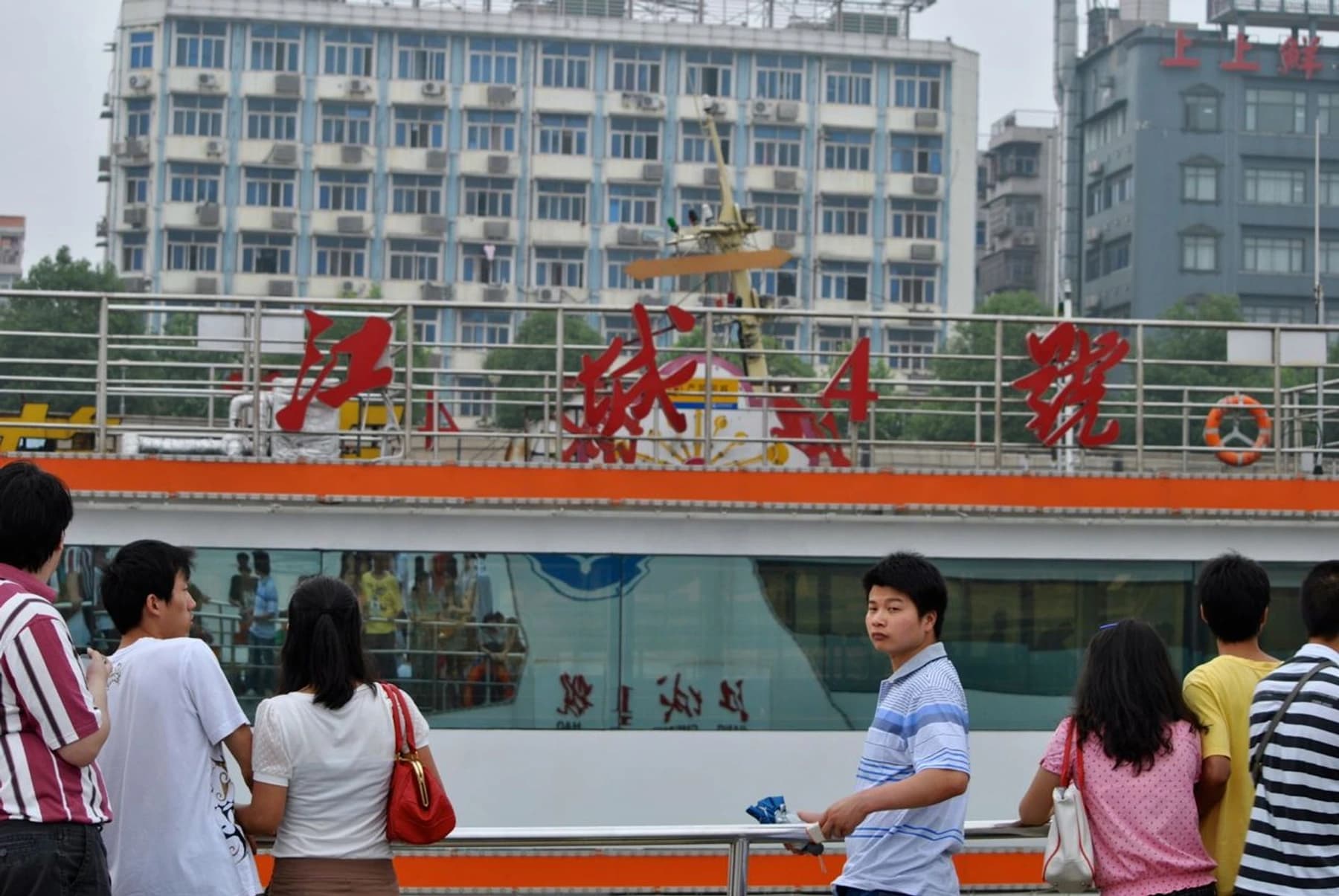
The logical continuation is the public Yangtze ferry from the customs-house area toward Wuchang. Verify the exact numbered pier, active route and receiving stop on the day. A sightseeing cruise and a public transport ferry serve different purposes.
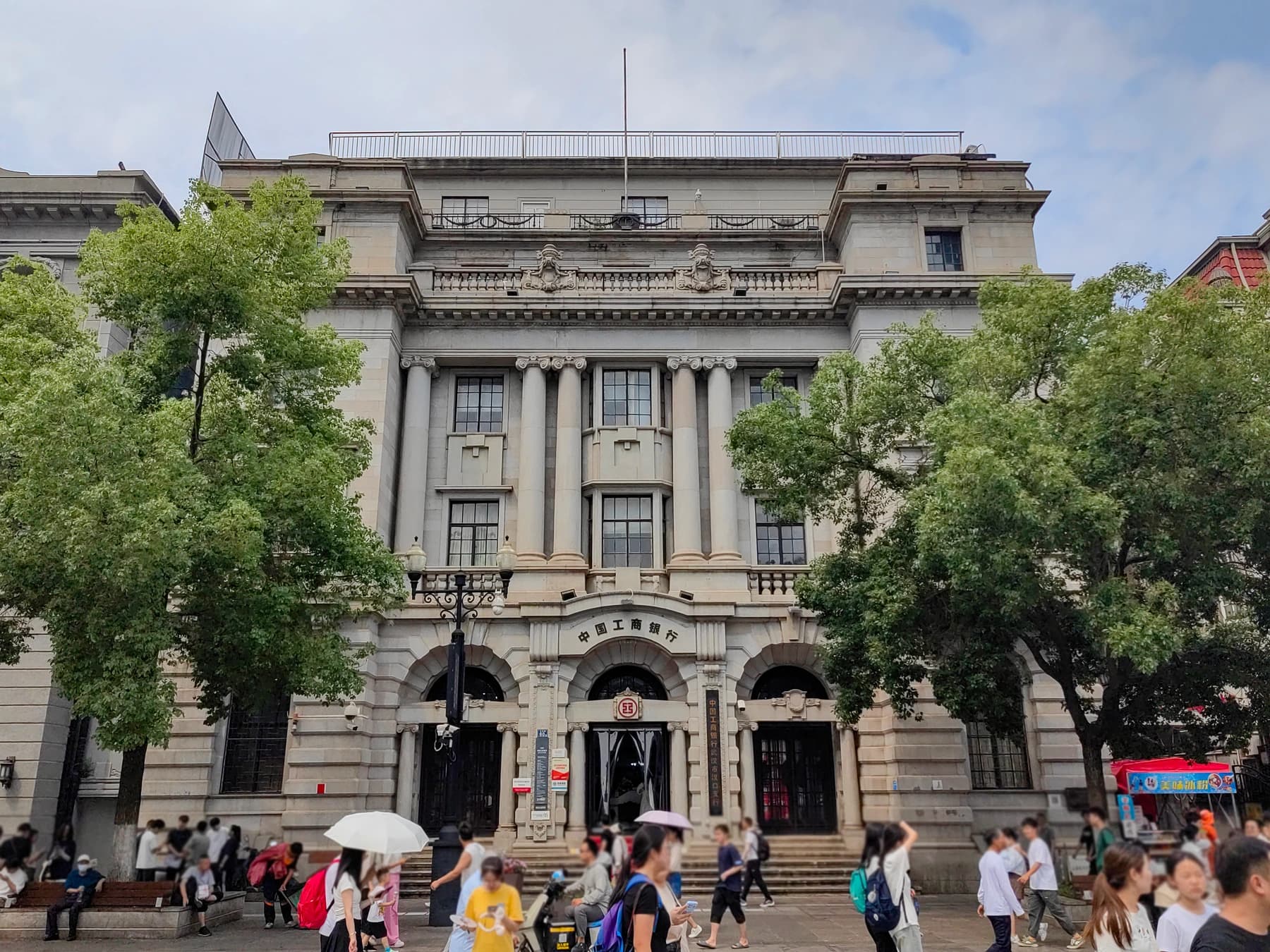
Photo: Saigyouji-Noriko · Source · CC BY-SA 4.0
If the ferry is suspended or the active route no longer reaches the intended Wuchang pier, finish on the Hankou riverfront and use metro or a car for the cross-river transfer.
Allow two hours for architecture only and three when adding the ferry. Shopping, dinner or a museum is an extension, not part of the minimum route. This protects the final river decision from a long queue at an unrelated viral business.