Central Street and Saint Sophia
The useful centre route is directional: Saint Sophia → Harbin Museum → Central Street → Flood Control Monument. It is roughly 2 km of core walking before optional detours. The value lies in comparing religious, civic and commercial architecture, not in collecting every snack shop.
Start at Saint Sophia
Arrive early enough to see the red-brick mass and onion dome without treating the square as a photo queue. Walk around the exterior before deciding whether to enter. The interior's function and exhibition format have changed over time, so check the current notice at the door rather than assuming it remains an active cathedral or that a historic photo describes today's display.
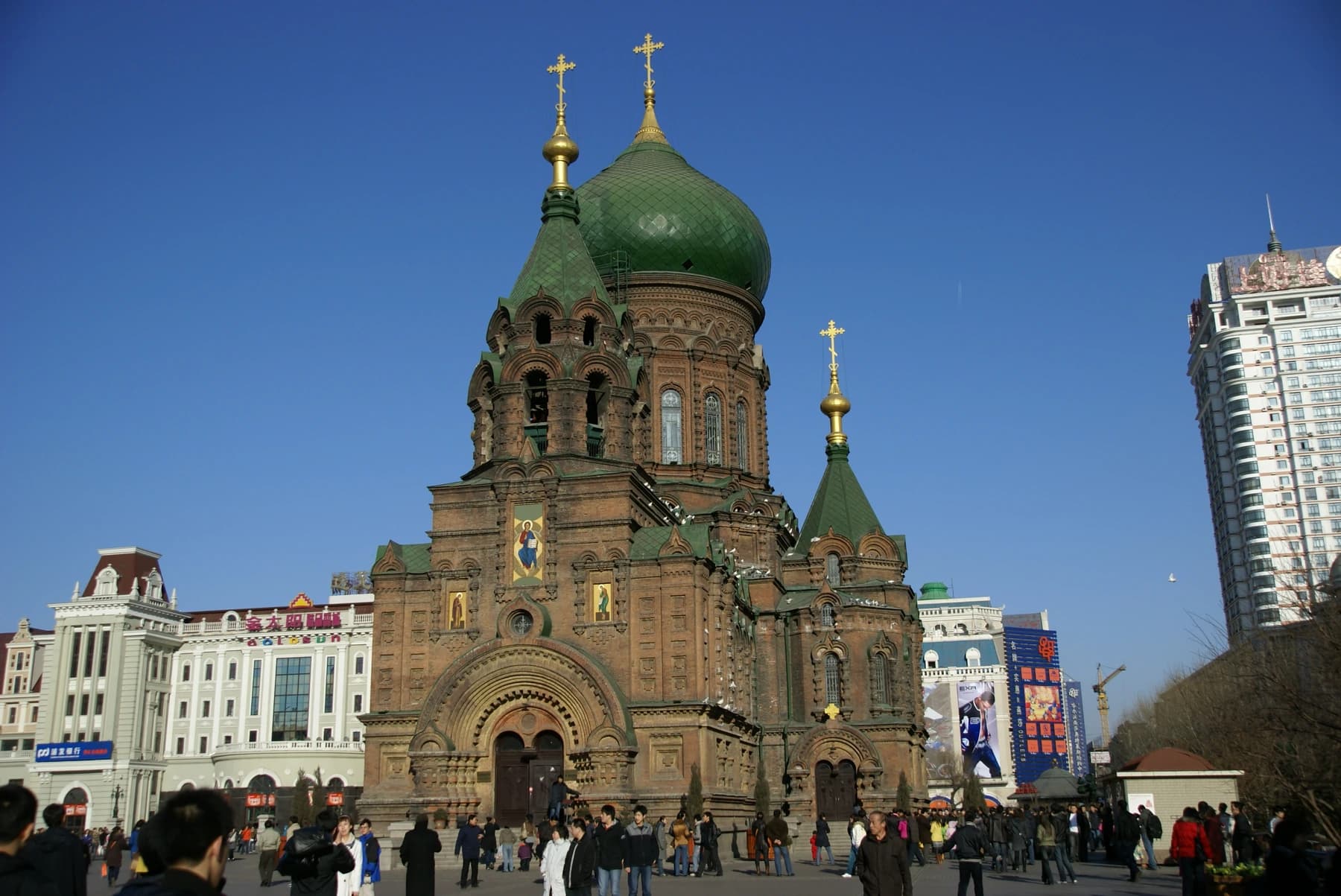
Notice the relationship between the cathedral and the surrounding commercial city. Harbin's Russian-influenced built heritage is not one pure style frozen in time; it reflects railway development, migration, changing civic uses and repeated restoration.
Use the museum as context, not another checkbox
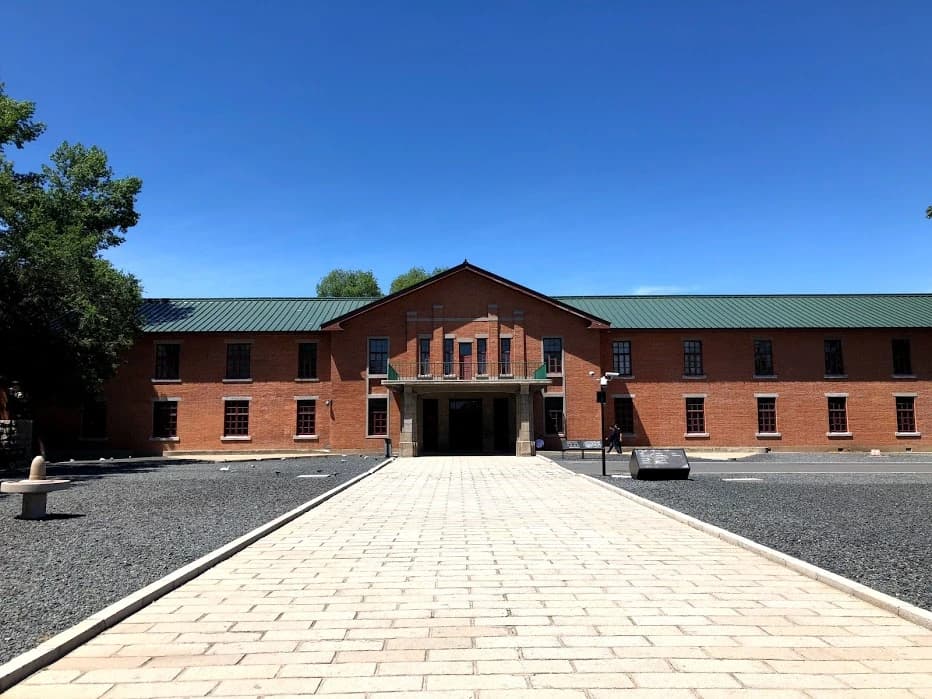
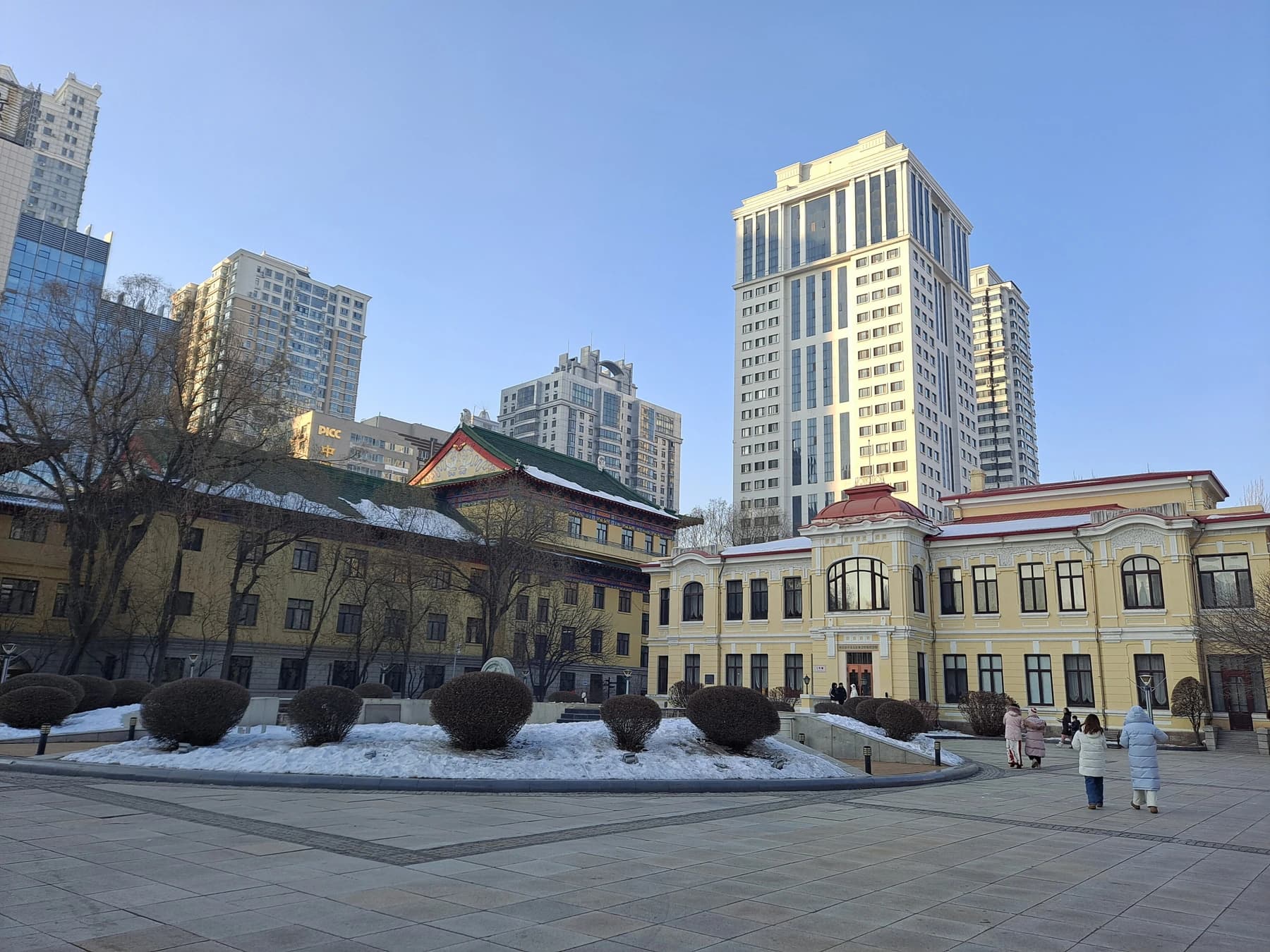
Harbin Museum is about 0.5 km north in route planning. A focused visit supplies the chronology needed to read the city outside. Confirm which buildings and exhibitions are open, because “Harbin Museum” refers to a historic-building complex rather than one permanent gallery experience.
Walk Central Street northbound
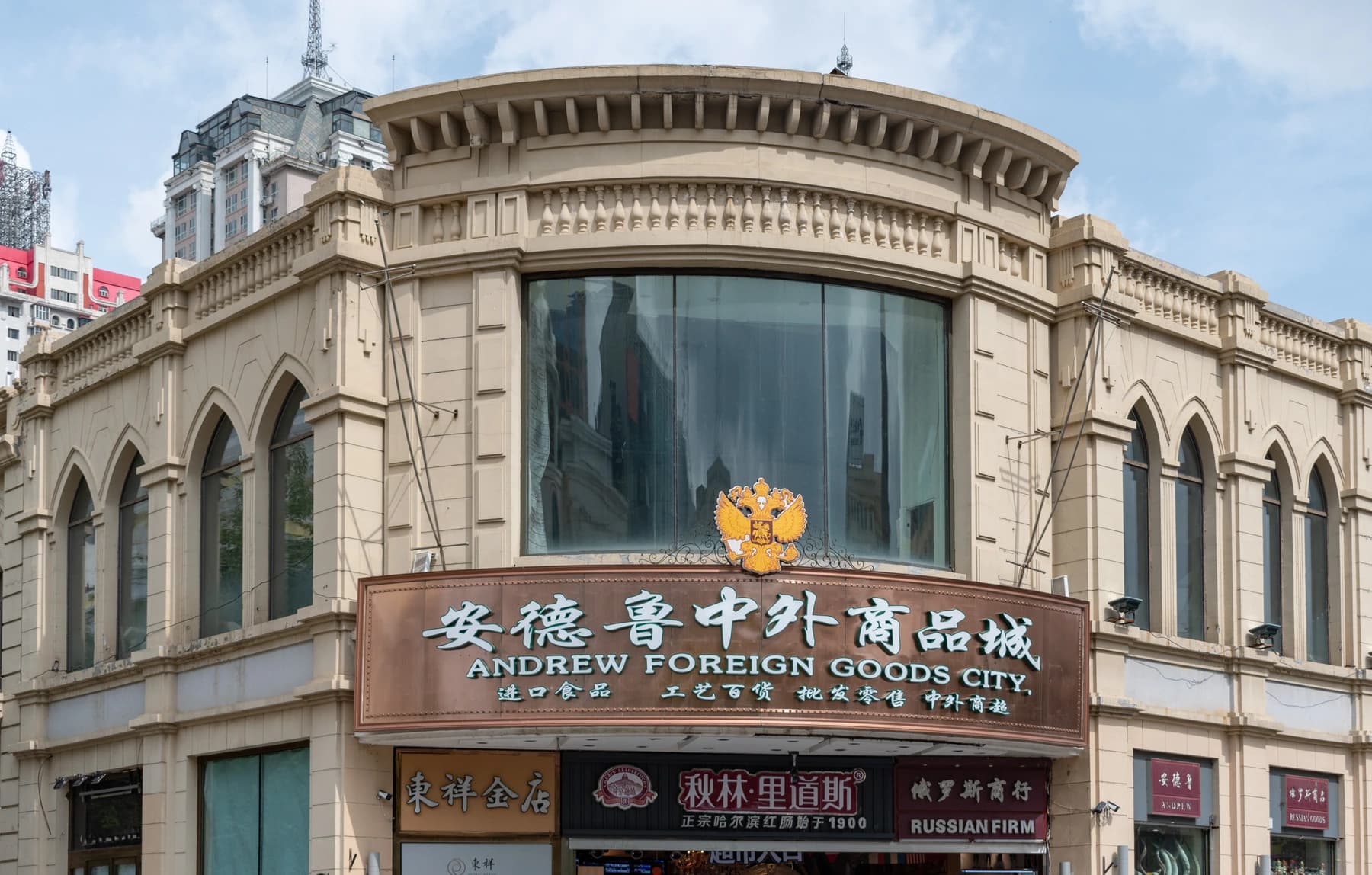
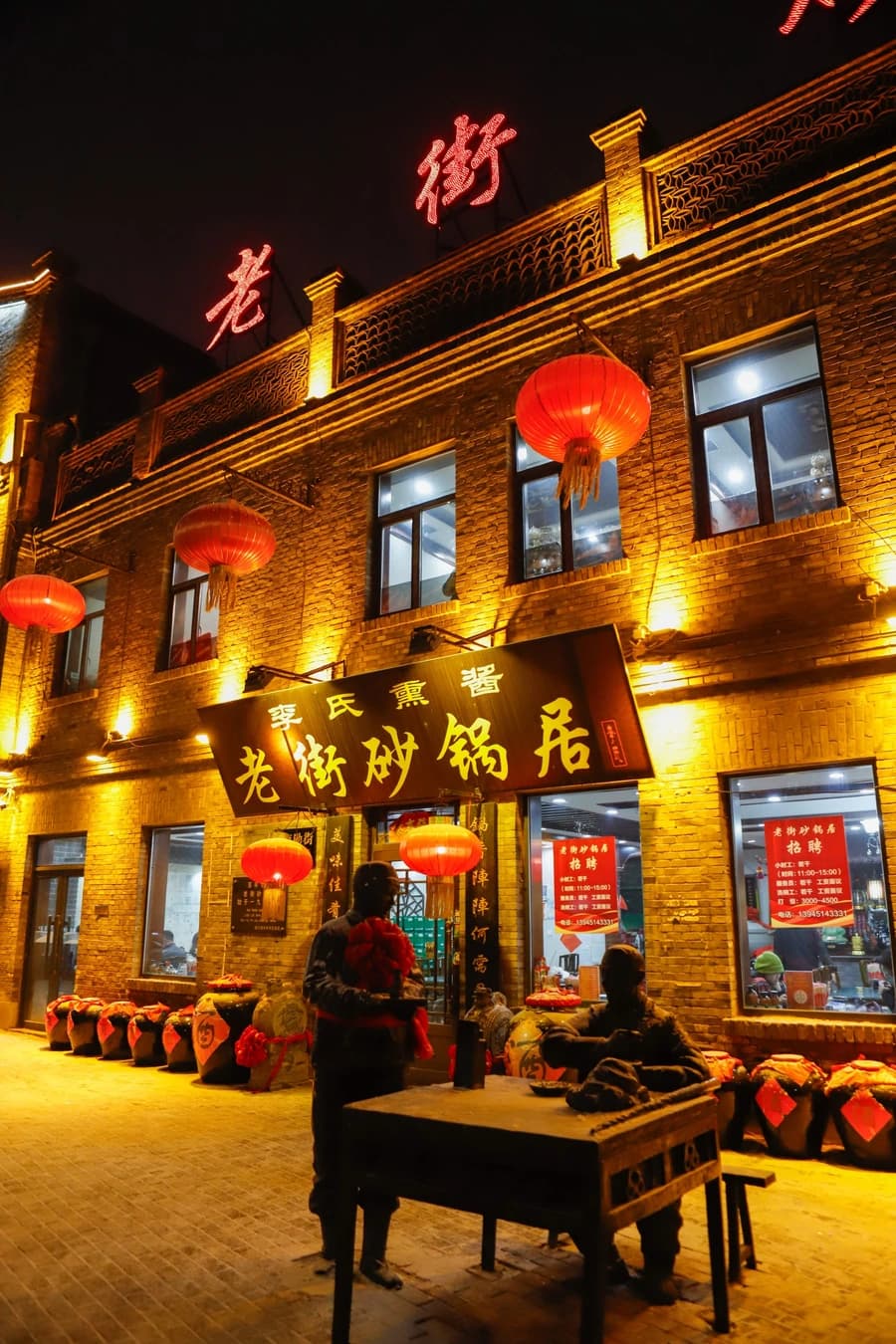
Enter Central Street from the south and look above the modern signs. Compare masonry, rounded corners, balconies, cornices and window rhythm. Some façades are historic, some altered, and some retail interiors have little connection to the architecture outside. That tension is part of the street's contemporary story.
For food, choose one or two deliberate stops. Check queue length against actual cooking turnover, displayed price units and whether the product is made there. A long queue proves visibility, not quality. Harbin red sausage and bread travel better than dairy desserts in deep cold; ice cream is a novelty only if your hands and face remain comfortable.
Finish at the river
The Flood Control Monument is about 0.8 km from the northern part of Central Street. It gives the route a civic and geographic ending at the Songhua River.
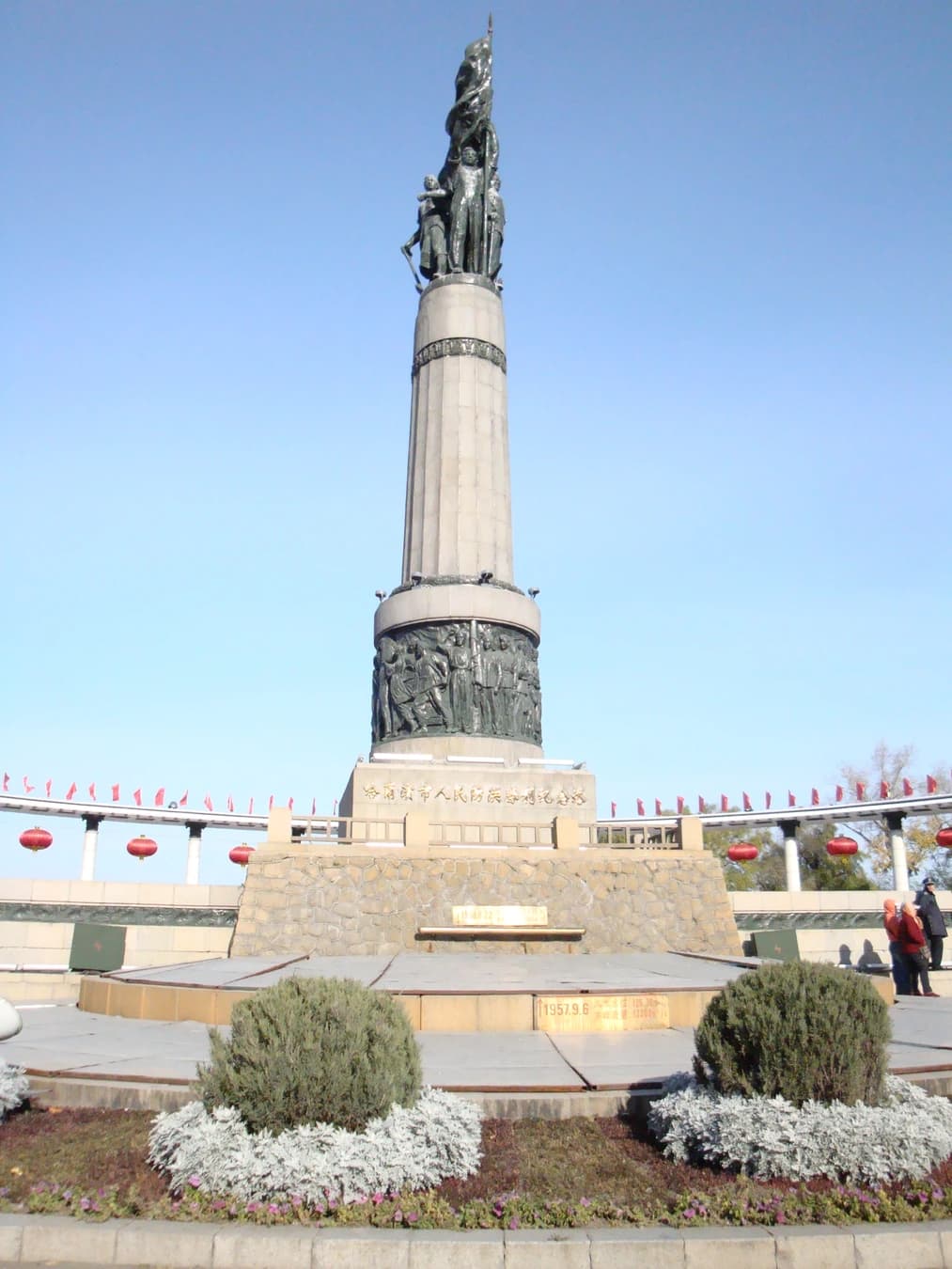
Photo: Tlrmq · Source · CC BY-SA 3.0
In winter, riverside wind can be substantially harsher than the temperature felt between buildings. Do not walk onto ice because other people appear to be there; use only an officially opened, managed area with current access controls. In warmer seasons, extend through Stalin Park only if weather and energy support it.
Practical route
- Saint Sophia to Harbin Museum: about 0.5 km / 8 minutes on foot.
- Museum to Central Street: about 0.7 km / 9 minutes.
- Central Street to Flood Control Monument: about 0.8 km / 11 minutes.
- Allow 3–5 hours depending on museum depth, food stops and cold breaks.
Exact entrances matter. Save 圣索菲亚教堂, 哈尔滨市博物馆, 中央大街 and 防洪胜利纪念塔 separately rather than using one generic “city centre” pin.
Best pairing
After the riverfront, take a vehicle roughly 3 km east to the Chinese Baroque historic district. This adds a genuinely different architectural layer. Do not add Songbei's ice attractions; they deserve their own day across the river.