Harbin Chinese Baroque District
Laodaowai's “Chinese Baroque” describes a local hybrid: outward-facing decorative façades influenced by European styles paired with Chinese commercial and courtyard life behind them. It is more useful to study that spatial negotiation than to hunt for one perfect European-looking street.
Unlike Central Street, this was closely tied to the Chinese merchant city of Fujiadian and later Daowai. The key visual idea is therefore not “a piece of Europe in Harbin.” It is a commercial façade translated through Chinese symbols and attached to Chinese courtyard life. Provincial cultural authorities describe a much larger protected district, but a first visitor should work with a short, legible section rather than trying to cover every block.
A focused 90-minute walk
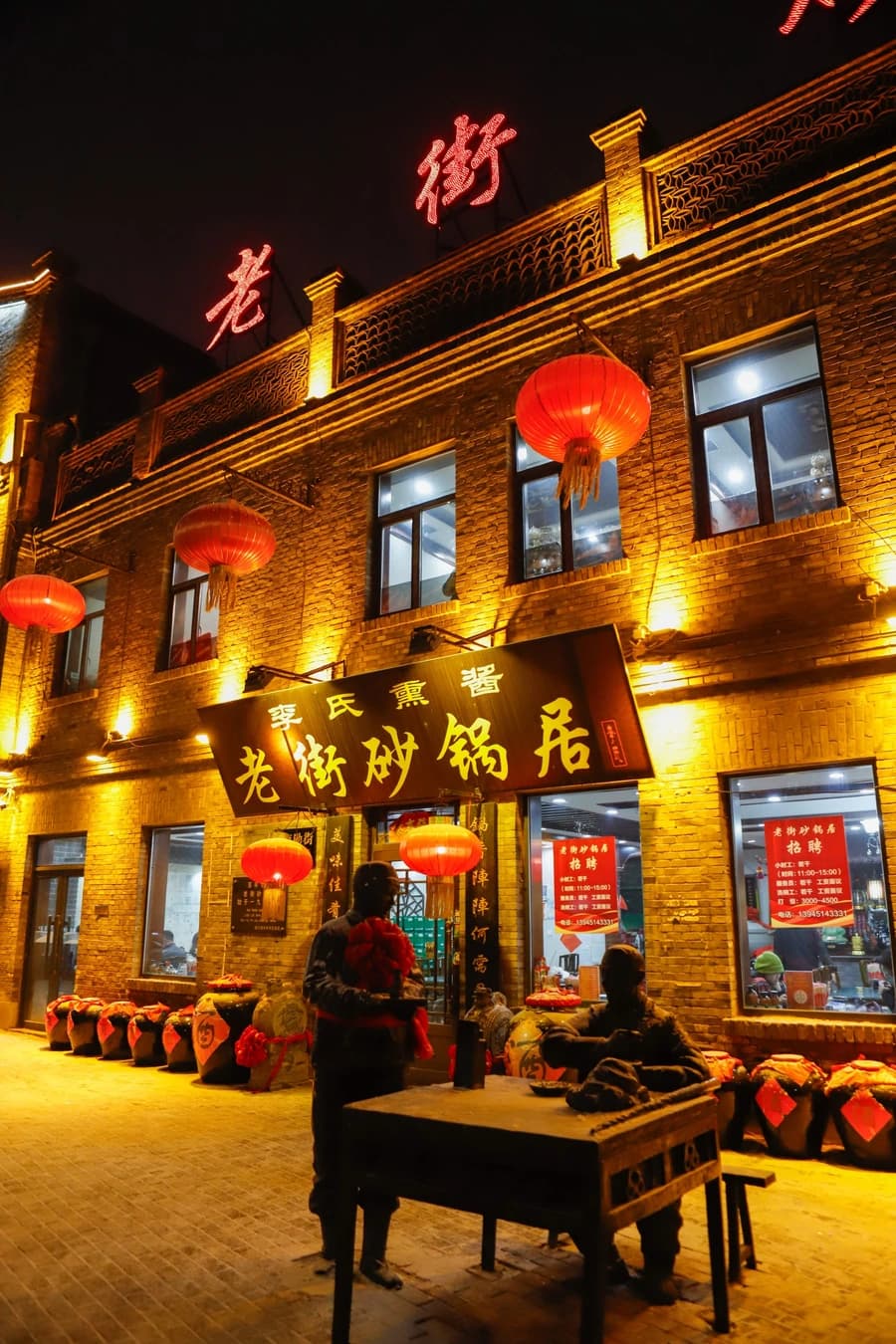
Start at the official street entrance around the junction of Jingyang Street and Jingyu Street, then work east through the restored core. Walk slowly enough to compare façade ornament, brickwork, parapets, shop depth and side-lane access. Look for Chinese auspicious motifs embedded in Western-derived decoration, then turn your attention behind the street wall: the lanes and courtyards explain how commerce and domestic space fitted together.
Continue only as far as your interest and the weather justify. One or two blocks beyond the busiest frontage can show how the wider Daowai district changes, but not every old building is open or stable. Obey barriers, do not enter residential courtyards and do not mistake an unlocked doorway for a public museum entrance.
Restoration has made parts of the district easy to visit but can flatten the distinction between surviving fabric, reconstruction and themed commercial fit-out. Read plaques critically and compare dates. A provincial 2024 architectural overview explains the street-front/Chinese-courtyard form, while a December 2024 restoration report describes newly presented sections. “Historic style” is not identical to an untouched historic building.
Add one interior, if it is actually open
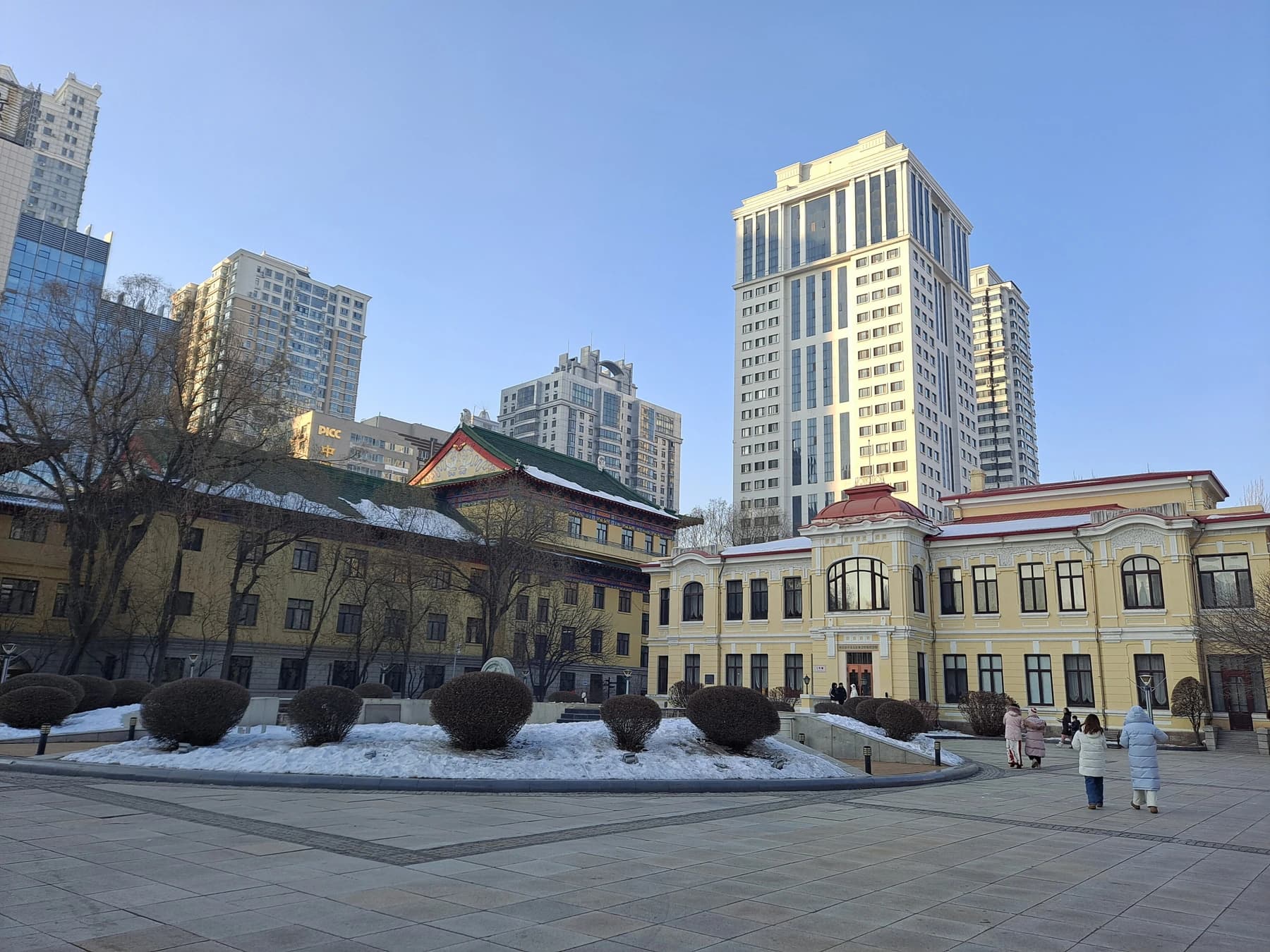
An interpretation space such as the Harbin City Origin History and Culture Museum can supply context that façades alone cannot. Treat it as an optional stop: confirm the day's opening hours, ticketing and last entry at the door. Shops, performance venues, museums and courtyards inside the district keep separate schedules even though the public streets remain accessible.
If you skip an interior, use plaques to identify one merchant building, one lane and one courtyard arrangement. That gives the walk a clearer purpose than taking photographs at every new commercial installation.
Photo: 陈霆, Ting Chen, Wing · Source · CC BY-SA 2.0
Eat with two checks
Daowai is a sensible place for Northeast food because a meal completes the geographic route. First check portion size: stews, dumplings and meat dishes are often designed for sharing. Second check displayed pricing units, especially for skewers, seafood and dishes sold by weight. Order one signature dish, one vegetable and a staple before adding more.
Useful local references include guobaorou, dumplings, smoked or red sausage, sauerkraut with pork and hearty stews. Choose a busy specialist with visible turnover rather than the restaurant with the longest multilingual menu.
Famous shop names circulate widely, but branches, opening hours and queues change. Save one preferred restaurant and one backup on the same side of the district. In winter, joining a long outdoor queue can cost more comfort than a particular “must-eat” dish is worth.
Photo: 陈霆, Ting Chen, Wing · Source · CC BY-SA 2.0
Best timing and pairing
Late afternoon into early evening gives both façade detail and lighting. In deep winter, daylight fades early and cold accelerates after sunset, so do the architecture walk before dinner rather than after it. Keep a warm indoor stop available and protect phone batteries close to the body.
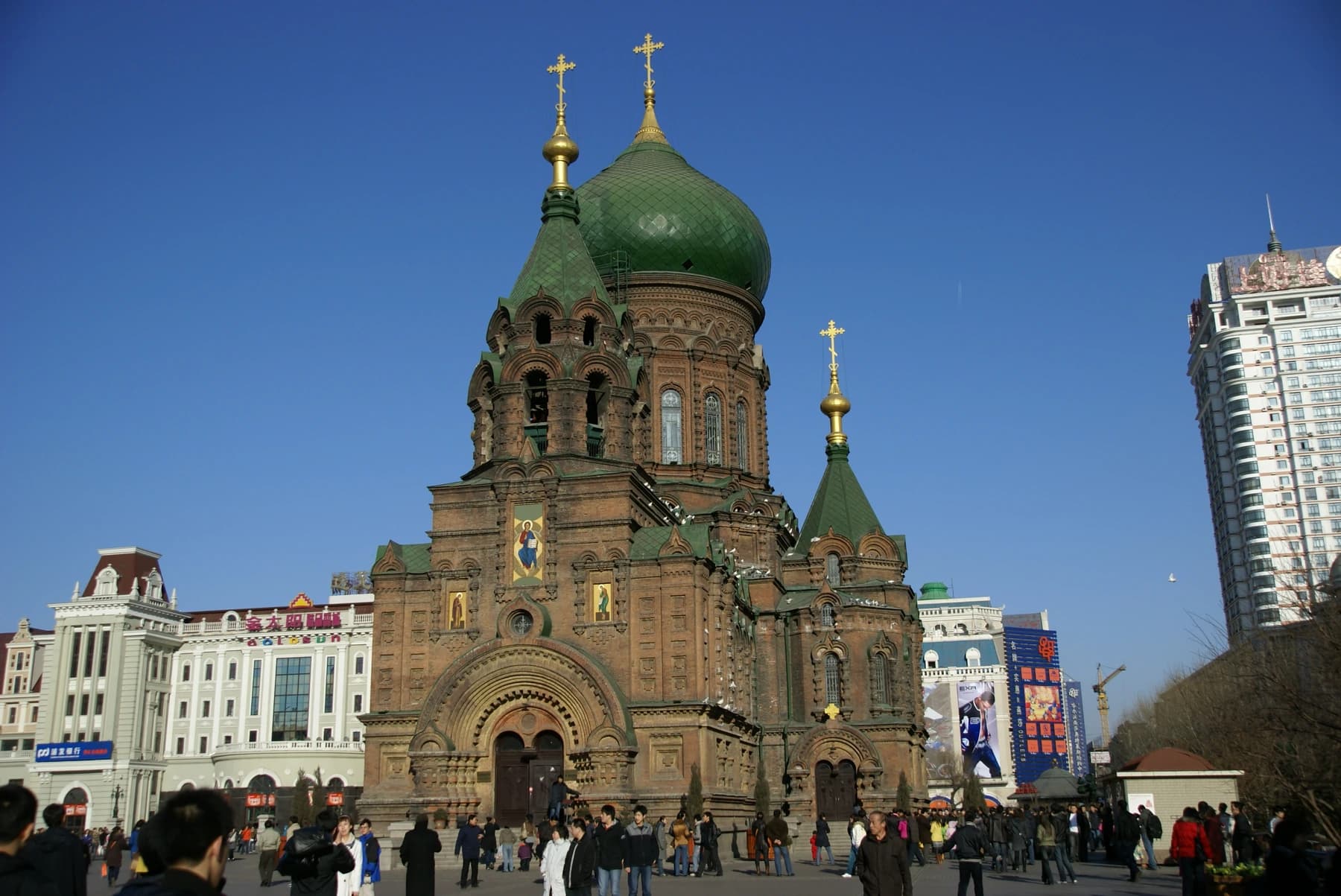
Pair the district with the Central Street and Saint Sophia route. From the Flood Control Monument, route planning is about 3 km by car and roughly 11 minutes before traffic. Do not try to walk the whole transfer in extreme cold simply because the map looks compact.
Save 中华巴洛克历史文化街区 as the destination. A metro station with a similar name can be a transport access point, not the architecture itself.
The public streets are free, while interiors, performances and temporary exhibitions may keep their own hours and charges. Snow, ice, kerbs and uneven older paving make winter accessibility different from the map impression; choose a short restored block plus one meal if walking is limited. Architecture-focused visitors should go in daylight, food-focused visitors can arrive later, and anyone expecting an untouched historical quarter should treat surviving, restored and newly themed sections as three different evidence layers.
Allow roughly 90 minutes for architecture alone or two to three hours with an interior and meal. The area is worthwhile for urban history, local food and hybrid design; it is a weak choice for someone seeking a pristine, uniformly restored European old town.