Jinshawan Bay Walk
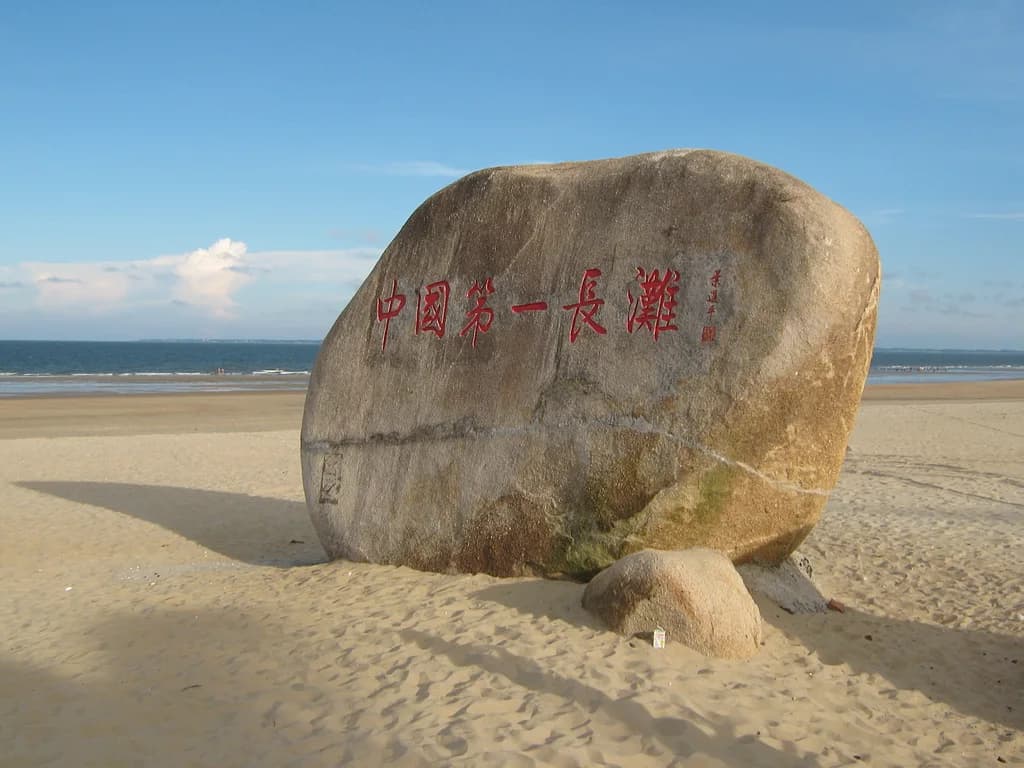
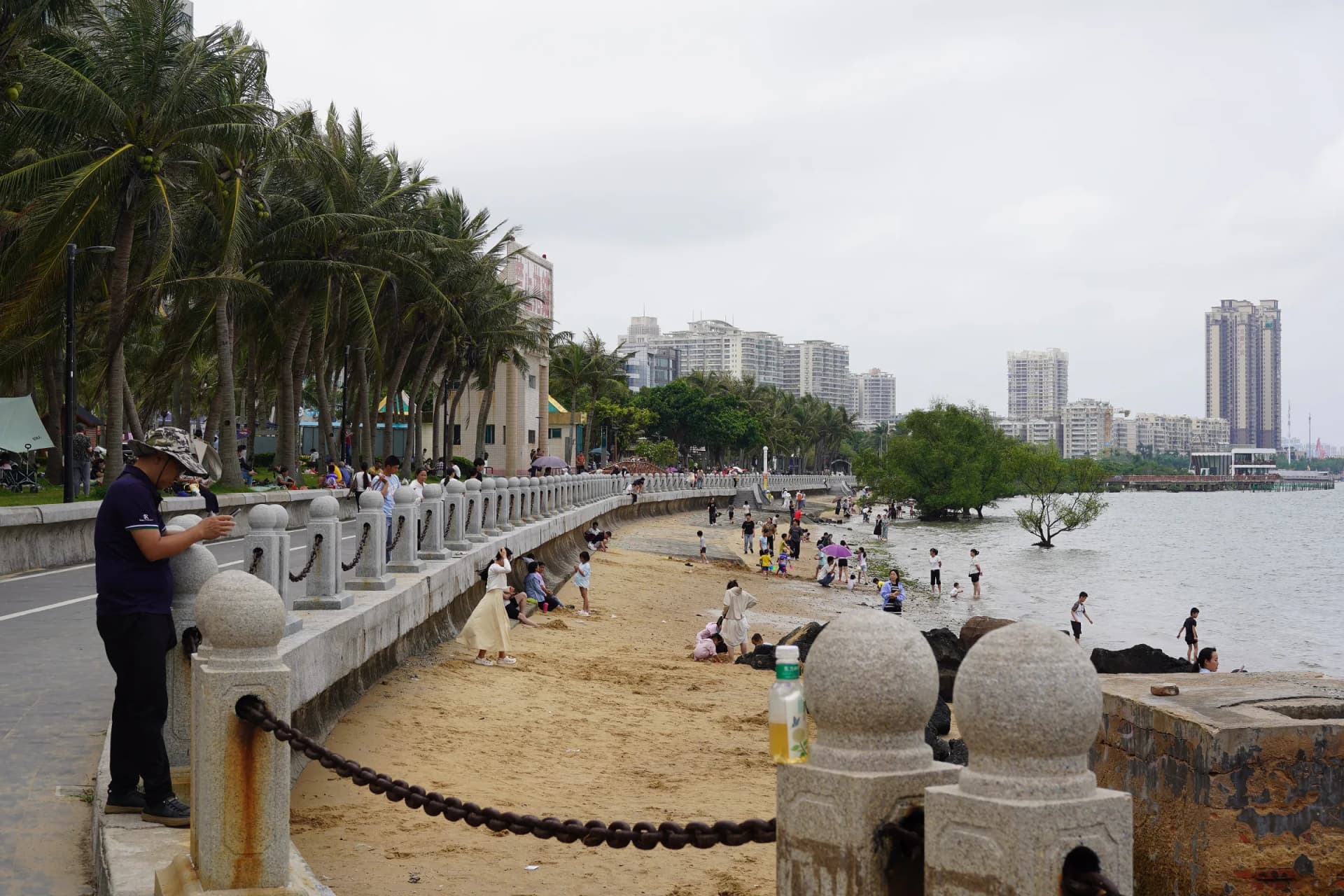
Jinshawan is the simplest bay stop for a first-time visitor: a public beach, long promenade, palms and open views rather than a remote resort transfer. It works best after Chikan or as a low-effort arrival-day plan.
There is no need to “complete” the waterfront. The successful visit is a comfortable out-and-back segment with a saved pickup point, not an arbitrary finish at the far end of the bay.
Walk when the sun is lower
Start near the main beach and follow the promenade toward the clearest bay and bridge views. Midday sun and humidity can be punishing, while late afternoon carries better light and more local activity. Check wind, rain and any swimming notice before entering the water.
Allow 45–90 minutes for a simple evening walk or two to three hours with sand time, a seated break and a meal. Leave earlier when a thunderstorm or typhoon notice affects the exposed coast; a bright patch between showers is not proof the bay is safe.
Choose a short beach stop or an evening stroll
For families, pick one accessible section of 金沙湾 (Jīnshāwān) and keep the visit centered on sand play, a promenade walk and a nearby meal. Decide on the return point before spreading out along the beach. This is easier to manage than walking a long distance and discovering that the group still needs to retrace it in the heat.
For an evening visit after Chikan, have your main meal or a rest before coming to the bay, then walk as the temperature eases. Pause where the water view opens up, continue only as far as the group enjoys, and return toward your saved pickup point. The changing light, palms and city activity are the attraction; reaching the far end of the promenade is optional.
If you stay nearby, split a longer visit into a short outing and a later return. That lets you leave beach items at your accommodation and change before dinner. You do not need to move accommodation for a single waterfront evening.
Separate a bay walk from a beach day
The promenade is worthwhile even when swimming is unsuitable. Water quality, lifeguard coverage and permitted swimming zones can change, so use the marked area and current signs. Bring sun protection and insect repellent in warmer months.
Do not infer that an open promenade means swimming is allowed. Flags, lifeguards and the day's notice control. Children should remain within reach near the water, and inflatable toys are not safety equipment.
Access and Mobility
Choose the main promenade and beach access shown on current maps rather than asking a driver for the generic “Jinshawan” label. The district is long enough for different hotels and entrances to produce different pickup points.
Most of the promenade is level, but beach ramps, road crossings, construction and sand can interrupt a step-free route. Travellers using wheelchairs or strollers should select one named entrance and confirm accessible toilets and a return vehicle nearby.
Food and transport
The surrounding Chikan/Jinshawan area has broad hotel and restaurant choice. Pin your exact return point because the waterfront is long, and allow time for ride-hailing demand after sunset.
Restaurants and temporary stalls change. Confirm seafood weight, unit price and preparation fee before ordering; the bay walk itself does not require buying a package or joining an event.
Pair it with the north city
Use the same day for Chikan Old Street. Keep Xiashan's historic buildings for another half day rather than crossing the city repeatedly.