Guangzhouwan Architecture Walk
Xiashan's surviving churches, offices and commercial buildings make a compact two-to-three-hour walk. The route is visually distinctive, but its meaning comes from the coercive French leasehold imposed in the late 1890s and returned to China in 1945, followed by decades of local reuse. Treat the buildings as evidence of colonial power and urban change—not as a romantic European film set.
The most useful sequence is St. Victor's Cathedral → former French Legation and military headquarters → selected former post, bank or police buildings → Seaside Park. Interiors depend on opening, worship and exhibitions; the façades and street relationships still work when a door is closed.
Start at the cathedral as a living religious site
Search 维多尔天主教堂. View the twin-tower façade and its position within the older Xiashan street grid before considering the interior. This remains a religious building, so a service, private event or conservation need may limit access. Dress quietly, silence your phone and do not photograph worshippers without permission.
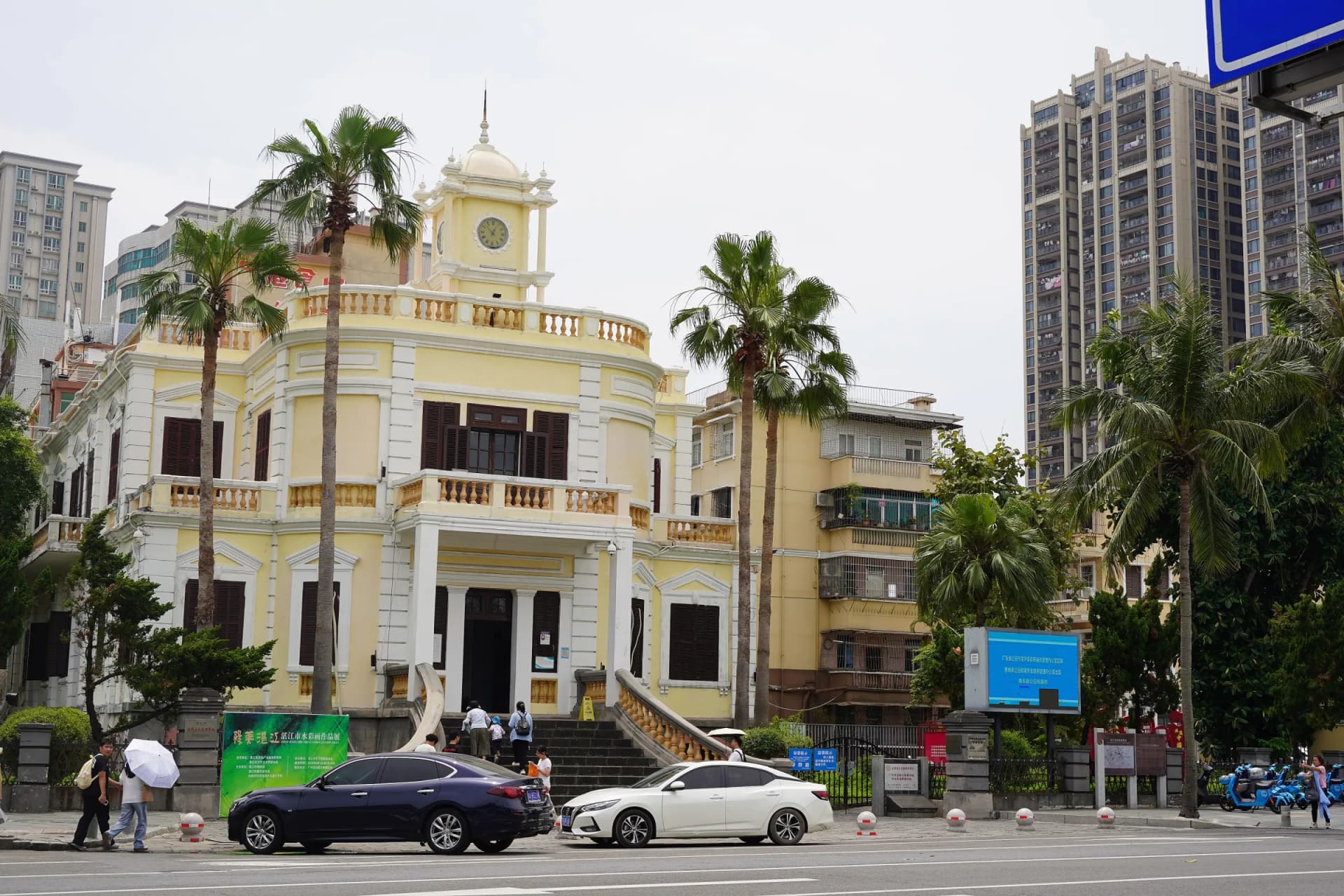
From the cathedral, walk toward 广州湾法国公使署旧址 (former French Legation). The crossings and heat make this feel longer than a map suggests; use shaded streets and pause rather than rushing between pins.
Give the former Legation the main history block
The former Legation is managed through Zhanjiang Museum and stands next to the former French military headquarters near Seaside Park. A 2026 visitor found photographs downstairs and Guangzhouwan history upstairs. On 29 August 2026, the museum opened a public art exhibition in the building, but it published no closing date; verify the live exhibition and opening notice before you go.
If the rooms are open, spend 30–45 minutes reading how administration, military control and the port shaped the leased territory. Look at circulation, balconies, shade and ventilation as adaptations to Zhanjiang's climate. Separate the historic shell from later repairs and exhibition design.
If closed, study the exterior only and respect barriers. Do not peer into offices or treat a protected building as an abandoned backdrop.
Choose one extension, not every pin
Official museum-led walks also connect the former West Camp post office, Banque de l'Indochine building, police station and other Guangzhouwan-era structures. Some are reused and may not welcome visitors inside. Pick one or two based on current map pins and exterior visibility rather than trying to collect them all.
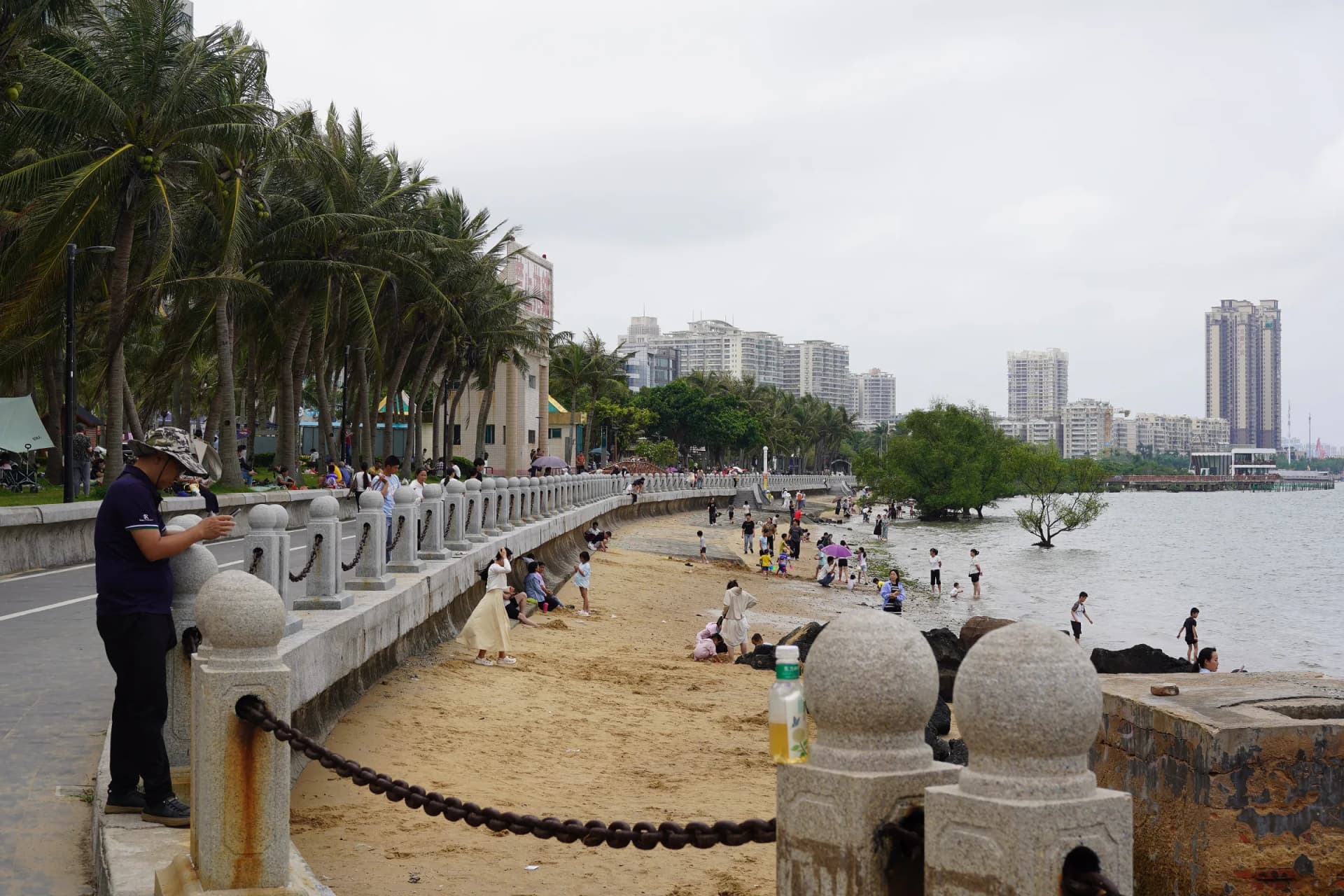
Finish at 海滨公园 (Seaside Park), across from the former administrative complex. The bay, port traffic and mature trees help explain why this coast mattered strategically. A recent visitor continued farther along the waterfront but encountered road works near another park; keep the promenade optional and check current streets.
Timing and practical limits
Begin around opening time if the former Legation interior matters. Older museum notices used Monday closure and special holiday schedules, but these are not a current year-round guarantee. Search the Zhanjiang Museum notice feed on the day; the cathedral keeps its own access rules.
Morning gives cooler walking and clearer façade detail. Late afternoon works for the waterfront, but arriving late risks missing both interiors. Carry water and cross major roads at signals.
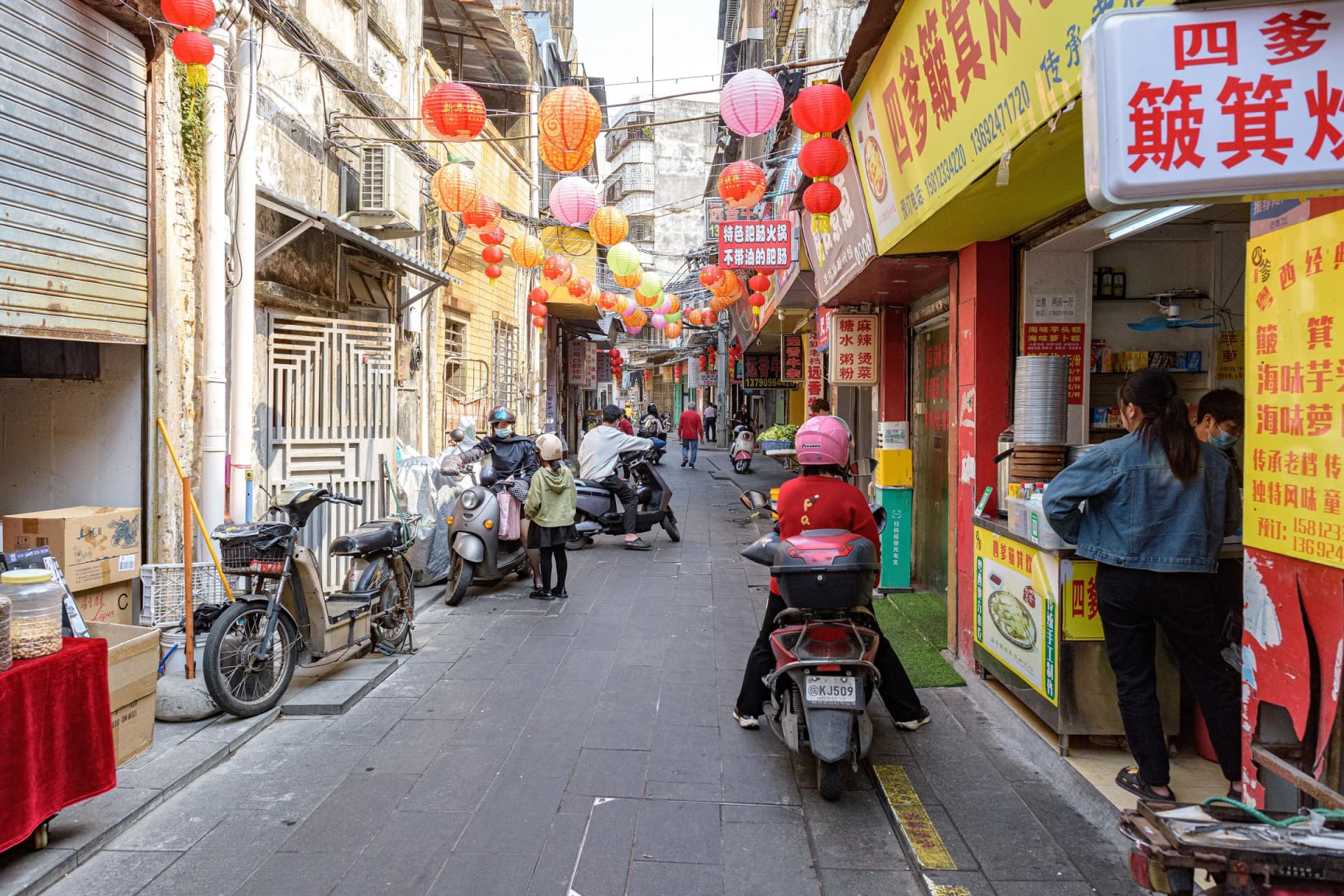
This route is in Xiashan. Chikan Old Street is a separate historic district with arcades, port commerce and residential lanes; give it another half-day rather than joining the two into an exhausting architecture checklist.