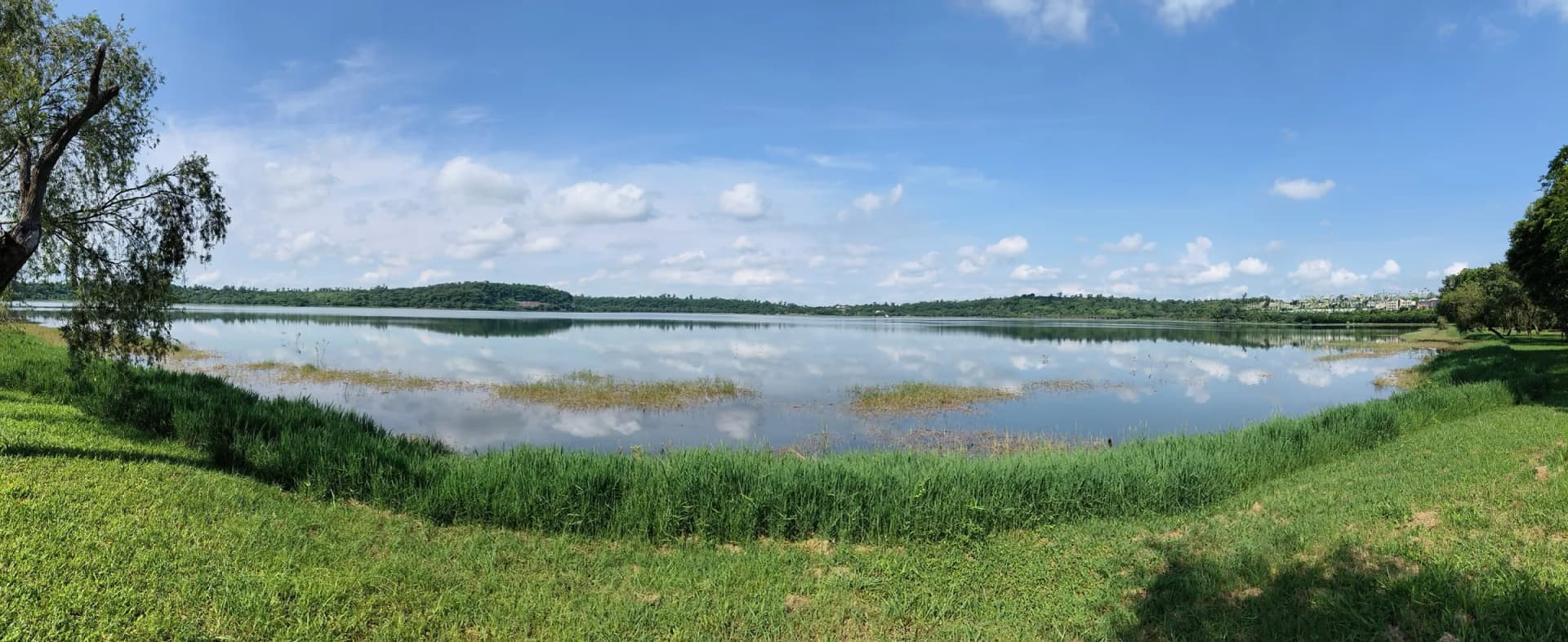
Huguangyan Maar Lake
Huguangyan is the geological counterpoint to Zhanjiang's coast. Its central feature is a volcanic maar lake within the Leiqiong volcanic landscape. Prioritize the lake, landform interpretation and shaded viewpoints before optional entertainment.
A maar forms when rising magma interacts explosively with groundwater, leaving a broad crater that can later hold a lake. Onsite interpretation should control the detailed age and eruption story; recycled claims about the lake being “bottomless” or having magical water are not geology.
Choose a partial or full loop
A full circuit requires more time and heat exposure than the map may suggest. Most visitors should begin at the main interpretation area, walk a chosen section of lakeshore and turn back once the views repeat. Commit to the longer loop only with enough water, sun protection and time before closing.
Choose one of three visit shapes:
- 90-minute introduction: interpretation plus the first strong lake viewpoint.
- Half-day partial loop: museum or geology displays, a shaded shore section and a rest.
- Longer circuit: only after staff confirm the path, distance, final vehicle and weather conditions.
The shortest option still explains the landform. Completing a circuit is not a badge of a more scientific visit.
Make the first lakeside stop a decision point
Use 湖光岩 (Húguāngyán) for the scenic-area search and confirm your arrival entrance and pickup with the driver. At the visitor map, identify the lake access, the interpretation facilities open that day and how you will return to the same gate. The lake is the main reason to come; a transport product or extra exhibit should support that visit.
After reading the geological explanation, spend time at the first clear lake view before committing to more walking. Compare the enclosed, green lake setting with Zhanjiang’s open coast. If that contrast is what you came for, continue along one comfortable shore section and return. If you want the longer circuit, decide while you still have the time and energy for its far side.
Any sightseeing vehicle needs its own check: ask where it boards, where you may get off and whether the ticket permits reboarding. Do not assume it works as an unlimited hop-on service or will be available at every point where you tire.
Allow half a day
Transport from central Zhanjiang plus a meaningful walk usually consumes half a day. Start early in warm months. Rain can make surfaces slippery, while strong sun turns exposed sections into the main difficulty rather than elevation.
Bring water even if a sightseeing vehicle is operating. Services at one node do not guarantee drinks, shade or transport on the far side of the lake. Families should agree on the turnaround point before children become tired.
Check the live operating notice
The operator’s published tariff, posted in December 2023, gives ¥50 as the standard adult baseline. Its February 2026 notice identifies 07:30–18:00 as the normal daytime schedule, but temporarily shortened it for a lantern event ending on 8 March. That event schedule is not a year-round rule. Confirm current admission, last ticket sale and any weather restrictions through the park notice index or visitor service at 0759-2819197 before traveling; confirm accepted passport details when buying.
Use the same call to ask which gate should be used and whether the internal vehicle is running. A ticket, vehicle and temporary exhibition are separate products unless the checkout explicitly combines them.
Protect the Lake
Stay on marked paths and behind shoreline barriers. Do not enter the water, feed wildlife, collect plants or stones, or use a drone without permission. The lake is a protected geological and ecological site, not a swimming lake or water-sports venue.
Pair it carefully
The Xiashan architecture walk is the easiest urban pairing. Do not promise a same-day island ferry after the lake.