Hands-On Intangible Heritage in China
The best craft experience in China is not necessarily the one with the most famous heritage label. It is the one whose public access, teaching depth and unfinished-work logistics match your trip. A pottery session in Jingdezhen can involve real making but leave you waiting for firing. A Bai tie-dye class near Dali can produce something portable on the same day, yet a ten-minute tying demonstration is a different product from a full dye cycle. A kite museum may run an excellent class during a school holiday without offering it to walk-ins every afternoon.
This guide helps you choose among making, watching, interpreting and buying. It does not treat heritage recognition as a booking platform. UNESCO describes living heritage as knowledge and practice transmitted between generations; inclusion on a list does not mean a private studio, religious practice or community home is open to tourists. First decide what kind of contact you want, then confirm the exact public programme.
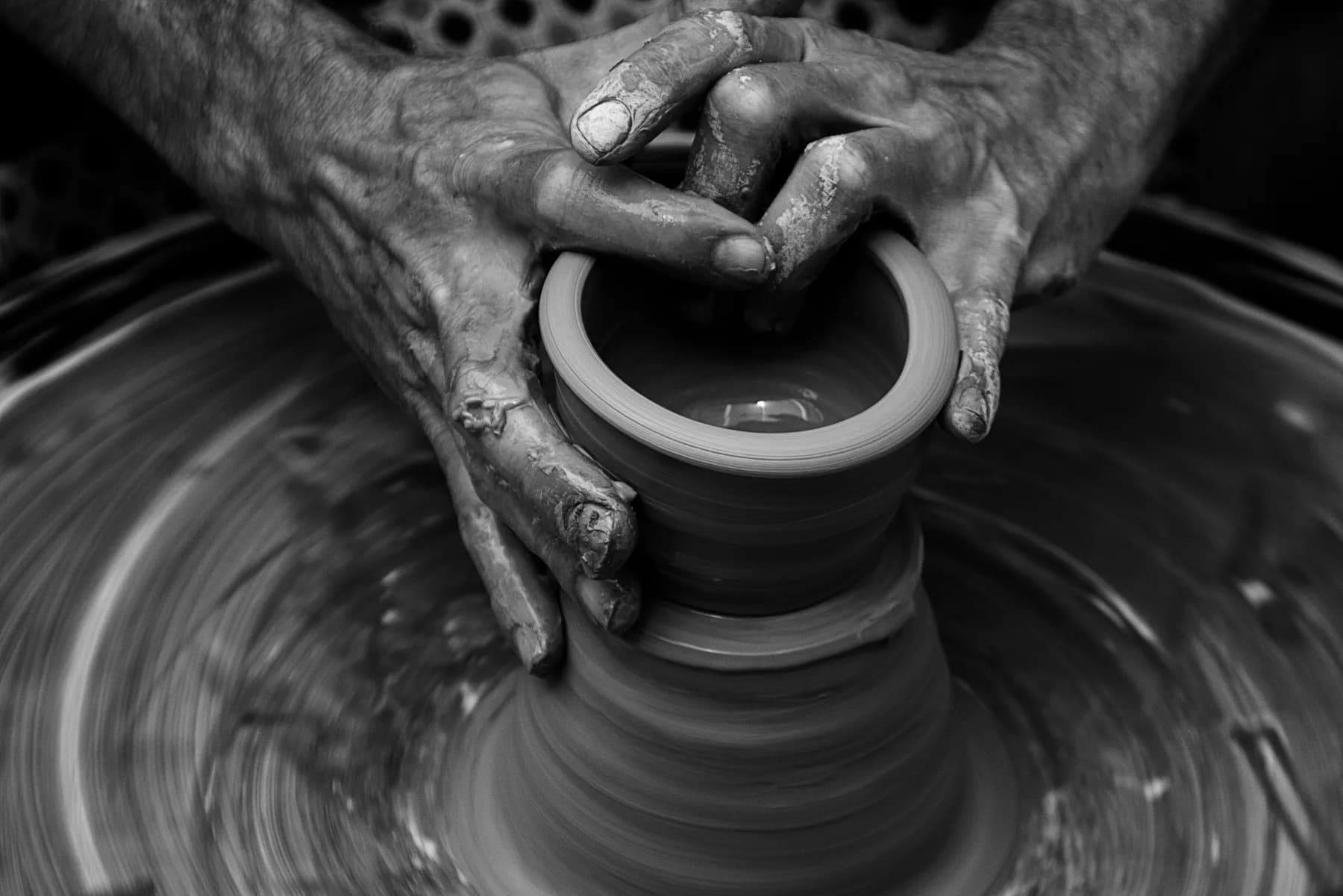
Wheel throwing is only the forming stage. Firing, glazing, collection and shipping determine whether the experience fits your route. Photograph: Quino Al, Wikimedia Commons, CC0.
Start with the access type, not the craft name
The word “experience” is too broad to book safely. Classify a listing or venue into one of six types before comparing prices.
| Access type | What should happen | What it does not promise | Best for |
|---|---|---|---|
| Hands-on public workshop | You perform named stages with tools, materials and instruction | That every traditional stage happens in one short class | Travelers who want to learn and make |
| Demonstration or observation | A maker performs a process and explains it | Your own finished object | Technique, time-poor visits, limited hand strength |
| Museum interpretation | Objects, tools and displays explain history and production | A masterclass or active workshop | Context before buying or booking |
| Retail demonstration | A short process supports a shop visit | Independent teaching or full production transparency | Quick orientation if sales terms are clear |
| Resident or community practice | Knowledge continues in everyday or ceremonial life | Public entry, filming or staged participation | Respectful observation only when explicitly invited |
| Dated event or pop-up | A programme runs on stated dates with a host and capacity | Year-round availability | Travelers whose dates match exactly |
A useful listing names the teacher or host, stages, duration, group size, language, materials, finished object and what happens after class. “ICH experience” without those details is a discovery lead, not a confirmed booking.
Quick chooser: where should you build the trip?
Choose Jingdezhen for the deepest making trip
Best fit: adults, older children with suitable supervision, design travelers and anyone willing to give a craft two or three days.
Jingdezhen has the clearest case for making the workshop itself the reason to travel. You can distinguish wheel throwing, hand-building and underglaze painting, compare studios and understand why drying, glazing and firing happen after your hands leave the clay. Our detailed Jingdezhen ceramics workshop route turns that choice into a realistic two- or three-day plan and explains the market and kiln geography.
Book one substantial process instead of stacking three “DIY” counters. Wheel throwing teaches pressure and form but normally produces a wet piece that cannot travel immediately. Hand-building is slower and often easier for mixed-age groups. Underglaze painting on a prepared blank offers more control over the visible result, although you are decorating an existing body rather than forming it. A studio that can state its firing batch, pickup estimate, shipping carrier, packing method and breakage policy is more useful than one promising instant success.
Time commitment: two nights is the practical minimum when the class is central; three gives room for a confirmed Sanbao studio, a dated market or recovery from a reschedule. Do not assume another day guarantees your piece will emerge from the kiln. Ship it if the studio has a documented process, and keep photos plus the receipt.
Choose Dali and Zhoucheng for a compact textile experience
Best fit: first-time makers, families who can manage dye and staining, travelers already spending several days around Dali.
Zhoucheng (周城) north of Dali is associated with Bai tie-dye. The destination works well when you want one workshop inside a broader village-and-landscape stay rather than a craft-only city break. Read our Zhoucheng Tie-Dye Village guide before choosing a class, then pair it with Xizhou rather than compressing both shores of Erhai into the same day.
The practical question is how many stages you perform. Tying a prepared outline, dipping it once and opening the pattern can be an enjoyable introductory activity. It is not equivalent to designing the resist, tying or stitching it, running repeated dye and oxidation cycles, rinsing and drying. Ask whether the cloth is cotton, linen or another fibre; whether the dye is natural indigo or a modern dye; who made the blank; whether loose color may transfer; and whether the quoted dimensions are before or after washing.
Open Zhoucheng on AMap. For a named public anchor, Puzhen Museum on AMap resolves to the museum in Zhoucheng, but current class availability still requires direct confirmation. Build in a return-car plan before the session begins.
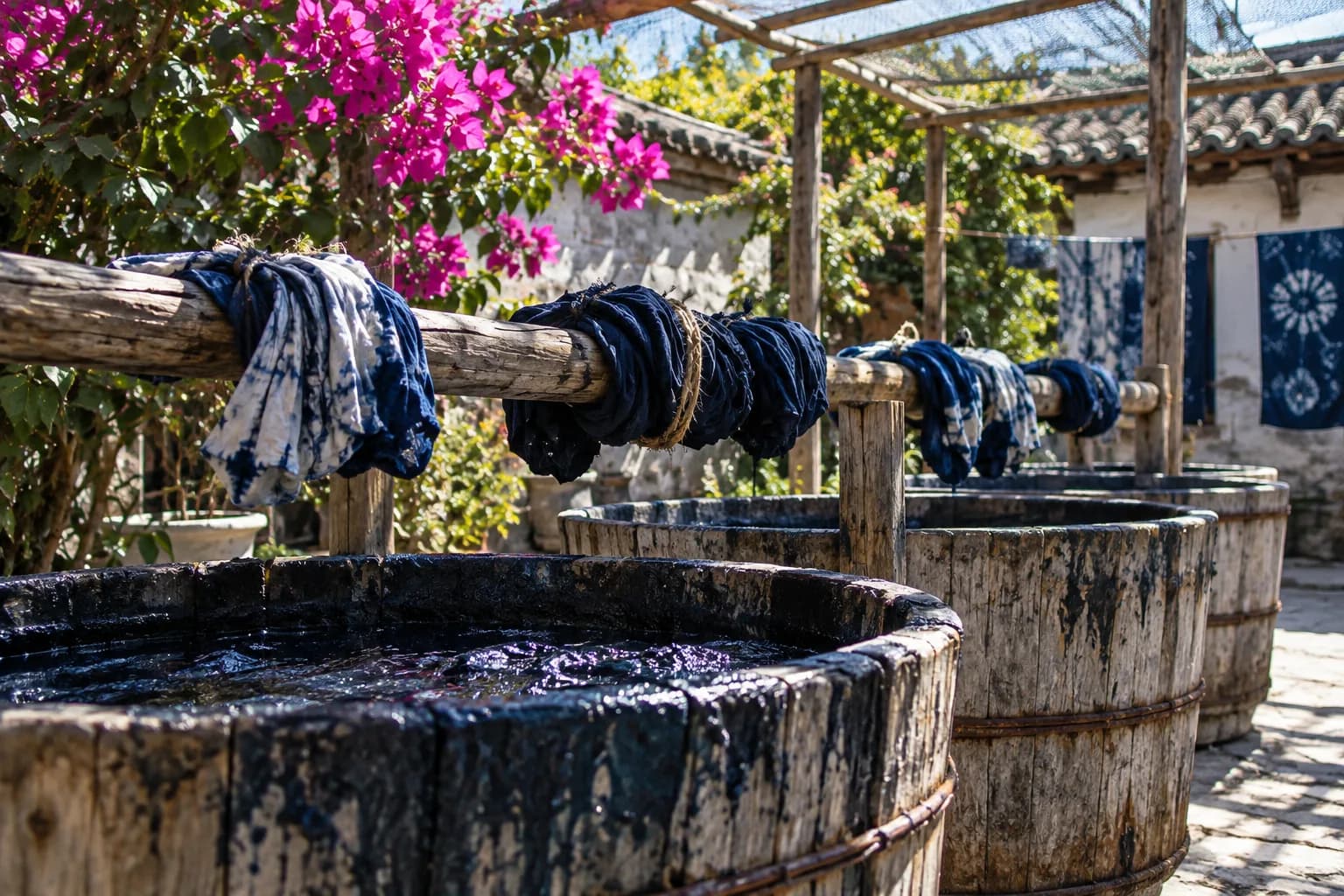
Vats, tying, repeated dyeing, oxidation, rinsing and drying are separate stages. Confirm which ones your class includes.
Choose Weifang for kite interpretation, with a date-specific class
Best fit: families, folk-art travelers and people who can make the programme calendar control the day.
Weifang is stronger as a kite-history and technique destination than as a guaranteed walk-in workshop. A 2025 Shandong government feature on the World Kite Museum described education programmes built around the four stages 扎、糊、绘、放: frame, paste, paint and fly. It also drew a useful distinction: younger children may paint a prefabricated blank, while an older-student course can follow the traditional sequence more fully. That is exactly the distinction to ask about.
Open the Weifang World Kite Museum on AMap. Treat the museum as a reliable interpretation anchor and any class as a second, dated product. Ask whether the programme is open to individual travelers or only registered school groups, the minimum age, whether bamboo cutting or frame tying is included, and whether finished kites can be packed safely for a flight. Yangjiabu also combines kite and woodblock-print traditions, but holiday activity announcements do not prove a daily workshop; open Yangjiabu Folk Art Grand View Garden on AMap only after checking the current programme.
Give Weifang one full day if the class is confirmed. Without one, make it a museum-and-folk-art day rather than paying for an extra hotel night solely on the hope of a workshop.
Choose Hangzhou or Suzhou for textile context first
Best fit: fashion, conservation, design and textile-history travelers who value interpretation more than a quick souvenir.
The China National Silk Museum in Hangzhou explains the chain from fibre and reeling to weaving, dress and conservation. That chain matters: UNESCO's description of Chinese sericulture and silk craftsmanship spans mulberry cultivation, silkworm raising, reeling, thread, weaving and design. A retail embroidery demo represents only one possible stage.
Open the China National Silk Museum on AMap. Check its live exhibition and education calendar. A museum visit teaches you to ask whether a later activity is stitching, loom operation, pattern design or simply decorating a prepared object.
Suzhou is a reasonable add-on for embroidery and textile interest, especially within a Shanghai–Suzhou–Hangzhou route. Current city cultural programmes and ICH markets can include workshops, demonstrations and sales, but many are temporary. Do not travel to a named event from an old article without finding the current host notice and registration channel.
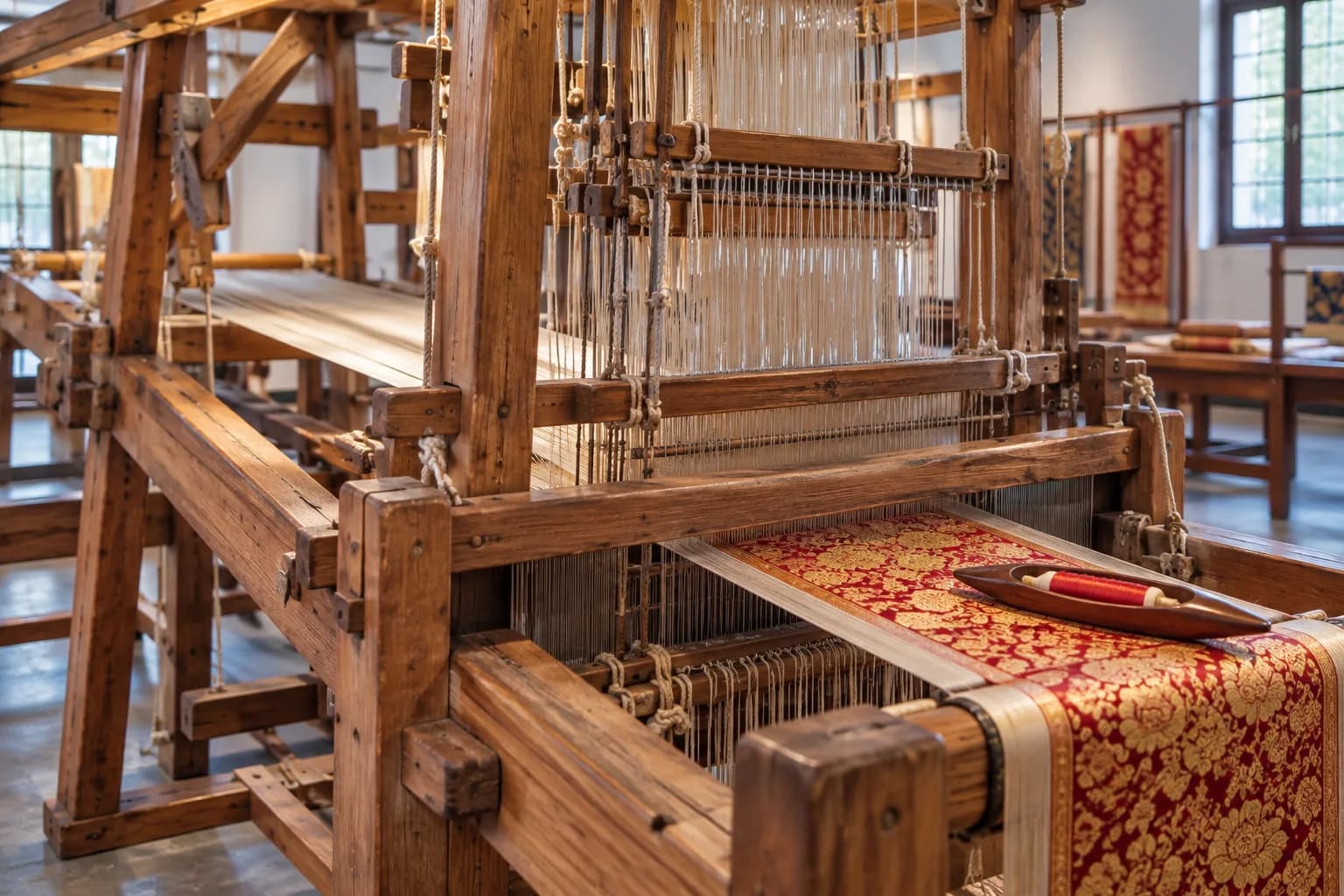
A drawloom makes the scale and division of labor visible. A museum demonstration may explain it better than a short visitor activity can reproduce it.
Choose Beijing for a national overview and rotating demonstrations
Best fit: a first China trip that cannot justify a separate craft city, or travelers still deciding which tradition to pursue.
The China National Arts and Crafts Museum / China Intangible Cultural Heritage Museum (中国工艺美术馆·中国非物质文化遗产馆) is an overview venue, not a fixed catalogue of bookable classes. A Chinese government report published in April 2026 described free reservation through the museum's official WeChat channel and inheritor demonstrations on weekend afternoons. Use that as a current planning lead, then check the museum's live notice for your exact date because the people, techniques and format can rotate.
Open the museum on AMap. Reserve with the identity document requested by the live system and read the specific programme description: “display,” “demonstration,” “performance,” “lecture” and “experience” are different commitments. One museum half-day can help you choose a later craft destination; it should not be advertised as a national workshop sampler unless the current calendar actually says so.
Choose Foshan for a kiln landscape and observation
Best fit: Guangdong itineraries, industrial-history interest and travelers who want ceramics context without building a whole trip around making.
Foshan's Shiwan area and Nanfeng Ancient Kiln belong in the observation-and-context category first. They make more sense inside a Foshan heritage and food stay than as a substitute for Jingdezhen's multi-stage studio trip. Open Nanfeng Ancient Kiln on AMap.
A shop, kiln complex and workshop counter can coexist at the same attraction. Verify the activity separately: what you make, who teaches, whether firing is included, how long it takes and how the finished piece reaches you. If there is no confirmed session, enjoy the kiln landscape, architecture and visible craft context without describing the visit as hands-on.
Silver, lacquer and paper-cutting: appointment-first categories
These crafts deserve more care precisely because visitor listings often flatten them into a generic “DIY.”
Silverwork may involve design, hammering, chasing, joining, polishing and potentially heat, sharp edges or regulated tools. A tourist-safe session may sensibly limit you to stamping or finishing a prepared component. Ask the metal fineness, weight, included stages, safety equipment, maker's mark and whether the price is based on material weight or a fixed object. In places associated with resident ethnic traditions, a retail street does not grant access to homes or permission to dress, pose or film people.
Lacquer can mean true lacquer processes, modern resin, painted decoration on a prepared blank or a museum display. Drying and curing may take far longer than a traveler has. Ask the material by name, ventilation, skin-contact precautions, number of coats, drying schedule and shipping feasibility. Anyone with known sensitivity should choose observation unless the host can explain materials and controls clearly.
Paper-cutting is the easiest of these three to fit into a short event because a basic piece can be completed and carried flat. Still ask whether you cut your own design, follow a template or only watch a demonstration. Confirm scissor or knife use for children, protective backing, duration and how the finished piece will be packed. A holiday market booth can be a valid short introduction; it should not be marketed as master training.
Use these categories as event-calendar or appointment-led experiences, not anchors for a multi-city route until the exact public session is confirmed. A named inheritor's status proves expertise, not availability to an unannounced visitor.
The booking message that prevents most disappointment
Send one compact request in Chinese and ask for a written reply:
你好,我想预约非遗手作体验。请问我们会亲手完成哪些步骤?总时长、人数、语言、材料和工具分别是什么?费用是否包含成品、后续加工、烧制或邮寄?成品什么时候可以取或寄出?如果活动取消,如何退款?
“Hello, I would like to book the craft experience. Which stages will we do ourselves? What are the duration, group size, teaching language, materials and tools? Does the fee include the finished object, later processing, firing or shipping? When can it be collected or sent? If the activity is cancelled, how is the refund handled?”
Then add the questions specific to the material:
- Clay: drying, bisque firing, glazing, final firing, remake and breakage.
- Textile: fibre, dye, pre-drawn pattern, washing, shrinkage and color transfer.
- Metal: fineness, weight, heat/tool use, safety and whether the quoted price can rise with material.
- Lacquer: actual coating material, ventilation, curing time and skin-contact precautions.
- Kite: prepared blank versus frame construction, flying space, packing dimensions and wind cancellation.
- Paper: template versus original cutting, blade/scissor handling and protective packaging.
Pay a deposit only through a channel that records the host, date, product and refund terms. Save screenshots of the inclusions rather than relying on a promotional title. When booking through a hotel or local contact, ask for the studio's own name and location too.
Price, time and shipping: compare the whole product
Long-lived national price tables are misleading because class depth, material, city and group size differ. Compare four components instead:
- Teaching: private or group, active instruction or self-directed counter.
- Materials: prepared blank or raw material; fibre, metal weight, clay body or object size.
- Post-processing: firing, glazing, drying, mounting, polishing or packaging.
- Delivery risk: collection date, domestic or international shipping, carrier, tracking, customs description and breakage remedy.
A cheap pottery class can become expensive if firing and international shipping are added later. A higher tie-dye price may be reasonable if it includes more cloth, repeated dye cycles and careful explanation. A free museum activity can be the best value when its goal is interpretation rather than a finished object.
For anything shipped, photograph the object before packing, receipt, address label and tracking number. Confirm whether the studio replaces, refunds or repairs a damaged piece and who files the carrier claim. Do not schedule an in-person pickup on a transfer morning; processing delays are normal in multi-stage craft.
Respectful participation
Living heritage is carried by people, not just patterns. Ask before photographing faces, hands, family spaces, altars, designs in progress or teaching materials. A public ticket may allow entry without allowing commercial portrait work, tripods, lighting or livestreaming. Stop if the host asks.
Do not bargain by dismissing skilled labor or compare every object with a mass-produced marketplace price. It is reasonable to ask who made an item, where, with what material and by which process. It is also reasonable to leave when those answers are vague. Credit the maker when posting a finished piece if they consent, and do not reproduce a contemporary design for sale merely because you learned a traditional technique.
For community or religious practices, participation needs an explicit invitation and a clear visitor role. Do not turn ceremonial dress, worship, domestic labor or a private courtyard into a costume set. Children should receive the same consent and tool-safety briefing as adults, with a task matched to their grip, reach and patience.
Realistic route combinations
Four to five days: Dali textile route
Base in Dali rather than changing hotels for the craft. Spend one day on Dali Old Town or the lake, one north-west day combining Xizhou with a pre-confirmed Zhoucheng class, and keep another day flexible for Cangshan, weather or a slower village visit. This is the easiest plan for a same-day portable result.
Five to seven days: Hangzhou plus Jingdezhen
Use Hangzhou's silk museum to understand fibres and production, then travel to Jingdezhen for the hands-on core. Give Jingdezhen at least two nights. This pairing works because the museum provides breadth and the ceramics city provides depth; it does not require collecting a workshop in every stop.
Four to five days: Beijing plus Weifang
Begin with the national ICH museum in Beijing. Continue to Weifang only when a kite programme or your museum interest justifies the move. Allow one full Weifang day and do not attach the city to a Beijing sightseeing day as though it were a local suburb. Recheck train inventory and the programme before locking the hotel.
Two to three days: Guangzhou and Foshan context route
Use Foshan for the kiln landscape, Lingnan architecture and food, with a workshop only if confirmed. This is a good short extension when observation is enough. Choose Jingdezhen instead when forming, firing and studio comparison are the main objective.
What to cut first
Cut the unconfirmed class first, then the extra craft city, then duplicate museum stops. Keep one strong making session and one context venue. A route with pottery, tie-dye, embroidery, lacquer and paper-cutting in seven days spends more time transferring than learning.
Final decision rules
- Want the craft to lead the trip? Choose Jingdezhen and accept firing or shipping logistics.
- Want an approachable half-day within an existing route? Choose a verified Zhoucheng tie-dye session.
- Traveling with children? Favor a class that states age, tool use, supervision and finished-object timing; Weifang's blank-painting and full-frame courses should not be confused.
- Care more about history and technique than making? Choose Beijing's national museum or Hangzhou's silk museum.
- Interested in silver, lacquer or a named master? Book the exact programme first, then build the route around it.
- Cannot get written answers about stages or delivery? Treat the venue as a shop or demonstration and decide whether that still meets your goal.
The central choice is simple: decide whether you want to make, observe, understand or buy, and pay only for the version that is actually available on your date.