Shanghai, Suzhou and Hangzhou: build the route around hotel moves, not the map
Shanghai, Suzhou and Hangzhou look like an easy triangle. High-speed rail connects them, all three reward first-time visitors, and the map makes every move appear short. The trap is counting only the train ride. Checkout, the trip to the correct station, security, waiting, the train, the arrival-station exit, the transfer to the next hotel and luggage drop can turn a short rail segment into half a usable day.
The best structure depends on how many nights you actually have:
- With five calendar days, choose Shanghai plus either Suzhou or Hangzhou. Three cities create more logistics than contrast.
- With seven days, all three work if you keep one hotel in each city and use an open-jaw flight or accept a final Shanghai buffer night.
- With nine days, the triangle becomes comfortable: Shanghai gets urban range, Suzhou gets a quiet morning, and Hangzhou gets a weather-flexible lake-and-hills day.
This page is the planning layer. It decides order, nights, stations, bases and transfer rules. Use the detailed Shanghai, Suzhou and Hangzhou guides after the route is fixed; repeating every attraction here would make the most important decisions harder to see.
If your priority is modern urban systems rather than Jiangnan gardens, canals and lake landscapes, compare this triangle with the China futuristic cities route.
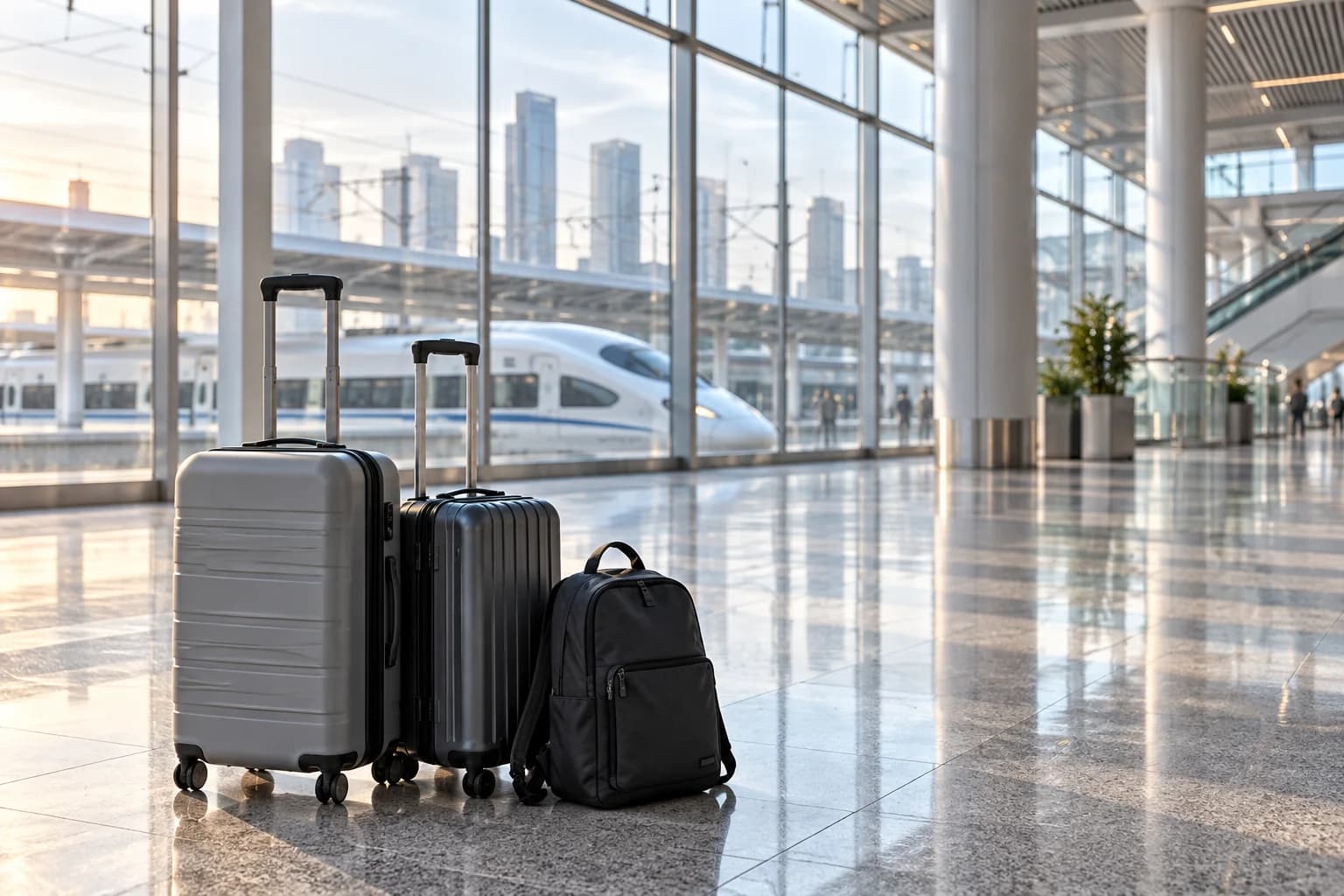
The one-minute route decision
| Time available | Structure that usually works | What to avoid |
|---|---|---|
| 5 days / 4 nights | Shanghai 2–3 nights plus Suzhou or Hangzhou 1–2 nights | Two hotel moves, three compressed checklists and a departure-day rail gamble |
| 7 days / 6 nights | Shanghai 2 nights, Suzhou 2 nights, Hangzhou 2 nights with an open-jaw departure; or split Shanghai across the start and end | Treating both transfer days as full sightseeing days |
| 9 days / 8 nights | Shanghai 3 nights, Suzhou 2 nights, Hangzhou 3 nights; shift one night to the arrival/departure gateway if flights require it | Adding Nanjing, a water town and a theme park just because trains exist |
Count calendar days, including arrival and departure. A 07:00 long-haul arrival is not a reliable full sightseeing day after immigration, baggage and jet lag. A 23:00 departure still consumes time because checkout and airport transfer shape the day. If your “seven days” means five nights on the ground, use the five-day plan.
Five days: make it a two-city trip
Five days are enough for contrast, not completeness. Keep Shanghai because it is usually the strongest international gateway and the broadest urban introduction. Then choose the second city by interest and flight geography.
Choose Suzhou for gardens, canals and a compact old-city rhythm
Use three nights in Shanghai and one in Suzhou when you fly in and out of Shanghai. Spend Days 1–3 in Shanghai, move to Suzhou after breakfast on Day 4, stay near the old city, and return to Shanghai only if the flight timing allows a conservative buffer. A safer version puts the Suzhou night on Day 3 and the final night back in Shanghai.
The overnight matters more than another attraction. Early canal streets before tour groups and a garden near opening time reveal the city at a different pace. A day trip can work, but it adds a return ride and forces luggage or an early start into an already short itinerary.
Choose Hangzhou for landscape, tea and a possible open-jaw exit
Use two nights in Shanghai and two in Hangzhou when a suitable flight leaves from Hangzhou Xiaoshan International Airport (杭州萧山国际机场) or you are continuing deeper into Zhejiang. Move on Day 3, keep Day 4 fully flexible for weather, and depart on Day 5.
If the international flight still leaves Shanghai, Hangzhou creates a longer final reposition than Suzhou. Return to Shanghai the previous afternoon or evening and sleep by the airport or a useful city station. Do not plan a morning Hangzhou train followed by a separate-ticket long-haul flight unless the buffer can absorb rail, metro and airport disruption.
Do not force all three into five days
A three-city five-day sampler might produce one Shanghai evening, one Suzhou garden, one Hangzhou lake segment and many station photographs. It removes the quiet hours that justify Suzhou and the weather choice that makes Hangzhou work. If seeing all three names matters more than depth, stay based in Shanghai and make one day trip; save the third city for another trip.
Seven days: the efficient three-city version
Seven days is the minimum at which the full route feels intentional. The cleanest open-jaw order is:
- Days 1–2 — Shanghai: arrival, one central-city day and one evening with no intercity deadline.
- Days 3–4 — Suzhou: morning rail, luggage drop, one partial day and one full old-city day.
- Days 5–7 — Hangzhou: morning or midday rail, one lake-side day, one hills/tea or indoor day, then departure from Hangzhou.
With six hotel nights, allocate 2 + 2 + 2. Hangzhou appears to receive three numbered days because the first is a transfer day and the last is departure day. If your Hangzhou flight is early, the final day contains almost no city time.
For a Shanghai return flight, use Shanghai 2 nights → Suzhou 1 night → Hangzhou 2 nights → Shanghai 1 night. This is less elegant, but the final gateway night protects the flight and prevents the last morning becoming a rail-air connection. If one night in Suzhou feels too brief, cut Hangzhou or move to the nine-day plan; do not remove the Shanghai buffer instead.
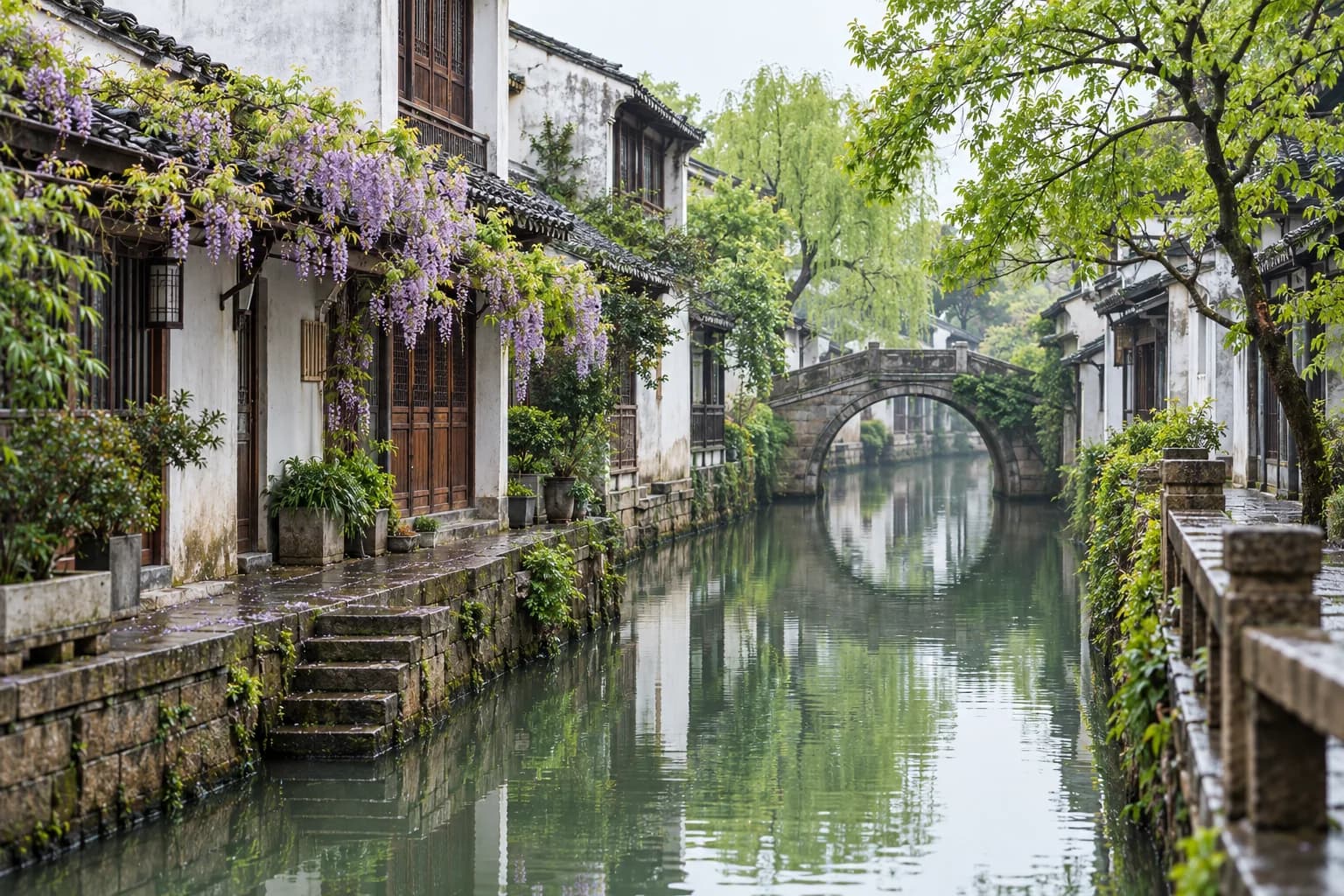
Nine days: keep the route, add resilience
Nine days lets each city do a different job rather than compete for the same hours:
- Shanghai, 3 nights: absorb arrival fatigue, choose two coherent districts, and keep one evening unscheduled.
- Suzhou, 2 nights: use the transfer afternoon lightly, then take a full old-city day with an early start.
- Hangzhou, 3 nights: reserve one clear-weather outdoor day, one hills/tea or cultural day, and enough slack for rain.
For an open-jaw trip, use Shanghai 3 → Suzhou 2 → Hangzhou 3. For a Shanghai return, use Shanghai 2 → Suzhou 2 → Hangzhou 3 → Shanghai 1. The last Shanghai night is operational, not wasted: it moves the high-consequence connection away from the departure morning and gives you time for a final meal, shopping or a district omitted at the start.
Do not spend the extra two days adding a fourth hotel by default. Nanjing deserves its own stay, and a water town adds road transfers, ticketing and another place to handle bags. Add one only when it is the main reason for the trip, then remove a city or extend beyond nine days.
Open-jaw or return to Shanghai?
“Open jaw” means arriving through Shanghai and leaving through Hangzhou, or the reverse. It can remove a backtrack, but only when the actual flights work.
Choose the open jaw when
- Hangzhou has a suitable flight to your next destination on the right date;
- the fare difference remains reasonable after baggage, seat and connection terms;
- both tickets are on one protected itinerary, or you can absorb a self-transfer failure;
- your Hangzhou hotel and airport transfer are simpler than returning to Shanghai;
- you want the route to end with slower scenery rather than another gateway reposition.
Hangzhou's airport publishes international as well as domestic departures, but routes and operating days change. Search the exact date rather than assuming a city pair runs daily. Compare the complete itinerary through Trip.com flights, then verify the operating carrier, baggage and connection protection before payment.
Return to Shanghai when
- the long-haul choice is materially better from Shanghai Pudong International Airport (上海浦东国际机场);
- you prefer one round-trip ticket with clearer disruption handling;
- you are travelling during a holiday surge or weather-prone period;
- an early flight would make a same-day Hangzhou-to-Shanghai transfer uncomfortable;
- you want a final gateway night for shopping, laundry or repacking.
Shanghai Hongqiao International Airport (上海虹桥国际机场) sits within the Hongqiao transport hub beside Shanghai Hongqiao Railway Station (上海虹桥站), which can make a domestic air-rail combination efficient. Pudong is a separate airport on the eastern edge of Shanghai. Never read “Shanghai airport” in a booking and assume it is beside the high-speed rail station.
Reverse the route when the flight tells you to
Hangzhou → Suzhou → Shanghai is equally valid when you land in Hangzhou and fly home from Shanghai. Start with landscape and finish with the largest city. The same rule applies: put the final night in the departure gateway, and avoid turning a separate rail ticket into an unprotected flight connection.
Pick the station pair before the train time
The fastest train is not always the fastest transfer. Search by exact Chinese station name and compare hotel door to hotel door.
| Station | When it usually helps | Friction to count |
|---|---|---|
| Shanghai Railway Station (上海站) | Central Shanghai bases and many Shanghai–Suzhou options | Large station approaches and peak-hour road traffic |
| Shanghai Hongqiao (上海虹桥站) | Western Shanghai, Hongqiao Airport and the widest range of high-speed options | Far from Bund-side hotels; the terminal is large |
| Suzhou Railway Station (苏州站) | Short old-city stays; immediately north of the historic core | Taxi queues and old-city last-mile traffic |
| Suzhou North (苏州北站) | A schedule or onward route that clearly beats Suzhou Station | Farther from the classic old city; add the full cross-city transfer |
| Hangzhou East (杭州东站) | Broad rail choice and hotels around Wulin or the eastern/central city | Huge terminal; allow time to find the correct exit and pickup area |
| Hangzhou West (杭州西站) | Hotels or plans in western/northwestern Hangzhou when a suitable train serves it | Not automatically convenient for Hubin or a first West Lake stay |
Newer stations such as Suzhou South serve different corridors and districts. A ticket saying “Suzhou” or “Hangzhou” plus another word is not the same destination. Copy the full station name into your map app before buying.
Shanghai–Suzhou often offers many short rides, but schedules vary. Suzhou–Hangzhou is the segment most likely to surprise: a geographically neat line can have fewer convenient direct departures, a less useful station pair or a route that bends through the regional network. On your date, compare departure station, arrival station and door-to-door time. Do not build the day around a remembered claim that every ride takes “about an hour.”
China Railway's official 12306 service uses real-name tickets. Foreign visitors can buy with a valid passport, and the same original document used for purchase is needed for the journey. Railway stations require baggage security screening and close ticket checks before departure; the official guidance explicitly tells passengers to allow for queues and walking between entrance, waiting room, gate and platform. Use the fuller China train and transport guide before the first rail day.
Use Trip.com trains when its English interface and international payment support are useful, then check every passenger name, passport number, station suffix and departure date before paying. Keep the ticket details offline.
Choose hotel bases for the next transfer
One hotel per city is the rule. Changing hotels to chase a view usually costs more usable time than it saves.
Shanghai
Choose People's Square / East Nanjing Road (人民广场/南京东路) for a first visit with broad central access, or Jing'an (静安) for a calmer base with useful metro links and food. A Bund-front address can be atmospheric but may create longer station transfers and awkward vehicle access. Hongqiao accommodation helps only when a late arrival, early departure or exhibition is the actual constraint.
Suzhou
Choose Guanqian Street / Leqiao (观前街/乐桥) for a short stay that needs flexible access to the old city, metro and dining. Choose Shantang Street / Shilu (山塘街/石路) when station convenience and the northwest side matter. Staying deep inside a pedestrian canal lane can be charming, but ask exactly where a taxi can stop and how far the last cobbled section is with luggage.
Hangzhou
Choose Hubin / Longxiangqiao (湖滨/龙翔桥) when a first West Lake evening is the priority. Choose Wulin Square (武林广场) for a more balanced rail, dining and city-transfer base. Stay by Hangzhou East only for a late arrival or early train; the time saved on one transfer can cost more on every lake-side day.
After fixing the bases, compare refundable rooms through Trip.com hotels. Read the full China accommodation guide for passport acceptance, address checks, deposit questions and late-arrival communication.
The real cost of a hotel move
A transfer day contains at least eight steps: finish packing, check out, reach the station, pass security, find the gate, ride, exit the arrival station, then reach the hotel and store or unpack the bags. With two travellers, each additional large suitcase also has to fit in lifts, taxi trunks, station queues and the final lane to a Suzhou hotel.
Use this planning rule:
- reserve three hours door to door for an apparently short intercity move until the actual hotels and trains prove otherwise;
- add more for Pudong Airport, Suzhou North, Hangzhou West or a pedestrian old-city address;
- plan only one important activity after arrival;
- never book a timed attraction before the bags can reliably be dropped;
- keep the final rail-to-flight connection on the previous day when tickets are separate.
Official 12306 guidance currently permits most adult passengers 20 kg of free cabin baggage; on EMU/high-speed trains, the total external dimensions of an item are capped at 130 cm and a single item at 20 kg. Those are transport limits, not comfort targets. One compact wheeled bag per traveller is much easier to manage than two legal but heavy pieces.

Pack a foldable day bag, one layer for wet weather, quick-dry basics and a small pouch that holds passport, charging cable and medicine. Photograph each hotel's Chinese name and address. Ask the hotel whether it will store bags before check-in or after checkout; do not assume an attraction or railway station will accept oversized luggage just because an old post mentions lockers.
Seasonal swaps that preserve the route
Do not rebuild the city order for every forecast. Keep the hotels and swap the day's emphasis.
Spring rain
Light rain can suit Suzhou canals and Hangzhou's lake scenery, but wet stone, queues and umbrellas slow the route. Pair one outdoor anchor with a museum, tea room or covered commercial street. Keep footwear with grip and avoid prepaying a chain of outdoor tickets.
Early-summer rain and high summer
Long wet spells can make a lake loop or garden-heavy day tiring; later summer also brings heat, humidity and possible tropical-weather disruption. Start outdoor time early, use the middle of the day for indoor content, and check railway, airport and attraction notices before leaving the hotel. If severe weather closes a site, do not treat an atmospheric lake photograph as proof that conditions are safe.
Autumn demand
Clearer days and foliage make the route attractive, while weekends and national holidays increase room, rail and attraction pressure. Reserve the scarce pieces first: international flights, the final gateway night and intercity trains. Keep ordinary meals and neighborhood walks flexible.
Winter
The region's winter can feel damp, and lake wind plus shorter daylight changes how long an outdoor day remains pleasant. Start with the landscape in the brightest hours, return to a compact hotel base after dark, and give Shanghai more indoor time. Winter is a strong case for fewer hotel moves rather than a faster checklist.
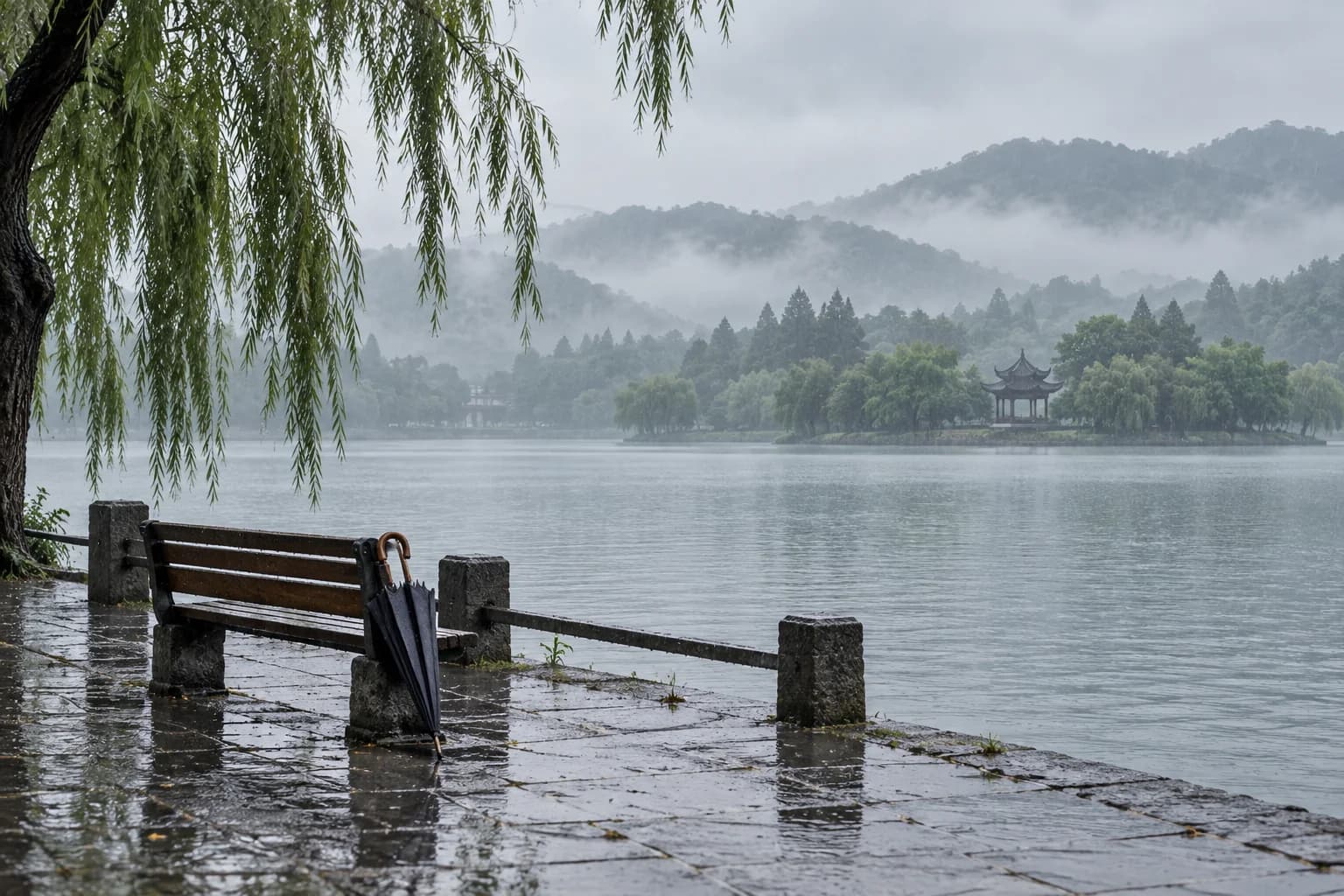
Who should cut Suzhou?
Remove Suzhou and keep Shanghai + Hangzhou when:
- you have five days and landscape or tea matters more than classical gardens;
- your useful international or onward flight leaves Hangzhou;
- steps, uneven paving and repeated hotel moves are a major concern;
- you already include another canal town or classical-garden destination;
- a quiet early old-city morning does not justify another check-in for you.
Do not keep Suzhou only because it is close to Shanghai. Keep it because a compact historic city, garden design and a canal-side overnight create a contrast you want.
Who should cut Hangzhou?
Remove Hangzhou and keep Shanghai + Suzhou when:
- both long-haul flights use Shanghai and the trip is five days or less;
- you want architecture, gardens and food more than lake, hill and tea landscapes;
- the forecast leaves no safe or enjoyable outdoor window and you cannot move dates;
- you need a compact route with fewer long last-mile transfers;
- adding Hangzhou would force a same-day rail-to-flight connection.
Do not cut Hangzhou because one viral lake viewpoint looks crowded. The city works through multiple lake shores, hills and neighborhoods. Cut it when its wider geography and extra transfer do not fit the trip.
Booking order: lock the skeleton first
Book in this sequence:
- Compare a Shanghai return with a Shanghai–Hangzhou open jaw through Trip.com flights. Write down airport codes, baggage and protected-connection terms.
- Fix the number of nights in each city and reserve refundable rooms through Trip.com hotels.
- Search the exact station pairs through Trip.com trains or official 12306. Check passenger details against the passport.
- Add only the timed attractions that define the trip. The city guides explain where advance booking matters.
- Leave ordinary meals, neighborhoods and weather-sensitive walks flexible.
The order matters. Booking an attractive Suzhou room before deciding the departure airport can create an unnecessary backtrack. Buying the fastest-looking train before choosing the hotel can place you at a distant station and erase the saved minutes.
Final check before payment
You have a workable route when every answer is clear:
- How many hotel nights, rather than brochure “days,” are available?
- Which airport handles the final flight: Pudong, Hongqiao or Hangzhou Xiaoshan?
- Is the final night in the departure gateway?
- What are the full Chinese names of every railway station?
- Does each train still win after hotel-to-station and station-to-hotel time?
- Is there only one hotel per city?
- Can every traveller move their own luggage through security, lifts and the old-city last mile?
- Which day can absorb rain, fatigue or a missed reservation?
- If the trip is five days, which one of Suzhou or Hangzhou have you deliberately removed?
The route succeeds when the three cities remain distinct: Shanghai supplies scale and contemporary urban life, Suzhou rewards an overnight shift into a compact historic rhythm, and Hangzhou needs enough slack for landscape and weather. Let trains connect those experiences; do not let station transfers become the experience.