Gaotai Ancient Homes
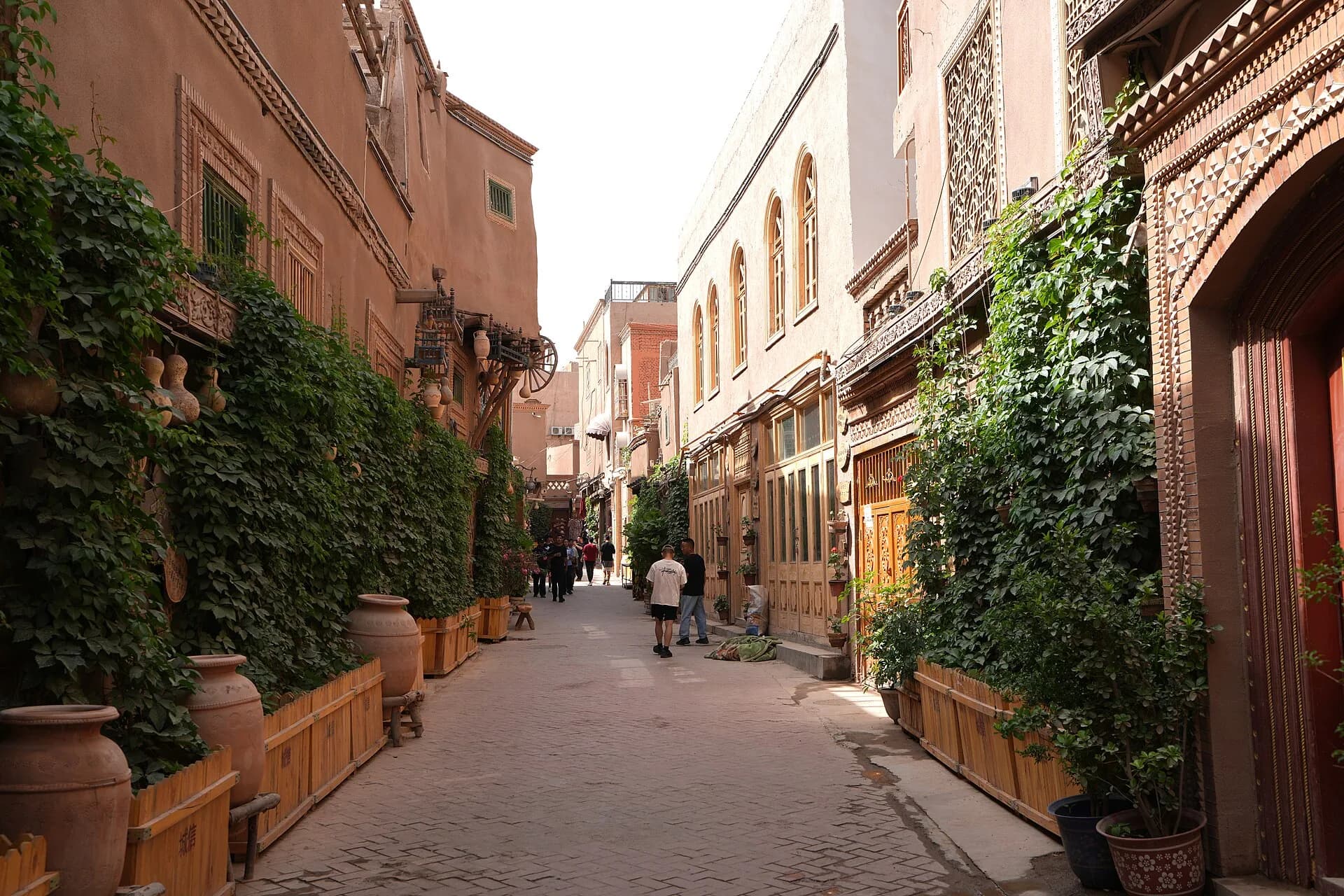
Gaotai (高台民居) is one of Kashgar's most distinctive pieces of urban form: earthen-and-poplar buildings, courtyards and narrow lanes gathered on a high riverbank. Looking at the quarter as a hillside system—not simply a collection of old façades—reveals how slope, building material and daily life shaped one another.
Gaotai is protected separately from Kashgar Old City. Its visible fabric includes older construction, later repairs and current reinforcement, so it rewards a more thoughtful reading than a quick “ancient village” label.
Why Gaotai matters
The district shows how dense homes and lanes adapted to an elevated site. Earthen walls and timber elements also help explain why fire access, utilities, drainage and structural stability are central to conservation here. Those practical systems are part of the heritage story, not merely background work.
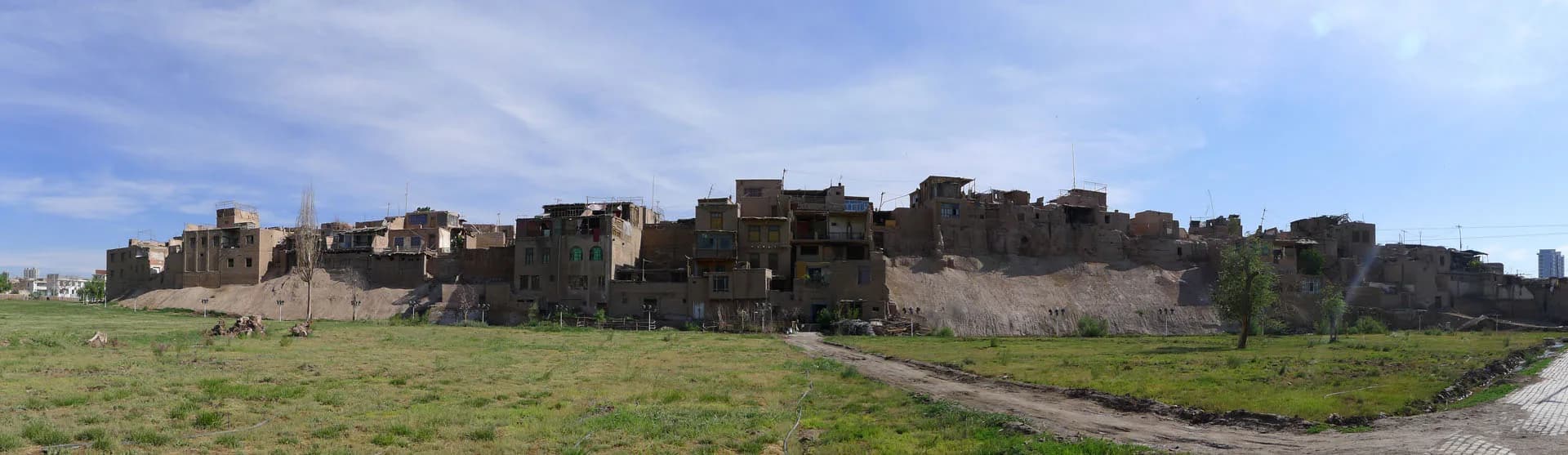
Photo: Eric Feng · Source · CC BY-SA 2.0
What you can do now
Gaotai was closed for restoration as last checked on 16 August 2026. An official report showed visitors inside on 12 June, but independent reports from July and August consistently found fenced entrances and reinforcement work; no later official reopening notice was found in the existing research.
If an authorized public pavement still gives a clear view, use a short 10–20 minute exterior stop to notice three things: how the buildings climb the bank, where lanes cut into the mass of homes, and how repair work meets older fabric. Keep gates, traffic and work access clear. Construction screens can remove the view entirely, so treat this as an optional observation point rather than a fixed itinerary stop.
Build the better heritage sequence
Start at Kashgar Museum for the city's historical frame, see Gaotai's hillside form from lawful public space if visible, then continue into the public lanes of Kashgar Old City. This sequence lets the museum explain change over time and the Old City supply the street-level experience that Gaotai cannot currently provide.
When Gaotai officially reopens, confirm the public entrance and route before adding it back. The useful questions will be which sections are conserved or reinforced, which workshops are genuinely active, where residential thresholds begin and what accessibility and one-way controls apply.
Practical decision
Do not make a dedicated taxi journey while the closure remains in force. Check an active official notice or a same-day staffed channel; an undated map pin or older interior video is insufficient. If reopening is confirmed, allow time to understand the construction and conservation rather than using the quarter as another photo stop.