Abakh Khoja Tomb
The Abakh Khoja family mausoleum (阿巴和加麻札) is one of Kashgar's strongest architecture stops. Its tiled exterior, timber elements, garden setting and funerary function create a visit that feels very different from the Old City's lanes. Come to study the building at close range and place a major local family within Kashgar's religious and historical landscape.
The mausoleum now sits within the wider Xiangfei, or Fragrant Concubine, Park, which adds landscaped grounds, reconstructed story spaces, performances, retail and photography products. Keep the historic mausoleum as the route's anchor; choose the modern layers only when they match your interests.
A focused 90-minute route
AMap places Xiangfei Park about 4 km / 11 minutes by car from Kashgar Museum. From the current entrance, ask for the shortest signed route to the historic mausoleum, then use this sequence:
- begin with the full exterior to understand the building's proportions;
- move closer to compare tile color, pattern and repair;
- notice how timber and openings break up the larger wall surfaces;
- enter only the burial or religious spaces currently open to visitors;
- finish with one garden or interpretation layer rather than trying every add-on.
This architecture-first plan normally needs about 90 minutes. Add time only for a performance, guide or photo product whose schedule and inclusions you have checked.
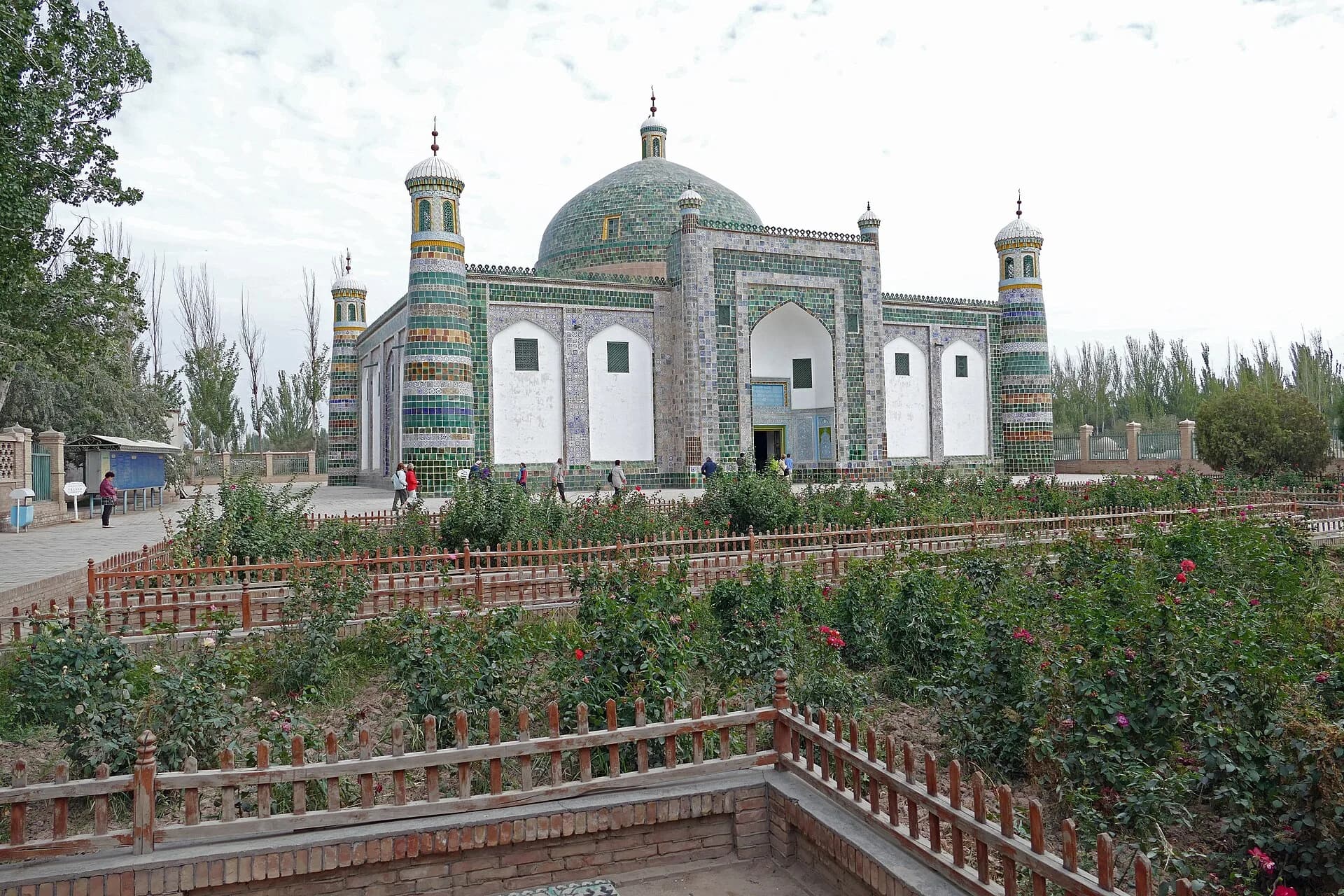
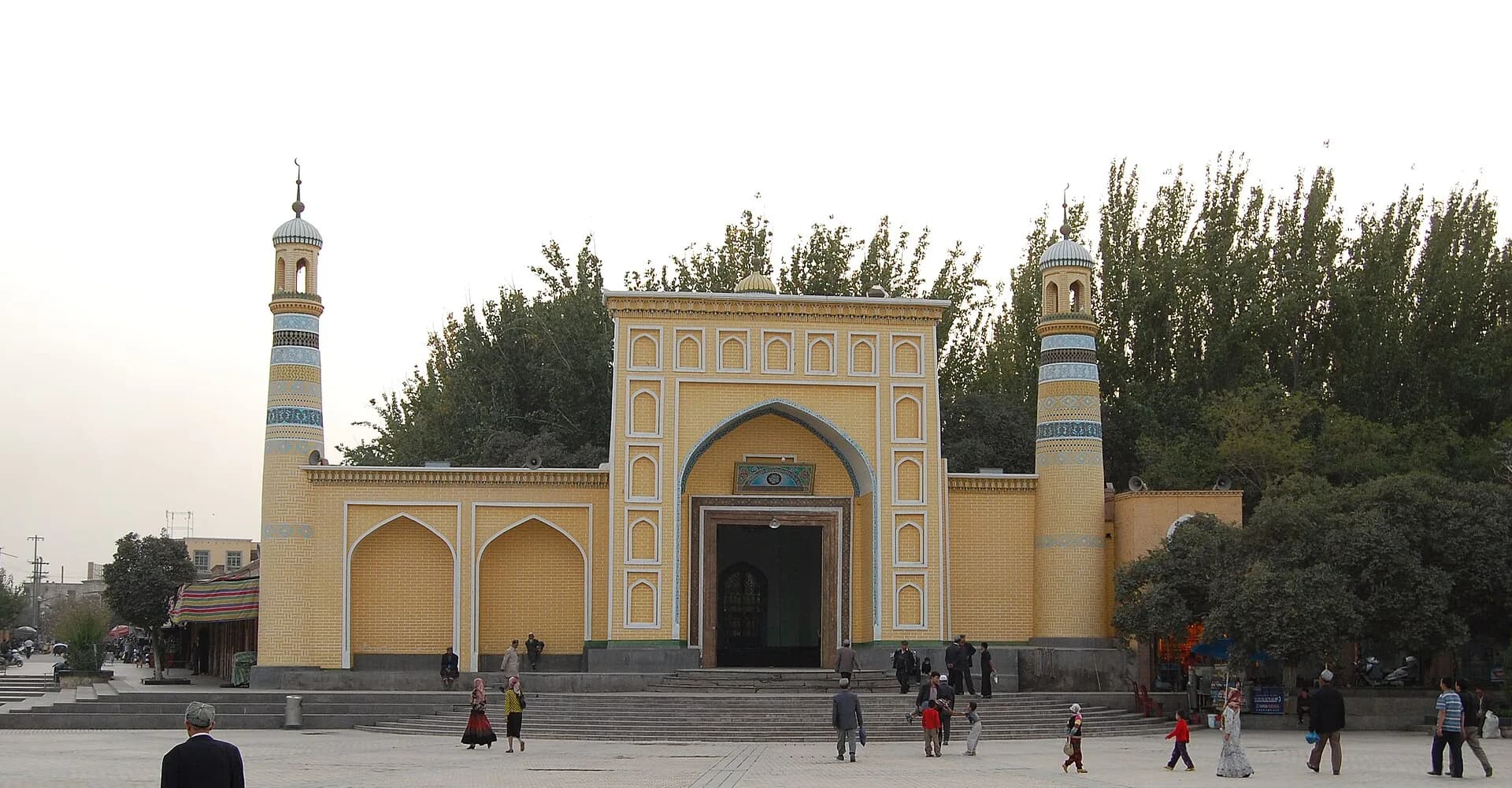
Photo: Zossolino · Source · CC BY-SA 4.0
Read the history carefully
The Abakh Khoja family mausoleum is linked to the Fragrant Concubine tradition through family legend and ancestry. The woman associated with that popular story is not documented as buried here; the Hebei cultural-relics authority places her at the Yuling concubines' garden in the Eastern Qing Tombs.
The Kashgar official profile separates the modern visitor and performance layer from the rear historic mausoleum and religious buildings. When exploring, use the site labels to distinguish protected fabric, reconstruction and popular narrative.
Choose optional experiences deliberately
The landscaped park, Bao Yue Lou reconstruction, welcome drama, music and dance show, guide, costume and photo set can all operate as separate products. Before paying, check the exact inclusion, start time, language, group size and total price. Missing a show does not diminish the mausoleum; it simply leaves more time for architecture.
Animal-photo offers deserve a separate welfare and safety decision. Skip them unless the operator, handling, insurance, image use and visitor contact rules are clear.
Visit as a cemetery and religious complex
Speak quietly, give worship priority and follow every photography sign, especially inside burial spaces. Keep away from graves, tile and woodwork, and use only the buildings and thresholds currently open. These few rules protect both the place and the quality of the visit.
Pair the mausoleum with Kashgar Museum: the museum supplies chronology and object context, while Abakh Khoja turns that history into architecture and place.