Zigong Salt Industry History Museum
Zigong Salt Industry History Museum (自贡市盐业历史博物馆, Zìgòng Shì Yányè Lìshǐ Bówùguǎn) is worth visiting for two experiences at once. Its home, the West Qin Guild Hall, turns salt-merchant wealth into layered roofs, courtyards, timber and stone carving. Inside, drilling tools and production displays explain how deep wells, brine lifting, transport and boiling shaped Zigong.
The strongest salt-history day begins here and continues, by a separate transfer and separate entrance, to Shenhai Well (燊海井, Shēnhǎi Jǐng). Museum first gives you the vocabulary; the derrick and production compound at Shenhai give that engineering story physical scale.
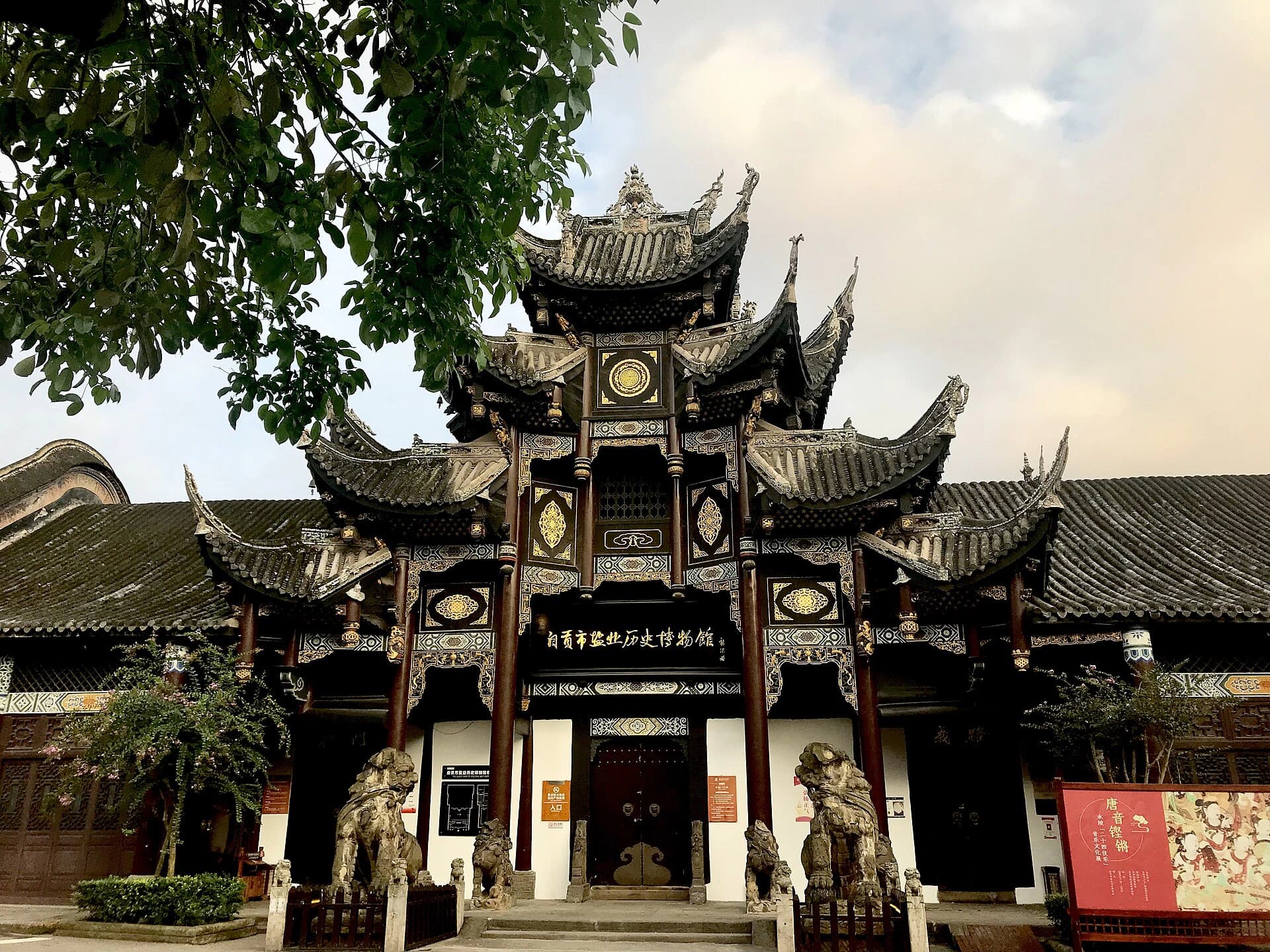
Photo: 寻森 · Source · CC BY-SA 4.0
Read the building before the collection
Begin outside and in the first courtyard rather than heading straight for the cases. The guild hall was designed to represent a prosperous merchant community, so its massing is part of the museum: look at the roof layers, carved surfaces, theatre-like space and the way narrow passages open into taller courtyards.
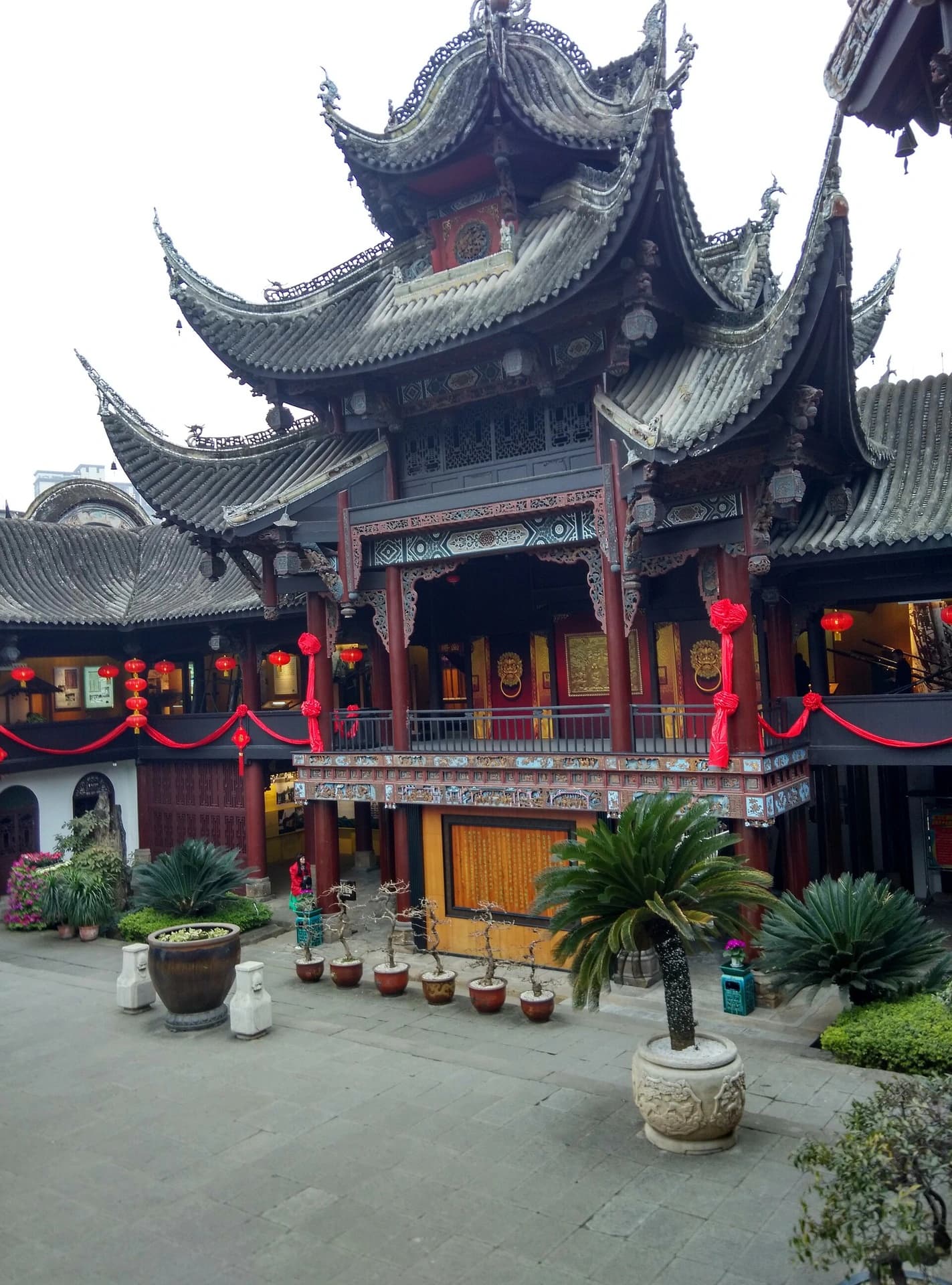
Photo: 苏你妹~ · Source · CC BY-SA 4.0
Then follow the production story in a practical order:
- Finding and drilling the well: notice the specialized tools and the problem of reaching brine far below ground.
- Lifting and moving brine: read the equipment as a connected workflow rather than isolated objects.
- Boiling and making salt: see how fuel, heat, pans and labor turned brine into a tradeable product.
- Merchant and city life: return to the guild-hall architecture with a clearer sense of who financed, organized and profited from the industry.
This sequence makes the museum useful even if you do not continue to Shenhai. Allow about an hour for a focused visit; around 90 minutes gives a family or anyone stopping for explanations more room. These are planning budgets: visitor accounts describe both a one-hour visit and a family visit of about an hour and a half.
Give each part of the visit a question
- At the courtyard: choose one carved detail and then step back to see how it fits into the roofline or facade. This gives an architecture-focused visit a close view as well as the overall building.
- At the drilling tools and well models: follow one problem from tool to result. How could workers reach the brine, and how could they bring it back up? With children, use the model to explain the process before spending time on individual tool labels.
- Before leaving: connect the stages in your own words—drill, lift the brine, then boil it down. If the machinery has become the most interesting part, continue to Shenhai; if the building was your highlight, the museum alone can fill the visit.
For a short visit, keep the courtyard and one complete explanation of the well-salt process. With more time, return to the tools that puzzled you or arrange a guide using the language and booking information below.
Choose a museum-only or complete salt-history visit
| Visit product | Sequence | Best for | Confirm before leaving |
|---|---|---|---|
| Museum only | Architecture first, then drilling, lifting and production interpretation | A compact downtown visit, architecture, industrial history | Normal opening hours and the document accepted for entry |
| Museum + Shenhai Well | Museum first, then a separate road transfer to the Shenhai visitor centre | The clearest complete salt story | Shenhai opening, admission, entrance and whether any demonstration runs |
| Downtown extension | Museum, then Zigong Lantern Park or Ziliujing Old Street | Visitors keeping the day walkable and city-centred | Weather, hills and the exact finish point |
The Salt Museum and Shenhai Well are not two halls of one attraction. They have different entrances, tickets and operating conditions. Do not build the second stop into a fixed schedule until Shenhai has confirmed its current daytime service.
Shenhai Well is the second chapter
Shenhai Well was completed in 1835 and reached 1,001.42 metres using traditional percussion drilling. Its surviving derrick and production setting make the leap from museum labels to industrial scale: after learning how workers drilled, raised brine and made salt, you can stand beside the kind of site that made Zigong possible.
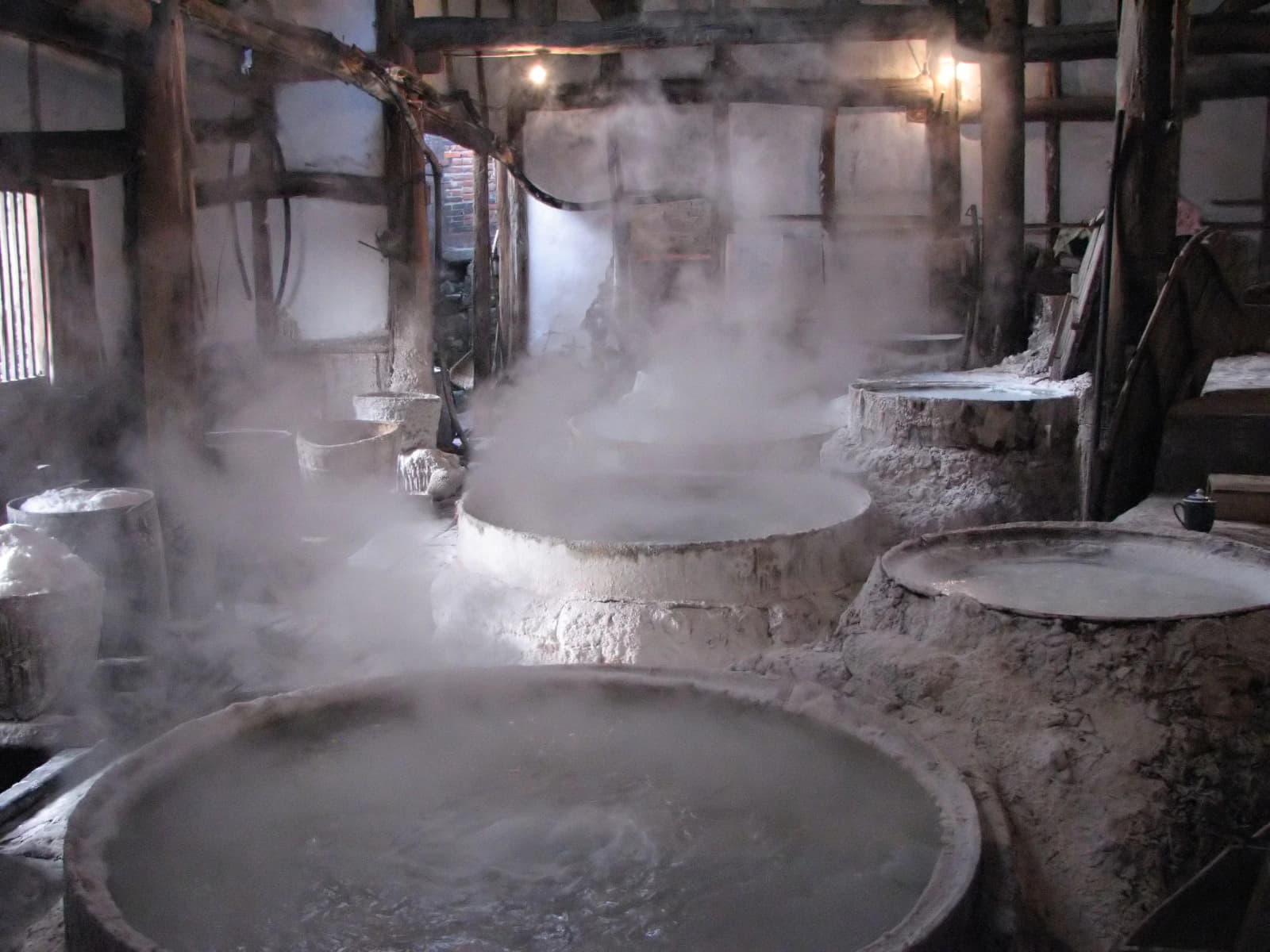
This 2006 photograph shows salt boiling at a Zigong well site. It illustrates the production process; ask staff which parts of the process can be seen during your visit.
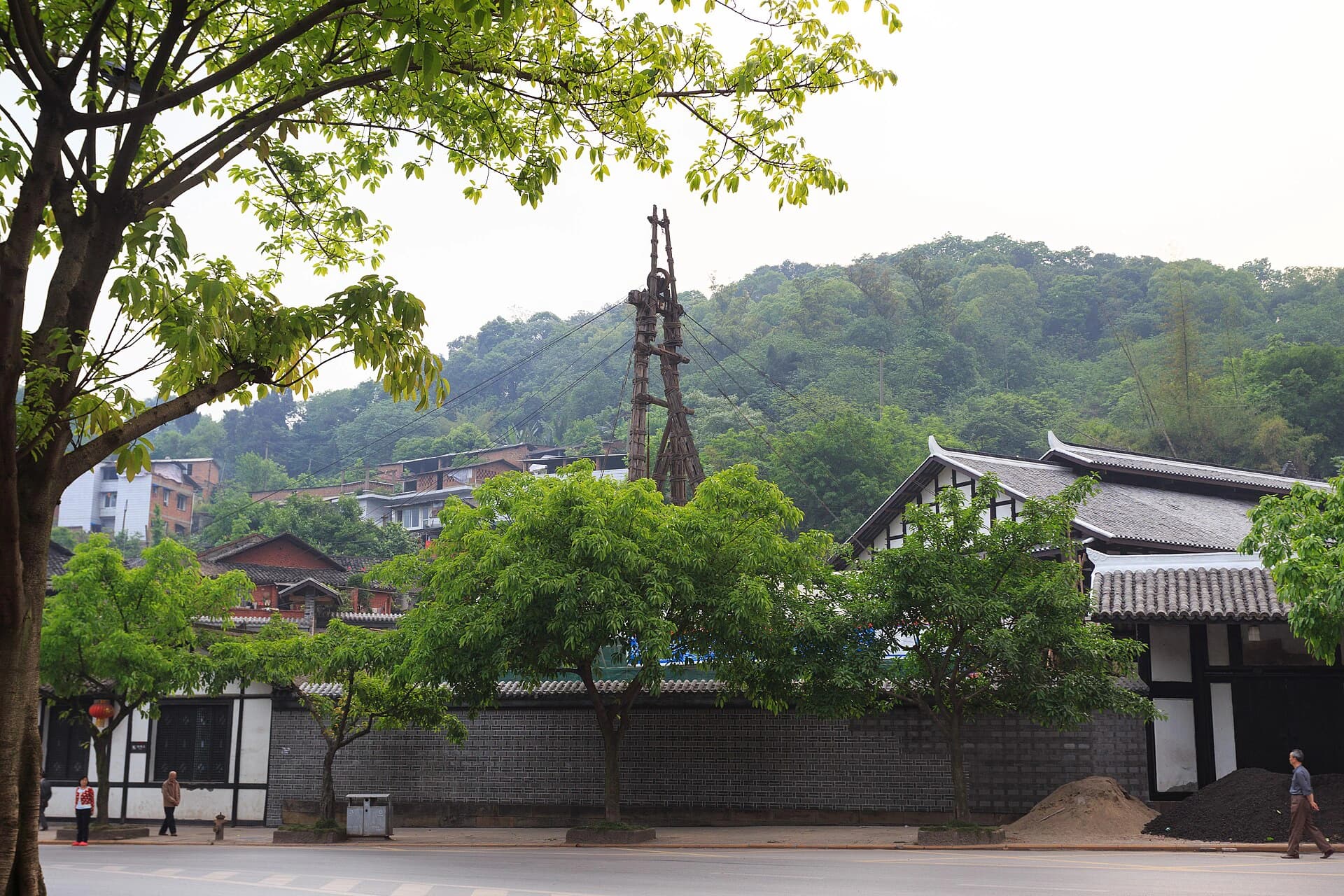
Photo: Zhangzhugang · Source · CC BY-SA 3.0
The useful expectation is heritage and engineering, not a guaranteed performance. Current ordinary hours, standard admission, concessions, accessibility and the schedule of any boiling or drilling demonstration were not confirmed strongly enough for an evergreen promise. A past night-opening event also does not establish regular evening admission.
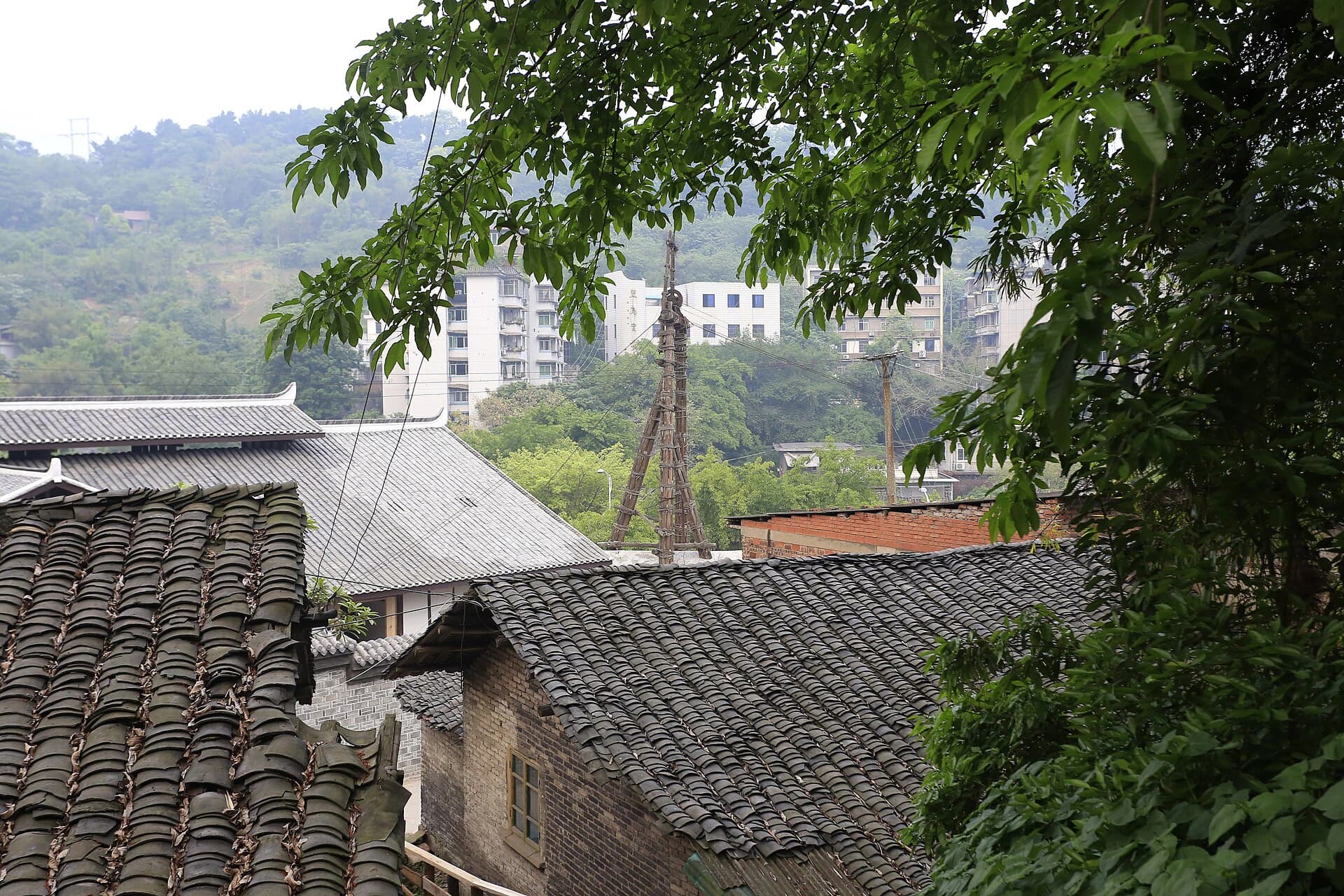
Photo: Zhangzhugang · Source · CC BY-SA 3.0
If Shenhai is not operating on your date, the Salt Museum remains a complete architecture-and-engineering visit. Use the saved time for the downtown heritage cluster rather than treating the day as unsuccessful.
Tickets and the current visitor baseline
The most recent museum-signed service notice available for this guide covered 1–5 May 2026, so its holiday schedule must not be treated as normal annual hours.
| Item | Dated 2026 baseline | How to use it |
|---|---|---|
| Standard museum admission | CNY 35 in the May Day notice | Recheck the live ticket and ordinary-day price |
| Student category named by the notice | CNY 17 | Carry the qualifying original document and confirm eligibility |
| May Day hours only | 08:30–18:00; entry ended 17:30 | Do not reuse as normal non-holiday hours |
| May Day capacity | 8,500 daily / 900 at one time | Event-period context, not a promise of entry |
| English guide baseline | CNY 300 for a group of up to ten, advance inquiry required | Confirm availability and the current quote before relying on it |
Compare the exact Salt Industry History Museum admission on Trip.com. The selected listing includes museum admission only. It does not include Shenhai Well, an English guide, transport, a meal, a night cruise or a demonstration. Read the selected date, cancellation terms and use instructions at checkout because price and inventory can change.
The reviewed service notice did not establish a normal foreign-passport purchase and gate flow. Carry the original passport used for booking and the e-ticket, and use the staffed ticket office or call the museum at 0813-2202083 if an online form does not accept the document.
Getting between the two sites
For the museum, navigate to 自贡市盐业历史博物馆 on Jiefang Road. Do not follow the separate map result labelled “new museum (under construction).”
For the second stop, navigate to 燊海井游客中心, not only the broad Shenhai Well attraction pin.
AMap's 21 August 2026 road model measured 4.8 km / about 13 minutes from the Salt Museum to the Shenhai visitor centre. Its transit snapshot was about 29 minutes with 520 metres of access walking. These are dated planning estimates, not a bus timetable or tourist-shuttle promise; confirm the live route from the actual exit.
For a walkable extension, the same dated models measured about 19 minutes from the museum to Zigong Lantern Park and 17 minutes to Ziliujing Old Street Visitor Centre. Zigong Lantern Park is downtown and is not China Lantern World, the outer venue used by the seasonal Zigong Lantern Festival.
Build the salt story into a Zigong day
Use the museum as the morning or early-afternoon anchor, when you have energy to read both the architecture and collection. Continue to Shenhai only after confirming that its current access adds value on your date. If the well is unavailable, stay downtown for the old-street and river layers, then connect the visit to the wider Zigong guide.
The strongest sequence is simple: merchant architecture -> drilling and brine technology -> separately reached well site. It turns salt from an abstract city label into a readable system without pretending that two distinct attractions share one ticket or schedule.