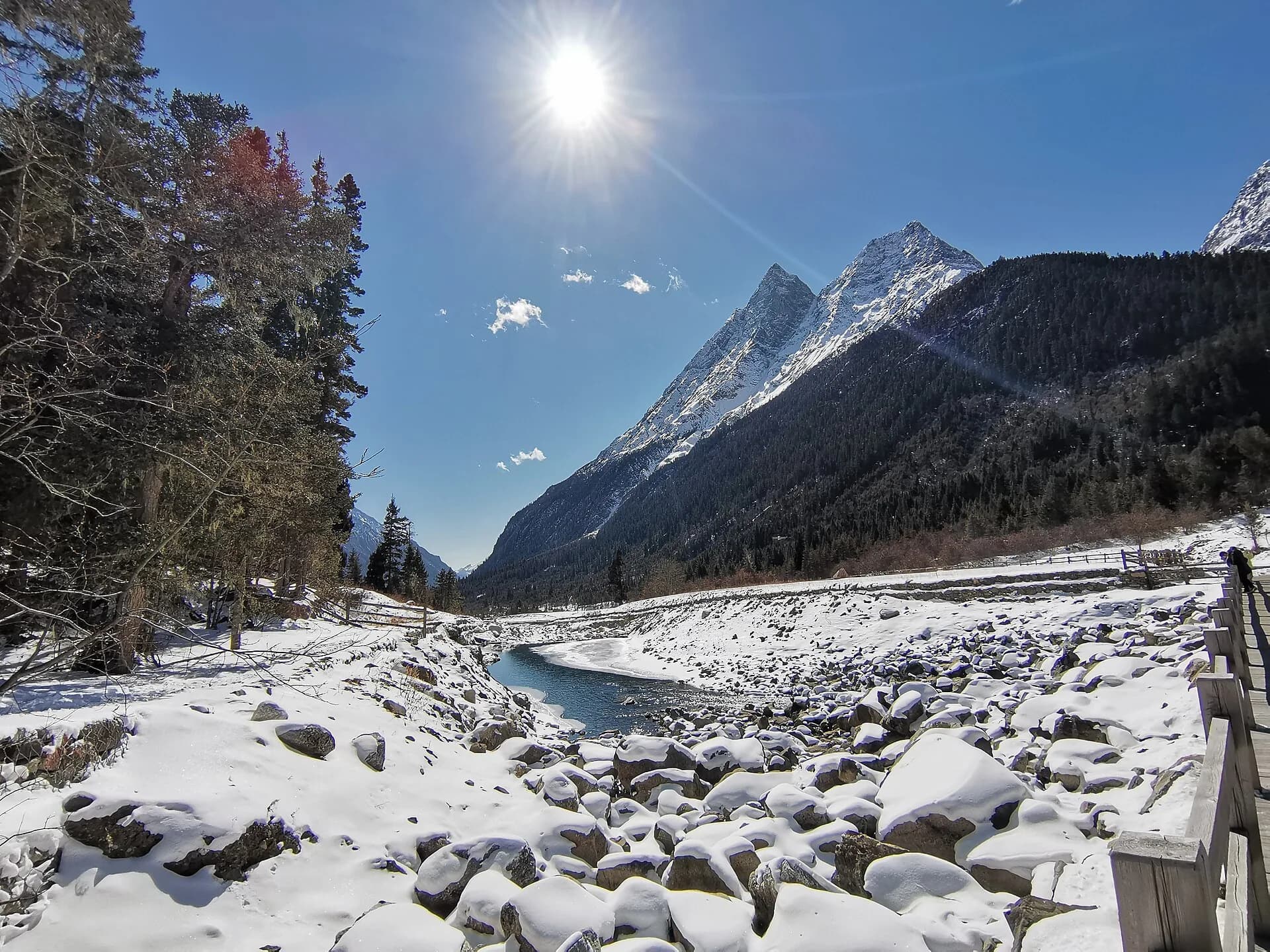
Shuangqiao Valley
Updated September 11, 2026
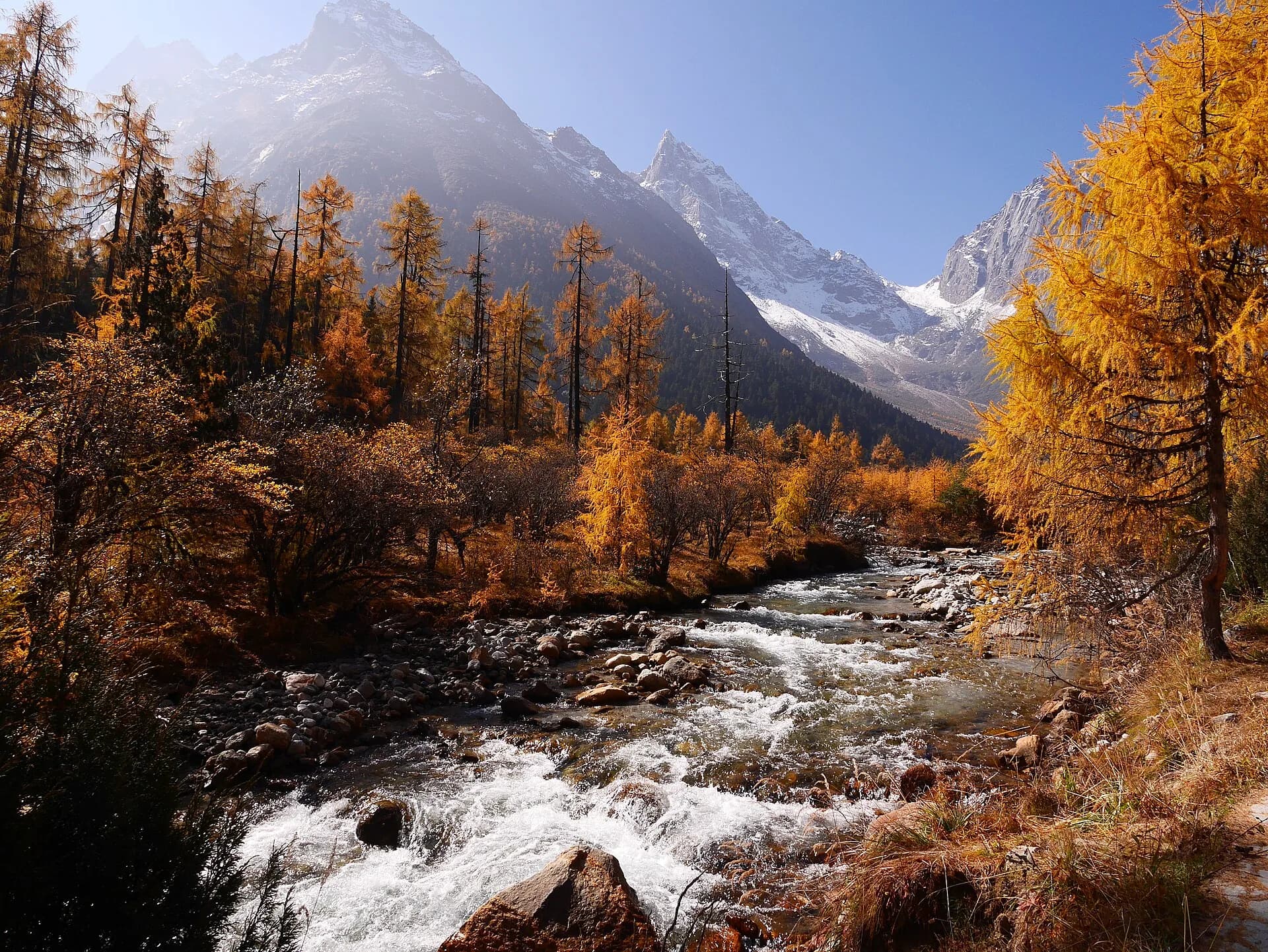
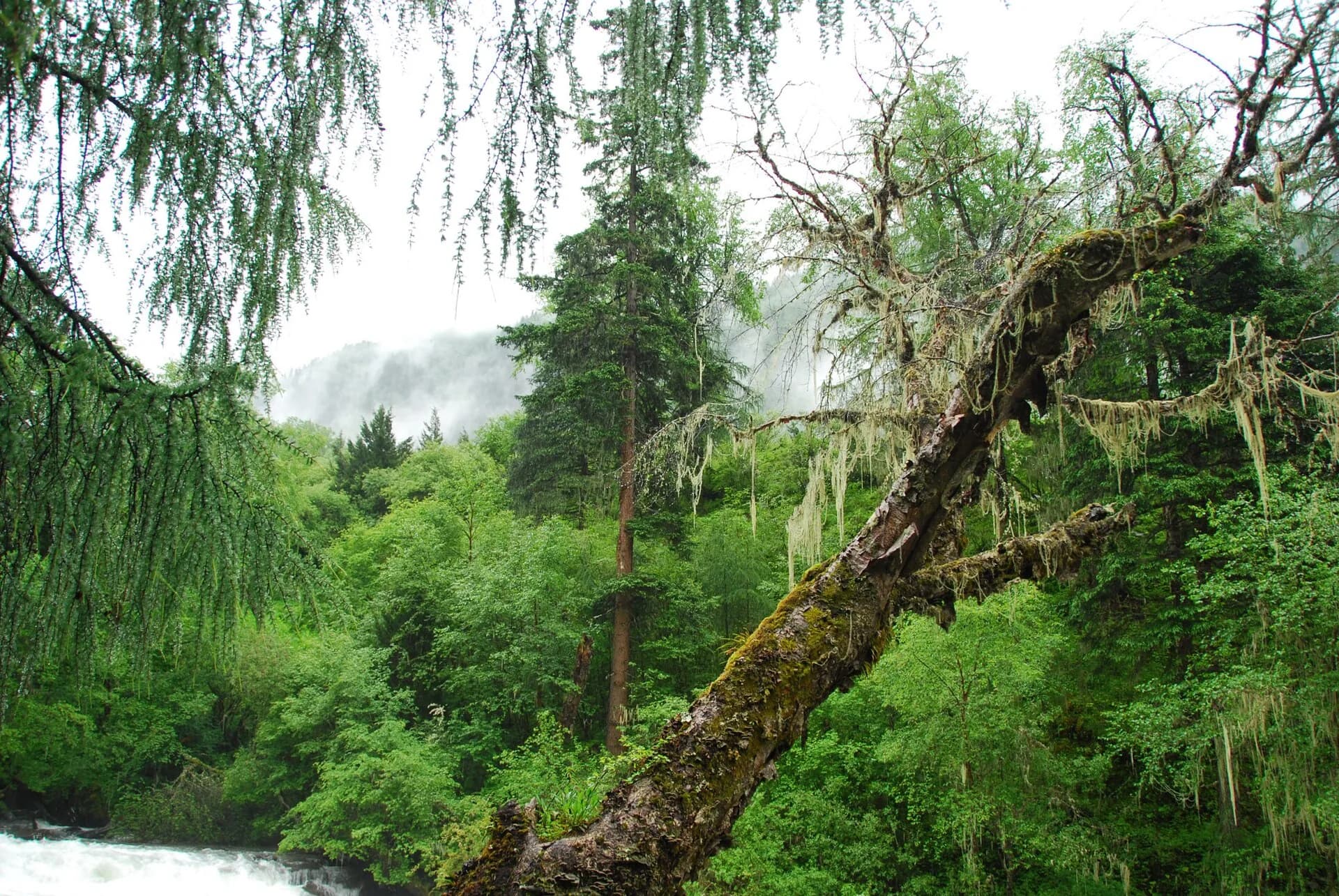
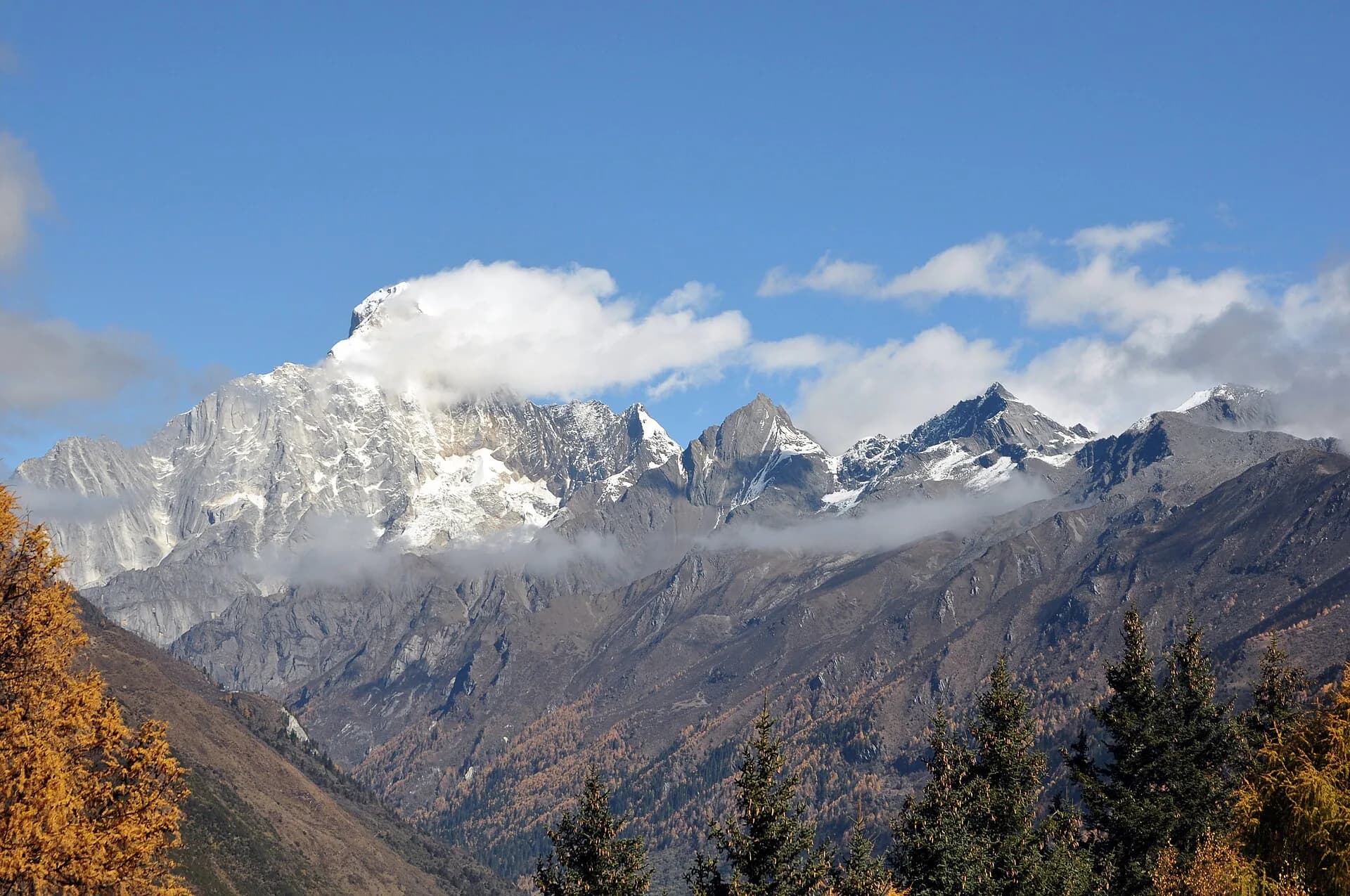
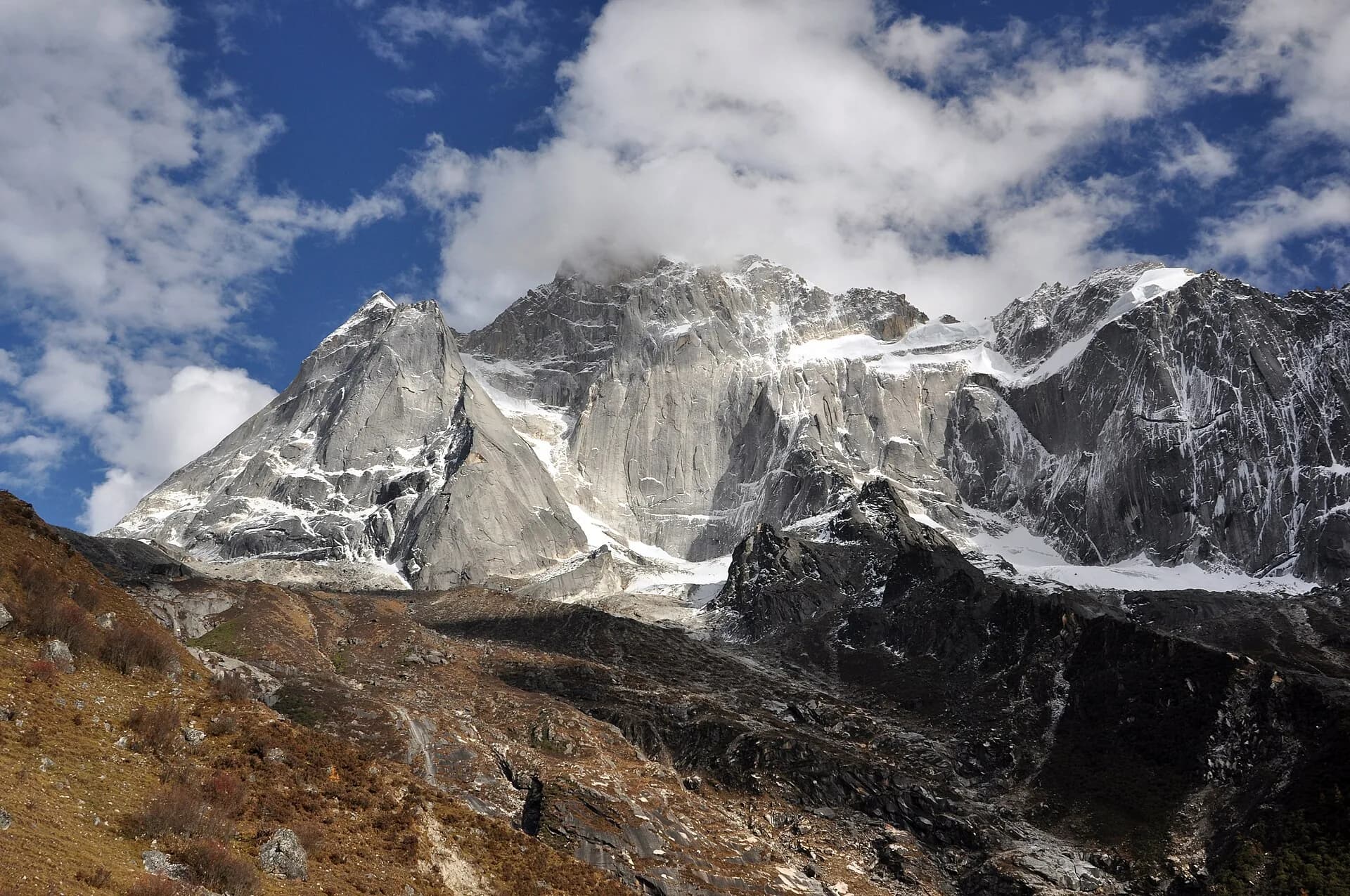
Shuangqiao Valley (双桥沟, Shuāngqiáo Gōu) gives you Mount Siguniang's broadest mountain-and-valley scenery with the least compulsory walking. A sightseeing bus reaches the high end of the valley, and open meadows, forest, streams and mountain walls offer several good places to slow down on foot.
It is the best first valley for families, groups with mixed energy levels and travellers who want alpine scale without a full hiking day.
Choose your day
| Product | How to shape it | What you gain |
|---|---|---|
| Easy scenic day | Use the bus for the long connectors, take short signed walks at a few open stops and keep a comfortable return margin | Mountain scale, water, meadow and forest with limited walking |
| Light-walk day | Ride high, choose one open upper boardwalk or footpath, then rejoin the vehicle system for selected lower stops | More stream-and-forest texture without turning the day into a trek |
| Weather-shortened day | Keep one high landscape stop and one lower meadow, lake or stream sequence, then return early | A complete contrast even when cloud, rain, snow or altitude reduces the plan |
The park entrance sits at about 2,900 metres, and the official Red Forest terminal reaches about 3,840 metres. The bus removes distance, not altitude. Decide how much to walk once you reach the top, not in advance.
Route: ride high, return selectively
This diagram shows a sequence of decisions. Dispatch, open boardwalks and staff directions control the visit.
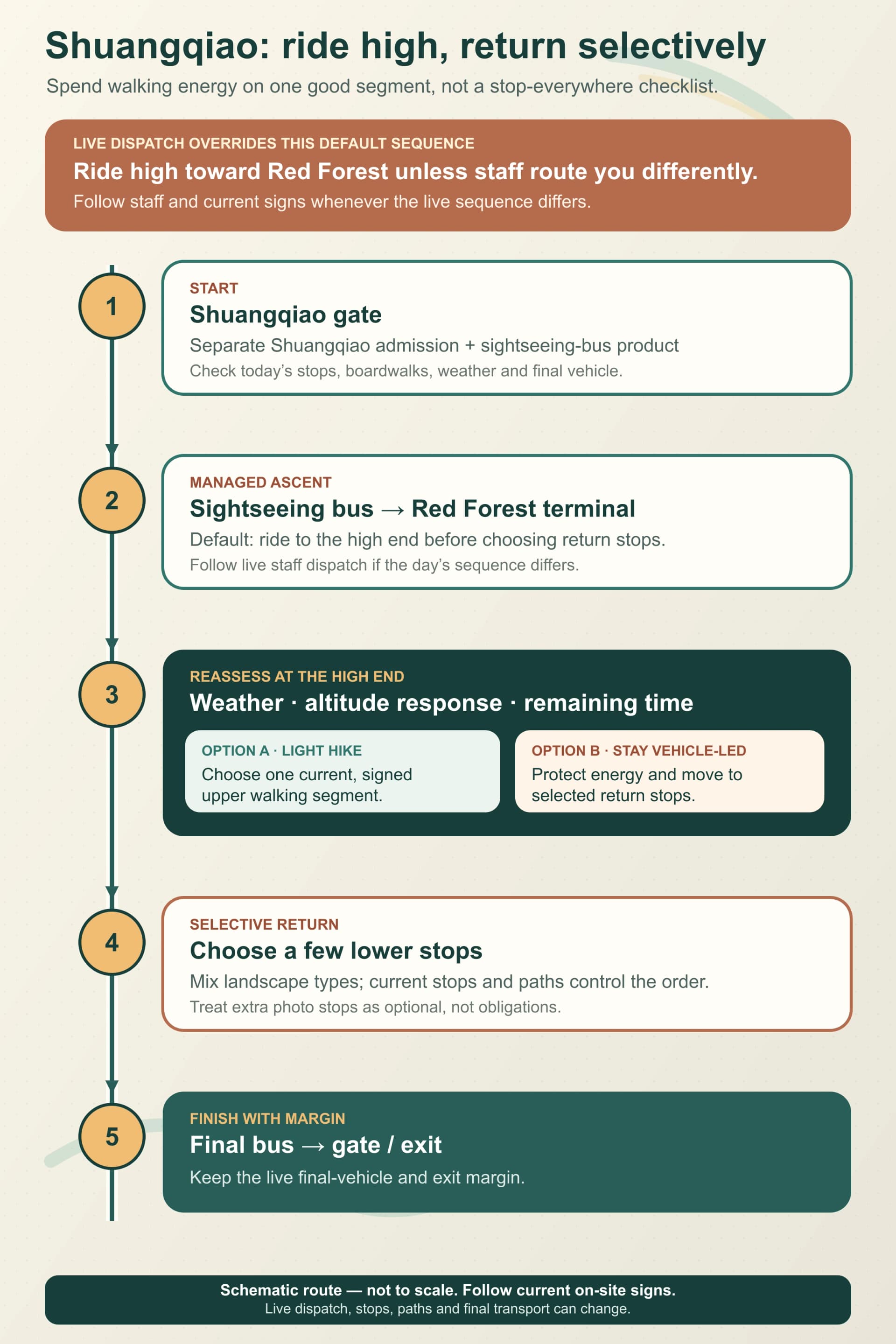
1. Have both the valley ticket and bus ticket ready
Shuangqiao has its own dated admission quota. Its sightseeing bus is a separate part of the valley day, not a transfer shared with Changping or Haizi. Confirm both before entering, and note the final-return and exit instructions.
2. Ride to Red Forest first
The official advice is to ride to the high end first and work back through the return stops. Plan around Red Forest (红杉林), but accept a different order if dispatch or weather controls change it. This way you don't spend the freshest part of the day on lower stops and reach the upper valley with no time to spare.
3. Check conditions before you choose a walk
At the high end, pause before setting off. Check the visibility, any rain or snow, the open-path board, your breathing and the group's energy. Choose one upper walking link, and only if it is signed open.
Look for a route that combines high forest, stream and open mountain views. The usable boardwalk changes, so never swap a closed footpath for the sightseeing-vehicle road unless staff tell you to.
4. Come down through a few contrasting stops
After the walk, use the bus to pick a few different landscape types, for example:
- an open mountain viewpoint;
- a lake or stream edge;
- a lower meadow or forest section.
Water levels, reflections, foliage and snow change through the year, so a plan built on landscape types works better than a fixed list of saved stops.
5. Leave time for the last bus and the exit
Finish your last walk while the return is still simple. Queues, weather controls and slower group members can take more time than another short stop is worth. Ending selectively lets you enjoy the final meadow, water and mountain view instead of watching the clock.
Before you choose a walk, confirm the open link, its length and where the next official boarding stop is. One family walked a 4.2 km link with no regular bus stop along it, and only got a lift when a child tired. Downhill is not automatically easy, and an informal pickup is not a plan.
The short ride from town can take about fifty minutes in traffic, and a late return coach can squeeze the day. Eat breakfast early, confirm your pickup, and leave a generous buffer for the onward coach; stay overnight rather than compressing the valley into a same-day trip.
Tickets and entry times for 2026
Official baselines:
| Item | Current baseline |
|---|---|
| Peak season | 1 April–30 November |
| Shuangqiao admission | CNY 80 |
| Sightseeing bus | CNY 70, separate from ordinary admission |
| General 2026 entry window | 08:00–15:00, effective from 1 April 2026 |
The three Mount Siguniang valleys have separate tickets and can sell out separately. Use the official 阿坝旅游 / Abatour channel or the official Mount Siguniang channels for your date. Holiday extensions and last winter's timetable are not normal-day schedules.
Compare current Shuangqiao Valley ticket options on Trip.com, then check the date, whether the sightseeing bus is included, the cancellation terms and the traveller document required at checkout.
International visitors are received, but the public notices reviewed do not document a single repeatable foreign-passport checkout and gate process. Before paying, confirm the accepted passport field, payment method and staffed-entry procedure with the official ticket service. Carry the original document you used for the booking.
Getting there from Mount Siguniang Town
Route to the exact Shuangqiao Valley AMap marker, not the general Mount Siguniang scenic-area pin. The valley entrance is about 6.9 km / 14 minutes by road from the neutral Mount Siguniang Town civic anchor. Its walking model gave 6.7 km / 1 hour 29 minutes, and it returned no public-transit route for this local leg.
These are route-planning estimates. They don't prove there is a shuttle, available taxis or a fixed journey time. Arrange a local vehicle with your lodging or ticket service, and confirm the pickup, valley drop-off and return plan.
A same-day trip from Chengdu is a much more compressed visit. The current Chengdu–Shuangqiao day tour on Trip.com includes Shuangqiao admission, Chengdu round-trip transport and insurance. Only the named package includes the internal sightseeing bus. The supplier confirms meeting points; this is not hotel pickup for everyone, and no fixed departure time is given here.
Altitude, weather and staying on route
- The bus climbs quickly from about 2,900 to 3,840 metres. Move gently at the top and shorten your walk if you get a headache, dizziness, unusual breathlessness or fatigue. Ask staff or seek medical help if symptoms persist or get worse.
- Mountain weather and temperatures can change fast. Carry a warm layer plus rain and sun protection, even when the entrance feels mild.
- Snow and ice can change which boardwalks and stops are open. Follow the signs and never enter a closed section for a photo.
- The bus and wide road don't make every stop step-free. If mobility matters, ask the official service channel about accessible stops, gradients and boarding.
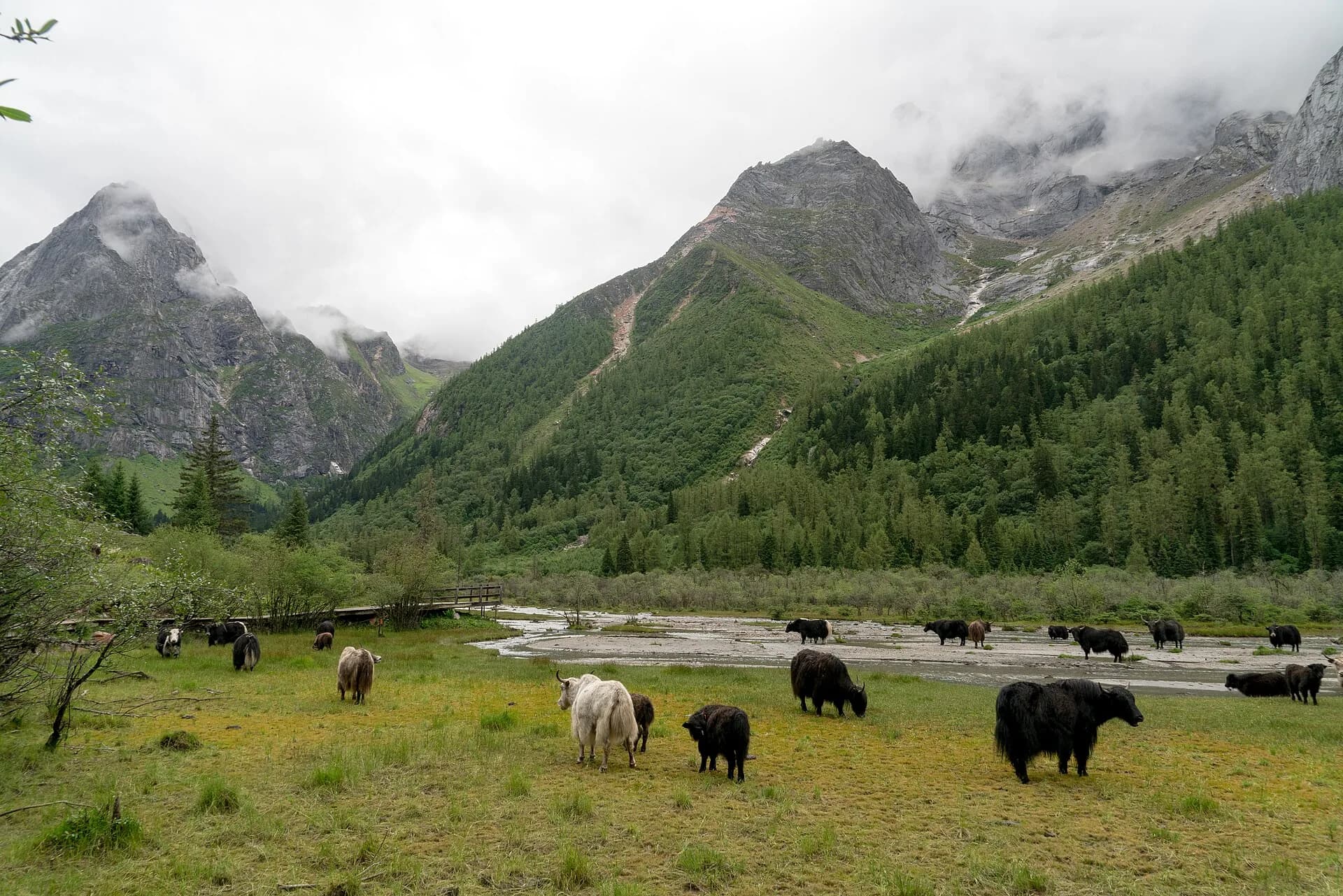
- You may see wildlife or grazing animals in the wider landscape, but this is not a managed animal-interaction attraction. Keep your distance and follow staff guidance.
Fitting Shuangqiao into a Mount Siguniang stay
For most international visitors, the best plan is to stay in Mount Siguniang Town and make Shuangqiao your first full valley day. Then choose the forest walking of Changping Valley or the open high country of Haizi, on a separate ticket and date. The Mount Siguniang guide compares all three.
Use the bus to give yourself choices, not a checklist: ride high, spend your walking energy on one good section, then finish with a few landscapes that really differ.