Mount Siguniang
Updated September 11, 2026
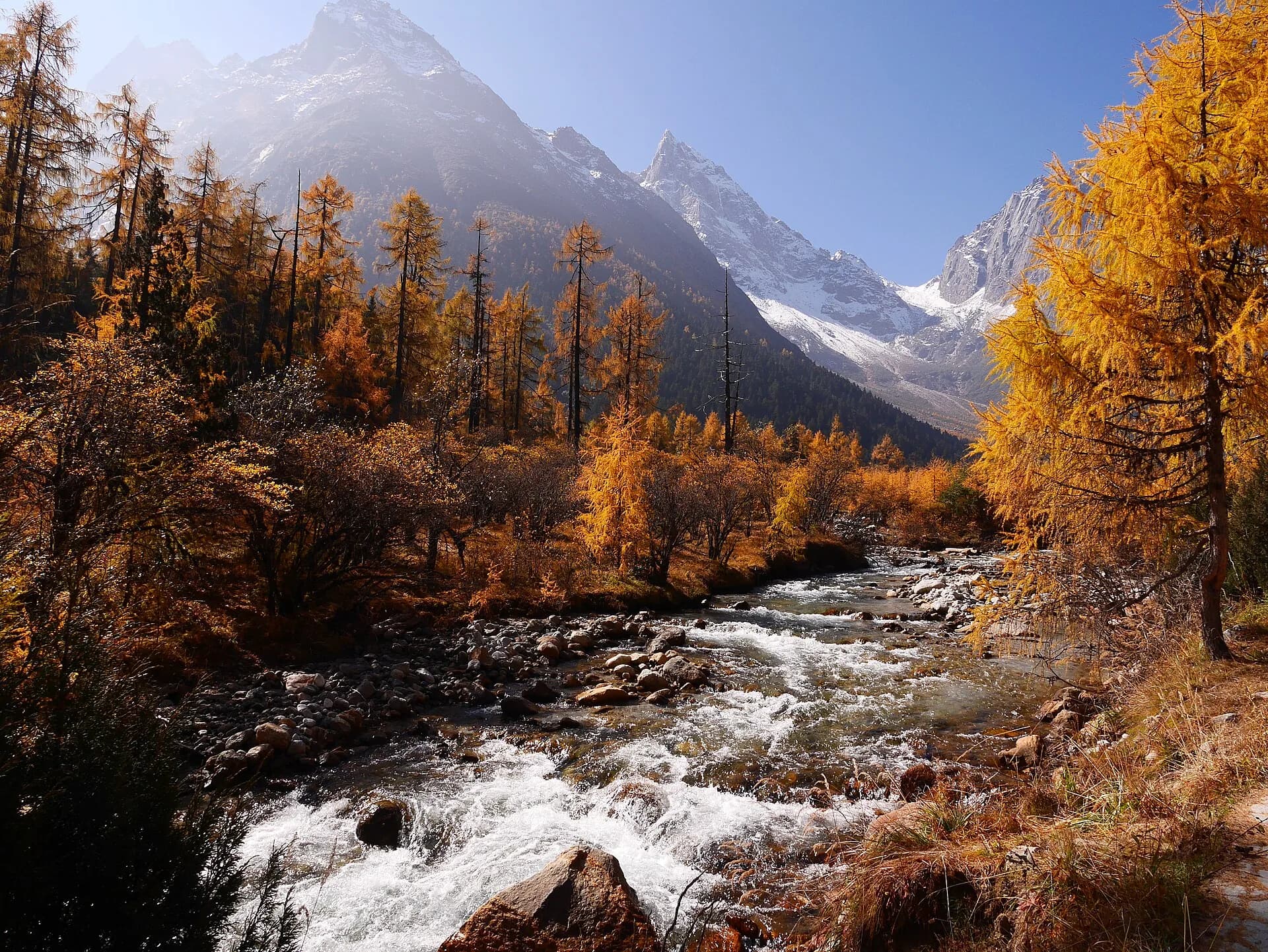
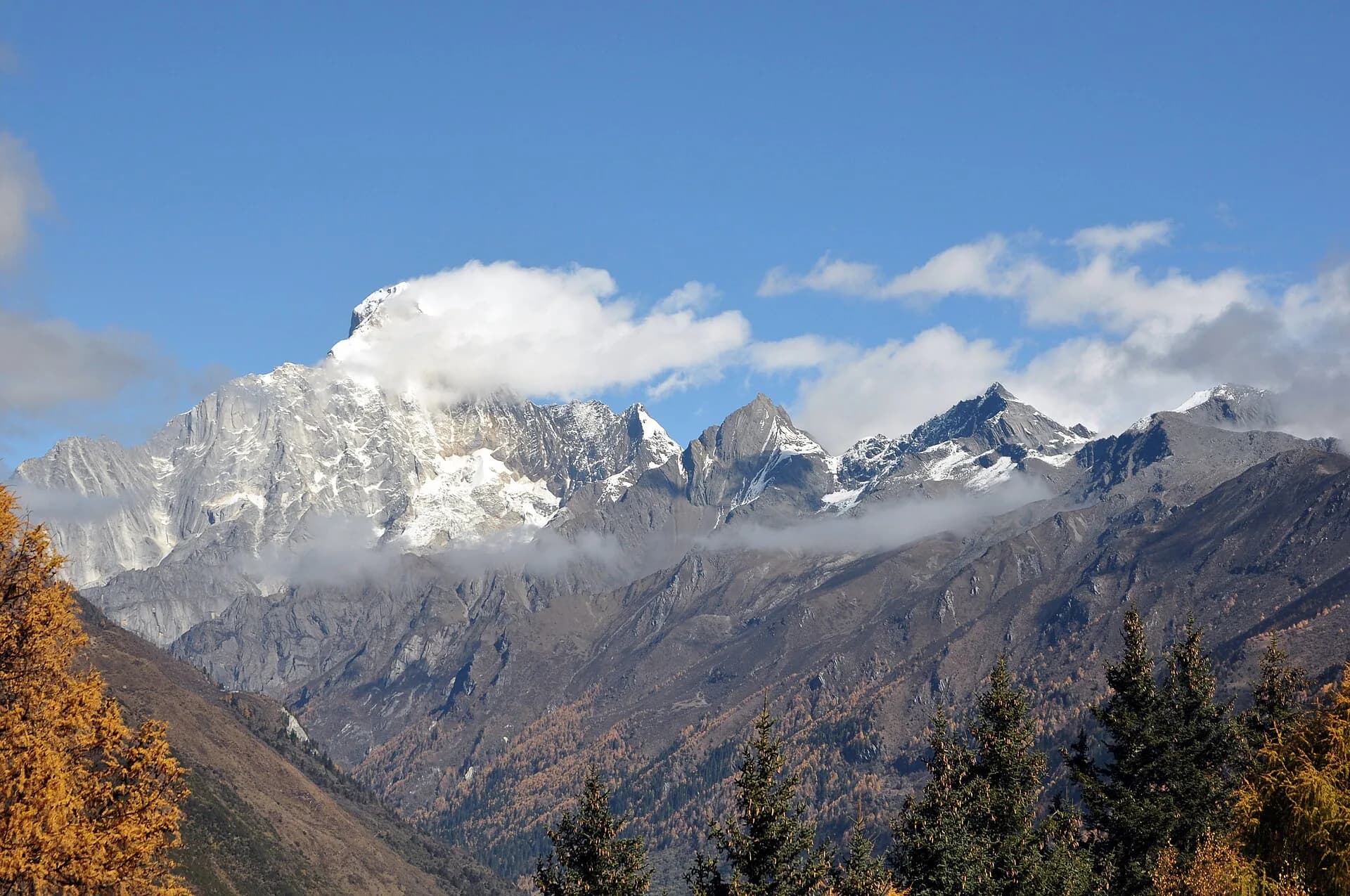
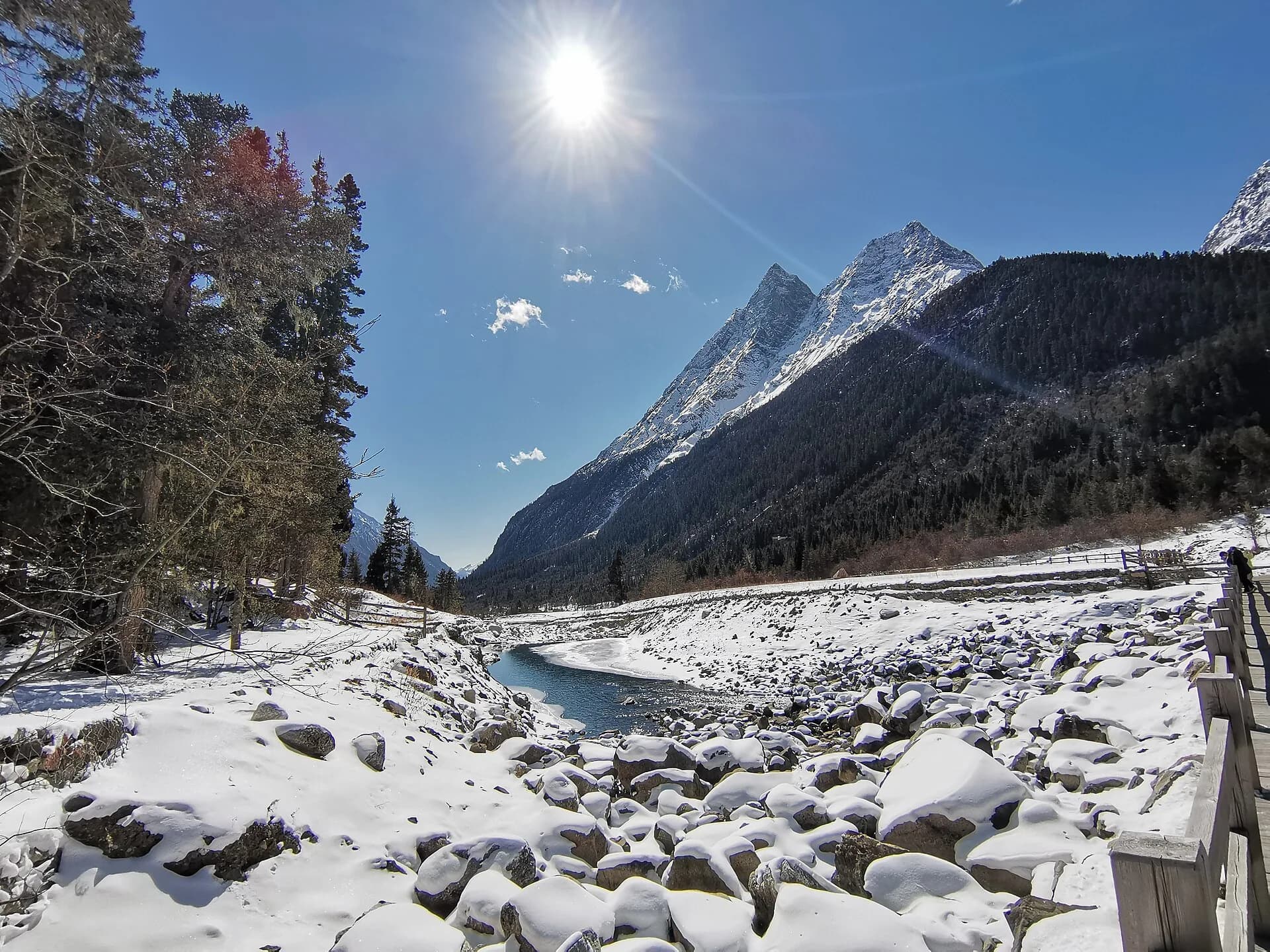
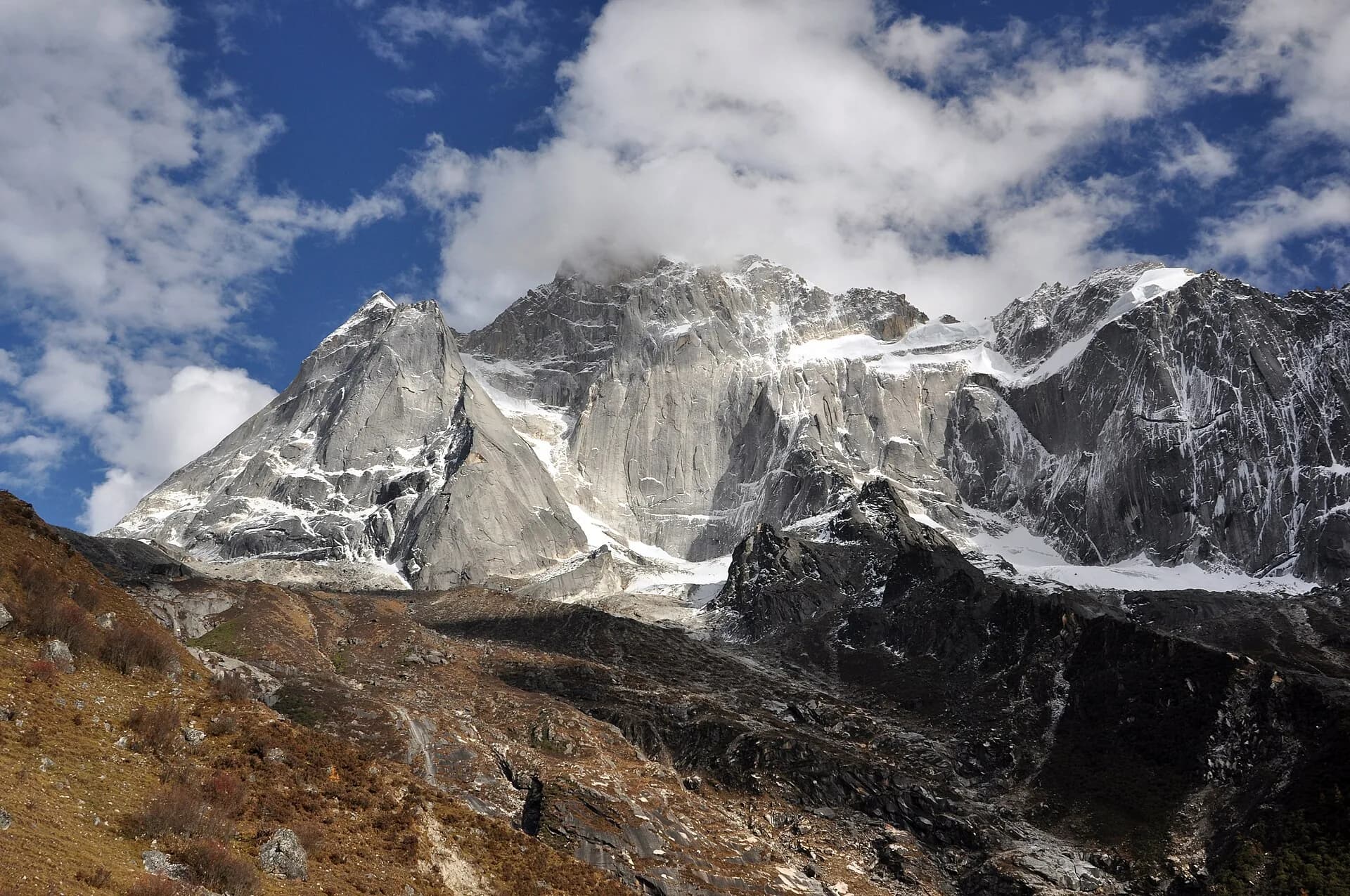
Mount Siguniang (四姑娘山, Sìgūniang Shān), also called Four Sisters Mountain, raises four sharp peaks above three very different valleys. Shuangqiao gives a broad alpine day with a sightseeing bus and selective walks. Changping puts forest and mountain views at the centre of a walking day. Haizi opens onto grassland viewpoints and, for well-prepared visitors, specialist high-country routes.
The three valleys are separate products with separate gates and tickets, not one park loop.
Compare the three valleys
| Valley | Best for | Transport and walking product | Strong first-visit shape |
|---|---|---|---|
| Shuangqiao (双桥沟) | A first alpine day, families and lower walking load | Required sightseeing bus climbs through the valley; walking is chosen around stops | Ride high, reassess the conditions, complete one upper walk and select lower stops on the return |
| Changping (长坪沟) | Forest, close mountain scale and a walking-focused day | Official 7 km connector, then walking or optional regulated horse service | Choose a front sampler, an extended forest day or the full continuation toward Muluozi |
| Haizi (海子沟) | Open grassland views or a prepared specialist mountain day | No sightseeing bus; the ordinary product begins on foot | Make a short viewpoint hike, or use the outdoor framework for a properly prepared long continuation |
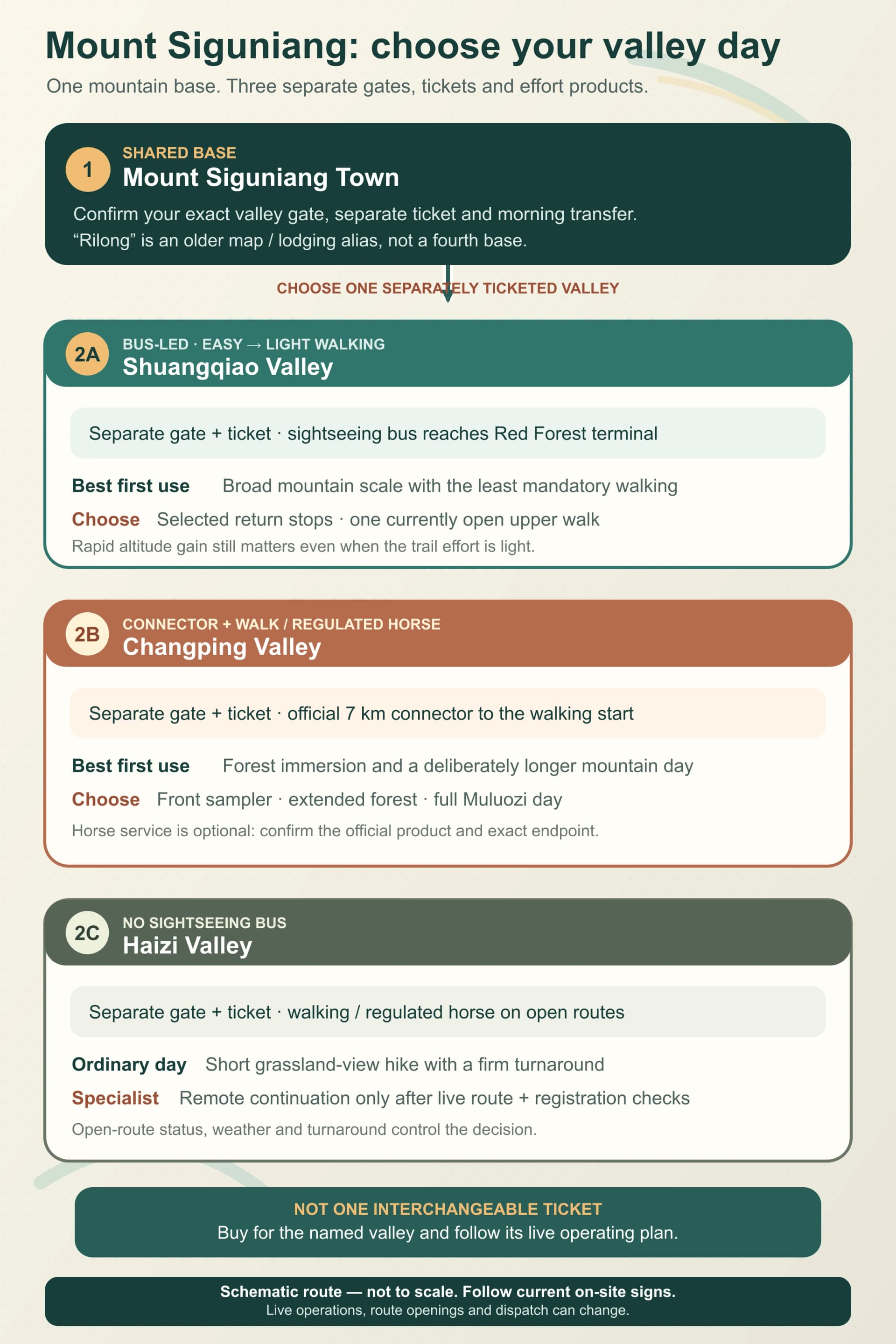
The diagram helps you choose a valley. Gate procedures, bus dispatch, horse availability, trail access and weather restrictions can change on the day.
A two-night first trip
Arrival day — Use the town as your base. Mount Siguniang Town sits between the valley approaches and is still often called Rilong in older listings. Before you sleep, confirm your lodging's exact pin, the right gate for the next morning and the document you booked with.
Full day — Start with Shuangqiao. The bus covers most of the long climb up the valley, so you can plan the day around views and chosen walking sections instead of a point-to-point hike.
Second morning or day — Add one contrast. Changping is the better choice for forest and sustained walking. Haizi is the better choice for an open grassland viewpoint or a specialist mountain objective under the rules. Leave enough road time if you are leaving that afternoon.
What each valley offers
Shuangqiao: the broad alpine introduction
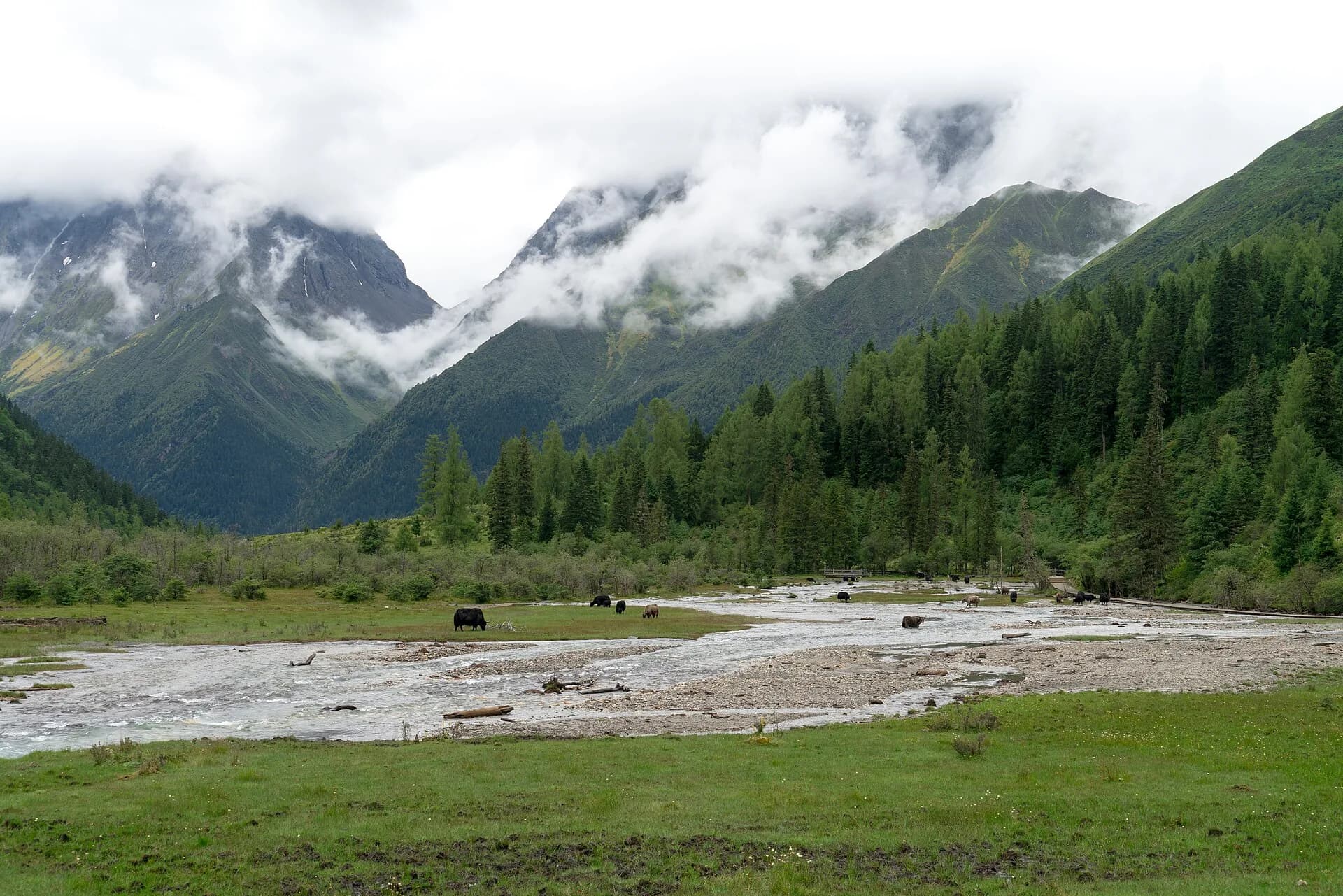
Shuangqiao is the easiest valley to recommend first. The sightseeing bus carries you from the entrance at about 2,900 m toward Red Forest at about 3,840 m. That quick climb opens up a big mountain landscape without a long ascent on foot, and the stops let you pick boardwalk and valley walks.
Ride the bus to the upper valley and pause to judge the visibility, altitude and time. Then commit to one worthwhile upper walk. On the way back, stop only where a lower section adds a new landscape.
Live dispatch can change the order of stops, so keep time in hand for the exit instead of planning a rigid sequence. Continue with the Shuangqiao Valley guide.
Changping: forest first, distance by choice
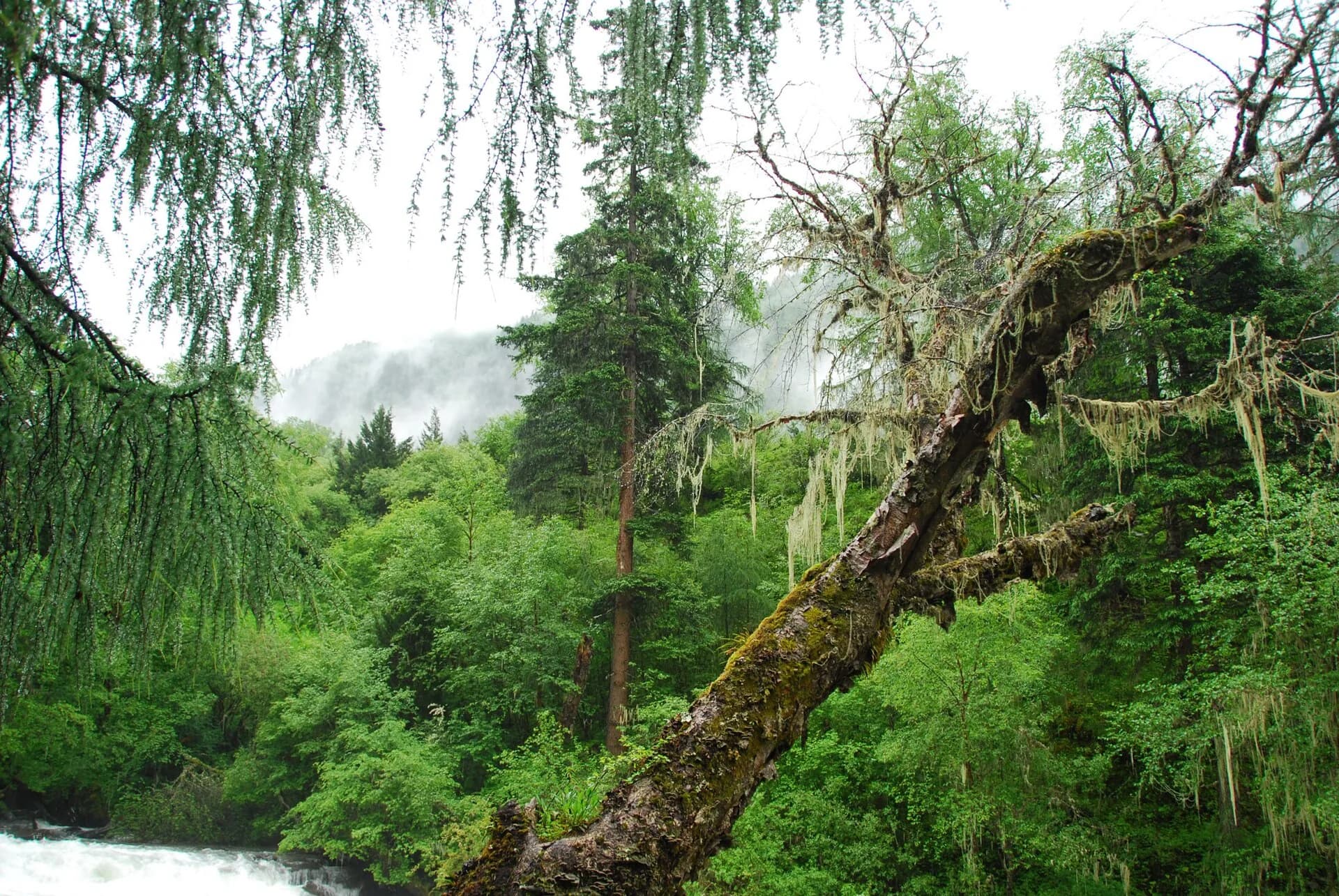
Changping begins with an official 7 km connector. After that, the visit is on foot. You have three options:
- Front-valley sampler: forest, water and mountain atmosphere without turning the day into an endurance test.
- Extended forest day: continue farther with a firm turnaround time.
- Full continuation to Muluozi: about 12 km one way after the connector. It suits a prepared long day, not every first visit.
Regulated horse service is an optional transport extra, booked through the official operator or counter. Before choosing it, confirm the day's endpoints, whether it is one way or return, availability, insurance and the live price. Read the Changping Valley guide before setting your turnaround.
Haizi: an open viewpoint or a specialist continuation
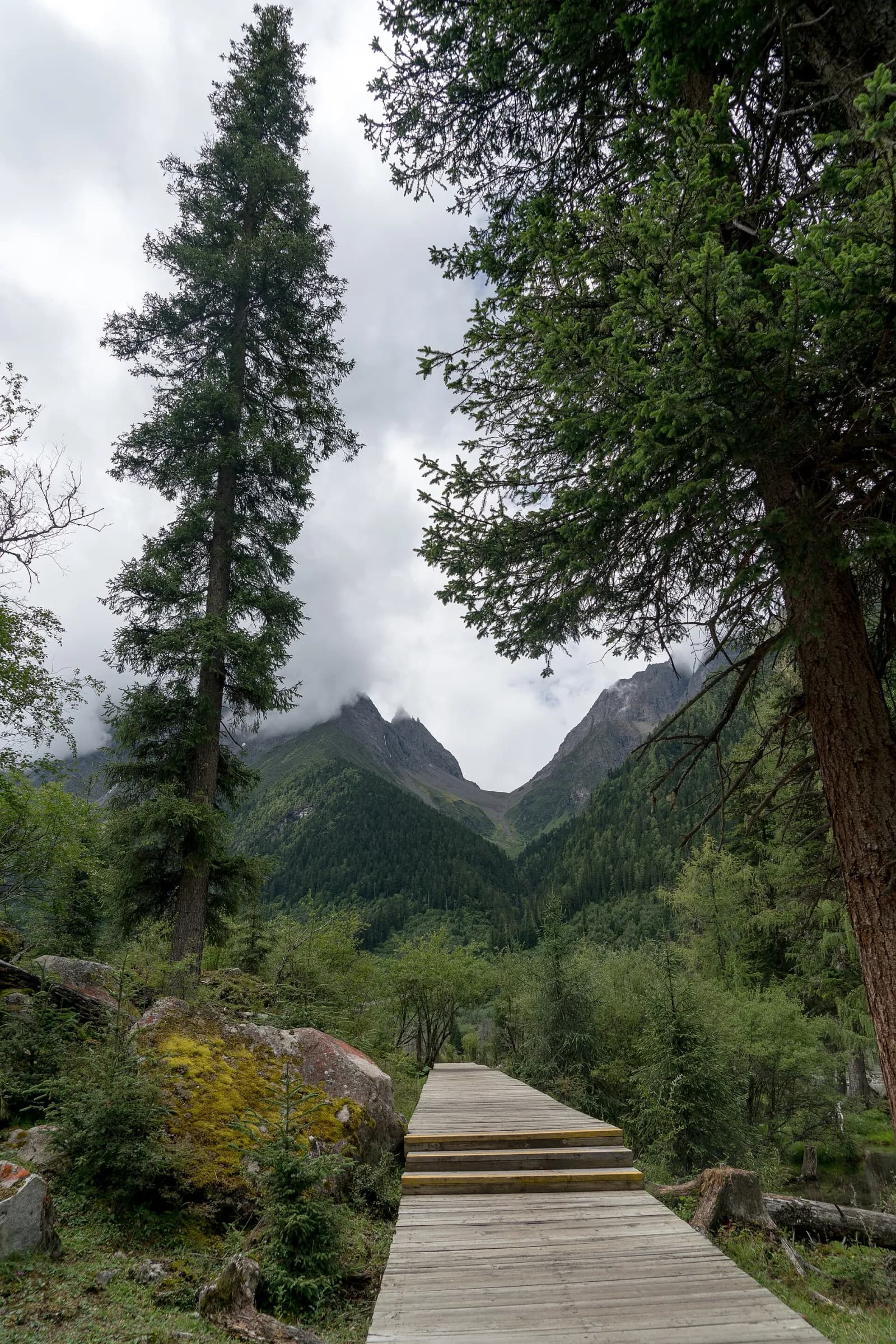
Haizi has no sightseeing bus, so even the ordinary visit begins on foot. A short front-valley hike works well for open grassland and mountain views. The farther lakes and high-country objectives are a bigger commitment that needs the right time, preparation and current permissions for the route.
Some Haizi outdoor routes reopened in April 2026, but that does not make every undeveloped route ordinary visitor access. Use the Haizi Valley guide to tell the short sightseeing visit apart from registered outdoor activity.
Tickets and entry windows for 2026
Official baselines: Peak season runs 1 April–30 November. Confirm the live product and your visit date before paying.
| Valley | Peak-season admission | Scenic transport | Entry window effective 1 April 2026 |
|---|---|---|---|
| Shuangqiao | CNY 80 | CNY 70 sightseeing bus | 08:00–15:00 |
| Changping | CNY 70 | CNY 20 official connector | 08:00–14:30 |
| Haizi | CNY 60 | No sightseeing bus | 08:00–14:30 |
Admission needs a dated, real-name reservation with limited availability, made through the official Abatour mini-program or website. The original document you booked with must match the reservation. A ticket for one valley does not admit you to the other two.
International visitors are received, but the public notices reviewed did not document a repeatable passport checkout and gate-entry process. Before paying, confirm the accepted passport field, the payment method and the staffed entry procedure. Carry the original document you used for the reservation.
Getting to the gates
Use the correct entrance pin, not a general destination marker:
- Mount Siguniang Town civic anchor
- Shuangqiao Valley main entrance
- Changping Valley Visitor Centre
- Haizi Valley ticket gate
The civic anchor is about:
- 6.9 km/14 minutes by car from Shuangqiao;
- 1.8 km/6 minutes from Changping;
- 2.4 km/7 minutes from Haizi.
None of the three returned a public-transit route. These are point-to-point planning estimates, not a promise of shuttles, taxis or walkable roads, and the result changes with your lodging's exact pin.
Outdoor routes need separate permission
Ordinary admission covers the standard sightseeing visit for the valley you choose. Camping, mountaineering, traverses and other outdoor routes may need a separate outdoor ticket, registration and guide under the current rules. Use only routes officially open for that activity. Unopened and undeveloped zones are outside the visitor product.
Mount Siguniang is part of the Sichuan Giant Panda Sanctuaries, inscribed as a UNESCO World Heritage property in 2006, and the wider landscape received geopark designation in 2026. These designations reflect its conservation value; they do not promise a wild panda sighting.
Booking
Compare current Mount Siguniang valley tickets and included-tour options on Trip.com, then check the valley name, visit date and every inclusion. The listing is not a three-valley pass, and transport, insurance, meals and intercity transfers are not included unless the listing says so.
For a one-day return from Chengdu, compare the exact Shuangqiao day-tour product. The dated join-in option included Shuangqiao admission, Chengdu round-trip transport and insurance. Package A excluded the scenic sightseeing bus and Package B included it. The service used meeting points rather than hotel pickup for everyone. Check the package you select before paying.
Search hotels near Mount Siguniang on Trip.com, then compare each property's exact pin with your valley entrance. The search label alone does not guarantee a particular distance to the gate, pickup service or amenity.
Altitude and weather
Mount Siguniang Town sits at roughly 3,160–3,200 m, and Shuangqiao's bus can climb nearly 1,000 m from the entrance to the upper valley. Keep the arrival evening gentle and start the first scenic day conservatively. Carry warm layers plus rain and sun protection, and keep food and water within reach.
If you develop a headache, dizziness or difficulty breathing, stop pushing harder, rethink the day and ask scenic-area staff or medical services for help. Weather can change the visibility, temperature, trail access and bus dispatch. Leave enough time to follow on-site instructions and reach the exit before operations close for the day.
Rooms and dinner in Siguniang Town
At this altitude, the room matters as much as the location. Before booking, ask about:
- Oxygen equipment: helpful for sleep, but the machine's airflow can be noisy. Ask whether it can be switched off or turned down.
- Heating and hot water: when hot water runs, especially in the morning.
- Breakfast: whether it is served before your early gate departure.
- Gate pickup: whether the hotel takes you to the gate you need. Some properties are up steep hotel streets, and a county-town hotel adds a longer transfer.
For dinner, a shared clear-broth mushroom and yak-meat hotpot is a warming choice after a cold valley day. Restaurants you passed in Wenchuan on the drive are a different town, so look for one in Siguniang Town itself and check the portion and price.
Be wary of fitness claims in social posts. A strong hiker may call Shuangqiao "effortless" and a long Changping walk "easy"; that is not a guide for families or anyone feeling the altitude.
Pairing the valleys
For most first trips, Shuangqiao + Changping gives the strongest contrast between vehicle-assisted alpine scale and a forest walking day. Choose Shuangqiao + a short Haizi visit when the open grassland viewpoint matters more than a longer forest walk. Go back to the Aba Prefecture planning hub before adding Bipenggou or another base.