Longhua Temple
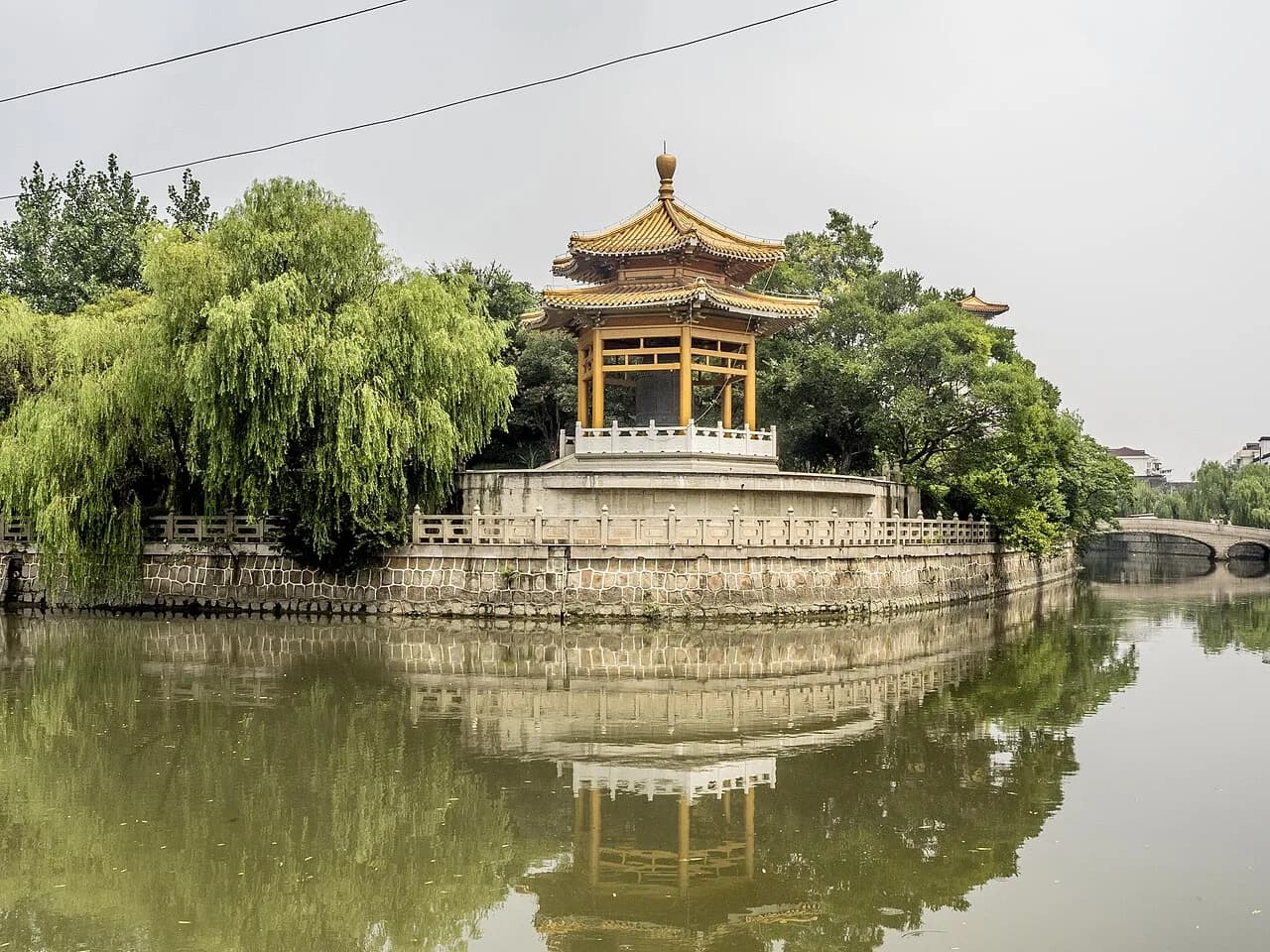
Longhua Temple (龙华寺, Lónghuá Sì) is Shanghai's most substantial historic Buddhist complex for a visitor who wants more than a single courtyard. Its hall sequence, incense, mature trees, vegetarian food, and pagoda exterior create a living religious visit rather than a decorative heritage stop.
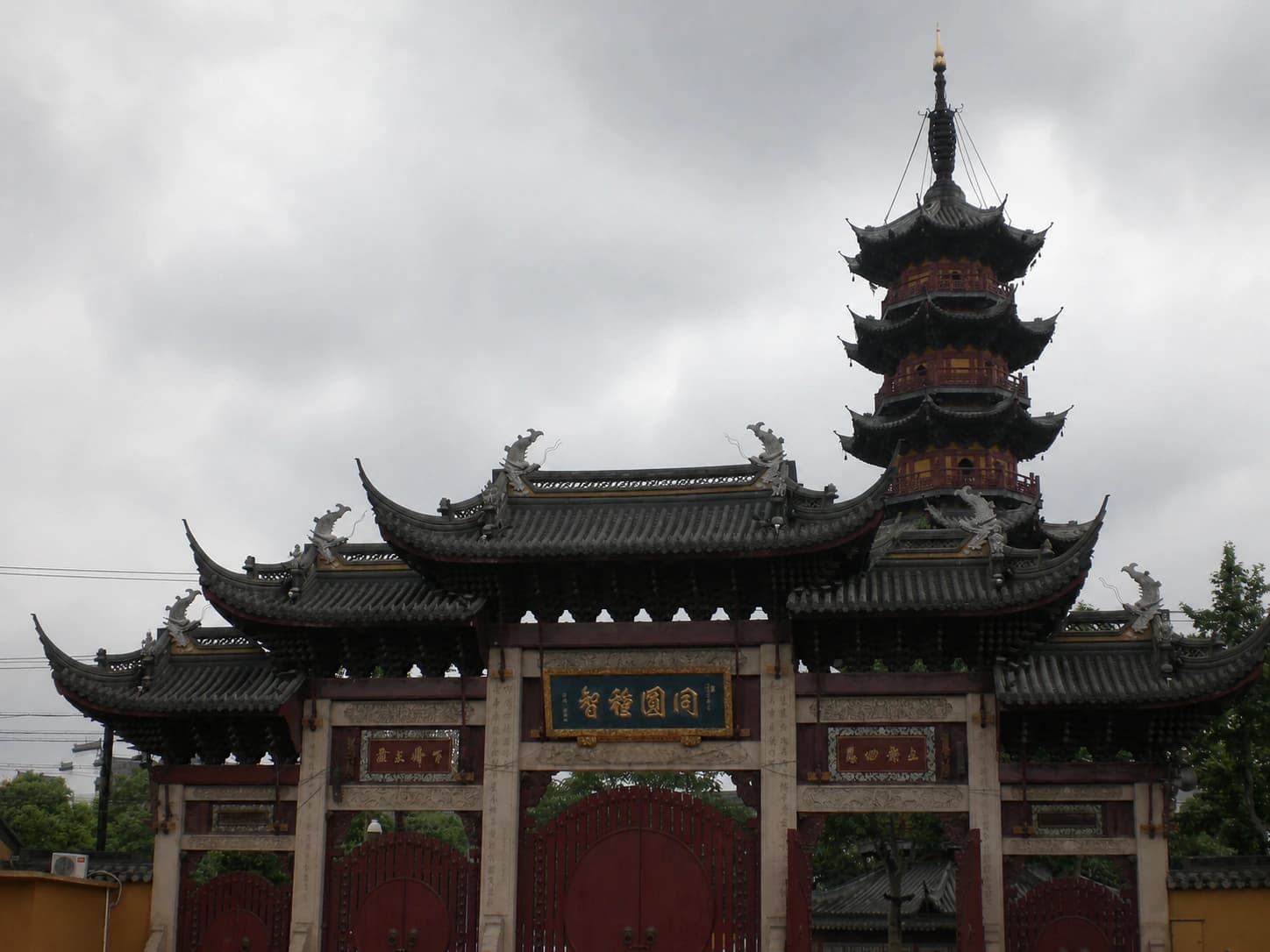
Photo by Parsifall, licensed under CC BY-SA 4.0.
Longhua or Jade Buddha Temple?
Choose Longhua for scale, a longer axial route and the exterior pagoda. Choose Jade Buddha Temple for a more central location and its famous jade images. Longhua is the stronger special trip for traditional architecture; visitors sensitive to incense can arrive early and stay toward the quieter edge of the main incense area.
Allow 75–100 minutes, plus time for food if you choose it.
Follow the Axis, Then Add One Side Experience
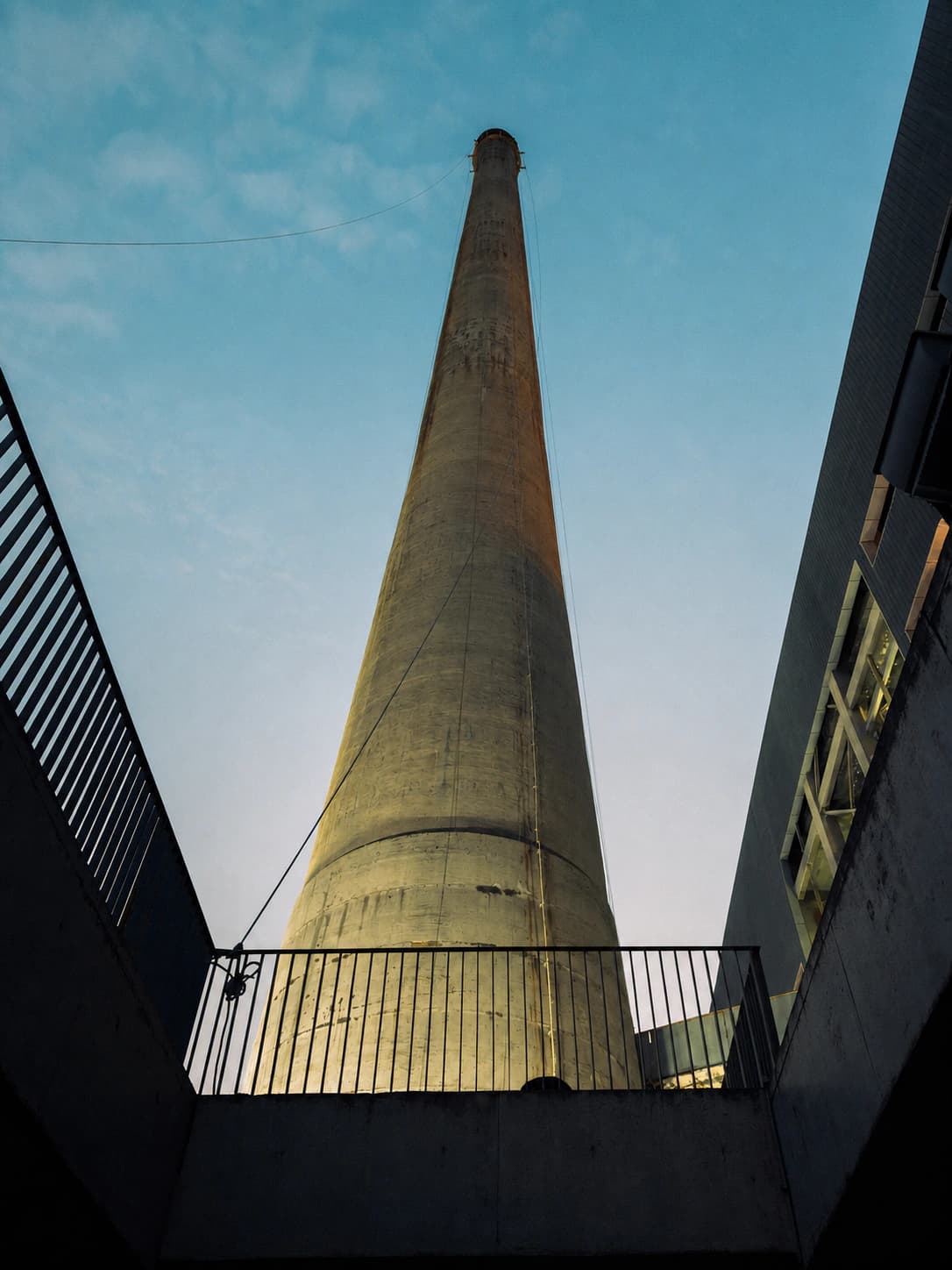
Begin with the pagoda exterior, which is normally viewed from ground level, then enter the temple and move courtyard by courtyard along the central axis. The changing gates and rooflines are the route, and the current hall labels provide a clearer sequence than a social-media wish list.
Pause in open side courtyards, then choose one optional extension—vegetarian noodles, a cultural activity or a quieter garden space. Calligraphy and copying activities can pause during ceremonies or internal adjustments, so enjoy them as a live bonus to the architectural route.
Read the Roofline as You Move
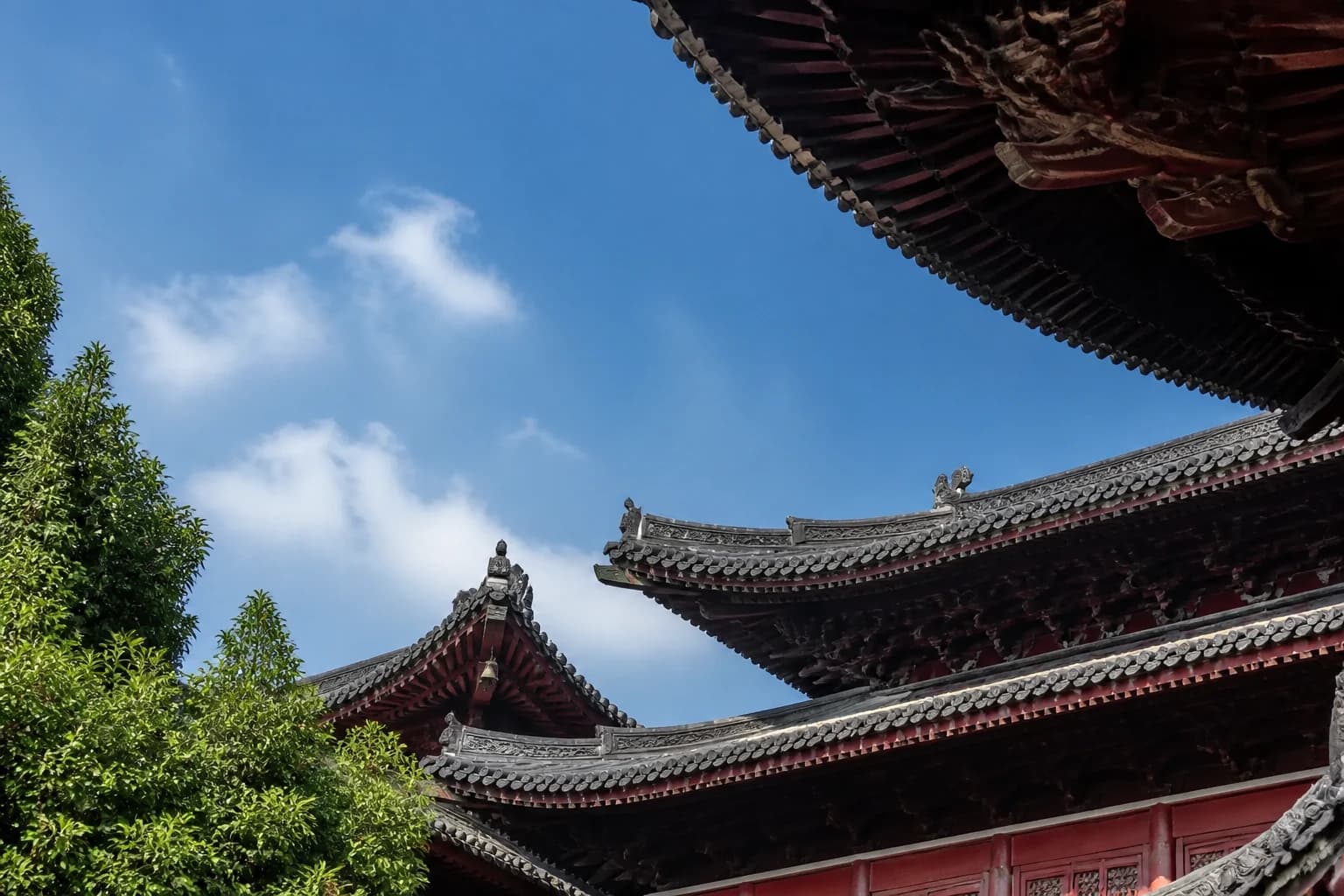
Longhua rewards looking up. Each courtyard changes the distance between roof ridges, trees, gates and halls; the pagoda remains an exterior anchor while the inner route becomes progressively more enclosed. Photograph one roofline from below, then step back and show how the eaves frame a courtyard, keeping worshippers outside the composition unless they invite a photograph.
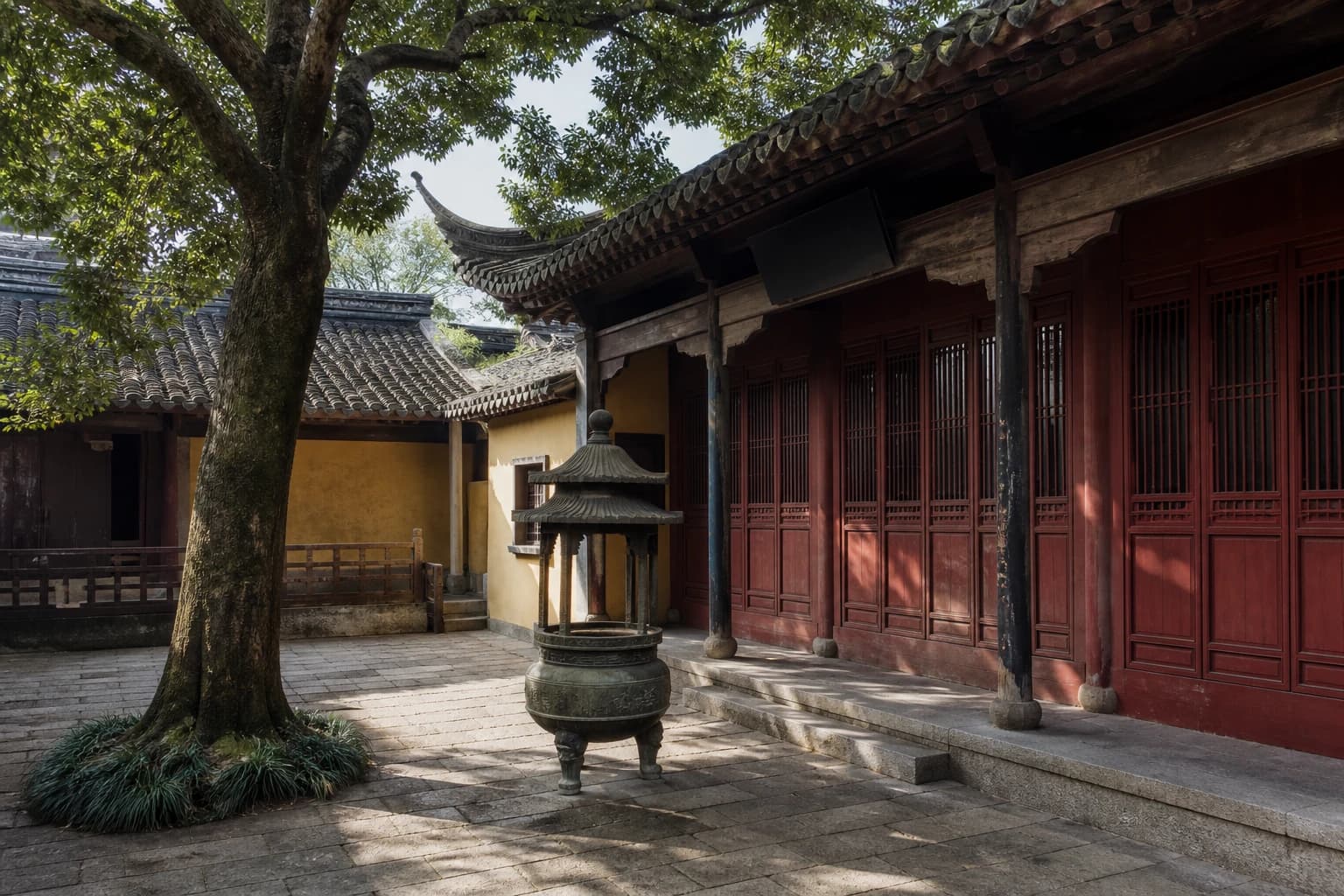
Side spaces supply the quieter details: worn paving, old trunks, timber doors, incense vessels, and the shadow line under deep eaves. These are better visited before lunch, when the light is softer and group circulation has not filled every threshold.
Make the Vegetarian Meal Part of the Visit
Longhua Vegetarian Restaurant (龙华素斋) at the temple is more than a convenient lunch stop. A bowl of vegetarian noodles with mushroom sauce or side dishes extends the temple visit through a long-standing Shanghai Buddhist food tradition; buns and baked goods make a lighter option when available. Stock and service change through the day, so treat a specific pastry as a bonus rather than a reason to travel.
The practical details are unusually local: recent visitors describe self-service or honor-system payment, returning your own bowl, and tissues that are not automatically supplied. Pay for everything you take, bring a tissue, and follow the current signs. The noon queue can be long even when it moves quickly; eating earlier or around mid-afternoon usually makes this a calmer extension.
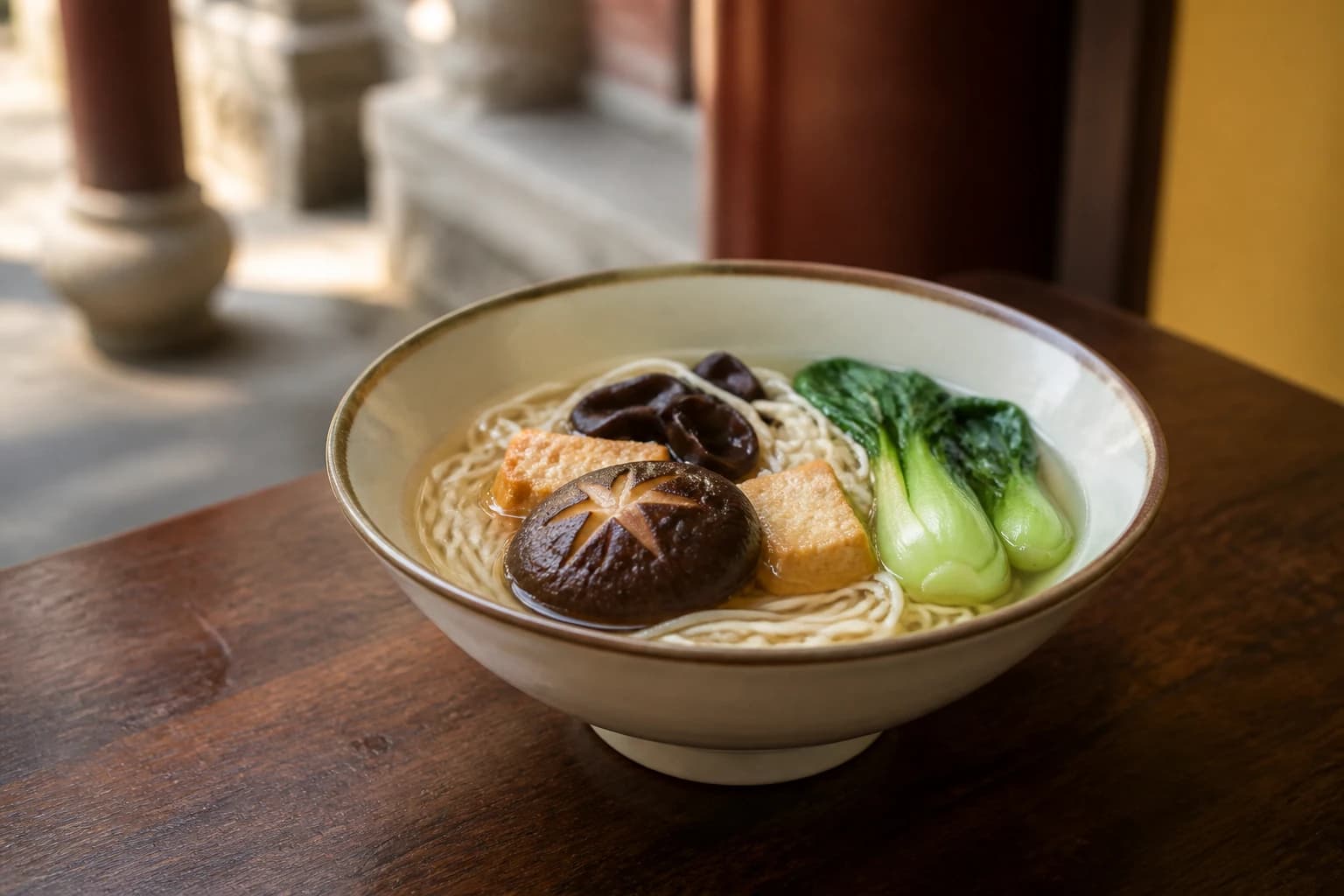
Menus, toppings and baked goods change. If the temple restaurant is crowded or closed, eat near Longhua Station or continue toward Xujiahui, where the range is wider. The meal remains a pleasant extension rather than the condition for a worthwhile temple visit.
Visit with the rhythm of an active temple
Keep your phone silent, follow photography signs and leave the line between a worshipper and an altar clear. Step over raised thresholds, give ceremonies space and observe unfamiliar rituals without imitating them. Incense is optional; an early visit and the quieter edge of the main incense area suit visitors concerned about smoke.
Observance days, temple fairs and New Year periods bring the strongest living-temple energy. Choose a weekday morning for quieter architecture or a major observance for active religious atmosphere.
Build the Rest of the Day by Neighborhood
The strongest continuation is the West Bund: contemporary museums, river paths, and broad open space create a deliberate contrast with Longhua's compressed sacred axis. Check each museum's current exhibition and closing day before relying on it. Xujiahui is the easier food-and-transport finish, while Shanghai Botanical Garden is a separate half-day rather than an automatic add-on.
For accommodation, Xujiahui is the most practical base when several southwest-Shanghai stops matter. The Former French Concession offers a more atmospheric central base with a straightforward ride to Longhua, and the West Bund suits travelers prioritizing riverside art and newer development. First-time visitors do not need to stay beside the temple itself.
Practical Information
- Hours: The official Shanghai tourism listing gives daily hours of 8:00 am–4:30 pm; religious events and holidays can override them.
- Admission: Check the current gate notice; ignore prices copied from old posts.
- Address: 2853 Longhua Road.
- Metro: Longhua Station on Lines 11 and 12; Exit 1 is a practical approach.
- Accessibility: Stone paving, thresholds, and steps interrupt the central route. Ask staff for the available step-free path.
Pair Longhua with the West Bund or Xujiahui. A weekday morning gives the clearest architecture experience; a major observance gives the strongest living-temple experience. Decide which one you actually want.