Qibao Ancient Town
Qibao Ancient Town (七宝古镇, Qībǎo Gǔzhèn) is the easiest Shanghai water-town taste to reach by metro. Its canals and old lanes are compact, but the dominant experience is street food and weekend crowds rather than a tranquil historical escape. That tradeoff—not age or fame—should decide whether you go.
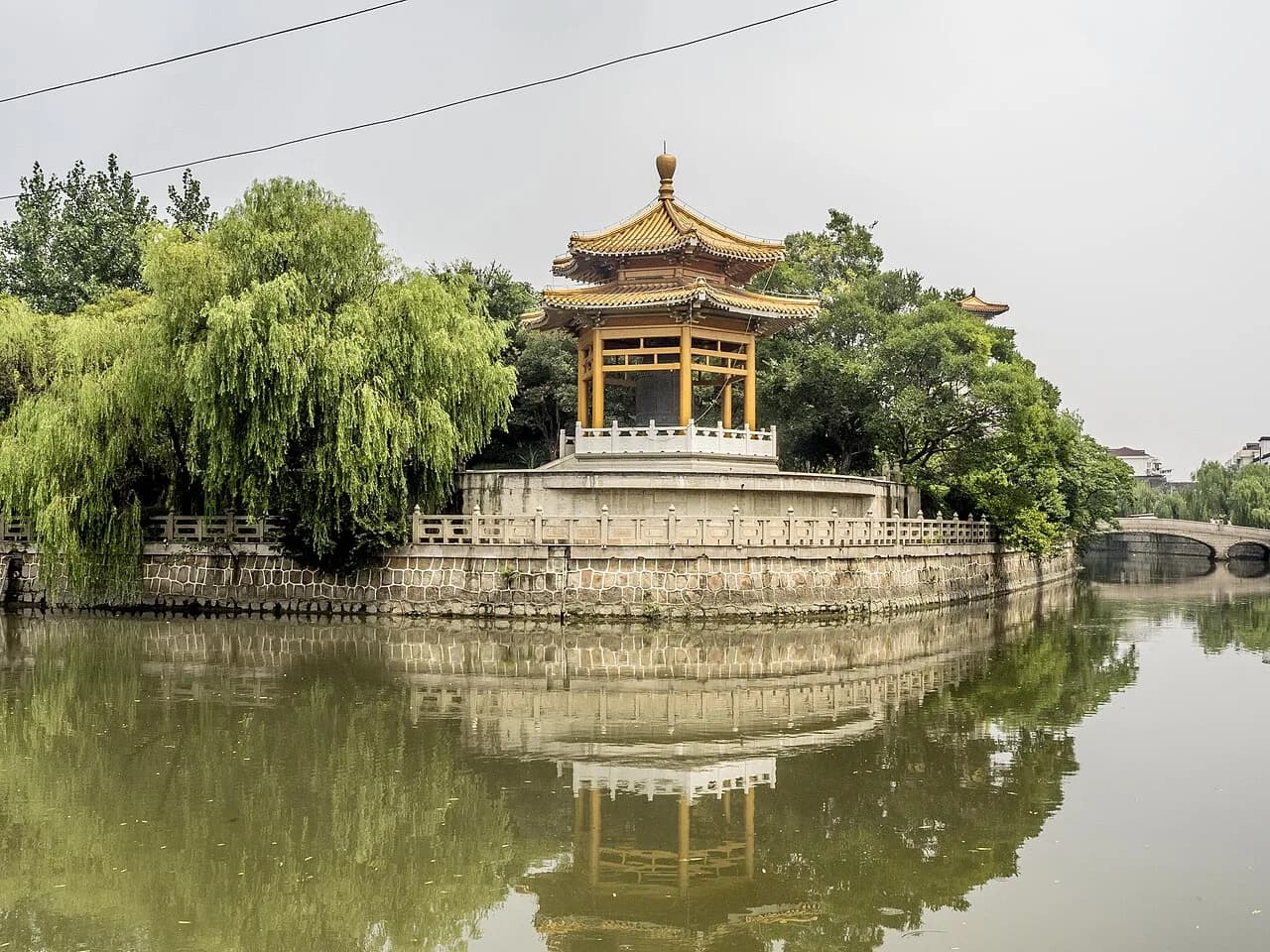
Qibao or Zhujiajiao?
Choose Qibao when you have 2–3 hours, want snacks, or cannot justify a long suburban journey. Choose Zhujiajiao when canal scenery, gardens, and a fuller day-trip rhythm matter more. If you already plan another Jiangnan water town, Qibao is the easy page to skip.
Walk the Town Before You Eat Through It
Arrive before 10:00 am on a weekday. Enter the main old street, cross the first canal bridge, and keep moving past the densest snack frontage. Use a second bridge and the quieter side lanes to make a small loop, then return to the food street. This sequence gives you the physical town before queues and smells turn the visit into one long market.
The outdoor lanes and bridges are free. Choose at most one or two paid interiors based on their subject; small museums, historic rooms, boats, and temporary activities keep separate hours and prices. Allow four hours only if you add a proper meal or several interiors.
A Better Tasting Strategy
Do not copy a ten-stall checklist. Recent visitor reviews repeatedly disagree about the same famous foods, especially when long queues pressure kitchens. Share one portion at a time and judge the next stop on freshness, visible preparation, and a clearly posted price.
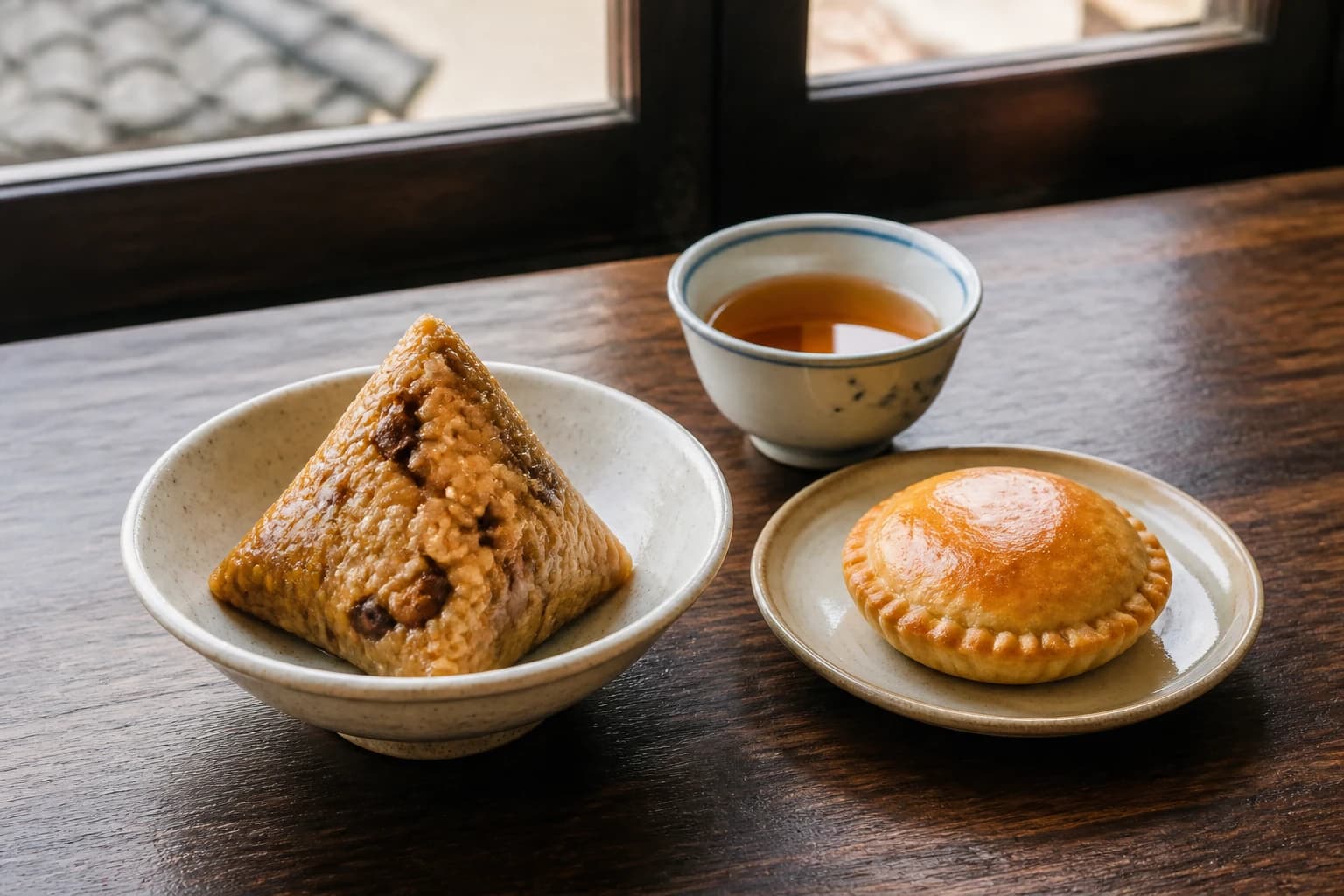
Eat for Qibao rather than for a viral checklist. The more characteristic candidates are haitang cake (海棠糕), large sweet or savory tangyuan, white-cut lamb or lamb soup, oil-fried dumplings, meat zongzi, and seasonal rice cakes such as yam or caotou versions. They are clues to the town's food culture, not eight compulsory stops.
Share one freshly made item, then decide whether to continue. Prefer a busy griddle or steamer where you can see the next batch being cooked; ask whether the price is per piece, bowl, or weight. Old “must-eat” posts can outlive both the cook and the recipe, and recent visitors disagree sharply about several famous stalls. A short queue for hot food is a better signal than a wall of celebrity photos.
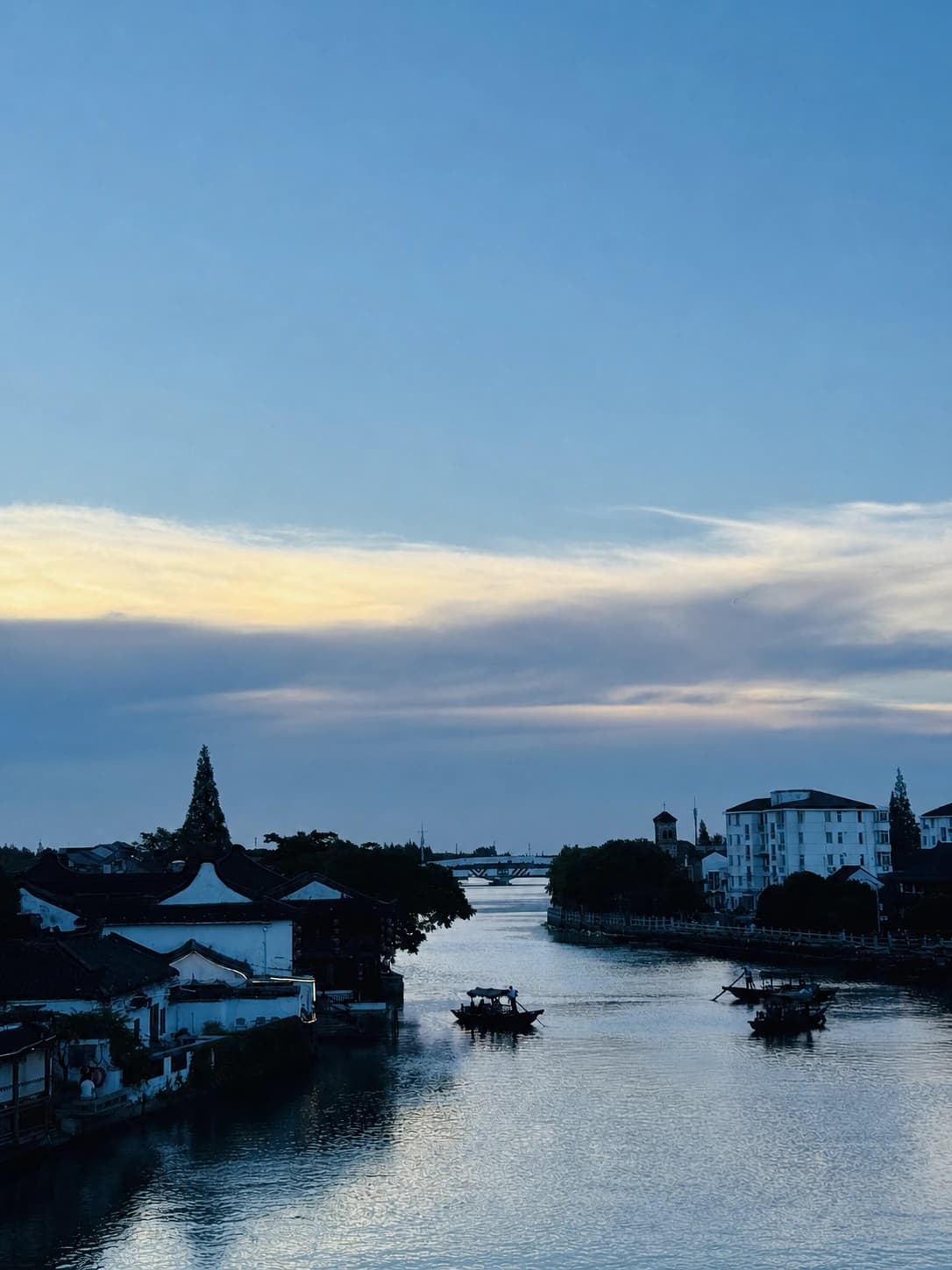
For canal photos, the busiest central bridge is not automatically best. Walk to the next crossing: the view can be cleaner and the experience less confrontational.
Look Beyond the Food Street
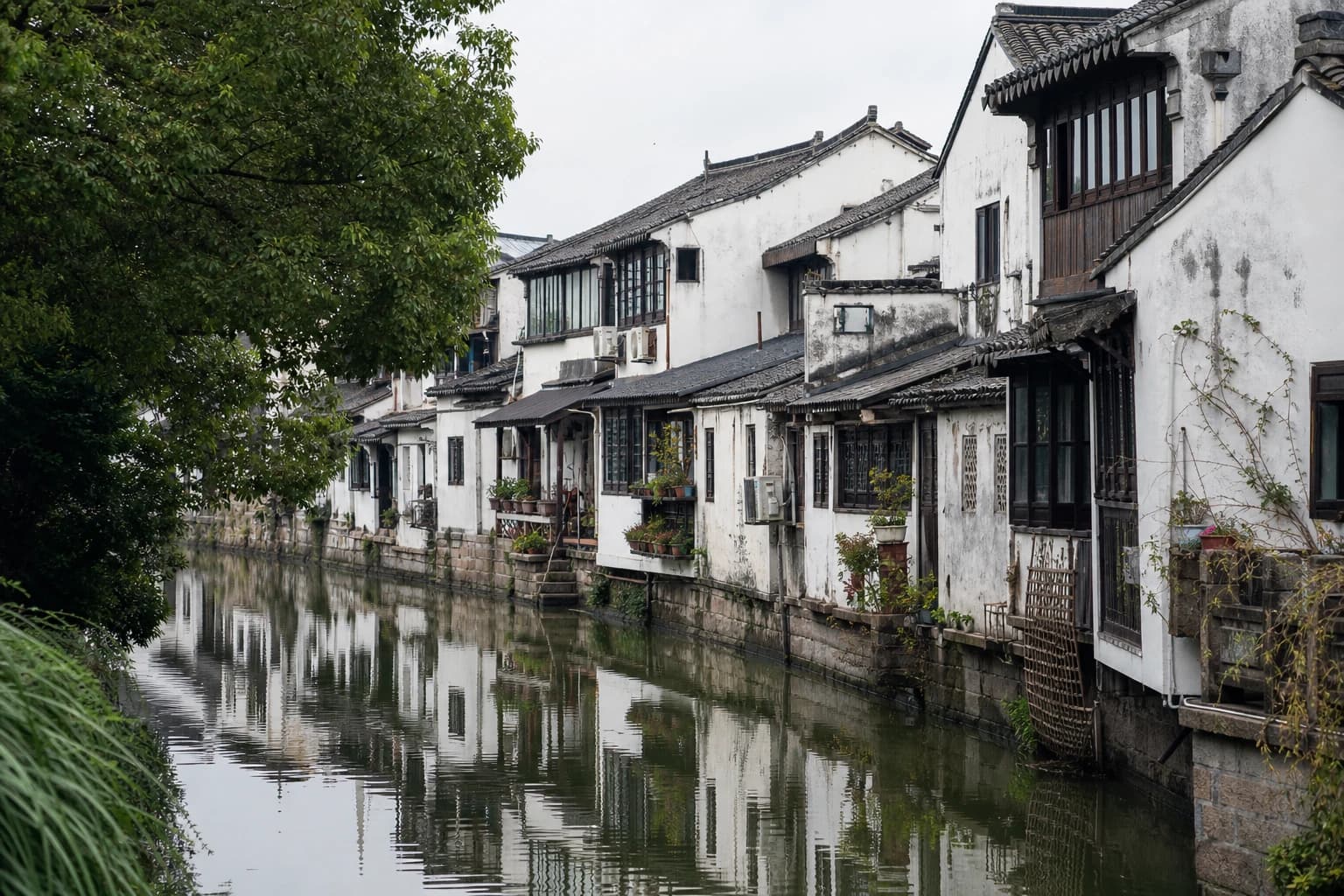
Qibao becomes more interesting when you separate the old-town fabric from the sales counters. On a side lane, notice how white plaster, dark timber windows, service doors, air-conditioning units, and plants all meet the canal. This is not a perfectly preserved stage set; it is an old commercial neighborhood that has continued to absorb ordinary urban life.
The most useful photo exercise is a three-part sequence: one broad canal view, one roof or window detail, and one food-making scene. That produces a more honest memory than twenty versions of the same bridge. If a lane becomes crowded, do not force the shot—cross the water and use the opposite bank, or wait at the next bridge where circulation is looser.
Where to Eat and What to Do Nearby
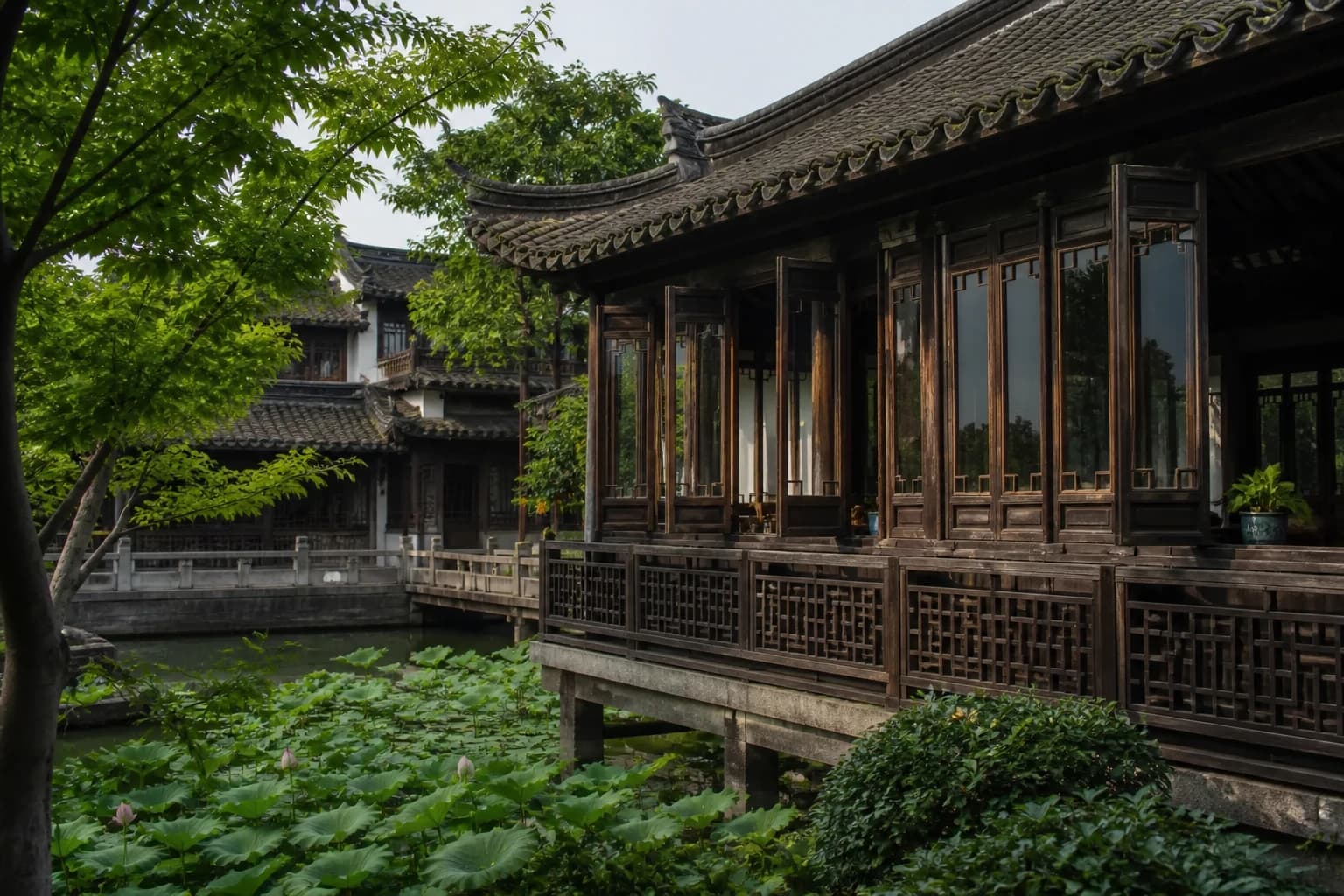
For tasting, the old street is the point; for a full sit-down meal, it may not be. Use the snack lanes for two or three small items, then decide whether you still want lunch. If you want air-conditioning, a predictable bill, or a broader menu, the modern blocks between the historic town and Qibao Station are usually more practical than squeezing into the busiest canal frontage.
Qibao pairs naturally with Xujiahui later in the day: return on Line 9 for shopping, a proper meal, or an evening walk. It also works before the Former French Concession, but treat that as a separate half-day rather than trying to connect the areas on foot. Families can consider Minhang Culture Park as a greener extension, while architecture-focused visitors will get more from saving their energy for central Shanghai.
Where to Stay for a Qibao Visit
Do not move hotels just to visit Qibao. For a first Shanghai trip, stay in the Former French Concession, Xujiahui, People's Square, or Jing'an and use the metro. Choose the Hongqiao area only when an early flight or high-speed train already makes western Shanghai convenient; Qibao then becomes an easy arrival- or departure-day stop. Staying beside the ancient town makes sense mainly for repeat visitors with several Minhang or western-suburb plans, not for someone building a broad Shanghai itinerary.
Getting There and Fitting It In
Take Line 9 to Qibao Station, then follow Amap to 七宝古镇; the mall beside the station is not the historic area. The easy return makes Qibao suitable before an evening in Xujiahui or the former French Concession. Avoid weekend lunchtime unless the market crowd itself is part of what you want.