Tsingtao Beer Museum
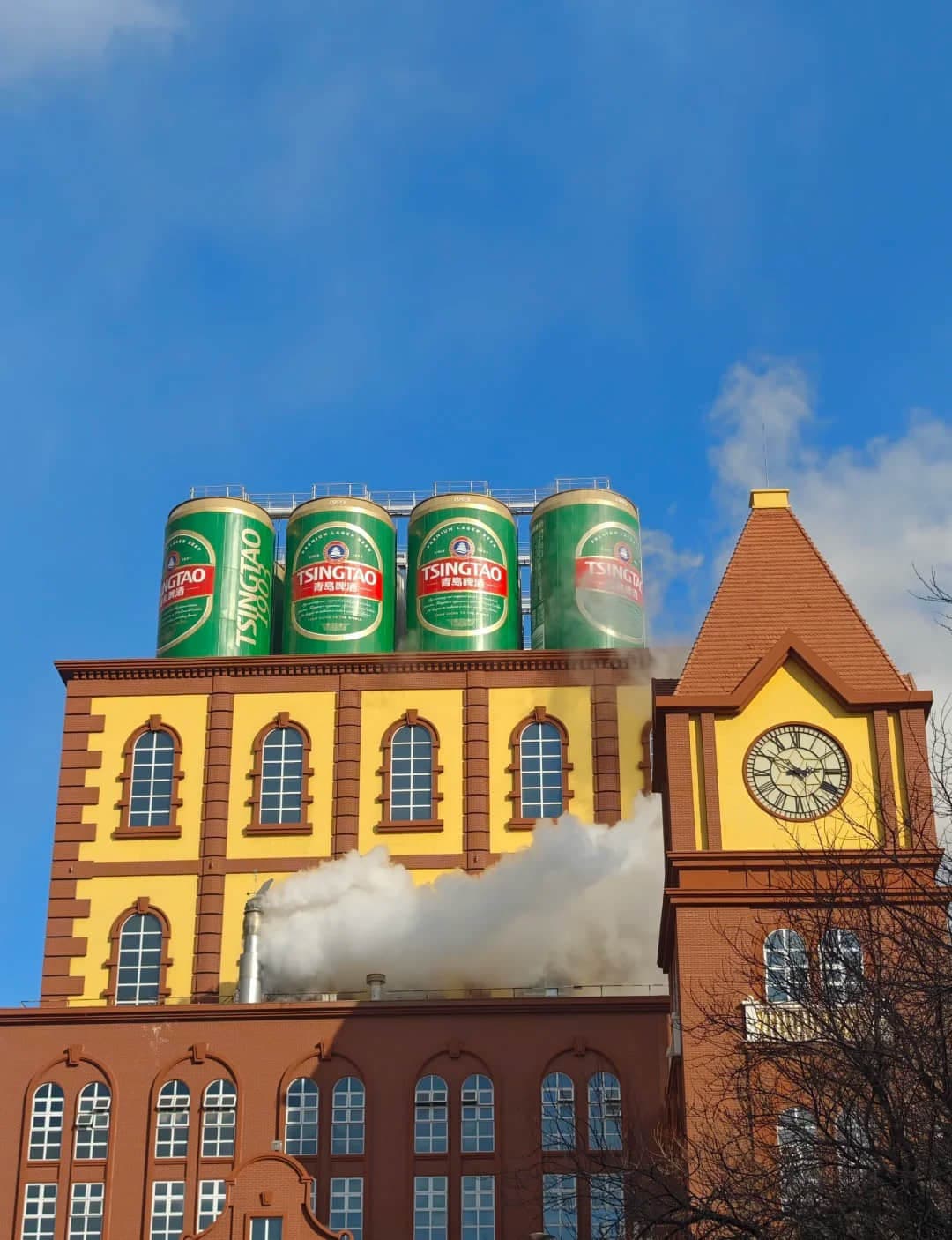
The Tsingtao Beer Museum (青岛啤酒博物馆) works best as a two-to-three-hour industrial-history visit, not a bar crawl. Hall A explains the brewery's 1903 origins and its relationship with Qingdao; Hall B turns ingredients, historic equipment and production displays into the main brewing story. Tastings come after you understand what is being made.
This is one of Qingdao's strongest rainy-day attractions and an easy half-day for adults, families and travelers interested in architecture or manufacturing. You do not need to drink alcohol to enjoy it, and nobody should drive after using a tasting inclusion.
Current Hours and Reservation Rules
The museum's current official visitor notice lists:
- January–April: 08:30–17:30; last admission 16:30.
- May–June and September–October: 08:00–18:30; last admission 17:30.
- July–August: 07:30–19:30; last admission 18:30.
- November–December: 08:30–17:30; last admission 16:30.
Special events can override this schedule. Reserve through the official WeChat account or a recognized travel platform, and bring the original document and booking proof used for real-name verification. The official ticket hotline is 400-169-1903.
Ticket packages change and may combine Hall A, Hall B, a light-and-shadow experience, different tasting sets, snacks or souvenirs. Compare the inclusions rather than choosing by price alone. International travelers can check the live Trip.com Tsingtao Beer Museum ticket page.
The Best Visit Sequence
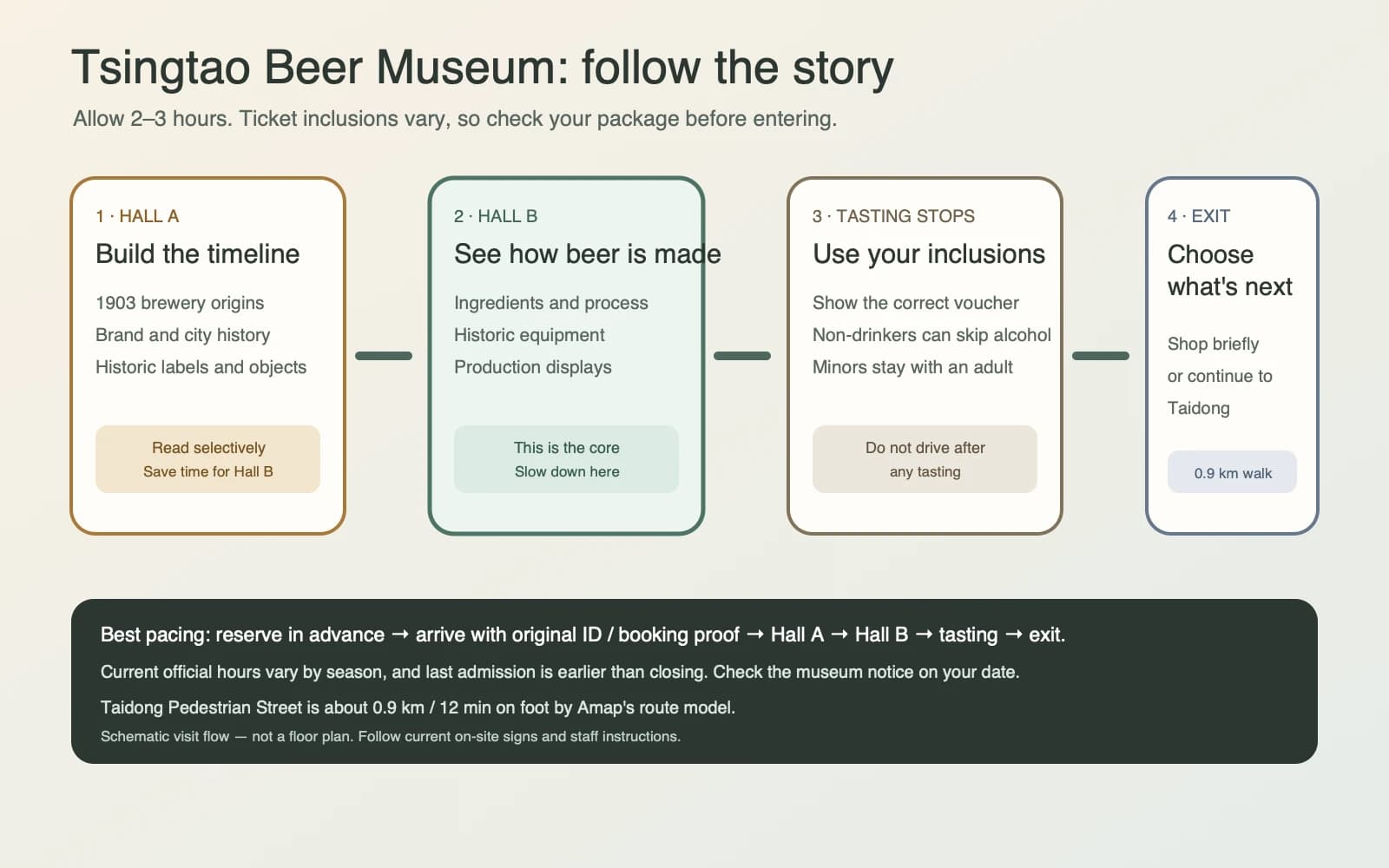
The diagram is a visitor sequence, not a floor plan. Follow current on-site signs because temporary exhibitions and ticketed experiences can alter the path.
1. Hall A: build the timeline
Start with the early brewery and Qingdao's urban history. Look for original labels, documents and material evidence of how the company changed across political and commercial eras. Read selectively: Hall A provides context, but spending too long on every panel creates fatigue before the production story.
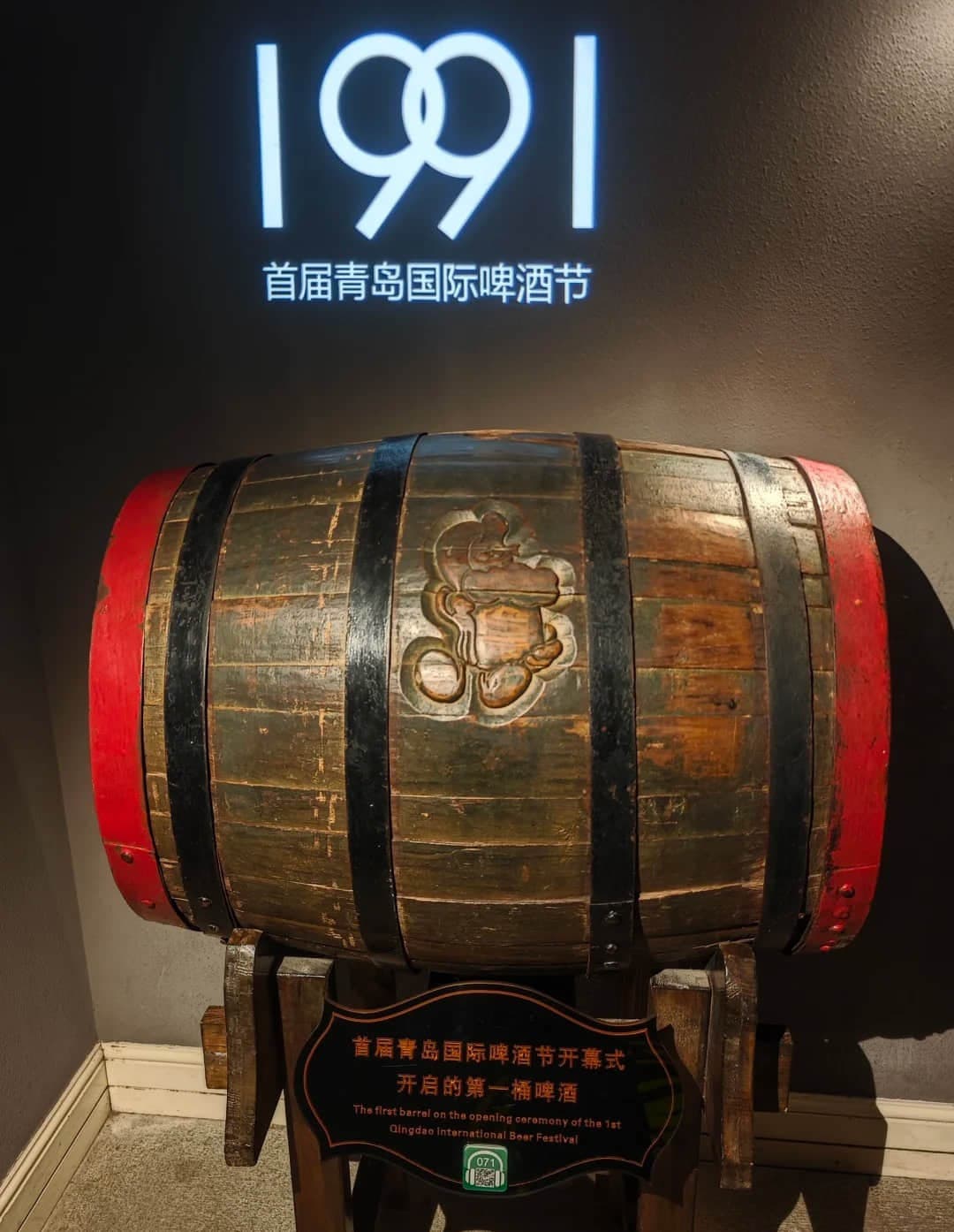
2. Hall B: ingredients, equipment and process
Hall B is the core for most visitors. Follow the sequence from raw ingredients through brewing and maturation, compare historic machinery with later production systems, and pay attention to what is original industrial fabric versus a modern interpretation. The building itself is part of the exhibit: red brick, factory volumes and surviving equipment make the experience more specific than a generic brand museum.
3. Use the tasting inclusion you actually bought
Different packages include different drinks and snacks. Keep the voucher or ticket accessible and confirm which counter serves your package. A non-drinker can simply skip alcohol; children and minors should remain with an adult and must follow current age rules. Eat beforehand if alcohol affects you quickly, drink water, and use metro, walking or a taxi afterward.
4. Exit without losing the afternoon
The shop and entertainment areas can expand a short visit into a long one. Decide whether branded merchandise matters before entering, then continue to Taidong or another planned neighborhood rather than browsing by default.
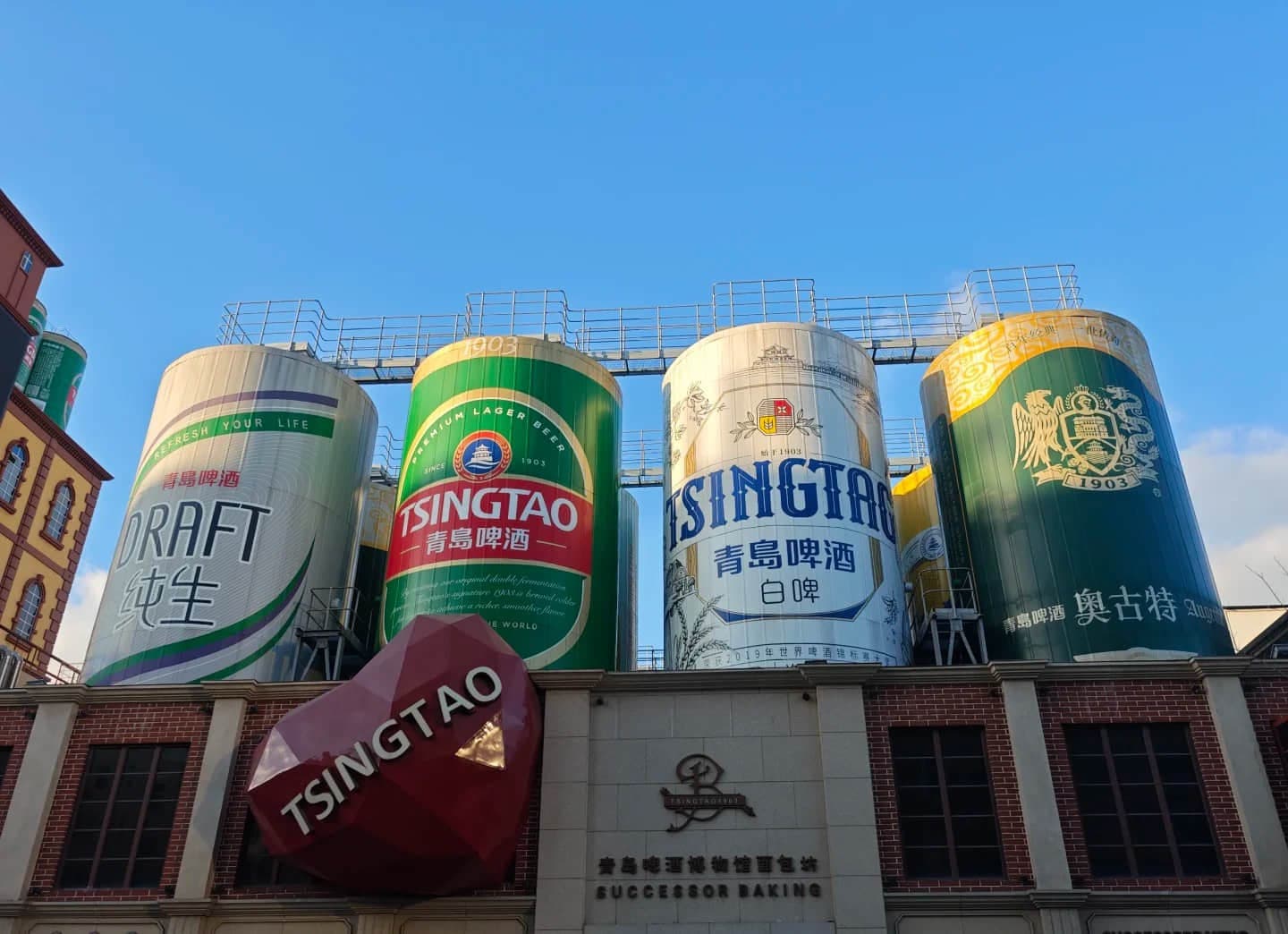
Getting There Correctly
The museum's official transport page lists three practical metro approaches:
- Taidong Station on Lines 1 and 2, Exit A: follow Taidong 1st Road, Weihai Road and Dengzhou Road.
- Guangrao Road Station on Line 1, Exit C.
- Lijin Road Station on Line 2, Exit C.
Taidong is the easiest pairing for a first visit. Amap's walking model places the museum and Taidong Pedestrian Street about 0.9 km / 12 minutes apart. Do not follow the old instruction to take Line 8 to the museum; Line 8 is relevant to airport and north-station transfers, not the final city-center approach.
The Qingdao Detail Beyond the Museum: Bagged Draft Beer
Fresh draft beer sold in a clear food-safe bag is one of Qingdao's recognizable everyday beer customs. The container is functional rather than ceremonial: locals may carry fresh beer home, and some vendors add a straw for immediate drinking. Treat it as a local serving format, not a quality guarantee.
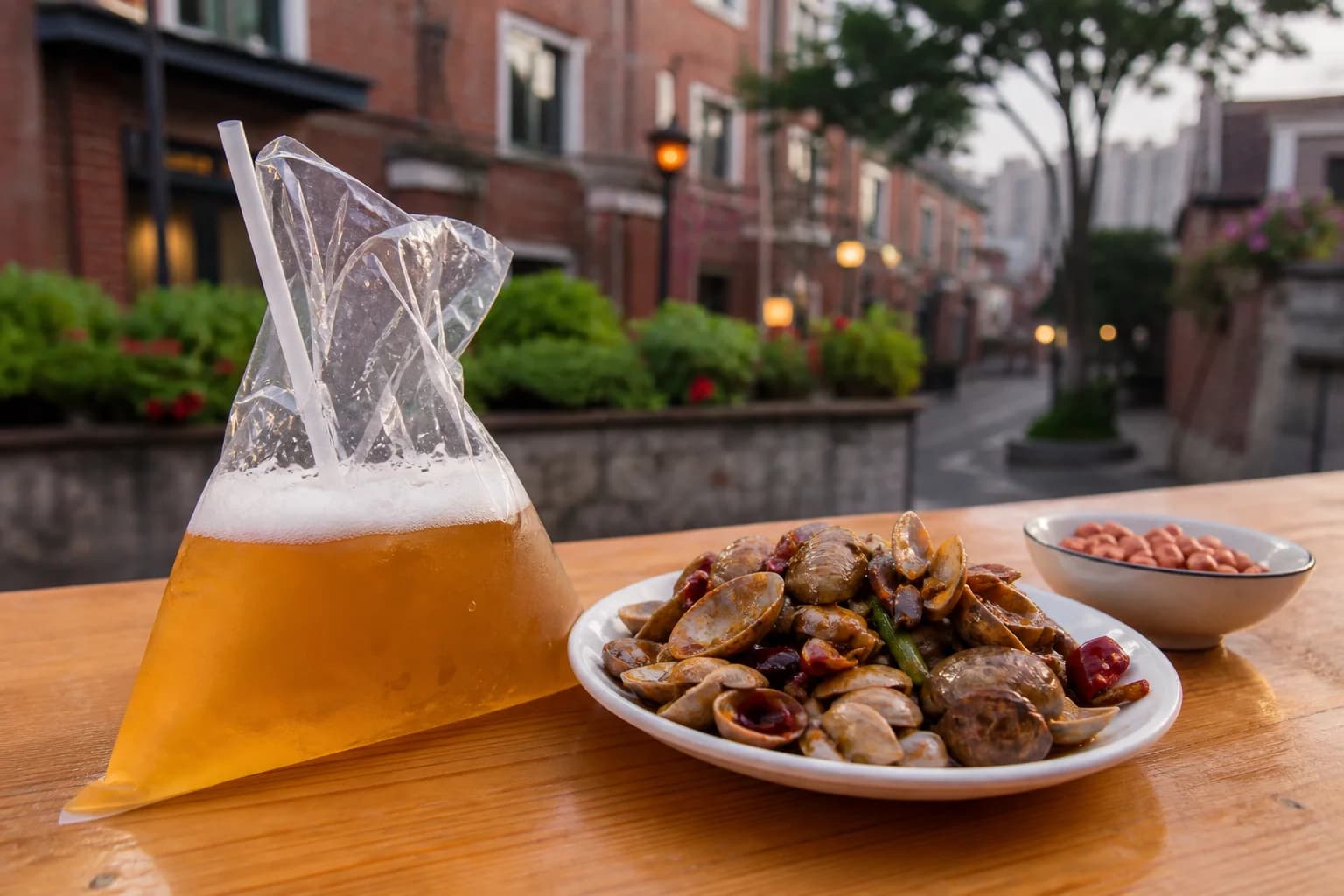
If you try bagged beer, choose a busy, clean seller; ask when the keg was opened; check the price and volume; and drink it promptly. Pairing beer with spicy stir-fried clams (辣炒蛤蜊) is more locally specific than ordering generic “beer-battered seafood.” For shellfish, choose a reputable restaurant, confirm prices before ordering, and avoid raw or poorly handled seafood.
What to Eat Nearby
Walk to Taidong Pedestrian Street for breadth and evening energy rather than assuming every restaurant on Dengzhou Road is automatically special. Good targets include spicy clams, grilled squid, dumplings, pot stickers and other Jiaodong-style dishes. Use three checks:
- Seafood prices should be visible or confirmed before weighing.
- Choose a shop with steady local turnover and clean holding tanks or preparation areas.
- Order one or two dishes first; beer plus a large seafood spread becomes heavy quickly.
Travelers who do not drink can focus on the building, industrial history and Taidong food. Families should avoid scheduling the museum too close to a late train, because queues and optional experiences make the exit time variable.
Where to Stay and What to Pair
Stay near Zhongshan Road / Qingdao Station for the old town and the easiest first-day walking routes, or around May Fourth Square / Hong Kong Middle Road for a more central base between the old city and eastern coast. The museum alone is not a reason to move hotels; Taidong is easily reached by metro from either zone.
Compare Qingdao hotels on Trip.com, checking the walking distance to a Line 1 or Line 2 station rather than trusting a broad district label.
Pair the museum with Taidong and, if energy holds, one coastal area later in the day. Do not combine it with Mount Lao: the mountain deserves its own early start and full daylight window.
Four Mistakes to Avoid
- Copying a fixed ticket price without checking which halls and tastings it includes.
- Arriving at closing time instead of the earlier last-admission cutoff.
- Treating the tasting as the whole purpose and rushing Hall B.
- Driving, cycling in traffic or swimming after drinking.
The museum is most memorable when it connects three Qingdao layers: a historic factory, a global beer brand and an ordinary local drinking custom. Follow that sequence, then let Taidong supply the food chapter.