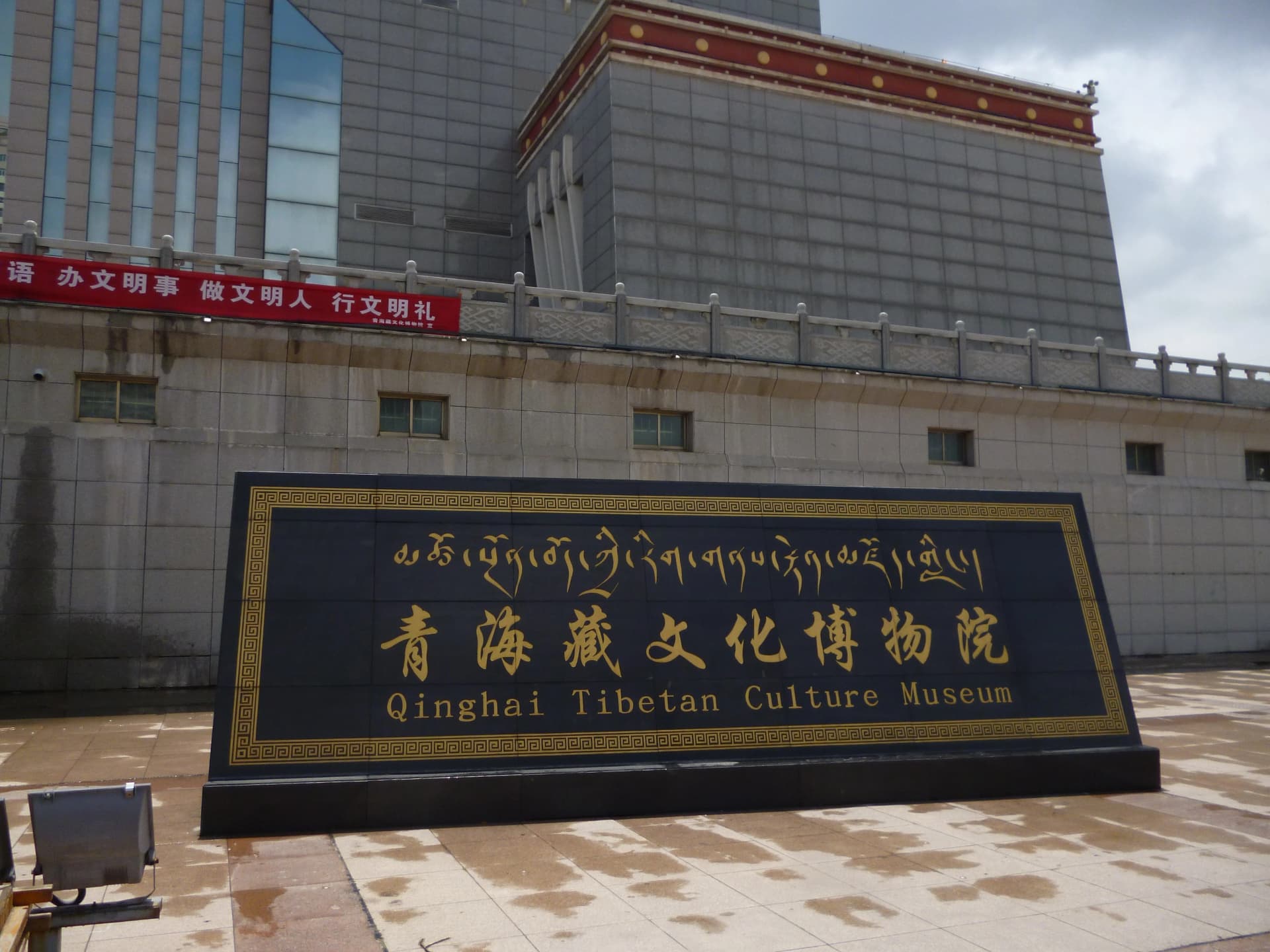
Qinghai Tibetan Culture Museum
The Qinghai Tibetan Culture Museum in northern Xining is a substantial museum complex rather than one quick gallery. Visitors commonly distinguish a north building focused on Tibetan medicine from a south building with broader cultural exhibitions and the monumental painted thangka scroll. Allow two to four hours depending on the building combination.
Decide before arrival
If time is short, prioritise the south building's cultural galleries and long thangka display. Travellers with a specific interest in medicine, anatomy and historical medical practice should add the north building. Separate admission or reservation arrangements may apply, so check the current official notice rather than relying on an old bundled price.
Save the full Chinese building name and entrance. “Tibetan medicine museum,” “Tibetan culture museum” and “Qinghai Tibetan Culture Museum” can lead maps or drivers to different gates within the broader complex. Ask at the first desk whether your ticket and identity check cover both buildings.
Two workable ways to spend the visit
Culture and painting first: go to the south building and make the long thangka your main stop. Ask for its location on the current floor plan before starting the other galleries. After seeing the scroll, choose one or two cultural sections that interest you. This keeps the centerpiece from becoming a hurried final room after your energy has gone.
Medicine as a second subject: add the north building when you want to learn about Tibetan medical history and practice. Treat it as a separate subject with its own time allowance. North-building access does not establish which south-building or special-exhibition ticket you need; confirm the building and exhibition name before buying.
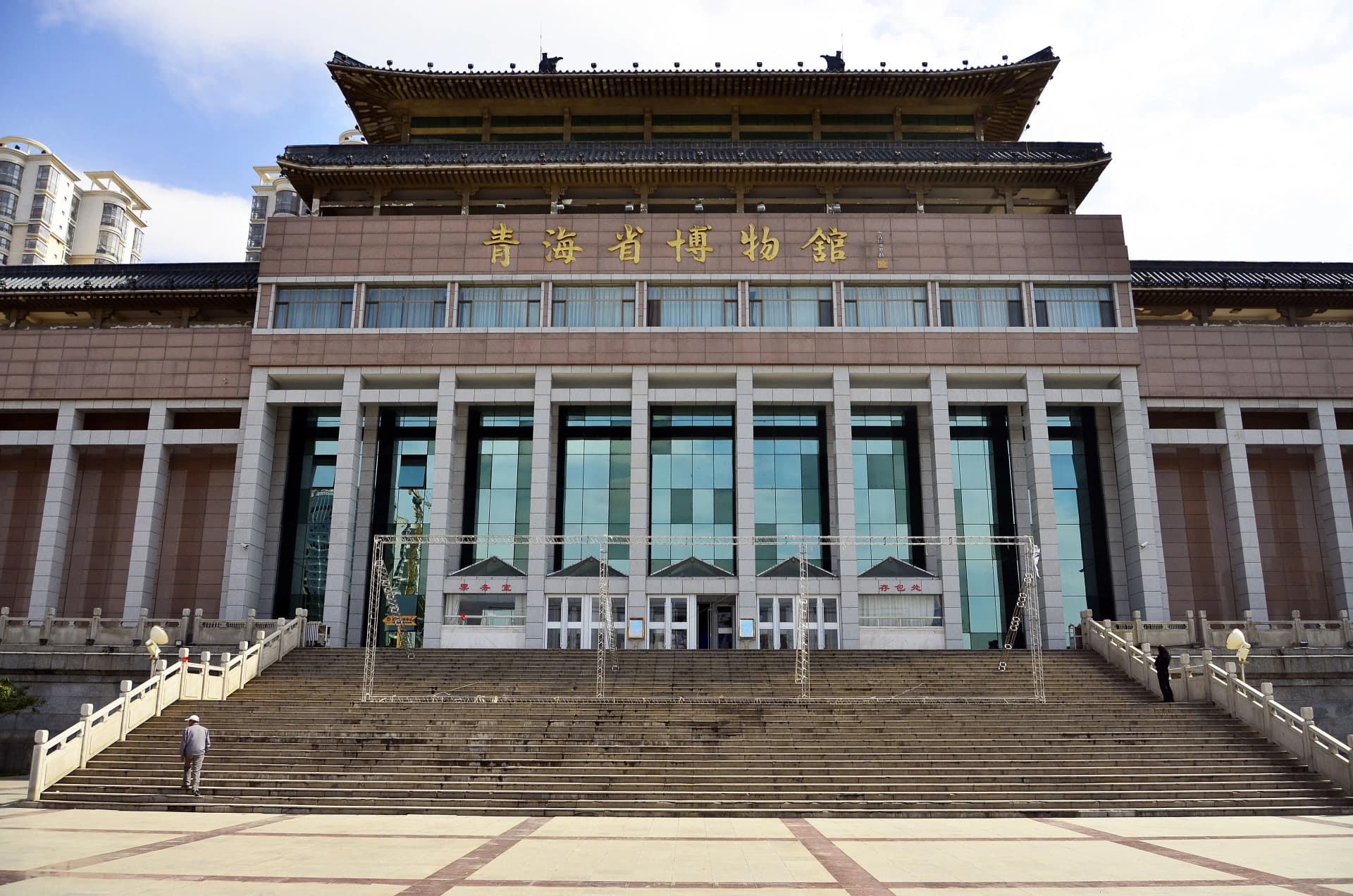
For a shorter visit, finishing the south building well is a complete choice. The Provincial Museum offers a different, broader introduction to Qinghai, so it can occupy another city day rather than becoming a second large museum immediately afterwards.
Allow about two hours for one building or three to four hours for both with a break. Do not count the walk, security and ticket procedure as gallery time. If you have just arrived at altitude, one building followed by lunch is often more useful than pushing through the whole complex while tired.
Read the long thangka intelligently
Do not treat its length as the only story. Use the introductory panels to identify cosmology, history, medicine, arts and daily-life sections, then slow down at a few panels. A translation app helps where English interpretation is limited, but keep the phone away from restricted exhibits.
The scroll is a modern monumental work drawing on traditional thangka forms, not one ancient painting preserved intact for centuries. Read the date, artists and production explanation on site. Distinguish religious iconography from ethnographic scenes and avoid reducing the work to a record-breaking photo.
In the medicine galleries, treat historical diagrams and treatments in their cultural and scholarly context. Museum interpretation is not personal medical advice, and visitors should not use an exhibit or retail product to diagnose or treat a condition.
Make the day comfortable
The complex is north of the main tourist centre. Build in a meal and rest, especially during the first altitude-adjustment day. Do not add Kumbum and the full two-building museum unless you have private transport and a deliberate fast pace.
Check the current closing day, timed entry, passport procedure, last admission and any separate thangka-gallery ticket with the museum. Carry the original registered passport and use the staffed desk if the online form fails. Large bags, food, flash and tripods may be restricted.
Mobility needs should be confirmed building by building. Lifts may connect galleries while long corridors and the scale of the thangka display still require walking. Ask for the accessible entrance and available seating before starting.
Choose this museum for a focused introduction to Tibetan cultural and medical traditions in Qinghai. Choose the Qinghai Provincial Museum instead for a broader regional archaeology and history overview, or visit both on separate days if museums are a central purpose of the trip.