Haikou Qilou Old Street
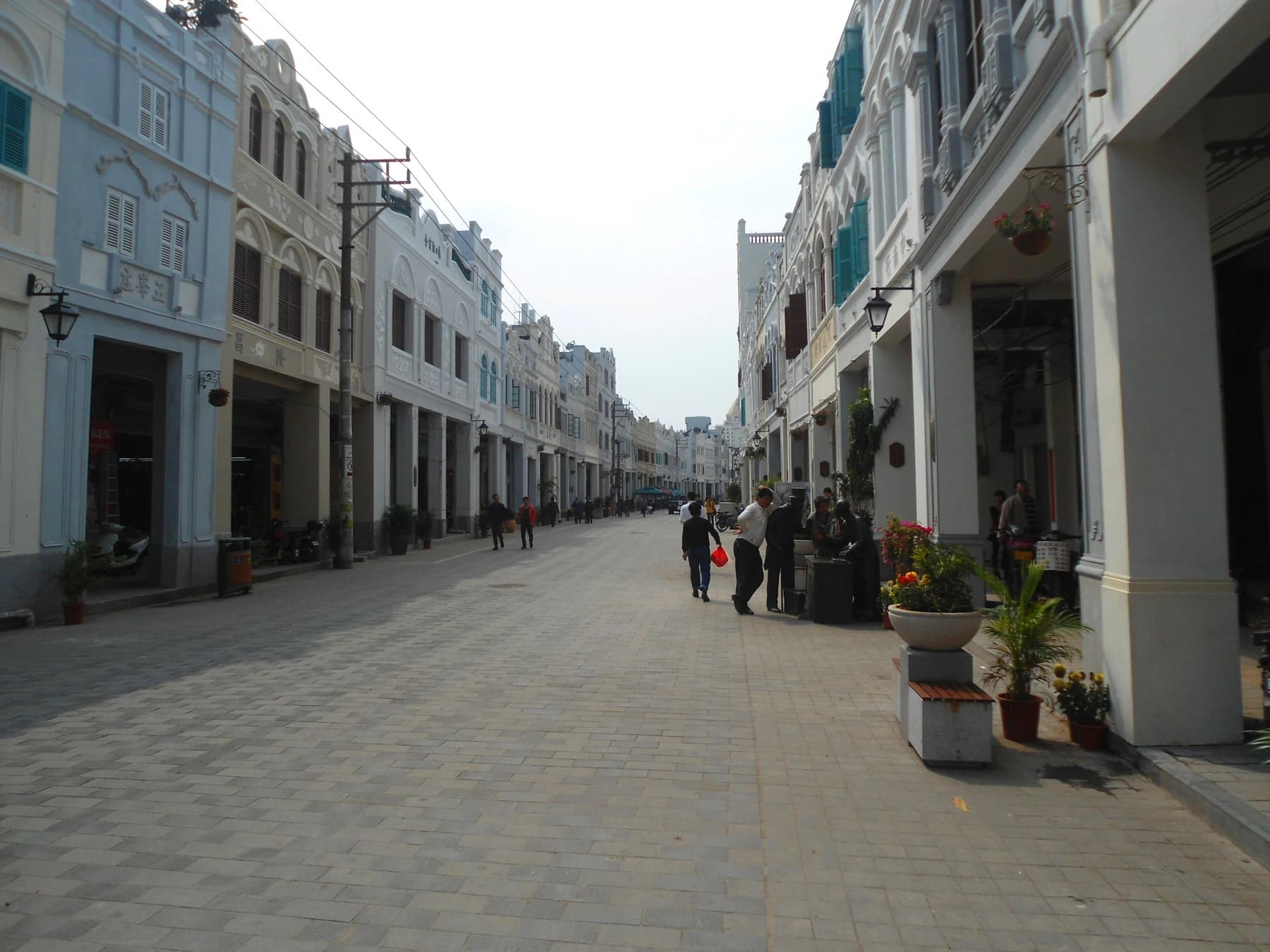
Haikou's covered arcades emerged from commerce, climate and overseas links. Their value is not one photogenic block: it lies in how shaded pedestrian space, upper-floor façades, warehouses, side streets and the riverfront still connect.
A directional 90-minute route
Start in the Zhongshan Road core, move through two or three side streets and finish at the Haikou Clock Tower. The verified old-street-to-clock-tower walk is about 0.4 km / 6 minutes, but allow time to compare buildings rather than walking directly.
Look for ventilation, column rhythm, balconies, decorative plaster and the transition between restored façades and ordinary commercial use. A polished frontage may be reconstruction; a worn shopfront may preserve more everyday continuity. Neither should be assumed from appearance alone.
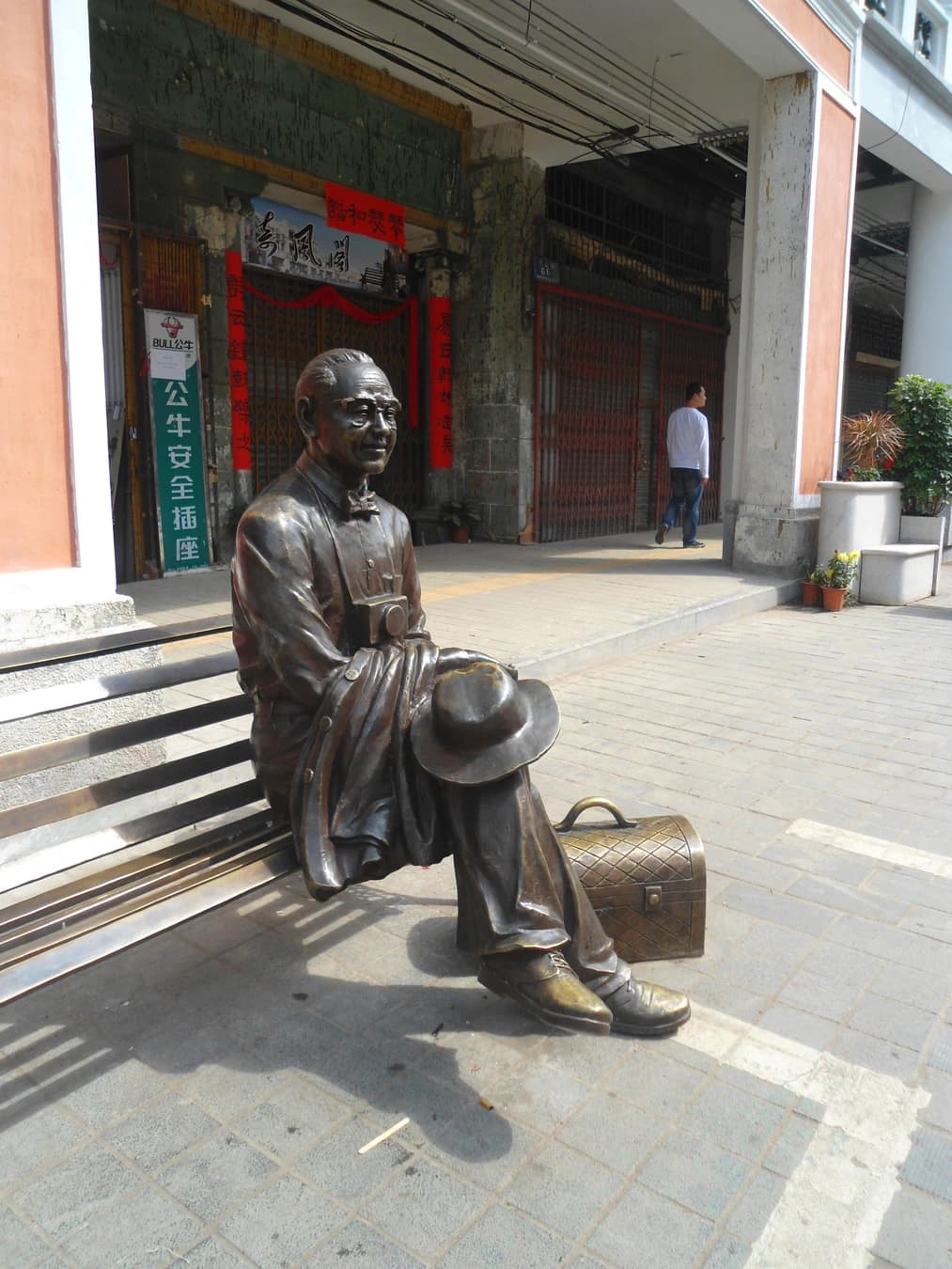
Port and migration context
The architecture reflects Hainanese movement through Southeast Asia as well as local responses to rain and heat. Do not call every arch “colonial.” Ask who financed a building, what business used it and how imported vocabulary was adapted locally.
Separate fabric from atmosphere
Walk in daylight first. Compare upper floors, where architectural detail survives, with ground floors adapted to current commerce. Side streets can retain ordinary repair, storage and neighborhood use that the main pedestrian section hides. Do not enter an upper level or courtyard unless it is clearly public.
Recent local reports frame Haikou as a city for slow eating, parks and sea breeze rather than a dense attraction checklist. Qilou fits that rhythm: one architectural loop, one food stop and the riverfront are enough. Some businesses close or reduce service in the afternoon, so a viral queue is not a dependable meal plan.
Food without the checklist
Try one bowl of Hainan noodles, a laobacha session or qingbuliang rather than joining every visible queue. Confirm price units, portion size and whether food is cooked or assembled to order. The dedicated Qilou Snack Street is a themed commercial plaza and should not be confused with the historic Bo'ai–Zhongshan fabric.
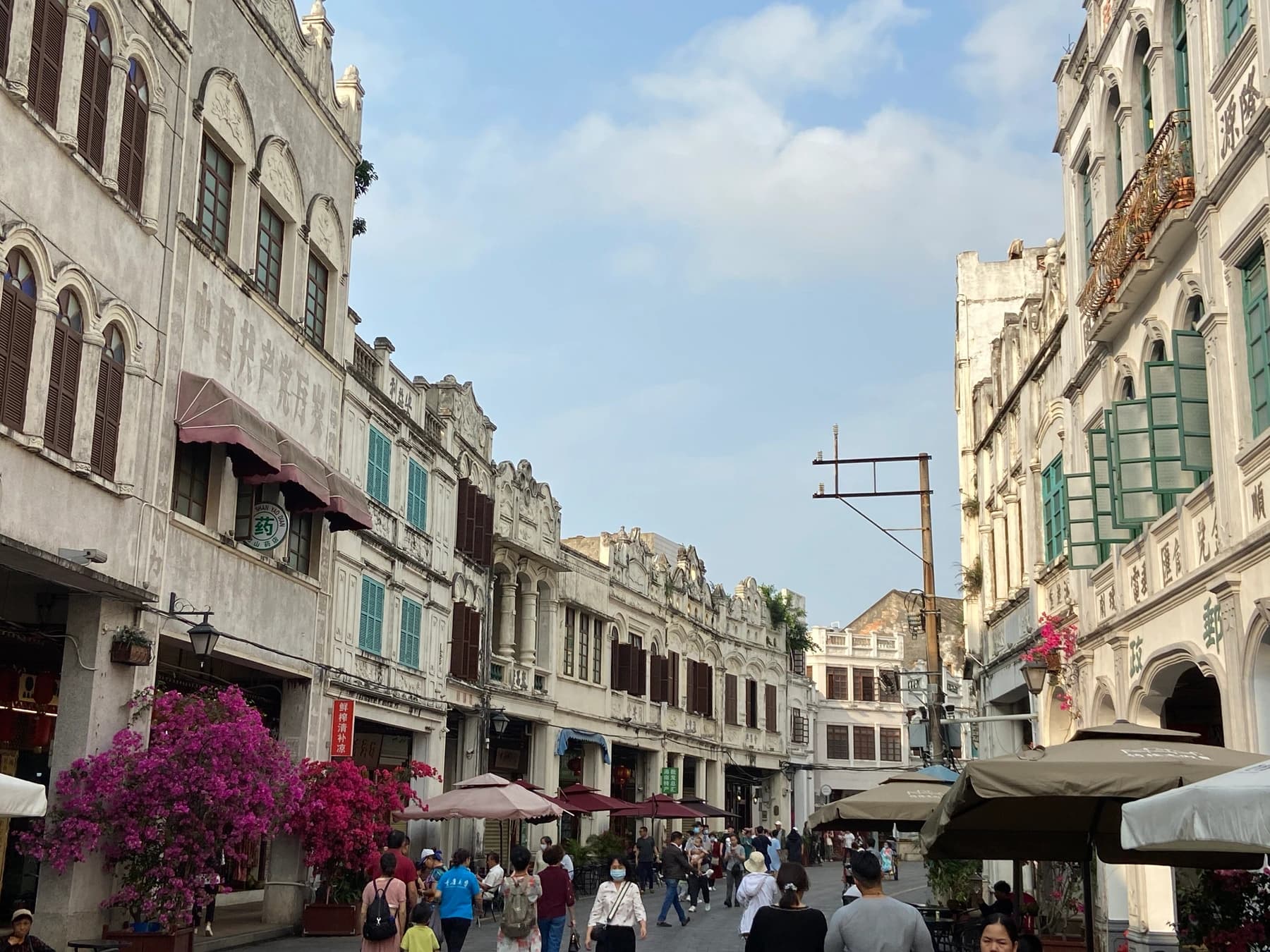
Photo: McNamara · Source · CC BY-SA 4.0
Begin in daylight for architectural detail. Stay into evening only if the added atmosphere is worth the greater food-street emphasis. In heavy rain, the arcades help, but water, scooters and uneven paving still require attention.
Practical route notes
Save 海口骑楼老街 and 海口钟楼 separately. Use a ride-hail or bus to the edge of the district, then walk; cars cannot reproduce the lane experience and may leave you on the wrong side of a traffic control. Keep valuables close in crowded food areas and use marked crossings near the river.
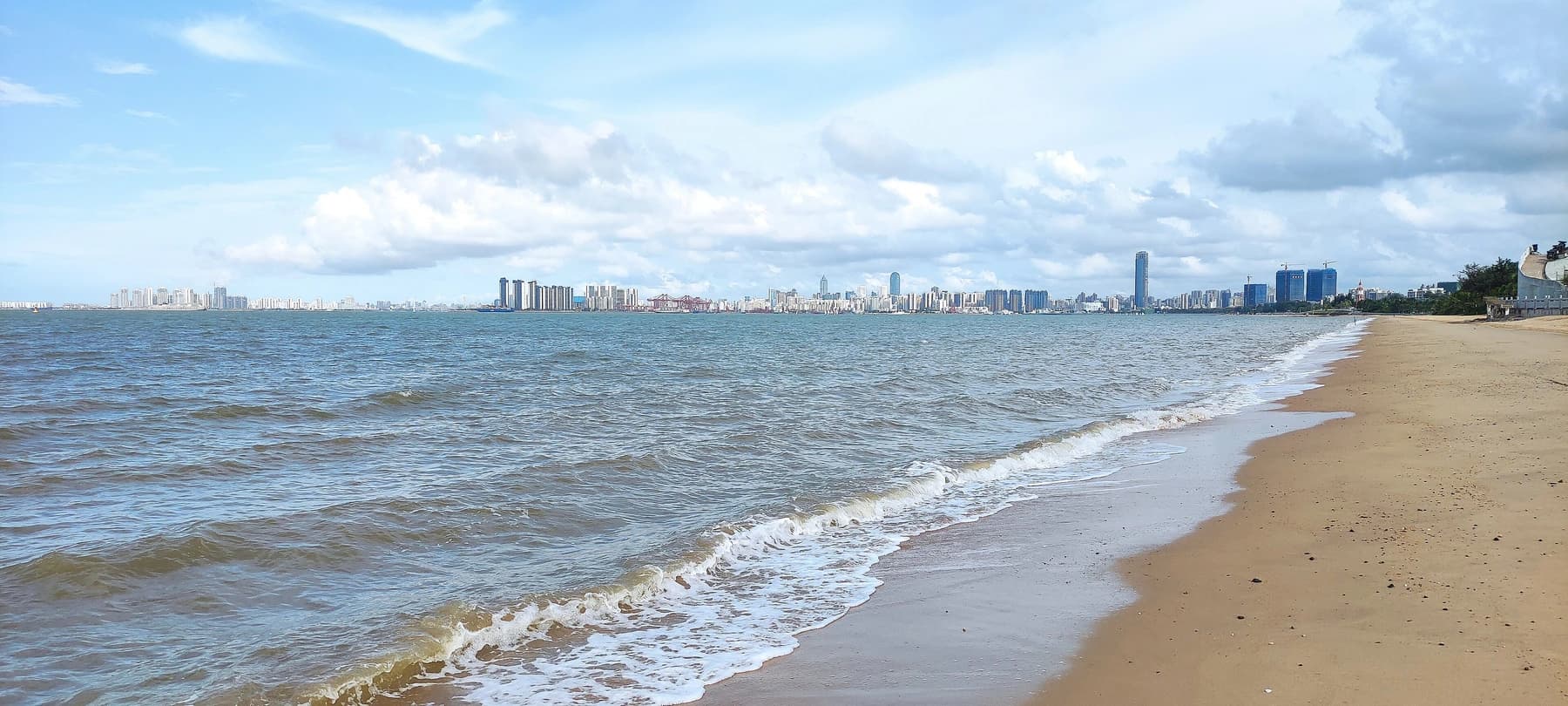
For a longer day, continue west toward the waterfront only after checking heat and distance. Cloudscape Library interior access may require a current reservation, so treat its exterior as the dependable endpoint. The Hainan government city guide provides official destination context; individual shops and exhibitions still need live confirmation.