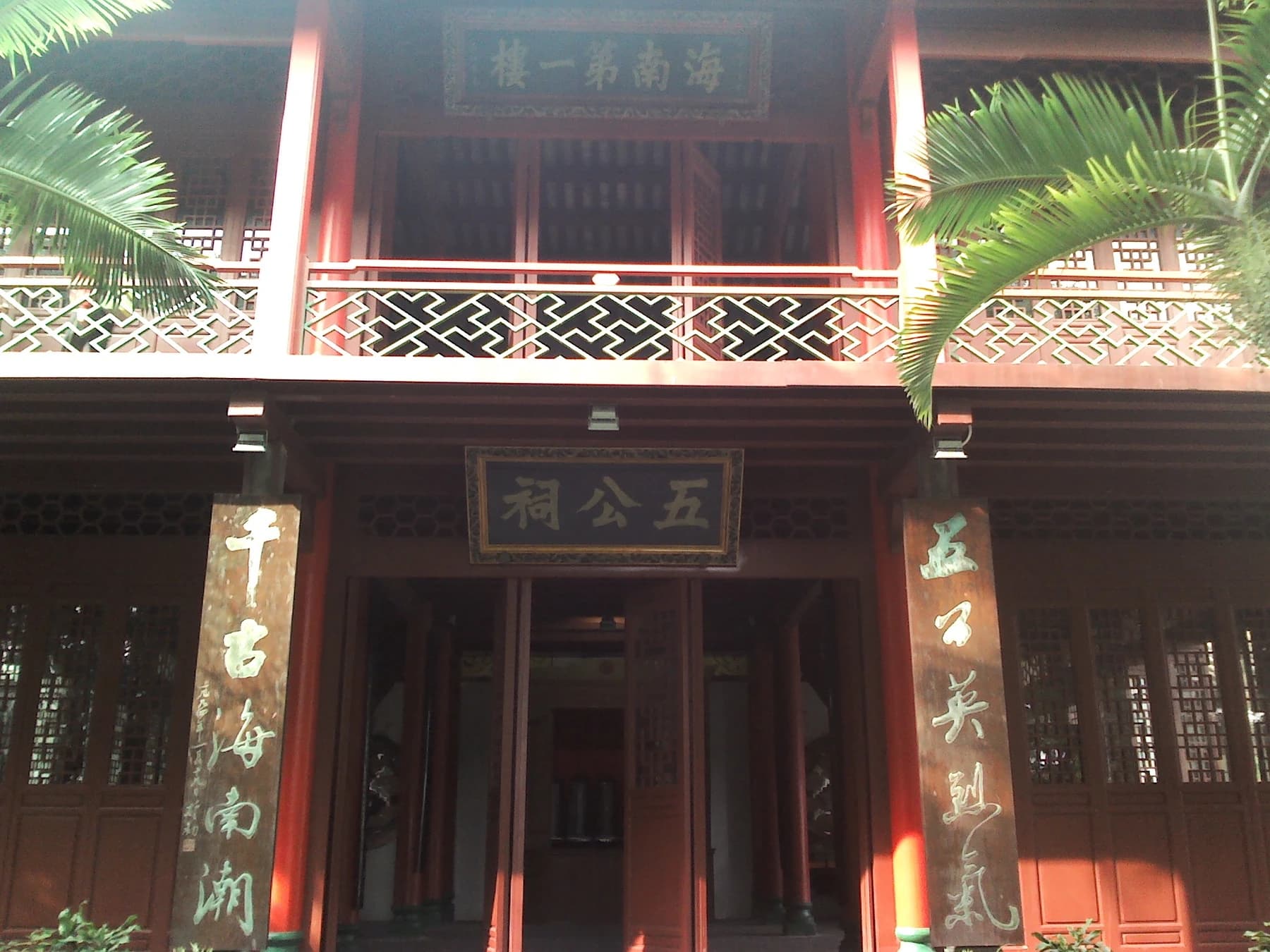
Dongzhai Harbour Mangrove
The mangrove system is an ecological landscape, not a guaranteed boat ride or bird checklist. Its meaning lies in tidal channels, salt-tolerant vegetation, nursery habitat and coastal protection. Make it a separate east-Haikou excursion.
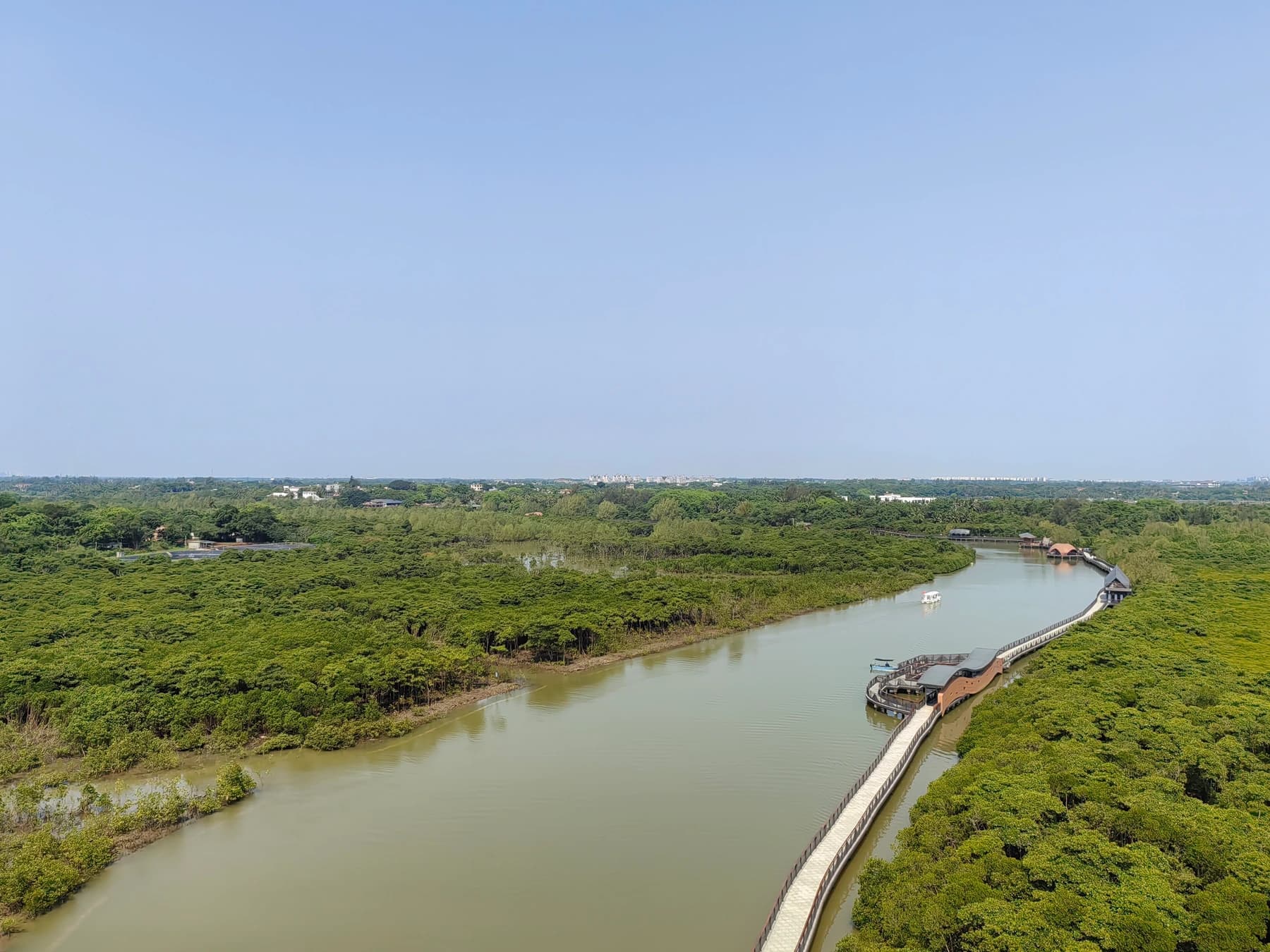
Photo: Yumeto · Source · CC BY-SA 4.0
Choose an authorized product
Before leaving, verify the currently open visitor entrance, whether a boardwalk or boat is operating, passport or ticket requirements, the final departure and typhoon/rain controls. A generic map pin can lead to a reserve boundary or village road rather than a legal visitor entry.
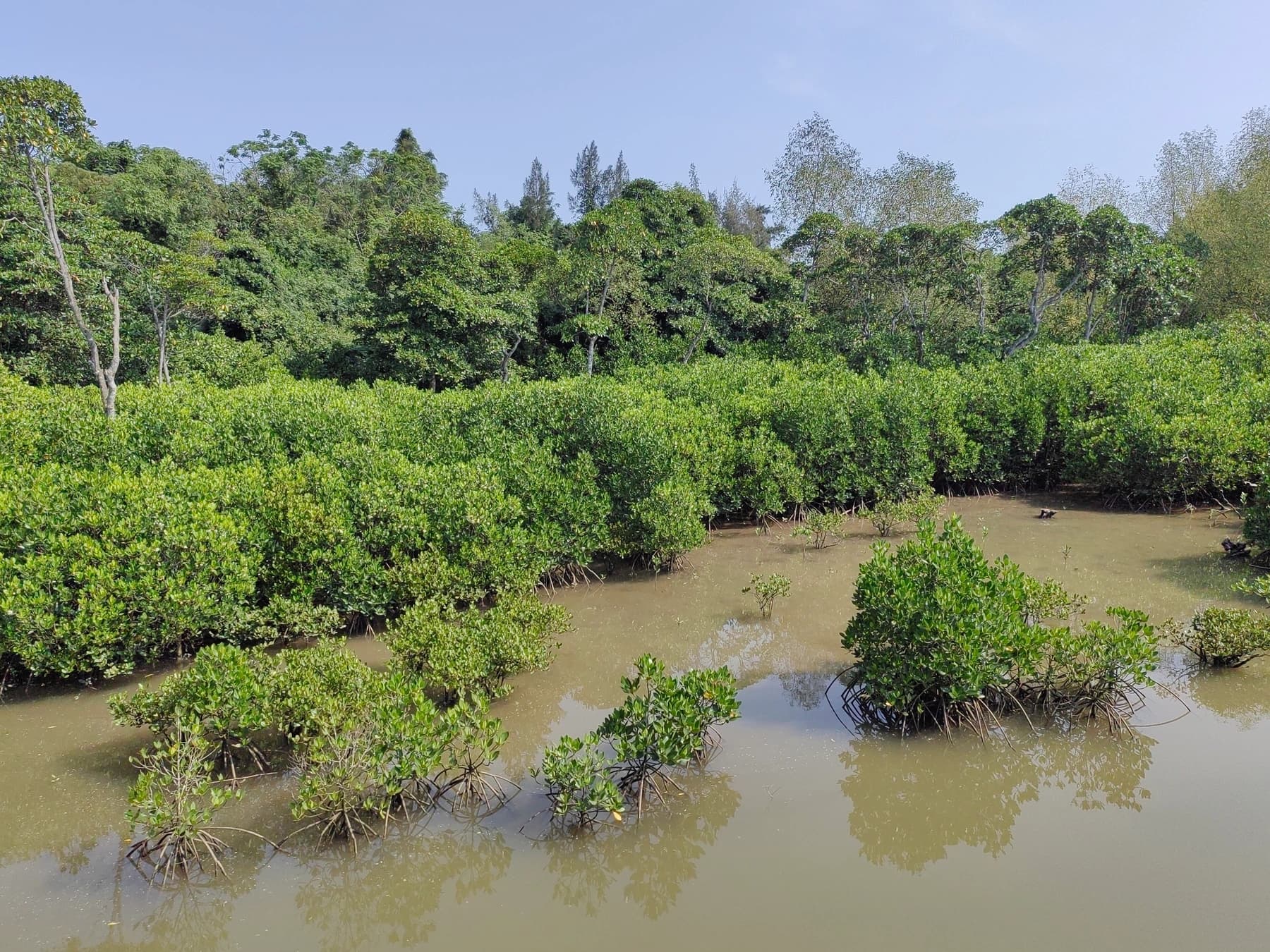
Photo: Yumeto · Source · CC BY-SA 4.0
Tide changes what is visible. Low water may expose roots and mudflat processes; higher water emphasizes channel structure. Neither is universally “best.” Wildlife remains unpredictable, and an ethical operator should not chase or feed birds for a closer photograph.
Read the wetland without a species checklist
Begin with the visitor interpretation, then look for the relationship among roots, water level, mud and human access. Binoculars are more useful than moving closer. A quiet visit may reveal fewer birds but still explains how mangroves buffer a low coastal landscape and support aquatic life.
Ask any boat operator who authorizes the service, the exact route, duration, life-jacket policy and weather cancellation terms. Do not board an informal vessel from a village edge because a social post labels it a “secret route.” Engine noise, wakes and close wildlife approaches are not signs of a better nature experience.
Give the boardwalk time
Allow roughly one to two hours on site, separate from travel from Haikou; add a buffer if choosing a boat with a scheduled departure. Move slowly along the open boardwalk and pause where you can observe without blocking others. Compare exposed roots with water-covered sections; if you notice movement on the mud, watch from the boardwalk rather than approaching it.
Alternate these close observations with wider channel views. That gives the visit a purpose even when few birds appear. In heat or heavy mosquitoes, shorten the walk after seeing those two landscape scales and preserve time for the return journey.
Who will find it worthwhile
Choose Dongzhai for wetlands, birding or coastal ecology and accept that the trip is shaped by tide and season. It is not the best use of a first Haikou day for travelers mainly seeking old streets, food and a relaxed waterfront. Local visitor reports often value central Haikou precisely because it works at a slower pace; the mangrove is a specialist half-day, not a compulsory city sight.
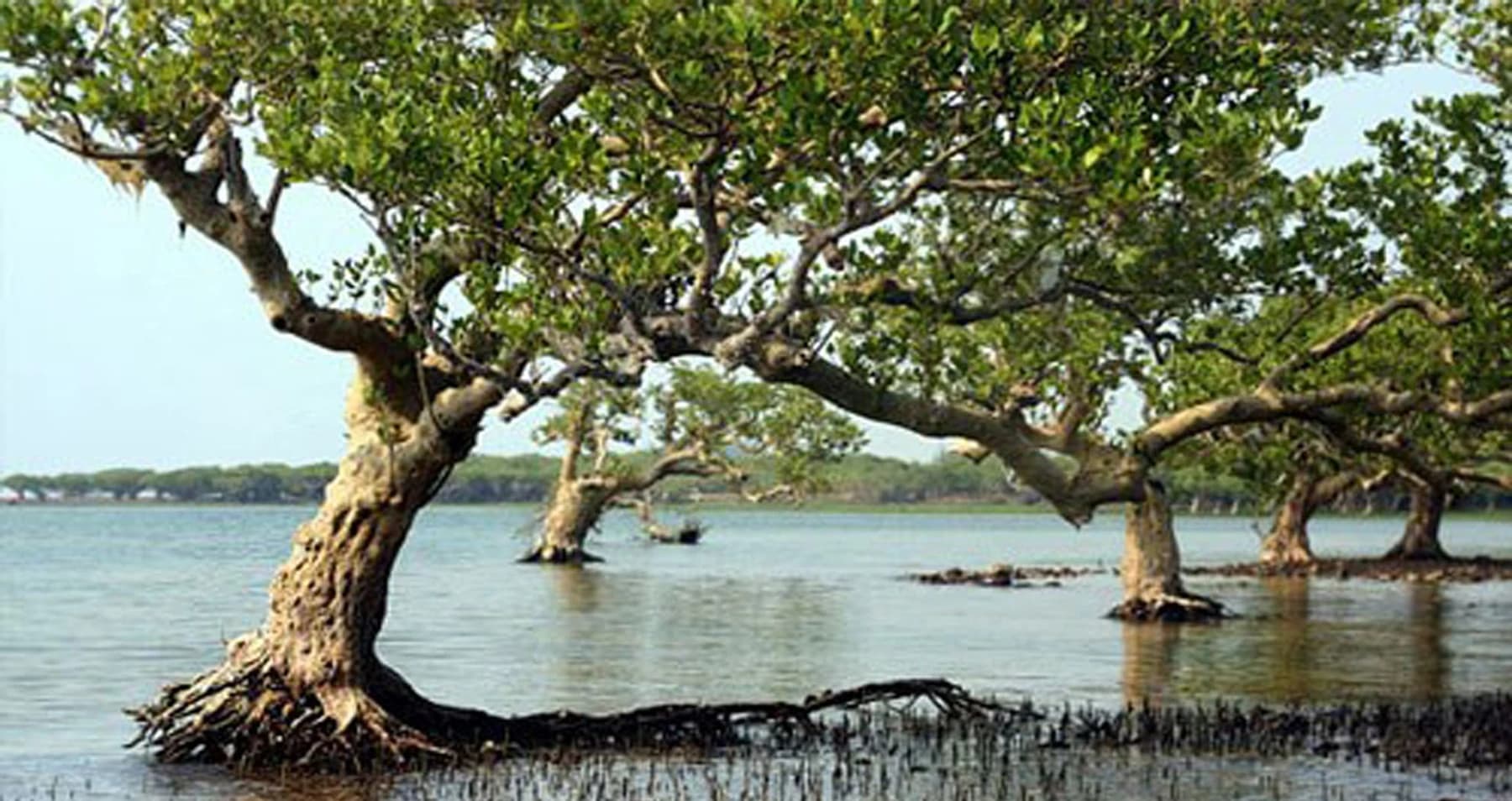
Photo: Philg88 · Source · CC BY-SA 3.0
Transport reality
Qilou Old Street to the visitor-area map location is about 31.8 km / 37 minutes by car in route planning before live traffic. Arrange the return rather than assuming immediate ride-hail availability. Carry water, insect protection and sun/rain cover, but avoid repellents or litter entering the wetland.
Do not combine Dongzhai with the western volcano. If weather closes the wetland, replace it with Hainan Museum or a short Qilou/waterfront day rather than improvising entry through an uncontrolled reserve edge.
For current destination guidance, start with the Hainan government tourism site. Confirm the visitor entrance and operator again on the day, because a protected-area name can cover much more land than the public route.