Huaxi Wetland Route
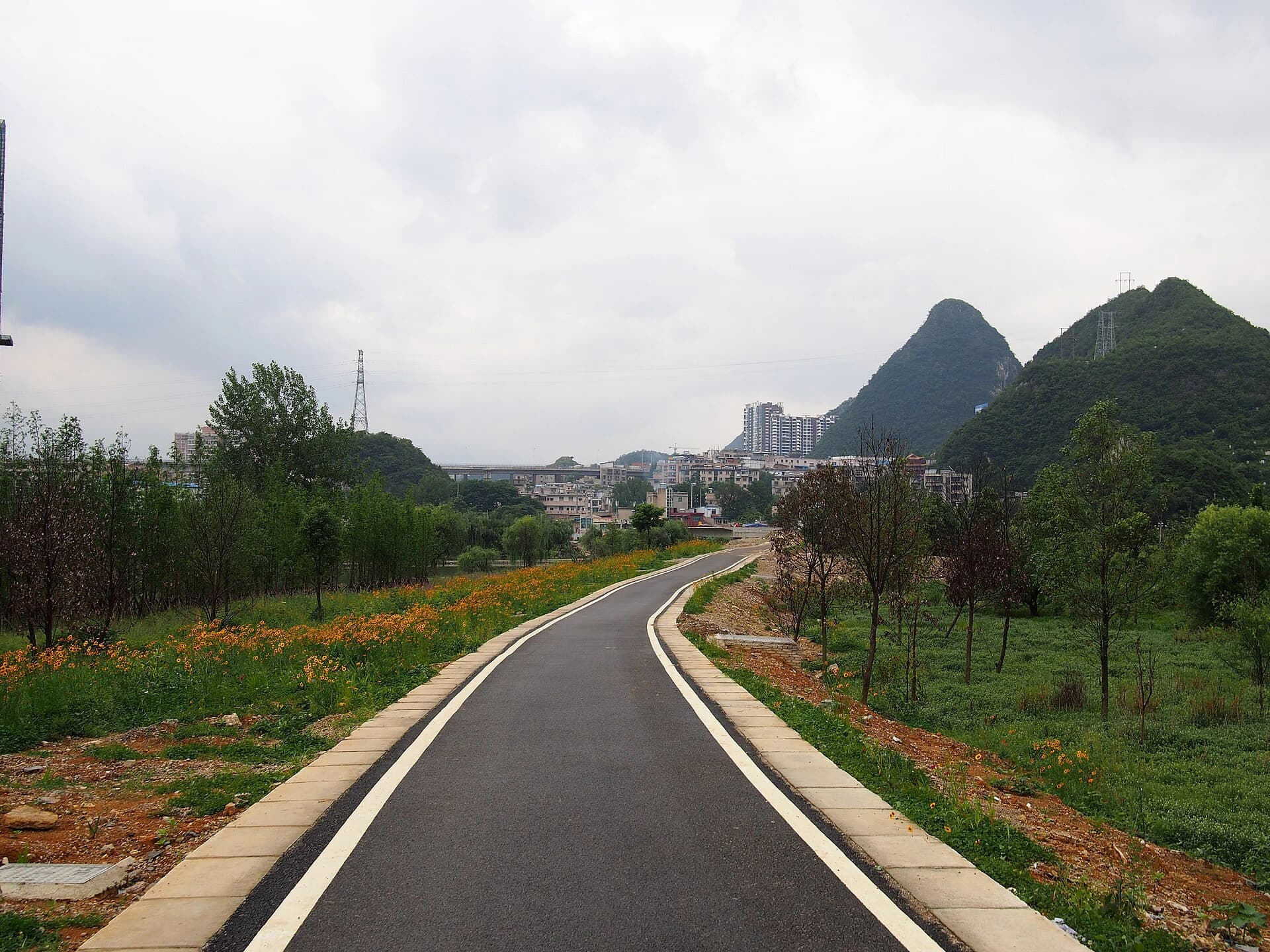
Huaxi Park, Shili Riverbank and the wider greenway form a large southern landscape system, not one compact attraction with a single gate. The best first visit is a defined stretch of riverbank for shade, water and a slower local rhythm. A roughly three-kilometre segment is enough for most travellers; online “Huaxi routes” approaching 100 kilometres describe a cycling concept, not an ordinary park visit.
Use Shili Riverbank Wetland Park, and Shili Riverbank metro station. AMap currently estimates 1.1 km / 14 minutes on foot from the station to the north visitor centre; confirm the open path from there to your chosen start.
The simple three-kilometre plan
Start from the Shili Riverbank side only after confirming which entrance connects to the open greenway. Follow one bank through the shaded river corridor and set a turnaround point at roughly half your available time. Do not keep walking on the assumption that the next exit will have a taxi pickup, metro connection or open bridge.
At a relaxed pace, allow 90 minutes to two hours for walking, photos and a rest. Families who rent bicycles may cover more, but that does not make a longer route automatically better. Recent visitors liked the shade and child-friendly cycling on a compact section; they did not establish that every greenway segment joins continuously.
For a first walk, make the outward half exploratory: follow open pedestrian branches toward the water, stop for views, then return by the route you now know. Set a time to turn around before leaving the entrance. If you have two hours, turning back after roughly 45 minutes leaves room for a seated break and the final connection out; it is more useful than chasing a distant park name.
Walking and cycling give different visits. One visitor preferred the waterside footpaths because some smaller stops were accessible only on foot; the cycling route they used sat farther from the water and included slopes. They also had to return their rented bicycle to its starting point in the rain. For frequent photographs and short waterside detours, walking avoids repeatedly locking the bike and retracing your steps. For cycling, enjoy the permitted through-route and choose fewer stops rather than expecting to ride every footpath.
Treat a longer ride toward Kongxuetang, Maiweng village or Huaxi Park as a separate extension. A promotional route links all of them, but 2026 riders describe about 10–12 km once the required return to the rental start is counted, not a continuous, flat six-kilometre loop or a one-way rental service. Bikes were also reportedly stopped at the Huaxi Park boundary. Choose an actual turnaround before committing; a casual river walk does not need to reach all three.
Walk or cycle?
Walk when this is a recovery half day, when paths are wet or when your group wants to stop often. Cycle only after confirming:
- the current operator and staffed return point;
- deposit, accepted payment and identification rules;
- whether the bicycle must return to the same station;
- whether child seats or small bicycles are actually available;
- which paths permit riding that day.
A bicycle visible in an old post is not proof of today's inventory. Recent prices quoted by visitors vary and are not an official tariff. Test both brakes, ask whether a helmet is included, photograph the rental terms and bike condition, and leave enough time to return it before the desk closes. Visitors also report no dependable luggage storage, so arrive with only what you can carry securely.
Timing, weather and exits
Early morning or late afternoon reduces heat and gives the route a more local, less touristic feel. Midday summer humidity can make even a flat path tiring. Early riders also report fast children and occasional collisions on crowded stretches: keep right where signed, slow before bends and dismount when pedestrian density makes riding unsafe. After heavy rain, check flood controls, mud, submerged edges and temporary barriers; do not step around a closure to preserve a planned route.
Save both the start and intended exit in AMap. If the exit looks isolated or ride-hailing availability is poor, use an out-and-back route. Carry water and insect protection, but do not expect a shop or toilet at every section.
Huaxi Park itself can be a calm morning or evening stop for nearby visitors. It does not always justify crossing the whole city, and it should not be confused with Qingyan, Tianhetan or the full wetland corridor.
What to combine
Pair this route with a meal or another low-pressure Huaxi stop. Tianhetan is possible only with an early start, a verified cave product and a protected return; otherwise each place deserves its own half day. Qingyan adds transport and hard surfaces, so the pairing is less gentle than it looks on a map.
Verdict
Good for a low-pressure half day when weather and path conditions are stable. The route becomes useful when the start, turnaround and exit are explicit—not when “Huaxi Wetland” is treated as a single giant loop.