Guizhou Provincial Museum
Use this museum to understand Guizhou before travelling deeper into the province. Its value is not a generic collection of “minority culture,” but a regional story told through archaeology, historical exchange, textiles, ecology and the material traditions of specifically named communities. Recent visitors who followed that story found a much stronger visit than those who arrived only to photograph a few promoted objects.
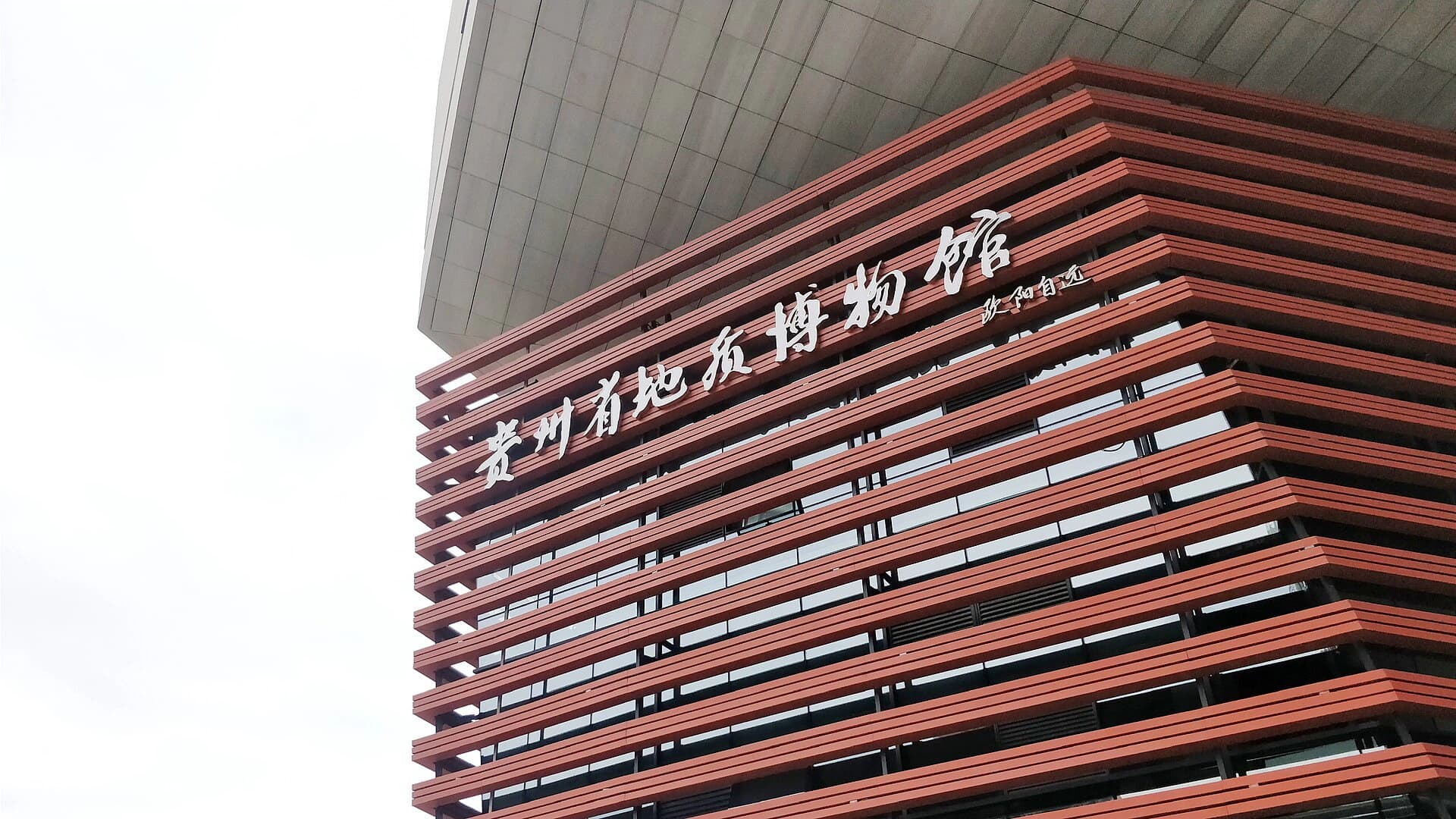
For a first Guizhou trip, this is the city's highest-priority museum. The separate Guizhou Geological Museum is better for fossils, minerals and karst science.
Use the verified Guizhou Provincial Museum pin in AMap. AMap estimates 5.8 km / 14 minutes by car from Guiyang North, or about 36 minutes by Line 1 including roughly 1.1 km walking.
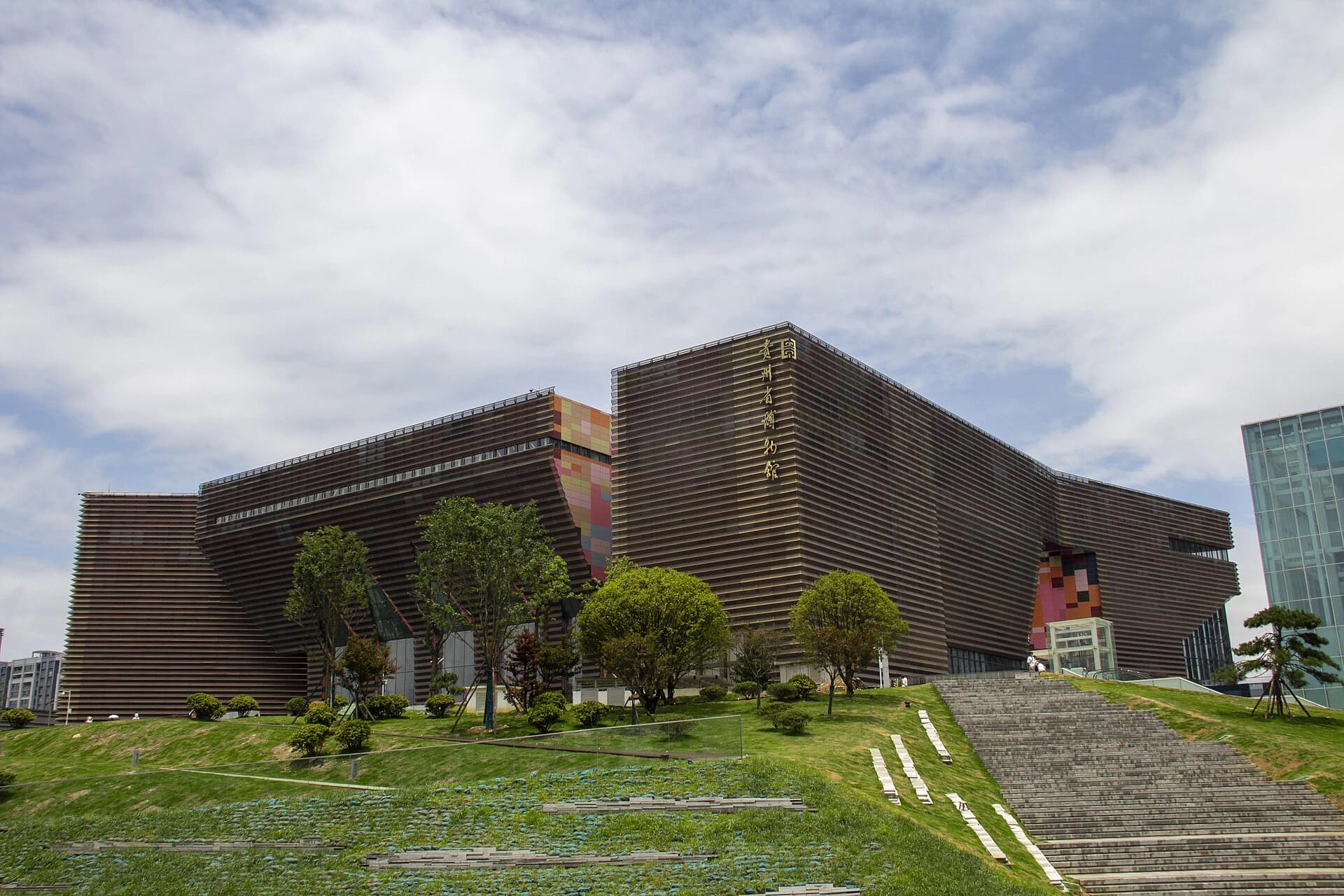
Photo: 維基小霸王 · Source · CC BY-SA 4.0
Admission and the published seasonal schedule
Admission is free but requires a real-name reservation through the museum's official WeChat account or “Guizhou Provincial Museum Portal” mini-program. The museum's 2026 notice allows booking up to 10 days ahead. Do not pay a third party merely to bypass a sold-out date: paid temporary exhibitions and 4D cinema are separate products, not proof that ordinary admission should cost money.
The 2026 summer extension ended on August 31. The published regular schedule is now Tuesday–Sunday 09:00–17:00, last entry 16:00; Monday closed, unless a dated holiday notice says otherwise. The former Saturday opening to 21:00 is not a September promise. Reserve early for weekends: the 2026 summer cap was 12,000 admissions a day and recent visitors still found sessions sold out.
The online form is designed around Chinese digital services. Foreign visitors should try the official booking channel first, carry the passport used for the booking and contact the museum in advance if the document field does not accept it. A successful reservation screenshot from somebody else is not an entry credential.
Build a two-to-three-hour route
The permanent exhibition Humanities and Landscapes, Peaks of Time spans three halls and six chronological chapters. Use those chapters as the route: prehistoric cave life; pre-Qin bronze societies; Qin–Han through the Northern and Southern dynasties; Sui–Yuan exchange; Ming provincial formation; and Qing social change. That sequence is far more useful than hunting a shuffled checklist across floors.
Choose three anchor objects, not fifteen. A practical set is the Western Han tiger-handled bronze cauldron for ancient Yelang, the Eastern Han bronze carriage for technology and rank, and one Ming or textile object for the later regional story. Read the label closely: one carriage in the display is an original while another element may be a replica, and famous works can rotate for conservation.
Interpretation matters because labels do not always supply enough context for an international visitor. The museum offers a companion mini-program, “Treasure Journey through Guizhou,” for the permanent exhibition. It will not solve every language barrier, but its object map is a better backup than an unofficial viral list. The museum has also advertised free scheduled talks and paid human interpretation; availability changes, so reserve a guide separately or self-guide by the six chapters.
Never copy, edit or borrow another visitor's reservation code. 2026 reports conflict about how strictly the gate checks it, but that inconsistency is not a safe or ethical plan. Bring the passport or identity document used in the booking and arrive in the booked session.
Practical pacing
- 90 minutes: one permanent-gallery sequence, suitable before a train or another Guanshanhu stop.
- Two to three hours: the best first-visit pace, with one temporary exhibition or a guided explanation.
- Half day: only for museum-focused travellers who read labels closely; otherwise fatigue reduces the value of the later rooms.
Weekday opening is usually easier than a summer weekend. The Saturday evening extension described above applied to July and August 2026. For a later visit, use the regular schedule unless a newer notice extends it; individual galleries and services may close earlier than the building.
The museum publishes free bag storage, wheelchair and stroller loans; wheelchair or stroller collection requires an identity document or a CNY 100 deposit. Photography, temporary-gallery restrictions and the exact open rooms can still change. Ask before using flash or tripods, and confirm the lift route between the three permanent halls if step-free access matters.
Verdict
High priority for a first Guizhou trip, particularly before Qingyan or a longer provincial route. Reserve through the official channel, use the permanent collections as the backbone and judge the visit by the regional story—not by whether one famous object happens to be on display.