Guizhou Geological Museum
This specialist museum explains why Guizhou looks the way it does. Fossils, minerals, palaeontology and karst processes turn caves and stone forests from scenery into a readable landscape. It is separate from the Provincial Museum: choose this one for earth science, or pair both only when your group genuinely enjoys museums.
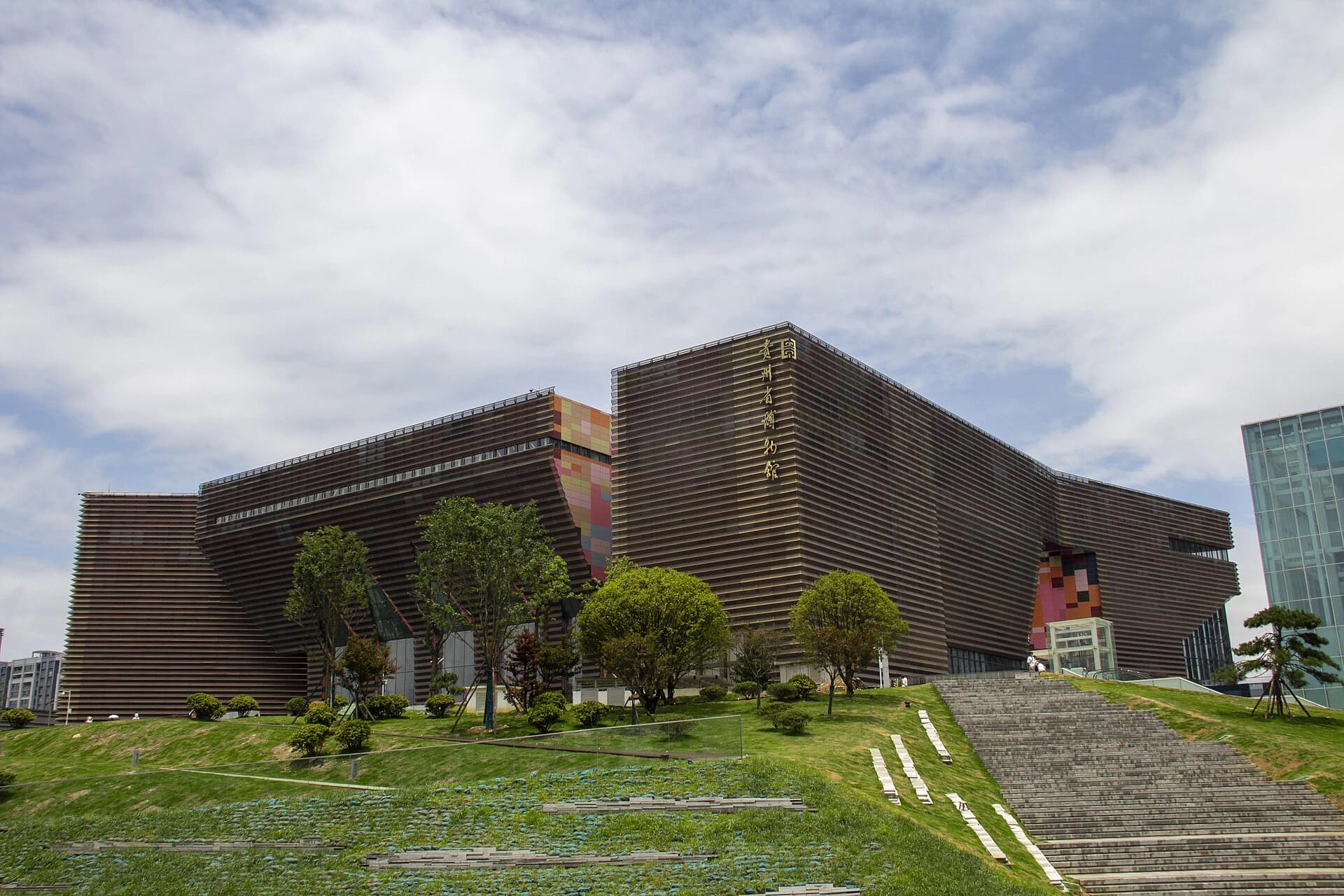
Use the verified Guizhou Geological Museum pin in AMap. From the Provincial Museum, AMap currently estimates 6.0 km / 17 minutes by car. Its mapped subway route takes about 54 minutes and requires roughly 2.1 km walking, so a car is the sensible transfer when combining them.
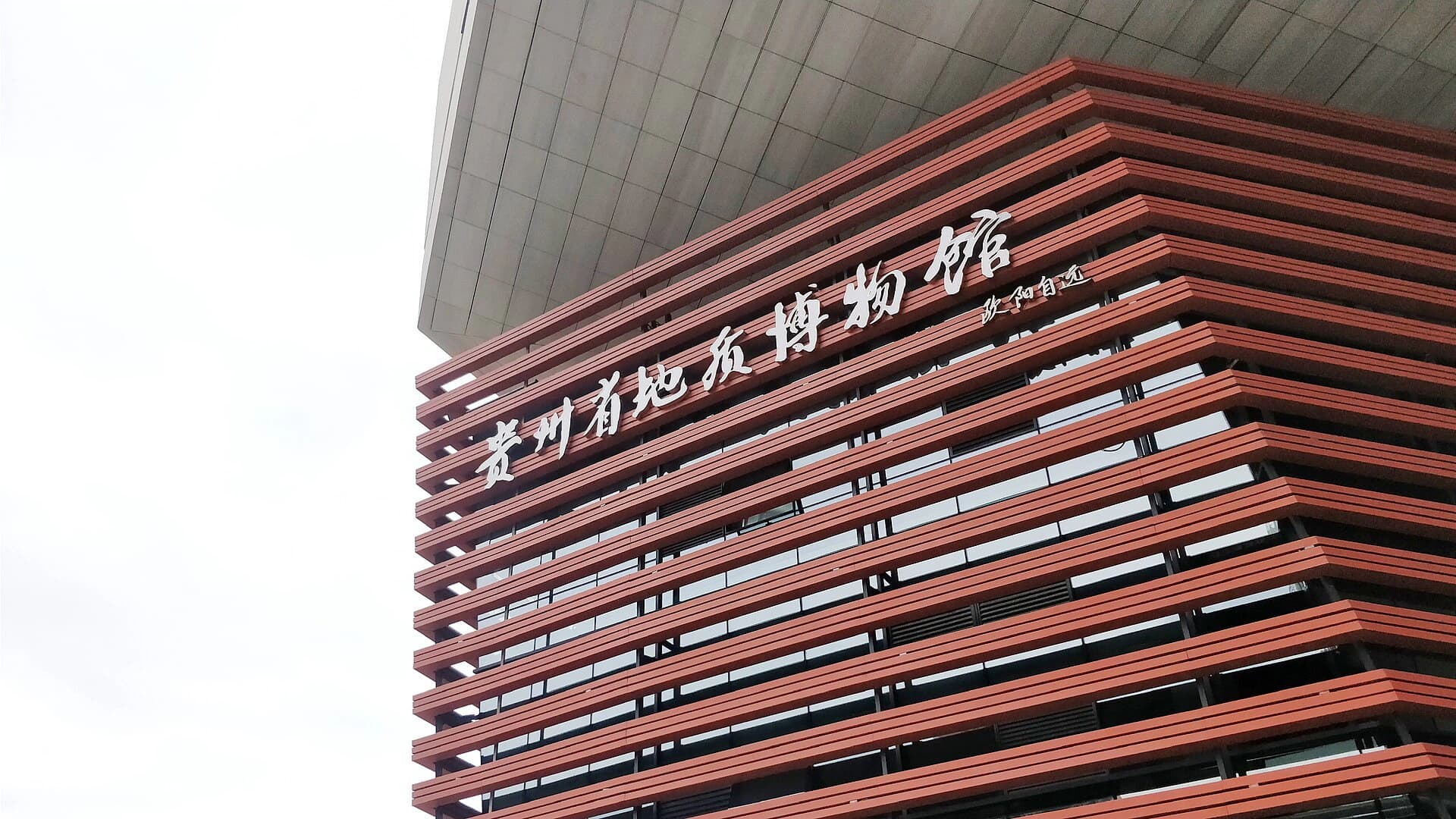
Photo: Buernia · Source · CC BY-SA 4.0
Who should choose it
The museum is strongest for families with school-age children, fossil and mineral enthusiasts, and travellers planning Tianhetan or a wider karst journey. It is also a useful rain-day anchor in Guanshanhu. Visitors seeking social history, textiles and a broad introduction to Guizhou should choose the Provincial Museum first.
Allow two hours for a focused route and up to four with children who stop at interactive displays. Current 2026 visitors describe weekend parking and crowd pressure. They also report that reservations are checked at the entrance, even though occasional older posts claim otherwise. Reserve every adult and child through the current official WeChat flow; do not travel across town expecting an unbooked exception.
The currently published baseline is free entry, Tuesday–Sunday 09:00–17:00, last entry 16:00, Monday closed unless a holiday notice changes it. The museum's booking history includes passport support, but digital forms change. Use the live form and call 0851-85801568 if the passport field fails rather than inventing an identity number.
A useful self-guided route
Use the four permanent-gallery names to orient yourself, then follow the current signs between them. This sequence moves from ancient life to landscapes, resources and the people who study them:
- Mysterious Guizhou (神秘贵州): ancient life. Make this the main stop for fossil enthusiasts. Compare body shapes and the surrounding rock, then read the provenance and specimen labels. A visitor particularly enjoyed the marine-life displays; use them to ask how the region's past environment differs from today's mountains.
- Colorful Guizhou (多彩贵州): the landscape outside. Give this section more time before a cave or karst excursion. Pick one explanation of how water and rock shape the land, then connect it to a place on your trip. Any hands-on activity should be explicitly marked for visitor use; a reachable fossil is not permission to touch it.
- Rich Guizhou (富饶贵州): minerals and resources. Look closely at a few contrasting specimens rather than sweeping past every case. Compare crystal shape, colour and the uses described on their labels. Do not identify a mineral by colour alone or treat the exhibition as gemstone-shopping advice.
- Advancing Guizhou (奋进贵州): the human story. Finish here if geological exploration and resource history interest you. With tired children or only two hours, give the fossil and landscape sections priority instead of rushing equally through all four.
At arrival, ask separately about interpretation and any cinema programme you want to attend. A 2026 visitor reports free public explanations at 10:00 and 14:30 and another found cinema seats sold out soon after opening. Treat both as day-specific: ask at the desk, secure a cinema place before entering if available, and keep the permanent galleries as the complete fallback.
For the most efficient family route, go from the first-floor ichthyosaur and crinoid fossils to the second-floor karst and mineral galleries, then decide whether children still have attention for later reconstructions and the basement paid or timed experiences. Do not promise a “dinosaur floor” or a 5D session until staff confirm the current layout and ticket.
Families do not need to read every panel. Let each child choose one fossil, one mineral and one karst feature to explain back to the group. That gives the visit a purpose and prevents the final galleries from becoming a blur.
Specimen, cast or reconstruction?
Read the object label. An original specimen, cast, composite mount, scientific reconstruction, scale model and immersive projection provide different kinds of evidence. A reconstruction can be excellent interpretation without being an original fossil; a dramatic media room does not prove a scientific claim by itself.
Before departure, use the museum's maintained WeChat or phone channel to confirm the reservation release window, passport/manual-entry route, open galleries, language support, bag rules and photography. Recent visitors report free bag storage and an accessible lift, but verify the actual step-free route if it matters. Parking may be free after showing a reservation code, yet spaces fill; Metro Line 2 to Xingzhu Road (兴筑路) followed by the signed walk avoids that uncertainty.
Pairing and logistics
The two major museums are close enough for a museum day, but not one continuous campus. Eat and rest between them. A same-day pairing works best when one museum is the main visit and the other is capped at two hours. Combining both with Tianhetan usually produces too much indoor reading plus a rushed cave journey.
Museum displays also do not authorize visitors to collect fossils, minerals or cave material outdoors. Protected landscapes and scientific sites have their own conservation rules.
Verdict
High value before Tianhetan or for curious families. Optional for travellers already saturated with natural-history museums—and better skipped than rushed between two unrelated city sectors.