Yang Pass
Yang Pass turns Dunhuang's western frontier story into a landscape you can stand inside. The surviving beacon remnant, open desert, poetry associated with departure into the west and museum interpretation give the stop its emotional and historical weight.
The experience also includes later reconstruction and contemporary visitor products. Reading those layers separately makes the visit richer: the beacon and terrain carry the archaeological story, while interpretation, reconstructed settings and performances offer different ways into it.
Choose the historical experience you want
Choose Yang when frontier history, poetry, trade routes and landscape interpretation matter. It can support a history-led pairing with Yumen Pass, provided the tour gives both real time.
If Yadan's geology is the day's clear priority, a shorter Yang visit can preserve more time for the landforms. For a history-led western line, keep enough time for explanation rather than accepting a rushed photo stop.
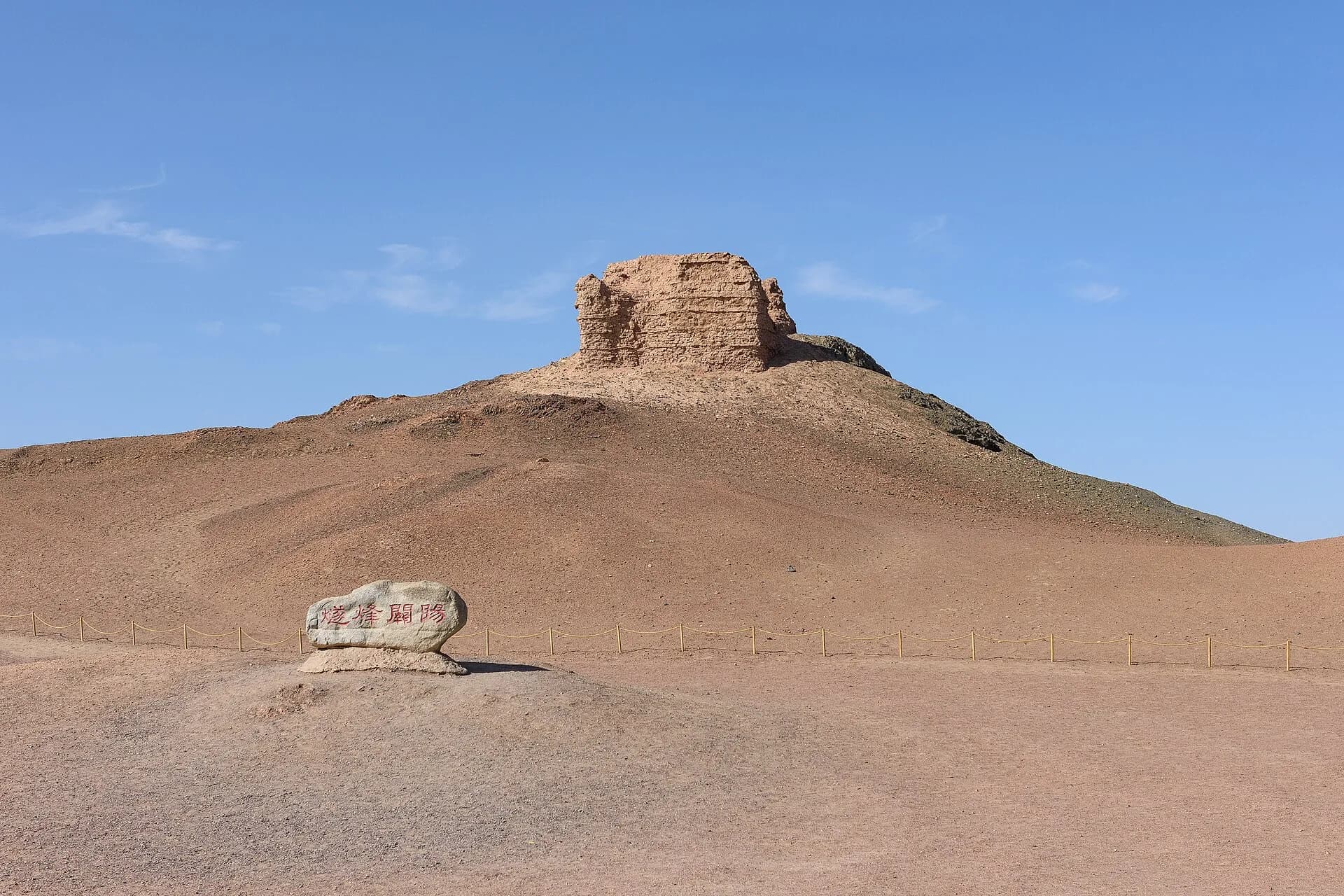
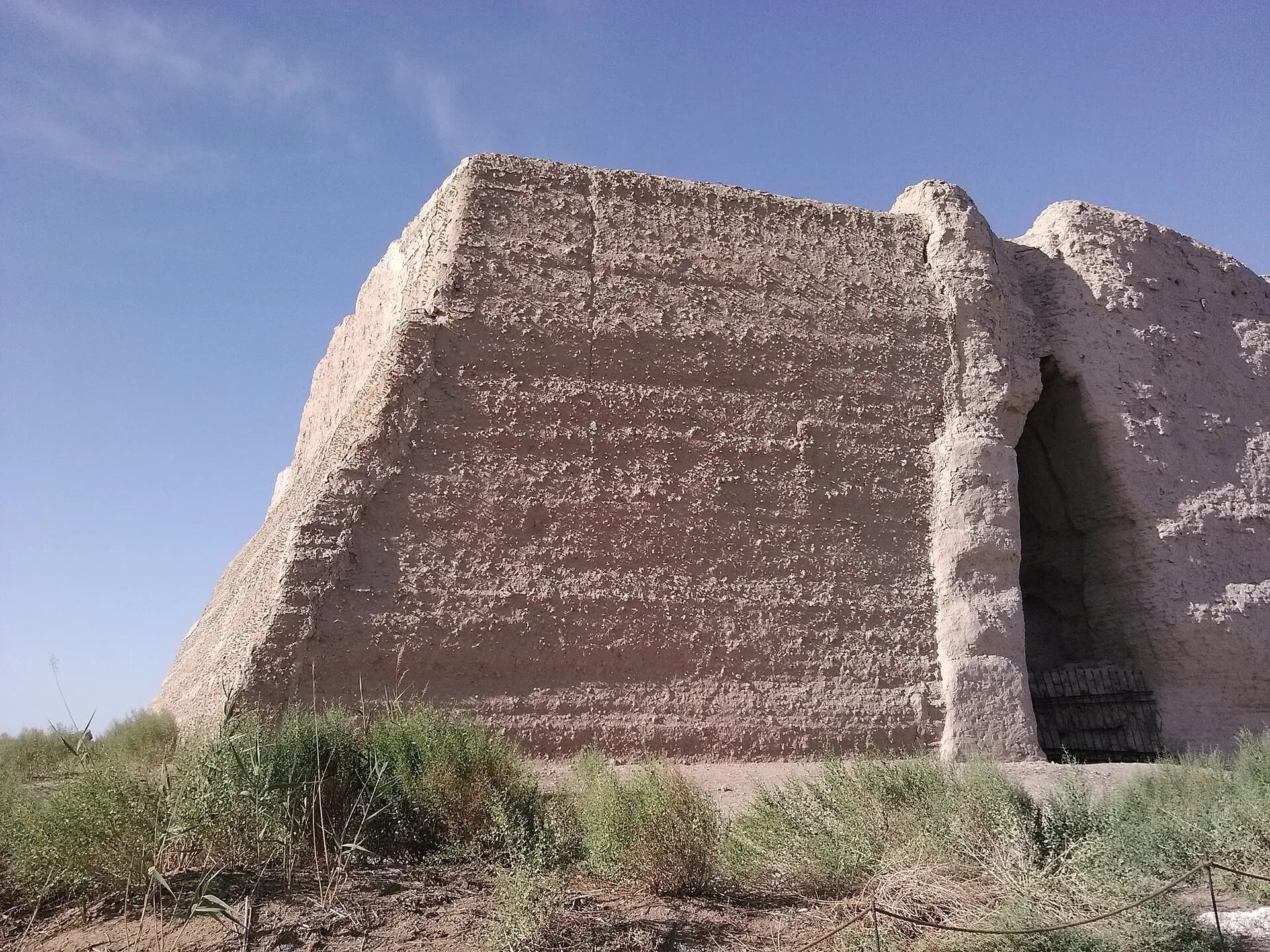
Photo: N509FZ · Source · CC BY-SA 4.0
Use the beacon remnant and surrounding desert slope to orient the surviving frontier layer before moving into the museum and reconstructed presentation areas.
Ask what each ticket component is
Current development around Yang and Yumen includes new visitor products and multilingual smart-guide work. Before buying, separate:
- base admission and museum or interpretation spaces;
- internal sightseeing transport;
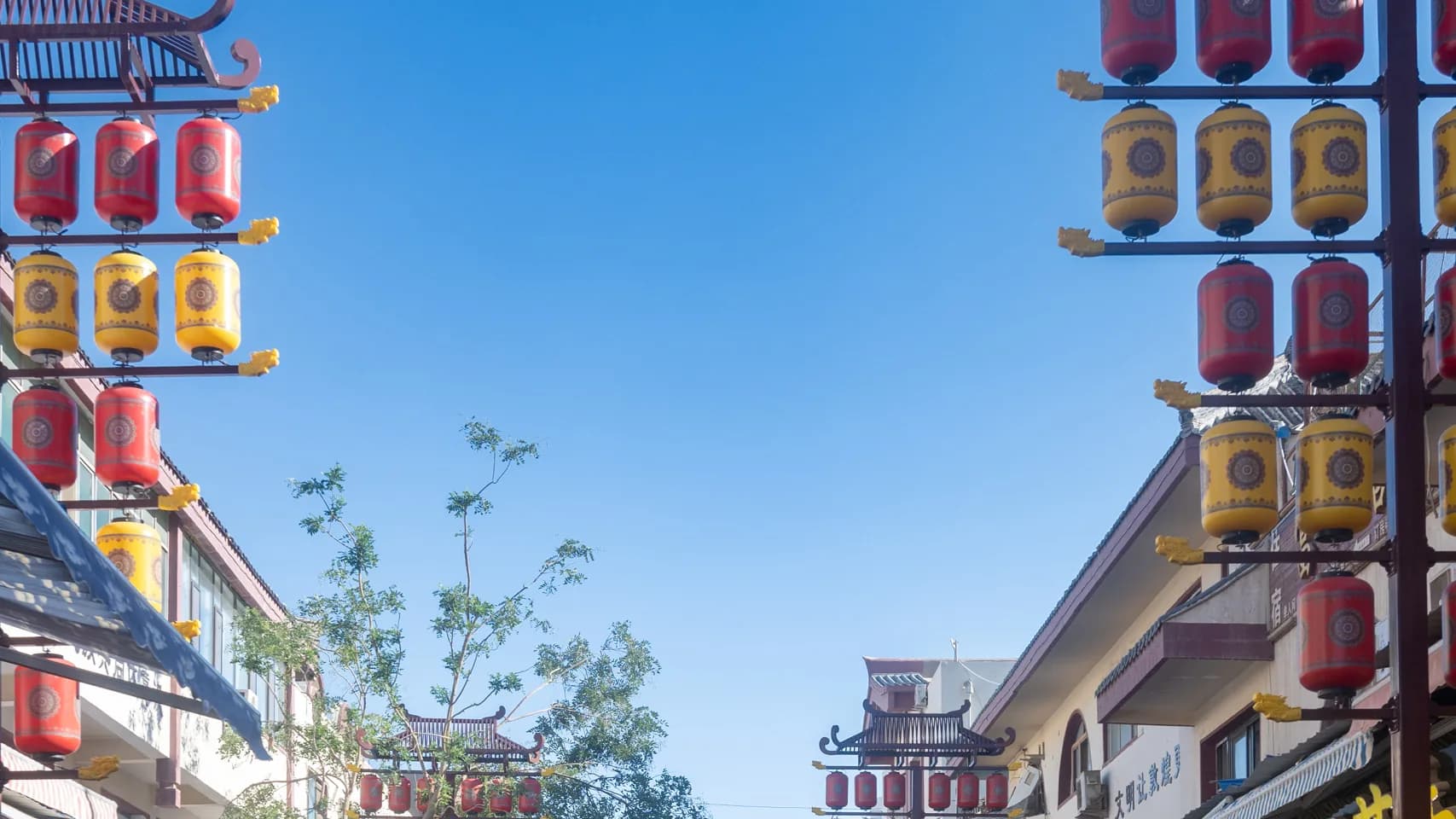
- reconstructed gates, streets or staged settings;
- live performances and scheduled activities;
- costume, photography or other commercial upgrades.
Request the live language, device, inclusion and cancellation details. A performance may be engaging without being archaeological evidence; a reconstruction may orient visitors without being original fabric.
Protect interpretation time
A useful sequence begins with site context, identifies the surviving beacon and broader route landscape, then examines later visitor layers with clear labels. If a tour places the stop at the end of an overloaded day, ask exactly how much guided time remains.
Do not repeat precise military, trade or literary claims from a performance script unless a heritage authority supports them. Poetry can deepen the emotional setting without serving as a site plan.
Western-line logistics
Yang, Yumen, West Thousand Buddha Caves and Yadan cannot all receive equal depth in one day. Confirm stop order, duration, vehicle cooling, guide, meals, upsells and final Dunhuang return in writing.
Weather can erase a sunset and make exposed earthwork stops physically demanding. AMap places Yang Pass about 30.1 km / 30 minutes by car from West Thousand Buddha Caves, but this does not establish the internal route, performances or final return. Remove a contemporary activity before sacrificing water, shade or return margin.
Final verdict
Visit Yang as a layered interpretation site. Keep original earthwork, reconstructed setting and performance separate, and give the pass enough time to mean more than a marker beside a bus.