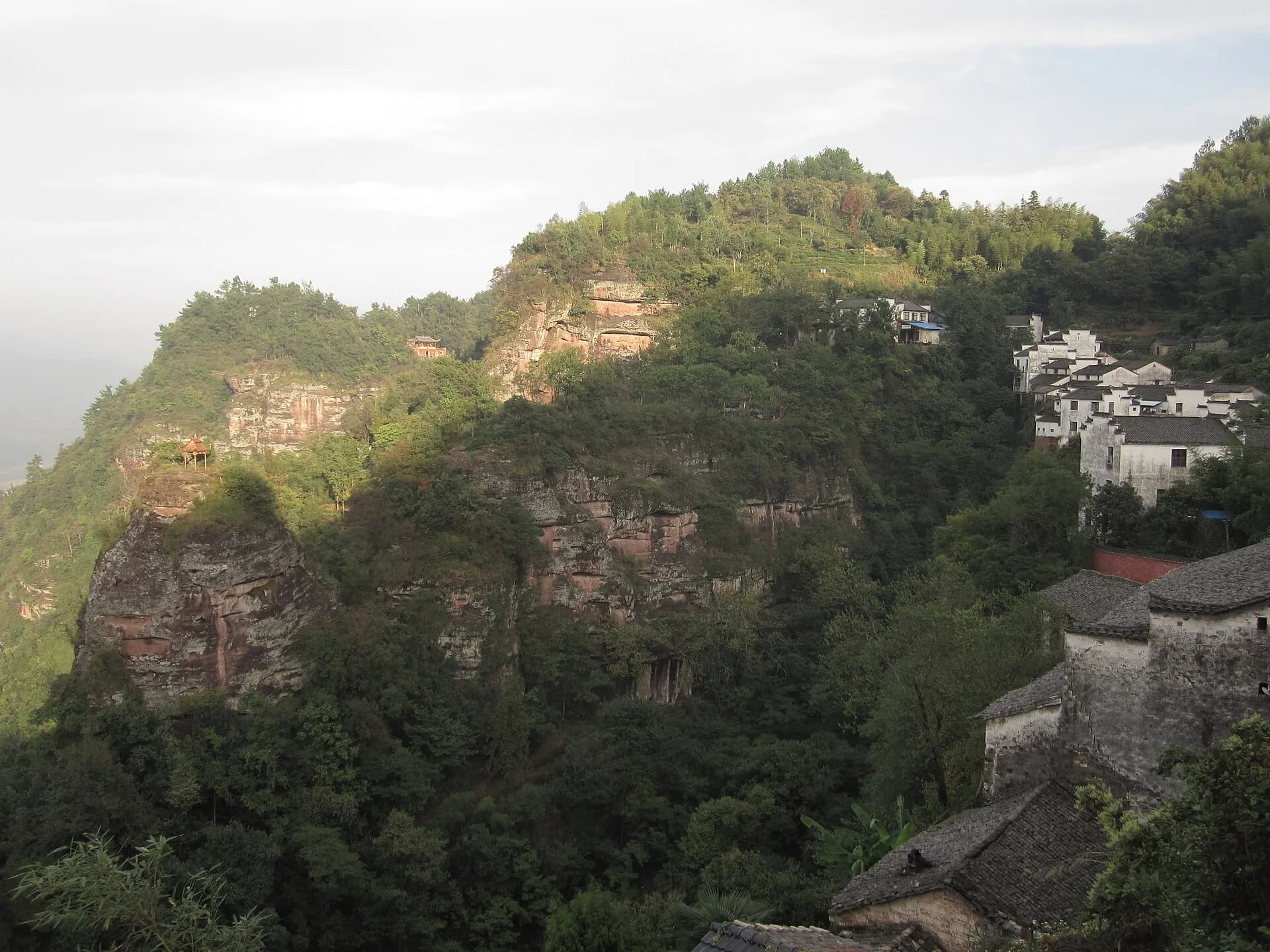
Huizhou Ancient City
Huizhou Ancient City occupies an inhabited part of Shexian. Its ordinary streets, Xu Guo Arch, museums, the reconstructed and conserved presentation of the Huizhou Prefectural Government Office, side lanes, workshops, events and any Yuliang extension are not one product.
This distinction explains sharply divided visitor reports. Travelers who stay on the commercial main axis and expect a monumental preserved town often leave disappointed; those who add historical context and selected side streets see a functioning county centre layered over older urban fabric.
Choose a compact or extended visit
For a compact history route, begin with a confirmed museum or interpretation source, use Xu Guo Arch and the main axis as orientation, then enter the Prefectural Office only if its current product and hours are confirmed. Finish with selected public side lanes rather than wandering through residential thresholds.
For an extended Shexian day, add Yuliang or another separate site only after mapping its exact connection. AMap shows that even Tunxi Old Street to Huizhou Ancient City is about 28.9 km / 50 minutes by car; social itineraries often hide a vehicle transfer inside what looks like one continuous old-town walk.
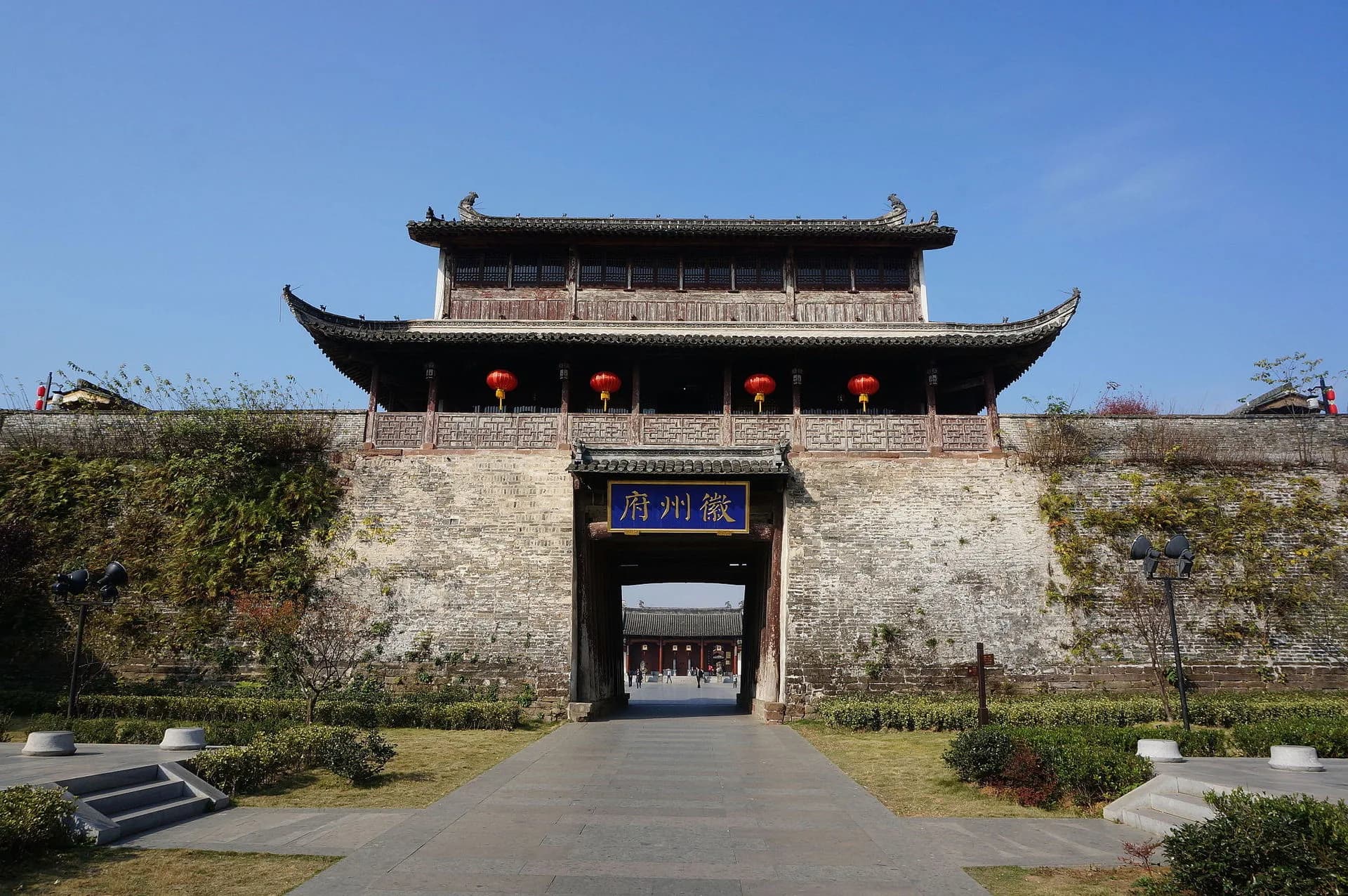
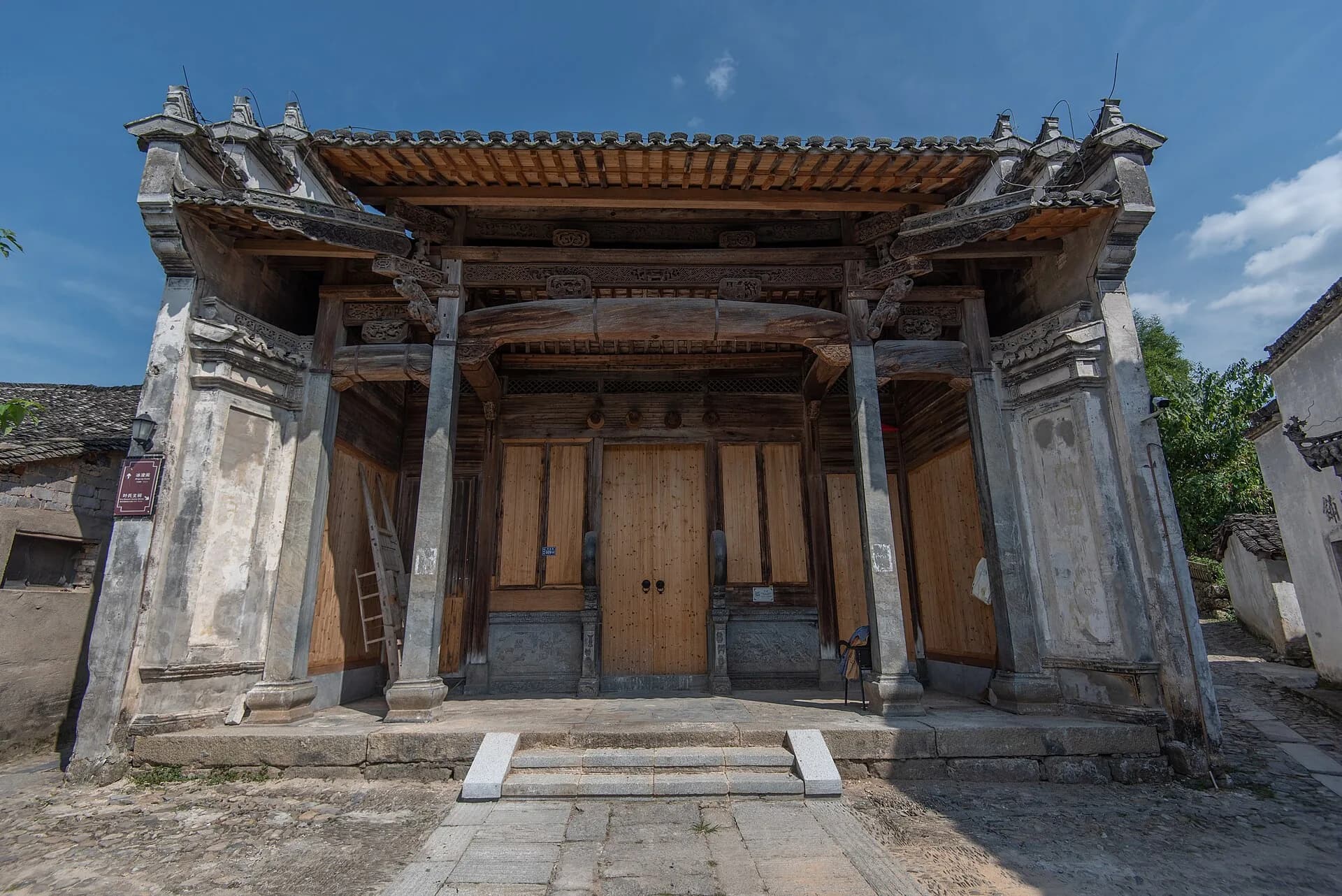
Photo: 猫猫的日记本 · Source · CC BY-SA 4.0
The photographed gate belongs to one controlled presentation complex. It does not establish today's ticket scope, hours or which fabric is original, restored or reconstructed.
Three operating layers, three different clocks
The official Huangshan listing currently describes the public ancient-city district as open all day. Walking its ordinary public streets does not require buying one blanket “ancient city” ticket.
The Huizhou Prefectural Government Office is controlled. Its published May 1–September 30 hours are 08:00–17:30, with ticket sales ending at 17:00; October 1–April 30 it publishes 08:00–17:00, with sales ending at 16:30. Confirm the dated notice and the selected interior before entering.
The Anhui Huizhou History Museum publishes May–September hours of 08:30–17:00 and October–April hours of 09:00–17:00, normally with last entry at 16:30 and Monday closure. Friday and Saturday extensions are published for both seasons, but temporary exhibitions and holiday arrangements can change. Check the museum's own notice rather than applying the city or office clock to it.
The live Huizhou Ancient Town listing on Trip.com is useful only for comparing dated paid interiors or bundles. The public streets and Xu Guo Arch approach remain a valid free route; never imply that this optional product is required to walk the district. Read the exact inclusion, document, entry window and cancellation before purchase.
Give the history walk a no-backtracking spine
Start with context when the local history museum is open. The Anhui Huizhou History Museum (安徽徽州历史博物馆) is in Shexian's ancient city; it is a different institution from the similarly named Huizhou culture museum in Tunxi. Continue through the Wengcheng/South Qiao Tower approach, then decide whether to enter the Prefectural Office. Choose a few displays that explain the region and its communities rather than trying to finish every case. Carry one question into the streets: how did commerce, education and government shape the town?
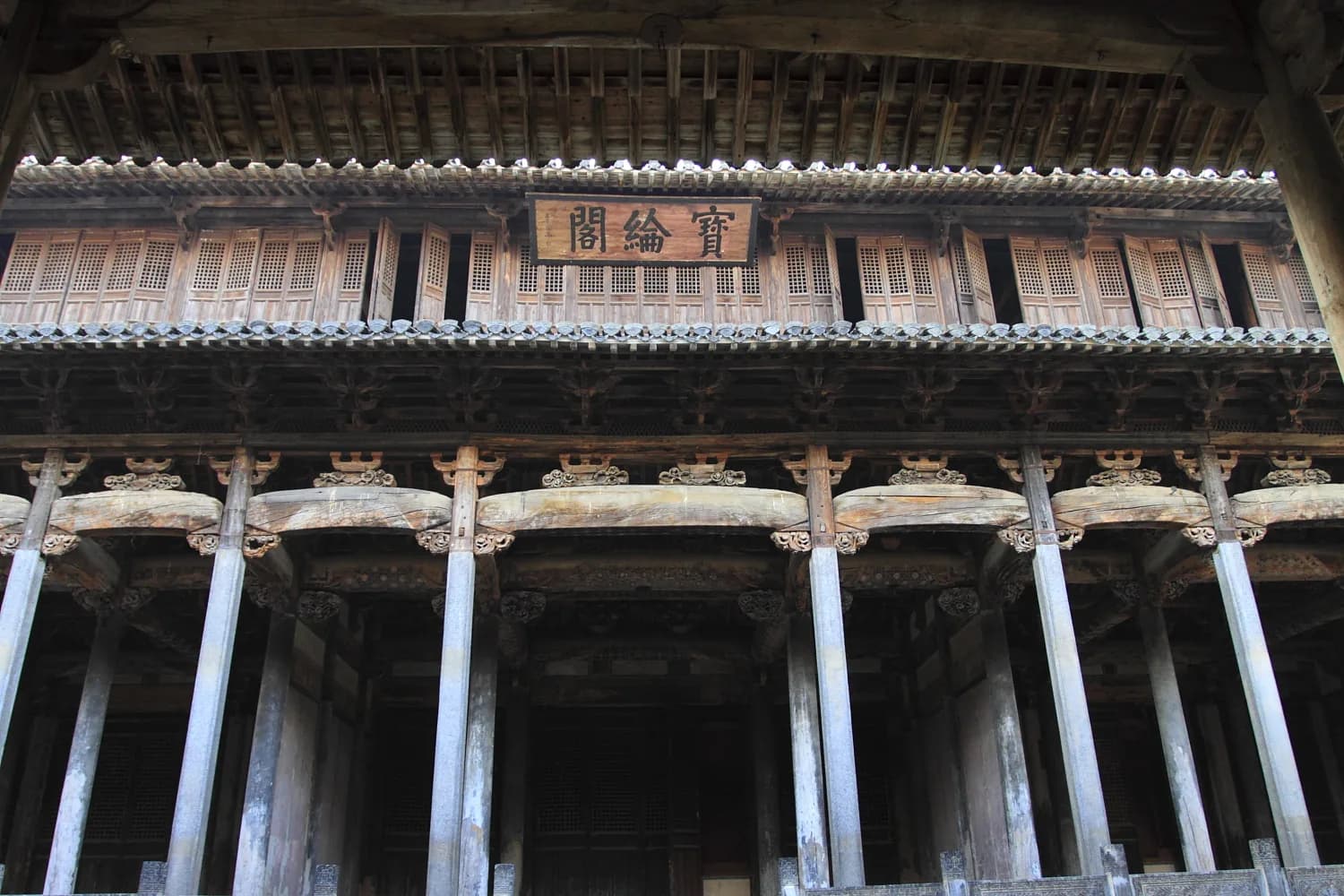
Slow down at Xu Guo Arch (许国石坊). Walk around the permitted public space to compare its faces, openings and carved details. A front-on photograph compresses the structure; looking from more than one side makes its depth easier to understand. Then choose whether the Prefectural Office's current interior presentation interests you. If you enter, compare ceremonial and administrative spaces and use the labels to distinguish surviving material from reconstruction.
Add Tao Xingzhi Memorial Hall, then finish with Doushan Street (斗山街) and a food break. The practical spine is history museum → Wengcheng/South Qiao Tower → optional Prefectural Office → Xu Guo Arch → Tao Xingzhi Memorial Hall → Doushan Street. Follow public signs and look at thresholds, wall lines and the way deeper compounds sit behind narrow entrances. This smaller domestic scale provides a useful contrast to the arch and official complex. Select a few details without entering private homes; you do not need to collect every well and doorway named online.
Allow around three to four hours when combining a museum, a selected interior and the lane walk. For a shorter visit, choose one interior and retain the arch and streets. A seated snack or meal is a natural ending; add an evening performance only after confirming its actual date and time, rather than waiting around for an assumed daily event.
Keep the products separate
- Public urban fabric: ordinary streets remain part of a working town and cannot be described by one attraction ticket.
- Prefectural Office and museums: controlled interiors have their own live access and interpretation rules.
- Workshops and shops: commercial experiences require separate quality and disclosure checks.
- Evening programs: fish lanterns, performances and boating are dated products, not permanent historical evidence.
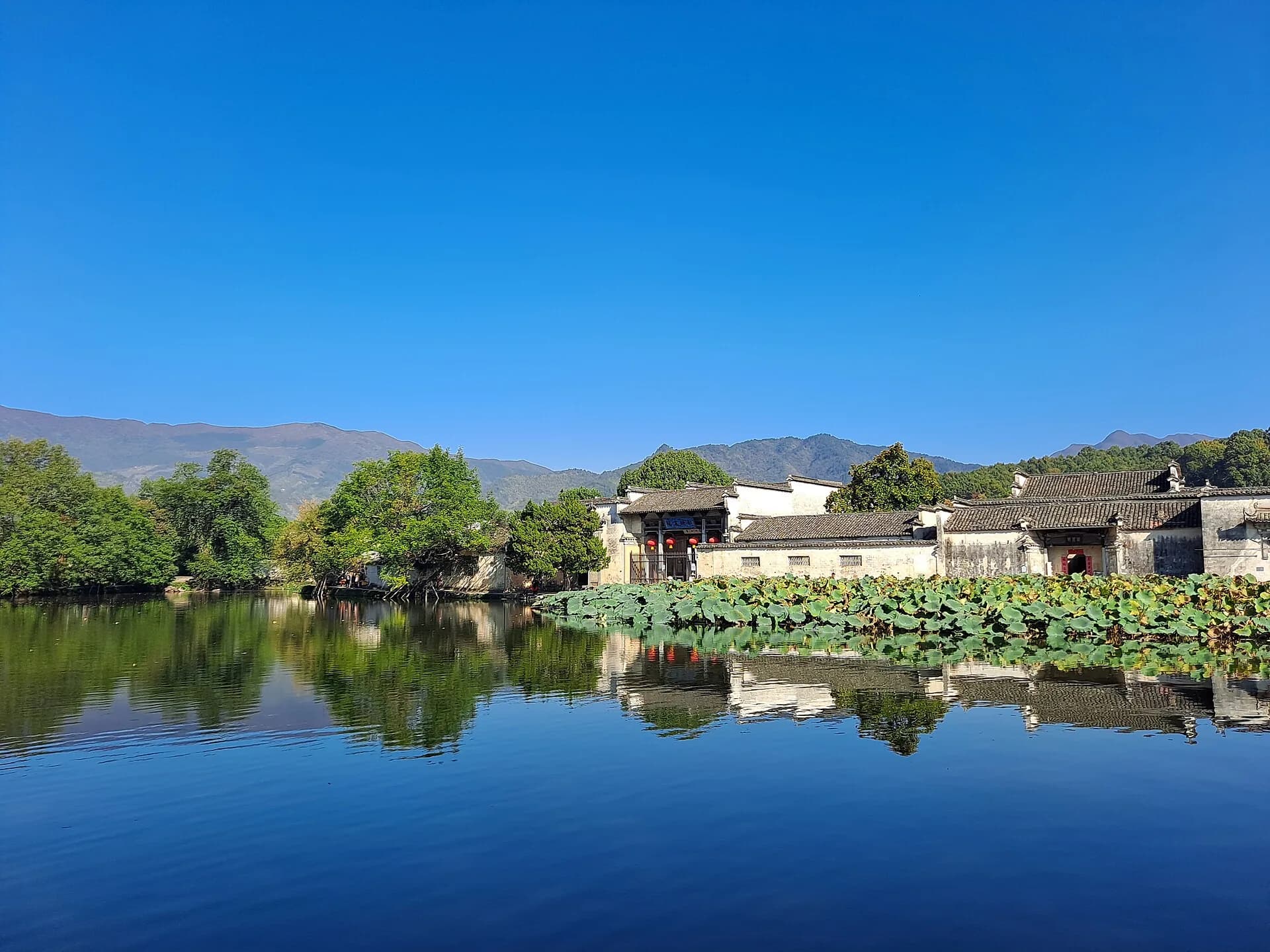
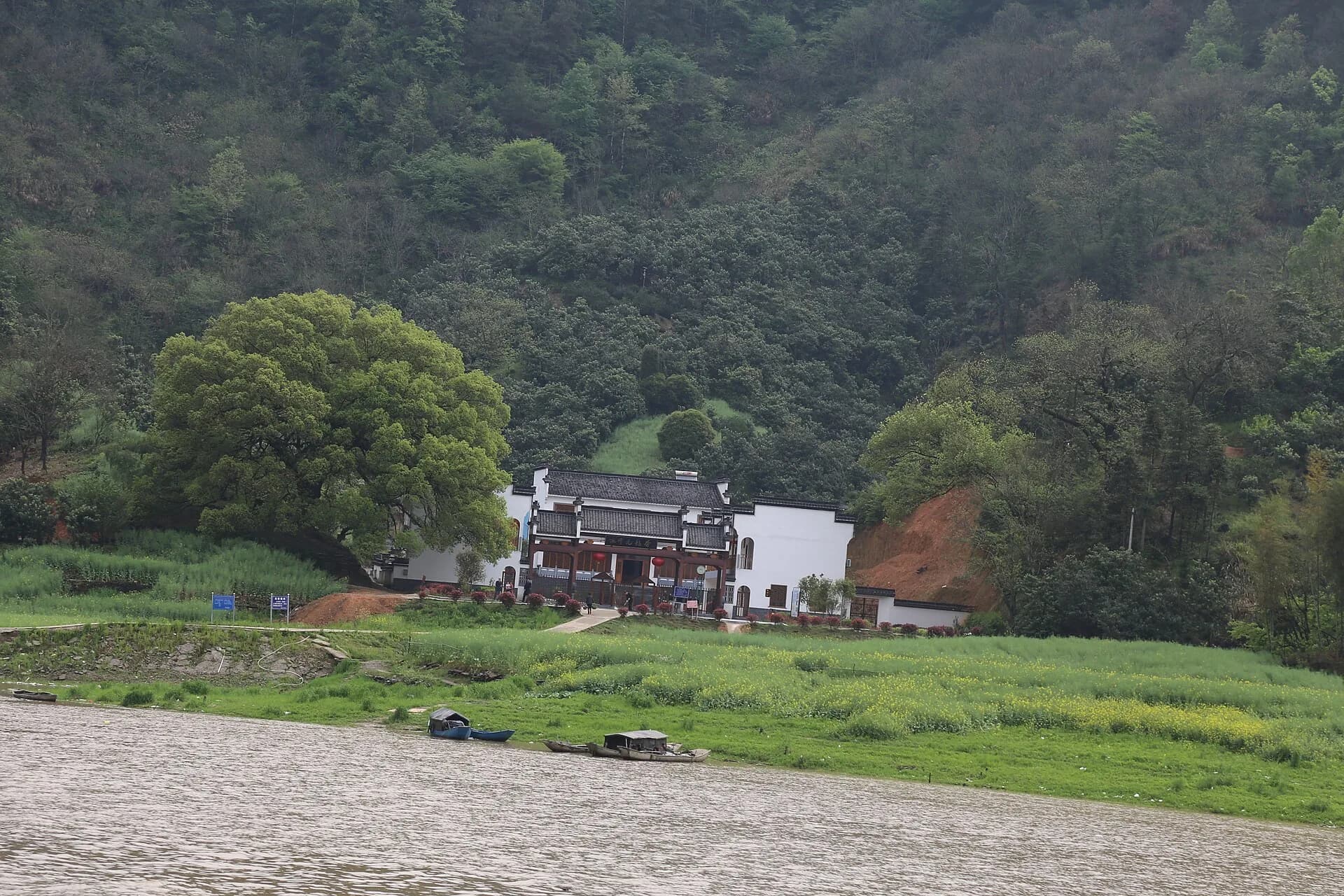
- Yuliang and river branches: separate places requiring explicit transport and weather checks.
“Free ancient city” and “one combined ticket” can both mislead when used without naming the component. Fish-lantern and office performances are seasonal or dated: consult the current Huangshan cultural-events notice, because rain and programming changes can cancel them.
Weather fallback
Heavy rain and flood conditions can close interiors, cancel programs and make riverside additions unsafe. If controlled sites are closed, use only a verified public-street route and decide whether the remaining urban walk still meets your goal. A reduced weather day is not evidence that the complete destination lacks substance.
Residents and ordinary businesses are not signs of failure, but they are also not a performance. Do not photograph through doors, enter unmarked courtyards or romanticize every old-looking wall as protected fabric.
From Shexian North Station
AMap verifies Huizhou Ancient City Visitor Centre at 118.436110, 29.862754 in GCJ-02. From Shexian North Station it currently estimates 8.2 km / 17 minutes by car. The mapped public route uses Shexian Route 702 and takes about 1 hour 16 minutes, with roughly 0.15 km walking; verify the live stop and final service rather than judging by the short road distance.
Use the visitor centre as the arrival anchor, then follow current signs through public streets. Confirm the Prefectural Office product, museum access, foreign-passport purchase and final entry cutoff directly, and carry the original document attached to any booking.
Final verdict
Choose Huizhou Ancient City for an interpreted urban-history visit. Start with context, distinguish public streets from paid interiors and add a mapped side-lane or Yuliang branch only when open; a main-street shopping pass is the weakest version of the city.