Wild Elephant Valley
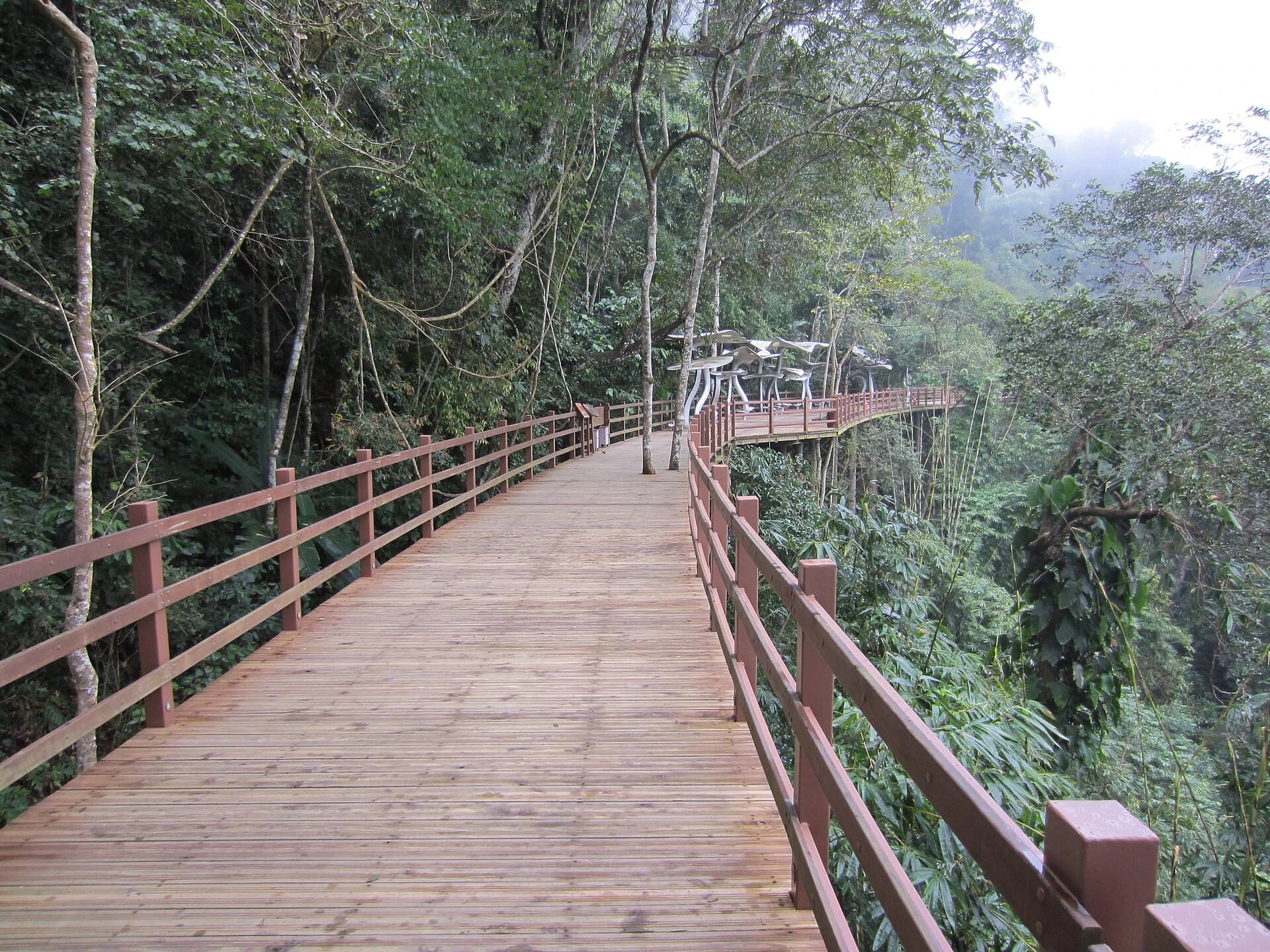
Wild Elephant Valley offers an unusual chance to understand Asian-elephant habitat from inside the Mengyang rainforest. The museum, conservation interpretation and 2,280-metre elevated walkway create a worthwhile day even when the animals remain out of view; a distant wild sighting is an unscheduled bonus, not the sole measure of the experience.
Why the visit can be rewarding
- Go for the Asian Elephant Museum, conservation interpretation, rainforest structure and elevated observation walkway.
- Go conditionally if a wild sighting would be a bonus rather than the reason the day succeeds.
- Choose another nature day if only a close photograph or physical interaction would satisfy you.
The operator site identifies the museum, 2,280-metre elevated observation walkway, rainforest cableway and conservation setting as principal products. The Yunnan natural-resources authority describes the site's protected-area obligations and environmental-education facilities. Those are the dependable facts.
Choose the movement plan at the gate
Visitor reports describe a south/north-gate structure using a one-way cableway, elevated walkway and gate shuttle, but the exact direction and open segment are operating details. At entry, confirm:
- which gate your vehicle and return will use;
- whether the cableway is operating and one-way or return;
- the walking distance after the cableway;
- the final inter-gate shuttle and return vehicle;
- any active ranger alert for elephant movement or weather.
The cableway is useful for canopy and route connection; it is not an elephant-viewing guarantee. Cut it when weather, queue or timing undermines the return.
Keep the day focused on wild habitat
Multiple visitor reports describe feeding, bathing, performances, photography and other captive-elephant products alongside conservation messaging. This guide does not recommend them. Do not feed, touch, bathe, ride or direct an elephant for a photo. A paid interaction is not made ethical by being inside a conservation-themed destination.
If staff announce wild elephants nearby, stay quiet, follow ranger instructions and never approach, call to, feed or block them. Do not publish a live location that could draw a crowd.
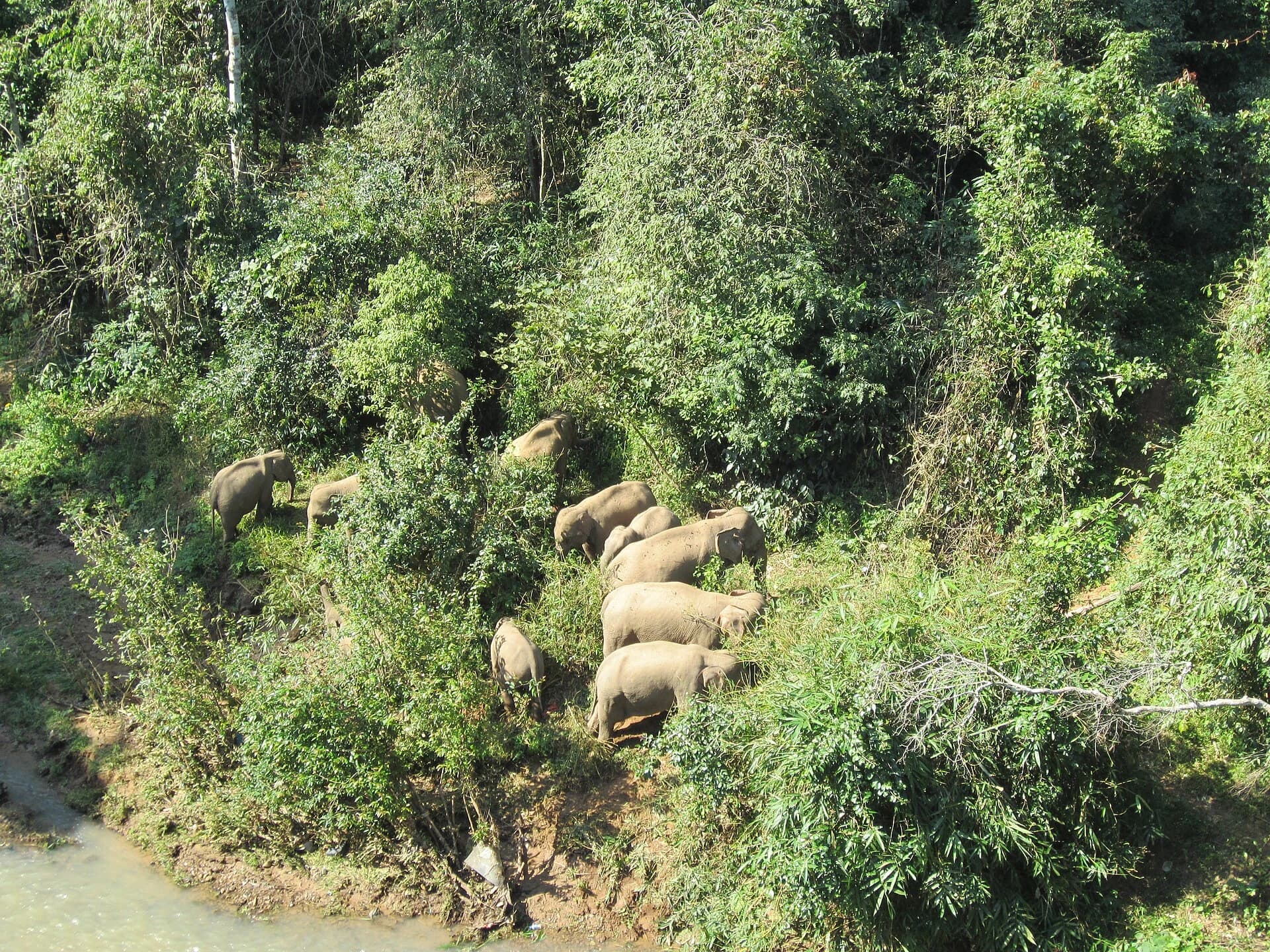
The image above records one distant historical sighting. It is not evidence of today's location or your chance of seeing elephants.
Transport and time
Amap models Gaozhuang to the main scenic area at about 31 km/30 minutes by car without live traffic and returned no normal public-transit option. Confirm an official coach or use a licensed vehicle with a written return. A guide who controls both tickets and your departure time can distort the visit toward commissionable add-ons; keep the route and purchases explicit.
What makes the day successful
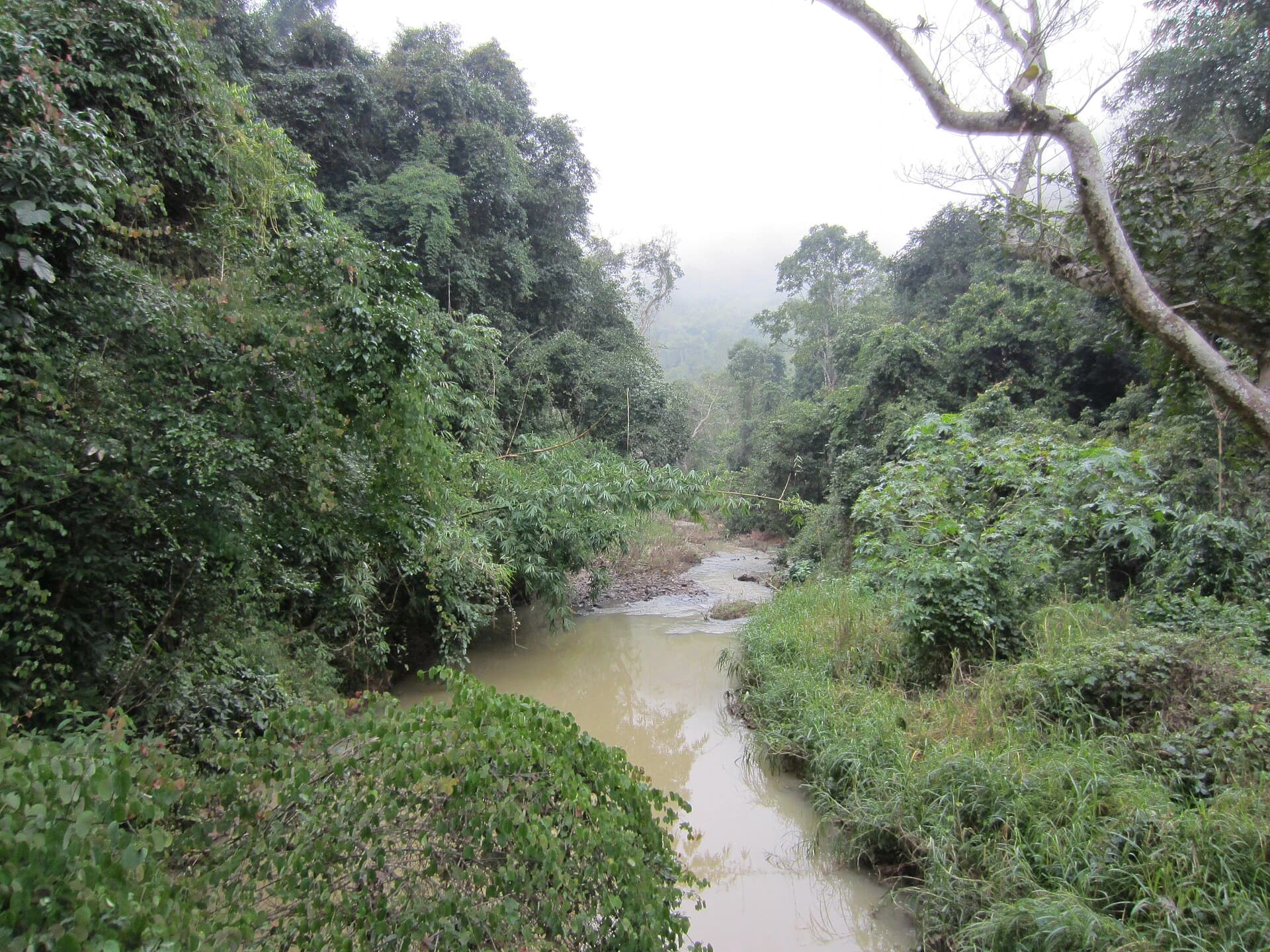
Measure the day by what you learned about Asian-elephant habitat and coexistence, not by proximity to an animal. If the museum, walkway and rainforest are not enough, choose the botanical garden instead.