Leshan Giant Buddha
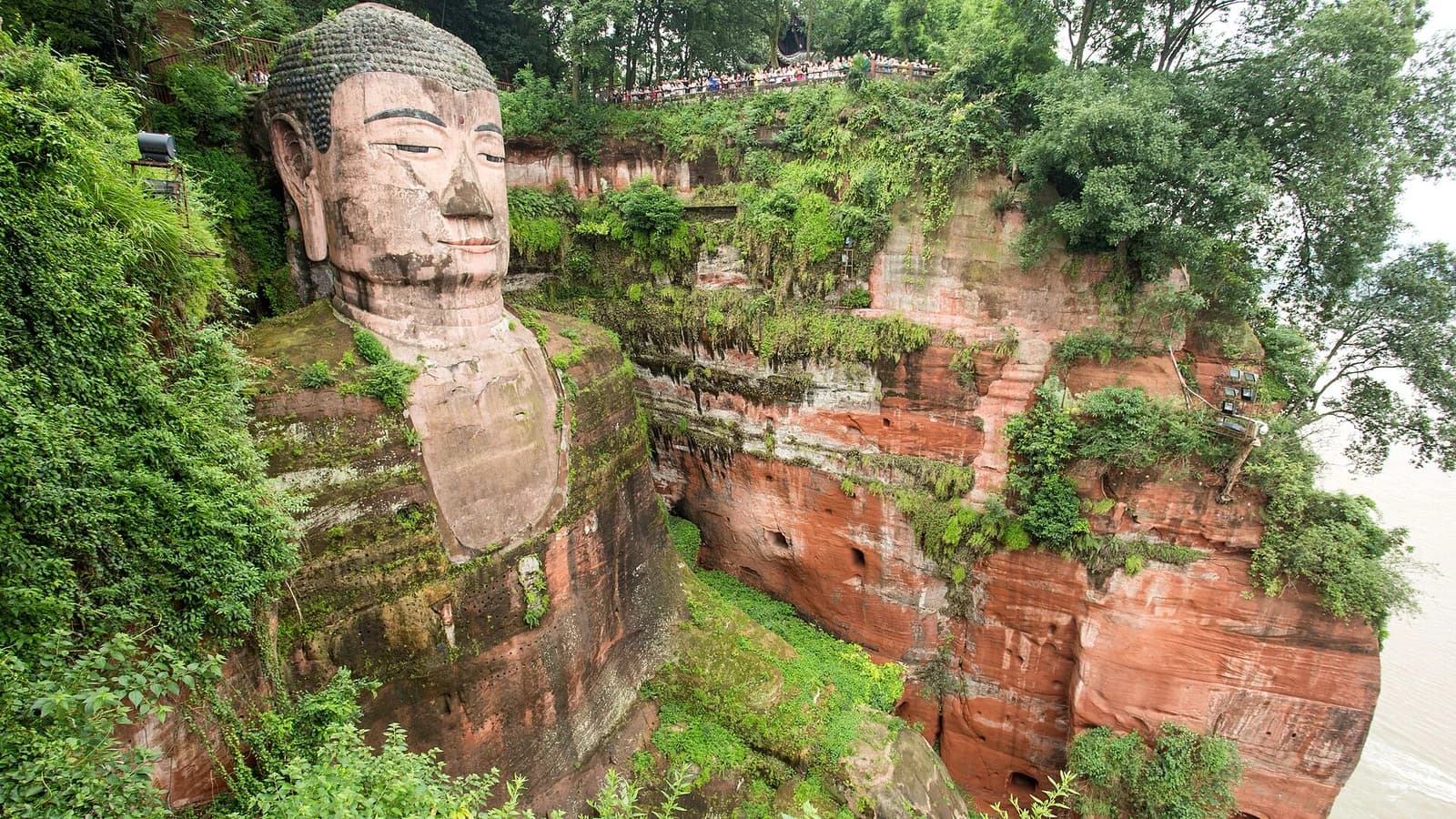
The Leshan Giant Buddha is most memorable when you understand how the 71-metre carving belongs to its red cliff, temples and three-river confluence. The mountain route brings you into that religious and archaeological landscape at close scale; the river cruise reveals the entire seated figure and cliff in one effortless frontal view.
For most visitors, one well-paced product creates a complete half day. Combine both for the richest perspective only when you have enough time and have confirmed the day's mountain exit, assigned pier and transfer. “South gate,” “south visitor centre” and the cruise pier can function as different nodes, so use the current named location rather than a saved shorthand.
Mountain, cruise or both?
| Product | Choose it for | Main trade-off |
|---|---|---|
| Mountain admission | Temples, cliff carvings, close scale, heritage context and the possible Buddha-foot branch | Many steps; the narrow descent and return climb can be crowded or closed |
| Day cruise | Low-effort complete façade and the relationship between Buddha, cliff and rivers | Shorter interpretation; sailing and pier depend on water, weather and live notices |
| Both | Visitors with a generous half/full day who genuinely want both perspectives | Separate tickets and a transfer that must be confirmed after the day's pier and exit are known |
The Buddha-foot platform is not a compulsory proof of visiting. Families, visitors with limited stair tolerance and anyone facing a long queue can still gain far more from the mountain's upper heritage route than from forcing the narrow stair branch.
Current ticket and operating baseline
The official Leshan Giant Buddha purchase guide, checked on 21 August 2026, gives these normal daytime baselines:
| Product | Adult baseline | April 1–October 7 | October 8–March 31 |
|---|---|---|---|
| Mountain admission | CNY 80 | 07:30–18:30 | 08:00–17:30 |
| Day cruise | CNY 70 | 07:30–18:00 | 08:00–17:00 |
These are useful baselines, not unconditional promises. Heavy rain, river level, maintenance and crowd control can close the cruise or Buddha-foot branch, change sailing hours, or redirect people through a different exit. The operator lists Jiazhoudu, Wuyou Temple and Baxian Cave among possible cruise piers; a saved guide must not choose one before the current notice does.
Check the exact Leshan Giant Buddha listing on Trip.com for live dated inventory, but compare whether you are buying mountain admission, cruise, a tour or a combination. The scenic area's same-day notice and staffed counter control actual access, passport handling, pier and closure status.
See how the two experiences connect
The diagram below is an original decision schematic. It does not show scale or promise a particular south exit or pier.
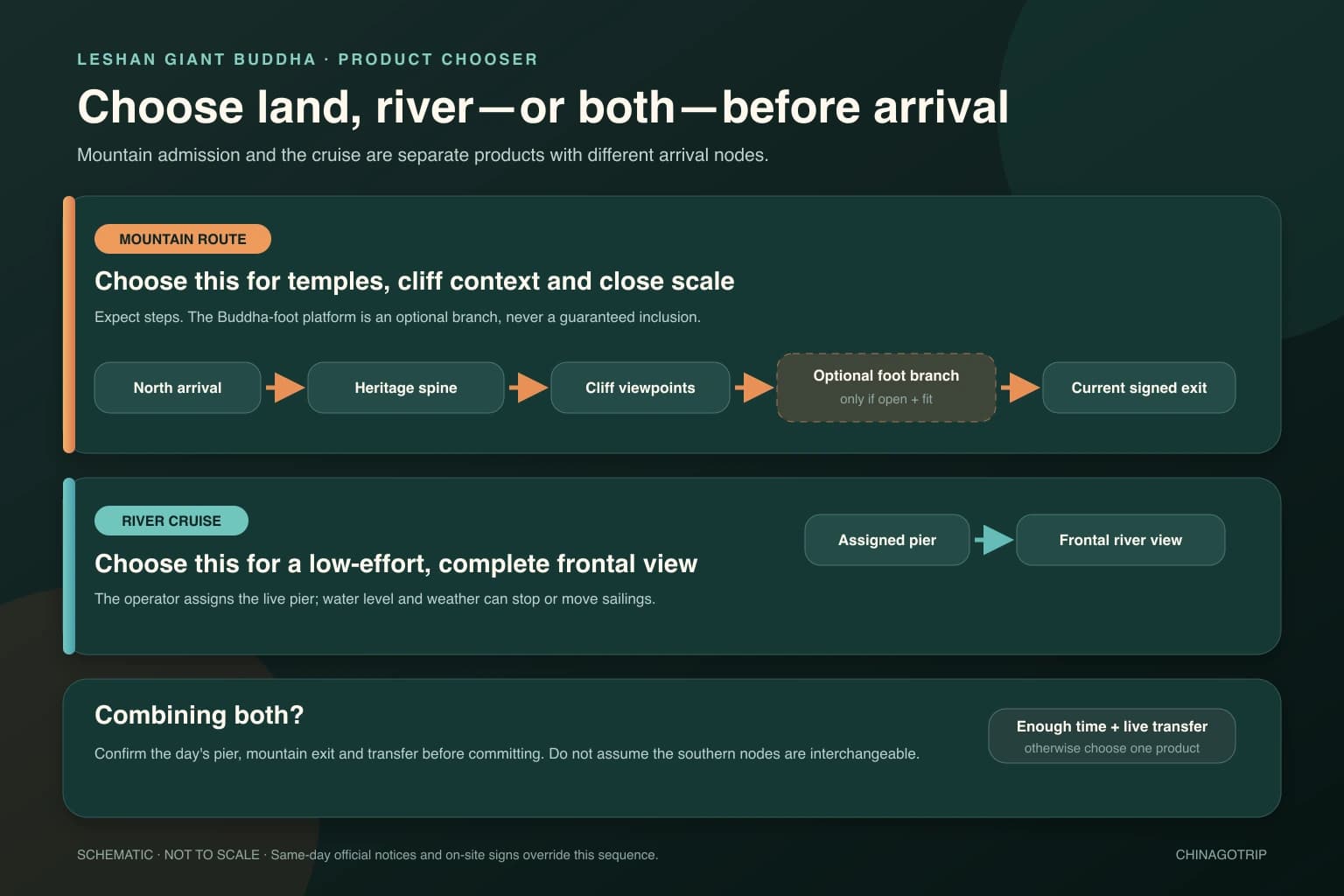
How to execute the mountain route
1. Begin at the current north arrival
Use the exact north-arrival stop or parking node shown in your current directions, not a generic “Leshan Giant Buddha” pin. The mapped bus stop and north parking area are close but not identical. Follow the current ticket and entrance signs after arrival.
2. Read the Lingyun heritage spine
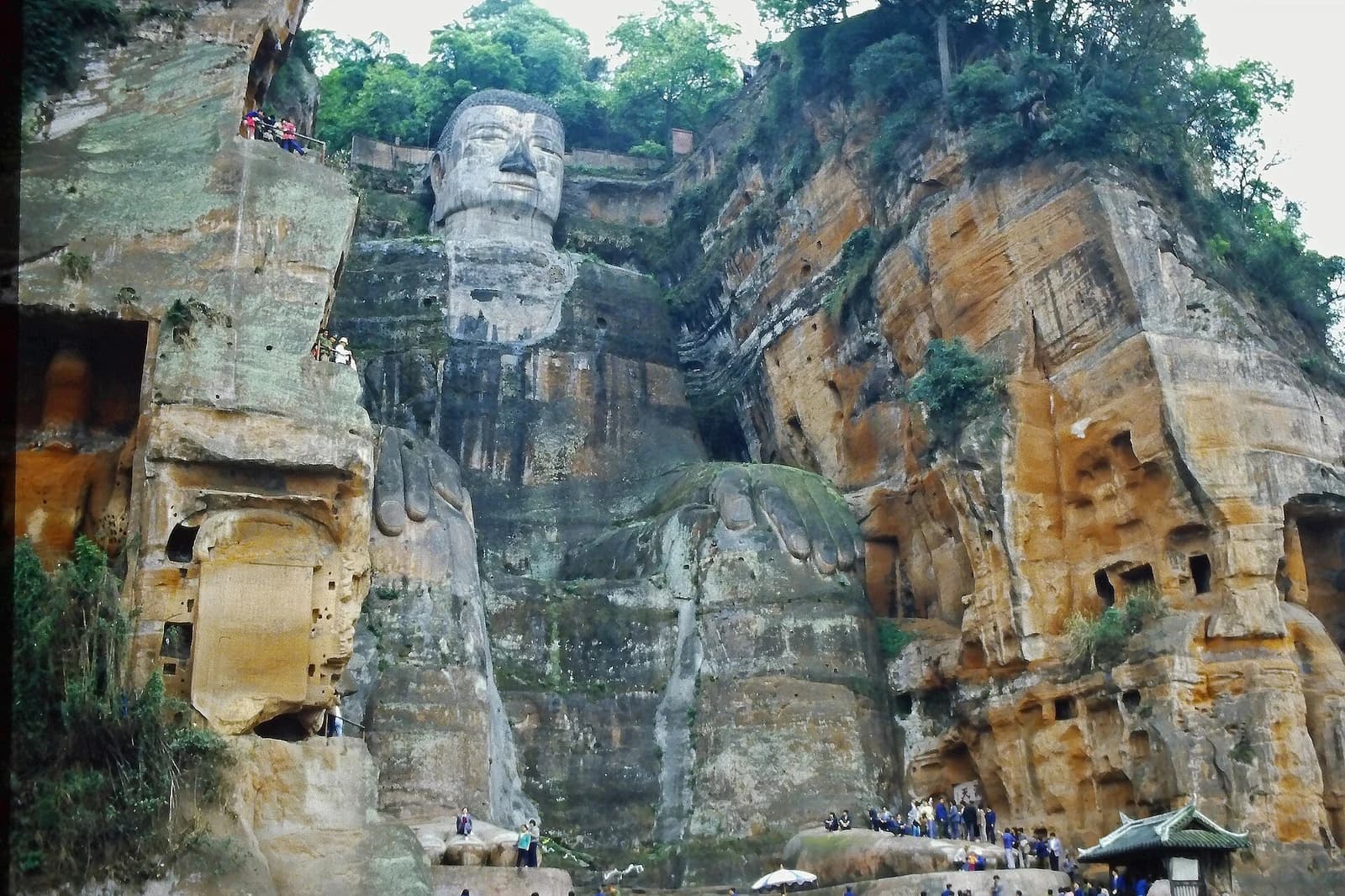
The 71-metre Buddha was begun in the eighth century and carved into the red sandstone at the confluence of the Minjiang, Dadu and Qingyi rivers. UNESCO treats it as part of a larger cultural landscape of temples, cliff carvings, tombs and river geography. Lingyun Temple and the upper terraces help explain why the figure belongs to the cliff; the experience is not merely a queue for one frontal photograph.
Move respectfully through active religious spaces. Keep voices low, do not block worshippers for portraits, and obey photography restrictions around interiors or conservation work.
3. Decide on the Buddha-foot branch only when you see the live condition
The descent towards the feet is the physical and queue bottleneck. Expect steep, narrow stairs, a descent followed by a return climb and slow movement when the platform is busy. Check that the branch is open, assess your knees and comfort around crowded steps, and retain enough energy to leave the site.
Skip it when closed, when the queue removes your return buffer, or when anyone in the group is not comfortable with the staircase. Never cross a barrier or use an old route screenshot to infer that the platform has reopened.
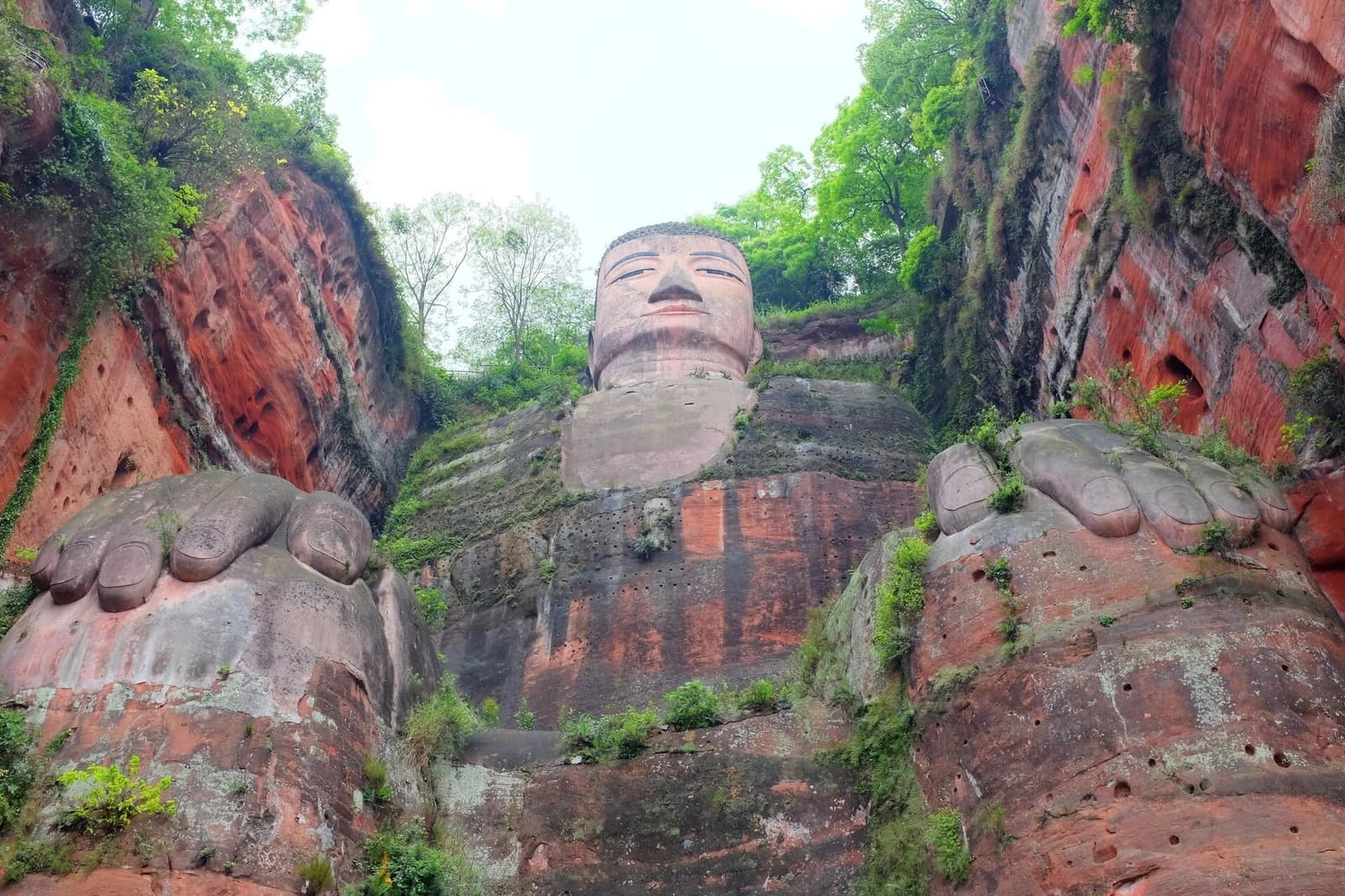
Photo: Blarandion · Source · CC BY-SA 4.0
4. Follow the current signed exit
Do not hard-code “finish at the south gate” into a train or cruise connection. Operational changes can alter the exit flow. Once you know the day's signed finish, rebuild the onward car, bus or pier transfer from that node.
How to execute the river cruise
The cruise solves a different visual problem: from the water, the entire seated figure and the surrounding cliff fit into one view. It is the better first choice for visitors who cannot manage the mountain stairs, families protecting energy, or photographers who value the complete façade over temple context.
Before leaving for the pier:
- Confirm that cruises are operating now, not merely sold on an old page.
- Read the assigned boarding pier and the operator's stated finishing point.
- Check whether the selected product is the normal daytime viewing cruise rather than a night product or bundled tour.
- Carry the booking document and original passport used at checkout.
- Keep a land alternative when water level, fog, storm or temporary control stops sailing.
The boat ride may be short relative to the full transfer. Judge the product by its low-effort frontal view, not by minutes on the water.
Combine mountain and cruise smoothly
Do not decide the order from a generic map. On the morning of the visit, collect three live facts: the mountain entrance, the expected signed exit and the cruise pier/endpoint. Combine only when the transfer preserves enough margin for ticket handling, queues and the cruise cutoff.
If the nodes conflict, choose one. A mountain visit followed by a relaxed Leshan meal is a complete day. A cruise followed by city time is also complete. Missing the second perspective is cheaper than missing the last train because a southern label led you to the wrong place.
From Leshan Railway Station
Amap's August 2026 model found a public-transport option using the K2 bus from Leshan Railway Station to the mapped north-arrival stop in about 42 minutes, including roughly 427 metres of walking and a low local fare. Its car model measured approximately 9.2 km and 28 minutes. Traffic, waiting and temporary drop-off control can change both.
Use the north-arrival node for a mountain visit. For a cruise, map the live assigned pier after checking the operator notice; do not ask a driver for the “south gate” as a substitute. Check live train inventory on Trip.com and leave a conservative return buffer after the current exit or pier.
Weather, stairs and mobility
- Wet stone, heat and long queues change the mountain's difficulty; carry water and use shoes with grip.
- The cruise can stop because of river or weather conditions even when the mountain area remains open.
- The foot branch may close independently of the upper mountain route.
- Keep children close on terraces and stairs; do not lean over cliff barriers.
- Ordinary swimming, fishing and unauthorised water activity are prohibited in managed heritage waters around the confluence.
- Staff and same-day signs override this guide whenever operations change.
Choose your best perspective
Before departure, you should be able to answer: mountain, cruise or both; exact arrival node; current foot-platform status; current pier or signed exit; last practical onward connection; and what you will drop if queues or weather consume the buffer.
Choose the cruise for the easiest full frontal view. Choose the mountain for the deeper cultural landscape. Choose both only after the day's geography proves that both still fit.