Jade Buddha Temple
Jade Buddha Temple (玉佛禅寺, Yùfó Chánsì) is an active Buddhist monastery in central Shanghai, not a museum arranged around two famous statues. Come for the full sequence of courtyards, halls, worship, tea, and quiet pauses; the jade Buddhas are the focal point, not the entire visit.
Is It the Right Temple for You?
Choose Jade Buddha Temple if you want an accessible, central introduction to living Buddhist practice with a substantial interior route. Choose Longhua Temple for a broader historic complex and pagoda setting. Visitors interested only in an exterior photo can skip both; the value here comes from moving slowly through an active religious place.
Allow 75–90 minutes. Regular entry is free, but offerings, tea, food, cultural activities, and some special programs are separate choices.
A Respectful, No-Backtracking Route
Enter from Anyuan Road and follow the courtyard axis through the Heavenly Kings Hall, Guanyin Hall, and Main Hall before exploring the side halls. Continue toward the Reclining Buddha and Jade Buddha spaces, following current signs where one-way circulation is in force. Finish with tea, vegetarian food, or the temple's cat courtyard only if those areas are open; they are optional experiences, not sacred “must-do” rituals.
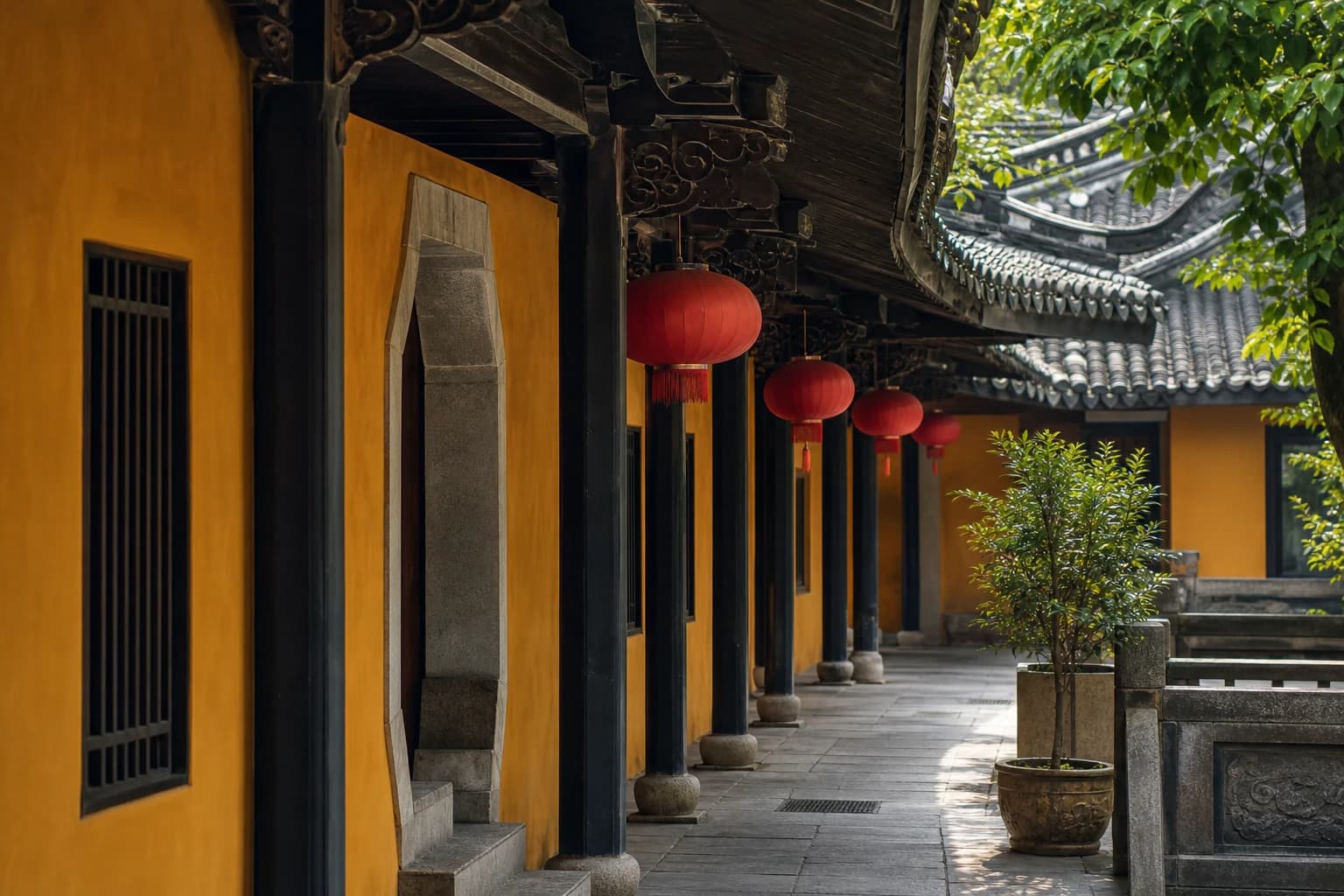
Slow Down Between the Major Halls
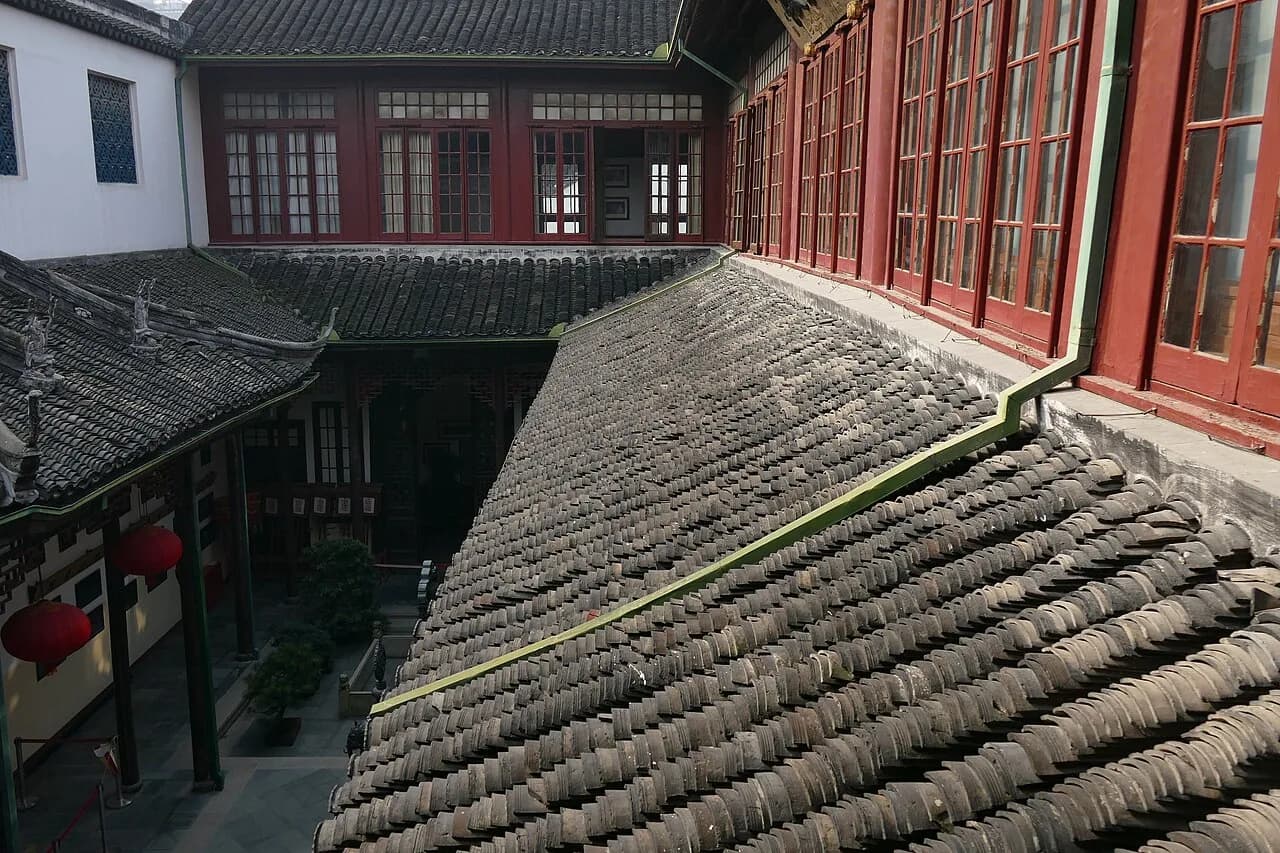
The famous images draw queues, but the temple's character also lives in its transitions: ochre walls changing tone under the eaves, framed roof views, stone paving, potted trees, and the sudden quiet of a side corridor. Leave space around doorways and use those pauses to understand the complex instead of rushing from one named statue to the next.
Cats sometimes appear in the grounds and have become a popular visitor detail. Enjoy the encounter from a distance. Do not feed, pick up, corner, or use flash on an animal, and never block a monastic or service route for a photograph.
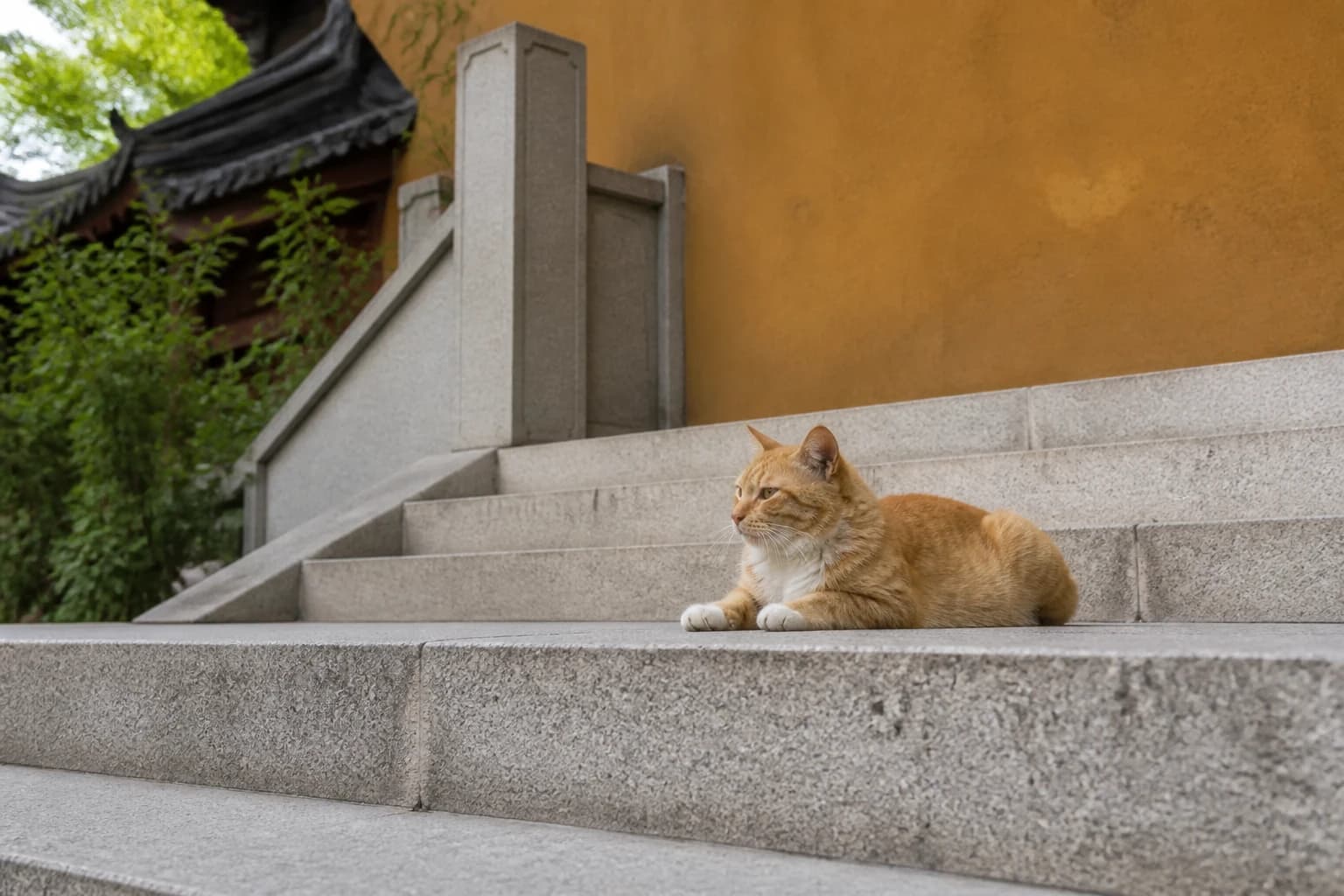
Do not copy worship sequences or promises of good fortune from social media. If you choose to offer incense, follow the temple's instructions. Quiet observation is entirely appropriate.
Why the Vegetarian Hall Belongs in the Story
The temple's vegetarian hall began as a public canteen and developed a reputation for Jiangnan-style Buddhist cooking. That history makes lunch part of the place rather than an interchangeable restaurant stop. Choose noodles for a quick meal, or ask about the more substantial dishes and set meals when you want to linger; visitors accustomed to firmer noodles may find the Suzhou-style texture softer than expected.
Seasonal pastries and mooncakes vary, and public activities such as scripture copying can pause without becoming a permanent closure. Check the temple's current notice instead of building the visit around an old post. The hall is useful precisely because it can turn a compact central temple into a slower cultural visit—not because every menu item or activity is always available.
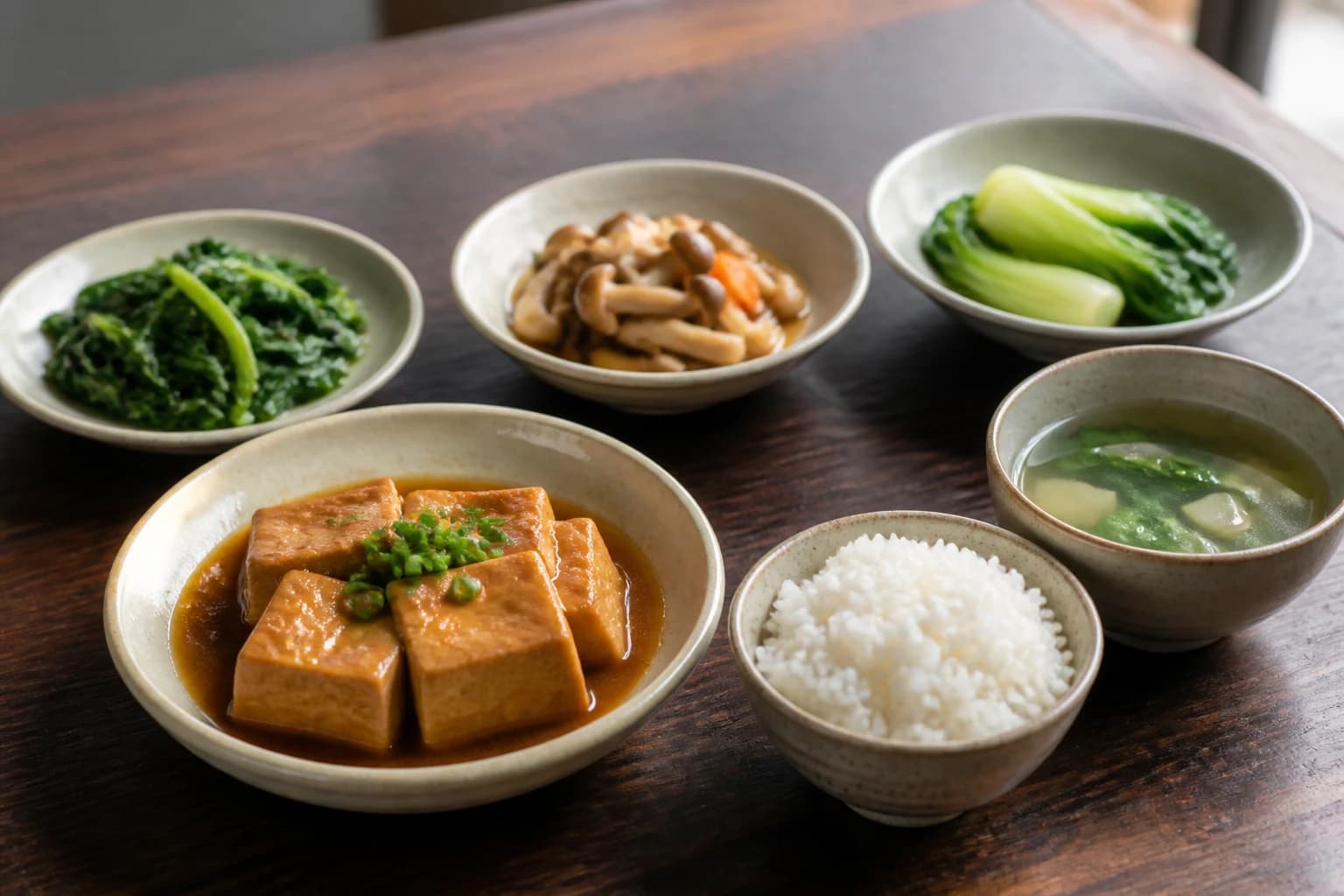
The image shows a representative meal style, not a fixed temple menu. Ask what is available before paying and avoid ordering a full set when noodles or one dish better fits your schedule. If the hall is busy, nearby Jiangning Road and the blocks toward Changshou Road have ordinary local dining; save destination restaurants for another neighborhood rather than treating the temple as a food court.
Etiquette That Actually Matters
- Wear clothing that covers shoulders and midriff; remove hats inside halls.
- Step around worshippers and queues rather than through them.
- Follow photography signs, especially around the jade images.
- Never photograph a worshipper at close range without permission.
- Keep voices low and do not touch statues or ritual objects.
Major lunar-calendar dates and New Year periods can use reservations and one-way crowd control even when ordinary days do not.
Current Visitor Information
The temple's official site lists 8:00 am–4:30 pm daily, except for special festival arrangements, and confirms free general admission. The address is 170 Anyuan Road, Putuo District. Use Jiangning Road Station on Line 13, Exit 3, then walk roughly five minutes. Search 玉佛禅寺 in Amap.
Arrive in the morning for a calmer atmosphere and more time before halls begin closing. Pair the temple with M50 and Suzhou Creek after lunch, when galleries are more likely to be open.
Pairing and Where to Stay
The cleanest half-day sequence is Jade Buddha Temple → lunch → M50 → Suzhou Creek. It moves from a living religious complex to reused industry and a public river corridor without pretending they are the same kind of heritage. If contemporary art is not your priority, continue instead toward Jing'an for shopping, cafés, and easier evening transport.
Stay in Jing'an or around Jiangning Road when Jade Buddha Temple, M50, and Suzhou Creek form an important cluster in your itinerary. People's Square remains a better all-purpose first-trip base, while the Former French Concession is more atmospheric but less direct. There is no need to choose accommodation solely for walking distance to the temple; the metro connection is straightforward.